Last updated 2026-07-09
TL;DR
Assessors sometimes record an unfinished basement as finished living space, which inflates your home's assessed value. Fix it by documenting the real condition, pulling your property record card, and filing an appeal. A successful correction removes the finished per-square-foot value from your basement, and that cuts a typical annual tax bill by hundreds to over a thousand dollars.
Why does an assessor mark a basement as finished when it isn't?
Assessors almost never walk through every room every year. Most jurisdictions reassess on a cycle of one to six years, and many run mass appraisal software that fills in the blanks from permit records, sales data, and whatever a field inspector scribbled on a clipboard the last time somebody knocked on your door. [1]
That process leaves gaps. A permit for a basement rough-in gets closed without a final inspection, and the county's data freezes at "finished." A previous owner listed a finished basement on an old real estate listing that got scraped into the database. Or an inspector checked the wrong box in a hurry. None of that requires bad intent. It all lands the same way: your property record card says finished basement, your bill charges finished-basement rates, and you pay more than you owe.
Here's the part that helps you. Assessors are human and their data is imperfect. The Lincoln Institute of Land Policy points to errors in property characteristic data as one of the most common causes of over-assessment at the local level. [2] A data error is the easiest kind of appeal to win, because you're not arguing about opinion. You're correcting a fact.
How much does a basement classification error actually cost you?
The cost comes down to three numbers: the assessed value per square foot for finished space in your area, the tax rate, and how many square feet got misclassified. Run those together and the annual overcharge is easy to estimate.
Most cost-approach mass appraisal systems value finished basement space at 50 to 75 percent of above-grade finished space. [3] Say your county values above-grade finished space at $120 per square foot and finished basement at $70. Your 800-square-foot basement is actually unfinished (close to $0 as living space). The misclassification adds roughly $56,000 in assessed value. At a 1.5% effective tax rate, that's $840 a year you shouldn't be paying.
Smaller basements and lower rates shrink the number, but even a 400-square-foot error at a 1% rate runs $250 to $400 a year. Stretch that across a five-year reassessment gap and it's real money.
One wrinkle worth knowing. Some states cap how far back you can claim a refund even after you win. Illinois, for example, refunds only the tax year under appeal, not prior years. [4] File the day you spot the error. Waiting costs you.
What counts as 'finished' living space for assessment purposes?
The definition matters a lot, and it changes by state and sometimes by county. The most cited standard in appraisal comes from ANSI Z765, the American National Standards Institute measurement standard for single-family homes. Under Z765, below-grade space (any portion of a room below the average finished grade) cannot count in gross living area, no matter how nicely it's finished. [5]
Most assessors don't use gross living area for assessed value, though. They use a broader "total finished area" figure that can include below-grade finished space, just at a lower per-square-foot rate than above-grade space. So the thing that decides your appeal is how your specific county defines and values each category.
For most assessors, a finished basement has:
- Permanent flooring (carpet, hardwood, tile, or finished concrete)
- Finished drywall or paneled walls on all perimeter walls
- A finished ceiling (drywall, drop ceiling, or paneling, not exposed joists)
- Electrical outlets and lighting that meet code
- Heating (through the home's HVAC or a permitted supplemental heater)
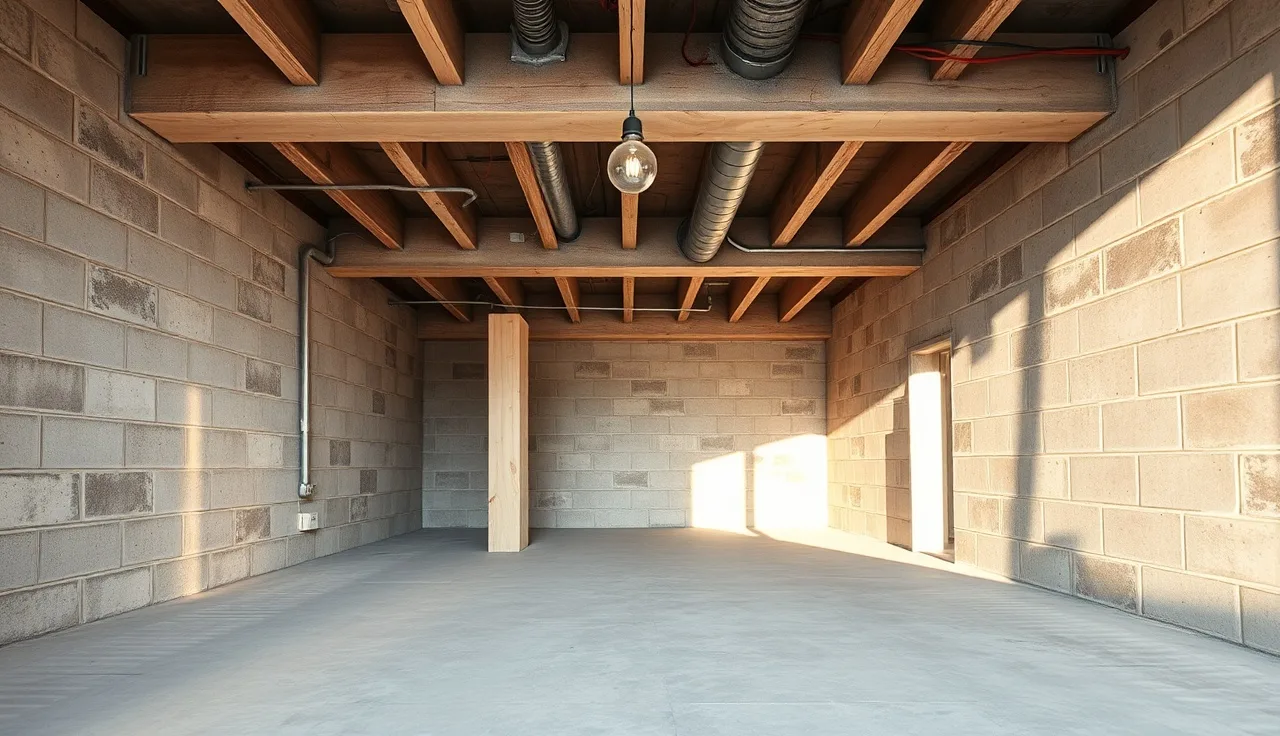
Bare concrete floors, exposed block or concrete walls, open plumbing and mechanicals, an unfinished ceiling: any of those and your basement almost certainly fails the standard your assessor is supposed to apply. [3] Pull your county's own definition from the assessor's website or the state appraisal guidelines before you do anything else.
How do you find out what the assessor thinks your basement is?
Start with your property record card. Every county keeps one for each parcel, and most now post them online through the assessor's website. Search your address and find the section labeled "building sketch," "improvement details," or "structure data." You're hunting for line items like these:
- BAS (base area, above grade)
- BFN or BAS-1 (basement, finished)
- BUN or BUF (basement, unfinished)
- FBM or FBsmt (finished basement)
The codes change with the software vendor. Tyler Technologies, Patriot Properties, and Vision Government Solutions are the three biggest, and each writes its sketches a little differently. [11] Can't decode the sketch? Call the assessor's office and ask a clerk to walk you through the basement entry. Most will do it in five minutes without a fuss.
While the card is open, note the year built, total square footage, and any permit or remodel dates. You'll need those when you build your evidence file.
Big metro counties often break the sketch out by floor already. Cook County in Illinois and LA County both run parcel viewers with building sketches you can read without calling anyone.
What evidence do you need to prove the basement is not finished?
Make it undeniable. "Trust me, it's unfinished" loses. A tight photo set and a measurement sketch win.
Here's what to gather.
Photos. Shoot 12 to 20 of them. Every wall (show exposed block or framing), the ceiling (show exposed joists, pipes, and ductwork), the floor (bare concrete or unfinished subfloor), the mechanical area, and every raw corner. Use your phone. The EXIF metadata stamps the date automatically, which settles any question about when you took them.
Measurements. Measure the total basement square footage and note which parts, if any, are genuinely finished. A single finished bathroom or one finished room inside an otherwise raw basement is common. Draw a simple floor plan by hand or use a free tool like Floorplanner. Label each area.
Permit history. Ask the local building or planning department for the permit history on your address. No finish permit ever pulled and closed? That's strong. A rough-in permit opened but never finaled? Stronger still.
Comparable data. Find two or three similar homes nearby where the assessor correctly marked the basement unfinished, and show that yours is assessed higher per square foot because of the error. That turns a definitional dispute into an inequity, which boards take seriously. The Lincoln Institute of Land Policy has found equity arguments among the most persuasive to local boards. [2]
For anyone doing this without an appraiser, the DIY route works well here, because this appeal fixes a fact rather than debating a valuation opinion. TaxFightBack's appeal kit walks through how to organize the evidence in your county's required format.
If your basement is partly finished, document every room on its own. Most boards can adjust square footage room by room, crediting you for the raw sections while keeping the finished ones on the record at the correct rate.
What is the appeal process for correcting a basement classification error?
The names change by state, but the sequence holds everywhere.
Step 1: File an informal correction request first. Before any formal appeal, call or email the assessor's office and lay out the discrepancy. Bring your photos and measurements. Many offices run an administrative correction process that fixes data errors without a hearing. It's faster, it's free, and it doesn't burn your formal appeal rights. Some counties call it a "review request" or "clerical error correction." Ask directly whether the misclassification counts as a clerical or data error, because those move faster than valuation disputes. [1]
Step 2: File a formal appeal if the informal route fails. If the office won't correct the record on its own, file with your jurisdiction's appeal body. Depending on where you live, that's a county Board of Equalization, Board of Assessment Review, Assessment Appeals Board, or something similar. [4]
Step 3: Know your deadline. This is where most homeowners lose. Windows run from 30 days after your assessment notice to 90 days, and some states tie the deadline to a fixed calendar date no matter when your notice arrived. Miss it by a day and you usually wait a full year. [6]
Here's how common state windows compare:
| State | Appeal deadline | Filed with |
|---|---|---|
| Illinois | 30 days from assessment notice | County Board of Review [4] |
| California | Sept. 15 (most counties) | Assessment Appeals Board [7] |
| Texas | May 15 or 30 days from notice | Appraisal Review Board [8] |
| New York | Varies by municipality | Board of Assessment Review [9] |
| Georgia | 45 days from assessment notice | County Board of Equalization [1] |
| Florida | 25 days from TRIM notice | Value Adjustment Board [6] |
Step 4: Show up and present the facts. Most informal hearings and many formal ones run 10 to 20 minutes. Lead with the property record card showing what the assessor claims. Then show your photos and sketch showing the real condition. Ask the board to correct the classification and recalculate the value. Keep it factual. "Here is what the record says, here is the physical reality" is the whole argument.
In Gwinnett County, Georgia or Bexar County, Texas, the portals and form names differ from the general steps above, so check those county-specific resources.
Can you get a refund for prior years if you win?
Maybe, but don't bank on it. Most states refund only the current tax year under appeal, not prior years. A few let you reach back two or three years if you can show the error sat in those records too.
Illinois statute, for one, limits refunds to the levy year appealed. [4] California's Revenue and Taxation Code Section 5097 allows refund claims up to four years back in some cases, but each year needs its own timely appeal. [7]
The smart play: file for the current assessment year right away, and at the same time ask the assessor's office whether they'll administratively correct the prior year records. Some offices will do a two- or three-year fix as a clerical correction without separate formal appeals, especially when the error is obvious and well-documented.
Texas owners can appeal to the Appraisal Review Board and, if still unhappy, to district court under Texas Tax Code Section 42. [8] Almost nobody takes a basement square footage fight to district court, but the door is open.
What if part of the basement is finished and part isn't?
This is the most common real situation. Somebody finishes one room for an office or drops in a bathroom, and the rest stays raw. The assessor sometimes codes the entire basement finished off the permit for that one project.
Your appeal asks for a partial correction. Measure and photograph each distinct area. On your floor plan, label the finished room (with its square footage) apart from the raw remainder. Then ask the assessor to reclassify the finished portion at the finished-basement rate and the rest at the unfinished rate.
Most mass appraisal systems handle this split without trouble. The adjusted value reflects the real mix, and your reduction tracks how much space was misclassified.
Montgomery County, Maryland publishes guidance on how its CAMA system handles partial-finish basements. It's a good model to read even if you live somewhere else.
What happens if the appeal board sides with the assessor?
You still have moves. The next level is usually a state tax court or state appeals board, depending on your state. Most require a petition within 30 to 90 days of the local board's decision.
For a basement dispute, this is where hiring a licensed residential appraiser starts to pay off. A written opinion of the basement's condition and its correct classification under state appraisal guidelines runs $400 to $700 in most markets, and it carries far more weight at the state level than photos alone. [3]
The other move is to document the error for next year and refile. If the basement hasn't changed, the misclassification shows up again, and a second appeal with tighter documentation often wins where the first stalled.
In big-metro cases like Los Angeles County or Hennepin County, the state-level bodies have structured processes built for exactly these factual disputes.
How long does the whole process take?
An informal correction can wrap in two to four weeks if the assessor agrees the data is wrong. A formal appeal hearing usually takes two to six months from filing to decision, depending on the county's backlog and hearing calendar. [6]
State-level appeals, if you go that far, drag longer. Twelve to 18 months is realistic. Weigh that against the dollar amount before you commit.
Most basement misclassification cases end at the informal route or the first formal appeal. These are factual disputes, not valuation fights, and boards would rather correct the record than argue about square footage.
Should you hire a property tax consultant or do it yourself?
For a basement classification error, do it yourself. That's the right call most of the time. Contingency consultants (typically 25 to 40 percent of first-year savings) earn their cut on complex valuation fights: pulling and presenting comparable sales, negotiating with an assessor, arguing cap rates on commercial property. [2]
A basement correction is closer to fixing a typo than debating value. You have photos. You have measurements. You have the property record card. The form asks you to describe the error and attach evidence. That's the job.
Shaky on the paperwork or the local process? A DIY appeal kit, like TaxFightBack's, costs a fraction of a contingency fee and shows you what to attach and how to frame the factual argument.
The one time professional help makes sense: the basement error is part of a wider over-assessment and you also want a value reduction from comps. Rolling both into one appeal with professional support can pencil out then.
Frequently asked questions
How do I find out if my basement is listed as finished on my property record card?
Go to your county assessor's website and search your property. Find the building sketch or improvement details section. You'll see basement codes like BFN (basement finished) or BUN (basement unfinished). Can't decode the abbreviations? Call the assessor's office and ask a clerk to explain the basement entry. Most will help in five minutes.
What photos do I need to prove my basement is unfinished?
Take 12 to 20 photos covering every wall, the ceiling, and the floor. Show exposed concrete block or bare framing on walls, exposed joists and ductwork overhead, and bare concrete or unfinished subfloor underfoot. Date-stamp everything. Smartphone EXIF data records the date automatically, which helps if the assessor questions when you took the pictures.
Will I get a refund for prior years of overpayment if I win my appeal?
Usually not. Most states limit refunds to the specific tax year under appeal. California allows refund claims up to four years back under Revenue and Taxation Code Section 5097, but only if a timely appeal was filed for each year. Illinois limits refunds to the levy year appealed. Always ask the assessor's office whether a multi-year administrative correction is available for clear data errors.
What is the deadline to appeal a basement misclassification?
It varies by state. Texas requires filing by May 15 or within 30 days of the notice, whichever is later. Florida gives 25 days from the TRIM notice. Georgia allows 45 days from the assessment notice. California's deadline is generally September 15. Miss the deadline and you wait a full assessment cycle, so check your state's window the moment you spot the error.
How much money can I save if I correct a basement classification error?
It depends on your county's per-square-foot rate for finished basement space and your local tax rate. A common case: 800 square feet misclassified at $70 per square foot of finished-basement value, at a 1.5% tax rate, costs about $840 a year. Smaller basements or lower rates save less, but even a 400-square-foot error can save $250 to $400 annually.
Can I appeal if only part of my basement is unfinished?
Yes. Measure and photograph each distinct area separately. Draw a simple floor plan labeling the finished section (with its square footage) and the unfinished remainder. Your appeal asks for a partial reclassification: the finished portion stays at the finished-basement rate, and the unfinished portion drops to the unfinished rate. Most assessment systems handle this split.
What if the assessor says a permit was pulled for a finished basement?
Ask the building department for the permit history. Check whether the permit was finaled with a passed inspection or left open. A permit pulled but never finaled means the work was never certified complete. If the work was never finished or was done non-conformingly, that permit doesn't prove the space qualifies as finished under the assessor's own definition. Bring the permit record and your photos together.
Do I need a professional appraisal to appeal a basement square footage error?
Usually not for the first-level appeal. Photos, measurements, and a hand-drawn floor plan are enough for a factual correction. A licensed residential appraisal, which runs $400 to $700, becomes worth considering if the assessor denies the correction and you're heading to a state board or tax court, where a written professional opinion carries much more weight.
What is the difference between a clerical error correction and a formal appeal?
A clerical or data error correction is an administrative fix the assessor's office makes internally, often without a hearing. It's faster and doesn't consume your formal appeal rights. A formal appeal goes to a separate board (Board of Equalization, Assessment Appeals Board, and so on) with a scheduled hearing. Try the informal correction route first for a basement error, since it's clearly a data issue.
Does an unfinished basement add any value to my assessment?
Yes, but far less than finished space. Unfinished basement area contributes a small amount, reflecting its use for storage and mechanical systems. The per-square-foot rate for unfinished basement is commonly 10 to 25 percent of the rate for above-grade finished space in most cost-approach models. The correction lowers your value but doesn't erase the basement's contribution entirely.
What if the assessor refuses to correct the error and the appeals board sides with the assessor?
You can escalate to the next level: a state tax court or state appeals board, depending on your state. That step usually requires filing within 30 to 90 days of the local board's decision. Consider hiring a licensed appraiser to write a report for state-level proceedings. You can also refile the following year with stronger documentation, since the physical condition hasn't changed.
How do I find the definition of 'finished basement' that my assessor uses?
Check your county assessor's website for a property assessment manual or appraisal guidelines document. If none is posted, call and ask for the county's CAMA manual or the state's residential appraisal guidelines. Your state's Department of Revenue or Division of Property Taxation often publishes the statewide standards county assessors must follow.
Can a basement count as finished for assessment even if it doesn't have a bathroom?
Yes. Most assessor definitions of finished basement don't require a bathroom. The typical requirements are finished walls, a finished ceiling, permanent flooring, electrical outlets, and heat. A basement can meet those and be classified finished without plumbing. The reverse is also true: a bathroom in an otherwise raw basement doesn't make the whole basement finished. Only the bathroom area itself would qualify.
Sources
- International Association of Assessing Officers (IAAO), Standard on Mass Appraisal of Real Property: Mass appraisal systems use property record cards and field inspection data; errors in characteristic data are a known source of assessment inaccuracy.
- Lincoln Institute of Land Policy, 'Rethinking the Property Tax': Errors in property characteristic data are among the most common sources of over-assessment at the local level; equity arguments are persuasive to appeals boards.
- Appraisal Institute, 'The Appraisal of Real Estate, 15th Edition': Finished basement square footage is typically valued at a lower rate than above-grade finished space in cost-approach models; residential appraisals cost $400-$700 in most markets.
- Illinois Department of Revenue, Property Tax Appeal information: Illinois limits property tax refunds to the specific levy year under appeal; appeals are filed with the county Board of Review within 30 days of the assessment notice.
- ANSI Z765-2021, Square Footage Method for Calculating: A Standard for Single-Family Residential Buildings (American National Standards Institute): ANSI Z765 states that below-grade space cannot be counted in gross living area (GLA) regardless of finish level.
- Florida Department of Revenue, Property Tax Oversight: Taxpayer Rights: Florida gives property owners 25 days from the TRIM notice to file a petition with the Value Adjustment Board; formal appeals commonly take several months.
- California State Board of Equalization, Assessment Appeals Manual: California's assessment appeal deadline is generally September 15; Revenue and Taxation Code Section 5097 allows refund claims up to four years in certain circumstances.
- Texas Comptroller of Public Accounts, Property Tax Code Section 41 and 42 (Appraisal Review Board and Judicial Appeals): Texas property owners must file ARB protests by May 15 or within 30 days of notice; judicial appeal under Tax Code Section 42 is available if dissatisfied with ARB.
- New York State Department of Taxation and Finance, Contesting Your Assessment: New York appeal deadlines vary by municipality and are tied to each locality's Grievance Day filing period.
- Tyler Technologies, CAMA Product Documentation (public overview): Tyler Technologies, Patriot Properties, and Vision Government Solutions are the three largest CAMA software vendors used by county assessors; building sketch abbreviations vary by vendor.