Last updated 2026-07-11
TL;DR
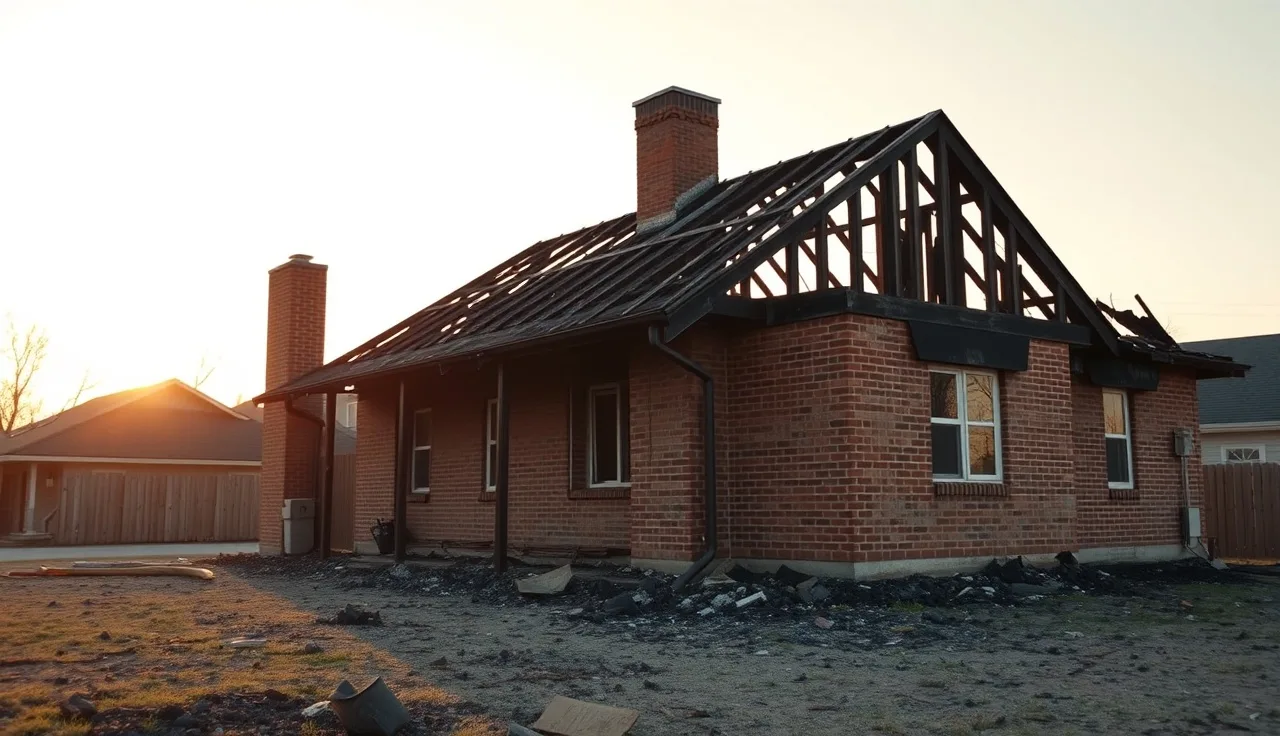
If your home or building suffers major damage from fire, flood, earthquake, or another disaster, most states let you apply for a temporary cut in assessed value, called a calamity reassessment. Filing deadlines run from 30 days to 2 years after the event. A successful application reduces your tax bill in proportion to the damage, and it is separate from your normal annual appeal.
What is a calamity reassessment and who qualifies?
A calamity reassessment is a mid-year correction to your property's assessed value, triggered by sudden physical damage you did not cause. It is not your regular annual appeal. You do not wait for the next assessment cycle. The assessor re-values the property in its damaged state and issues a corrected tax bill, usually prorated for the part of the year the property sat wrecked.
Most state statutes that authorize these reassessments require three things. The damage has to be sudden (not gradual decay), it has to come from a recognized calamity event, and the loss usually has to clear a minimum dollar or percentage threshold. California is the most codified example. It defines qualifying events under Revenue and Taxation Code Section 170 as "misfortune or calamity" and requires damage of at least $10,000 in full cash value [1]. Texas uses the term "disaster reappraisal" under Tax Code Section 23.02 and lets assessors reappraise after a governor-declared disaster [2]. Louisiana, Florida, and Oregon have parallel provisions, though the threshold amounts and triggering events change from state to state.
Common qualifying events across most states: wildfire, hurricane, tornado, earthquake, flood, explosion, and mudslide. Some states add vandalism and civil unrest. A normal house fire qualifies in virtually every jurisdiction that has a calamity statute. Slow water damage from a leaking pipe usually does not, because it is not sudden.
Owner-occupied homes qualify in all states with calamity statutes. So do residential rentals, commercial buildings, and bare land that suffers erosion or contamination from a qualifying event. Mobile homes on permanent foundations typically qualify too, though the application route sometimes differs.
How does a calamity reassessment differ from a regular property tax appeal?
One line captures the difference. A regular appeal says "the assessor got my value wrong." A calamity reassessment says "the assessor got my value right, then my property was destroyed."
In a regular appeal you dispute the assessor's methodology, comparable sales, or classification. The burden is on you to show the assessment topped market value on the lien date. In a calamity reassessment you do not dispute the original value at all. You report a change in the physical condition of the property and ask for a value that matches its current, damaged state.
That distinction changes your evidence. Appeals need comparable sales and market analysis. Calamity applications need damage documentation: photos dated to the event, contractor estimates, insurance adjuster reports, and ideally a written statement from a licensed contractor or structural engineer describing what is damaged and what repair or replacement would cost. The assessor sends an appraiser to inspect. Your job is to make sure they can see everything.
The reduction is usually prorated. Say your home was damaged on March 1 and your tax year runs January through December. You might get the reduced value applied only from March 1 forward, with the original value covering January and February. California's prorated method sits in Revenue and Taxation Code Section 170(d) and has been in place since 1979 [1]. The exact formula varies by state, so read your county assessor's instructions.
One more difference. Calamity applications are often free to file. Regular appeals sometimes carry filing fees of $30 to $75 or more depending on the jurisdiction. Ask your county assessor before you assume there is no fee.
What are the filing deadlines for a calamity reassessment application?
Deadlines are where most homeowners get tripped up. They swing hard by state and sometimes by county within a state. The table below shows deadlines for the jurisdictions people ask about most. If your state is not listed, your county assessor's website is the authoritative source.
| State | Deadline to file after damage | Key statute or authority |
|---|---|---|
| California | Within 12 months of the damage event | Revenue and Taxation Code § 170 [1] |
| Texas | Varies; assessor may initiate after governor disaster declaration, or owner files within the deadline set by appraisal district | Tax Code § 23.02 [2] |
| Florida | Within 2 years of the damage event | Florida Statutes § 197.319 [3] |
| Louisiana | Within 90 days of damage | Louisiana R.S. 47:1978 [4] |
| Oregon | Within 60 days of damage or within 60 days of the date you knew the damage occurred | ORS 308.425 [5] |
| New York | Within 30 days of the damage event in most counties | RPTL § 553 [6] |
| Illinois | County-dependent; Cook County uses a separate incentive, not a calamity statute | 35 ILCS 200/14-20 [7] |
| Georgia | Within 45 days of damage notice; varies by county | OCGA § 48-5-299 [8] |
A few things jump out. California gives you a full year, which is generous and helps with a major disaster like the LA wildfires, where insurance claims and contractor assessments drag on for months. New York's 30-day window is brutal, especially after a hurricane. If you live in New York and your property was just damaged, stop reading this and go get the form.
For federally declared disasters, a FEMA declaration can sometimes extend state deadlines or trigger automatic reassessment in states like Texas and Louisiana. Do not count on the extension arriving before the normal deadline. File on time, then check whether the extension applies.
Miss the deadline and your options are not zero, just worse. You can wait for the next assessment cycle and file a regular appeal arguing the damaged value is your current market value. That takes comparable sales of similarly damaged properties, which is harder evidence to pull together. The calamity route is almost always faster and cleaner.
How do you file a calamity reassessment application step by step?
Step one is finding the right form. Most county assessors post it under names like "Claim for Reassessment Reduction for Disaster Damage," "Calamity Reassessment Application," or "Misfortune and Calamity Claim." California's standard form is the BOE-265, published by the California State Board of Equalization [1]. Texas appraisal districts use district-specific forms. Search your county assessor's name plus "calamity" or "disaster damage" and you will usually find it within two clicks.
Step two: fill in the basics. You need the property's assessor parcel number (APN), which shows up on your tax bill or on your county assessor's website. You need the date of the damage and a description of the cause. You also need the full cash value before the damage, which the assessor already has on file, and your estimate of the loss in dollars.
Step three is your evidence package. This is where the application gets won or lost. Assemble:
- Dated photographs of all damaged areas, taken as soon after the event as it is safe to do so
- Insurance adjuster report, including the adjuster's estimate of the replacement cost of damaged components
- Licensed contractor repair estimate (written, on letterhead, with a license number)
- Any fire department, building department, or FEMA inspection report
- Structural engineer or home inspector report if the damage is structural
- A copy of your insurance claim submission, if you have one
Step four: submit by the deadline. Most counties accept mail, in-person, or online submission. For mail, use certified mail with return receipt so you have proof of the postmark date. The postmark date is almost always what counts, not the date the assessor receives it.
Step five: the assessor's appraiser schedules a physical inspection. Be there if you can, or send someone who can walk them through every area of damage. Point out what they cannot see, like damaged subflooring under floors that have been pulled up, or electrical damage behind walls. The appraiser's report drives the new value. If you think their number is still too high, you can appeal that determination through the normal appeals process in most states.
In California, if your property sits in a state- or federally declared disaster area, the county assessor has to notify you of your right to reassessment. "Notified" does not mean the work is done for you. You still have to file.
What evidence do you need to support a calamity reassessment claim?
The appraiser has to reconstruct the condition of your property at the moment of damage, assign a value to that condition, and calculate the reduction. Give them the evidence that makes that easy.
Photographs are the single most useful document you can provide. Date-stamped shots from your phone, drone footage if you have it, and screenshots of aerial imagery from tools like Google Earth Pro that captured the post-damage state all help. If the fire department or any government agency photographed the property, request copies through a public records request.
Contractor estimates carry weight because they turn damage into dollars. Get at least two written estimates from licensed contractors. The estimate should itemize by category: roof, foundation, framing, electrical, plumbing, interior finishes, and so on. An appraiser can cross-check those line items against cost databases like Marshall and Swift, the same source appraisers use for cost-approach valuation.
Insurance adjuster reports are strong because they come from a licensed professional whose job is to estimate damage for money. If your insurer sends a third-party adjuster, ask for a copy of the full report, more than the claim settlement letter.
For structural damage, a written report from a licensed structural engineer or a licensed building inspector saying the structure is unsafe or badly compromised will almost always produce a bigger reduction than a contractor estimate alone.
Do not wait for the insurance claim to settle before you file. The deadline clock runs from the damage date, not the settlement date. File with whatever preliminary documentation you have, note in the application that more is coming, and supplement the file as reports arrive. Most assessors accept supplemental submissions up to the time of the inspection.
How much will your property tax bill actually go down?
The reduction tracks the loss in market value, prorated to the share of the tax year the property sits in damaged condition. No single formula applies everywhere, so treat the numbers below as an illustration of the math.
Say your home was assessed at $800,000 in California, your annual property tax rate is 1.1% (the Prop 13 base rate plus local bonds), and your bill is $8,800. A wildfire destroys the structure completely on September 1, leaving only the land, which the assessor values at $150,000. The structure was gone for four months of the year (September through December, roughly one-third of the year).
The assessor reduces the assessment from $800,000 to $150,000 for four months. The four-month tax at $150,000 is about $550. The eight-month tax at the original $800,000 is about $5,867. Total for the year: roughly $6,417 instead of $8,800. That is a saving of about $2,383, just from the reassessment.
The next tax year, if reconstruction is not done, the property stays at $150,000 for the full year and you pay roughly $1,650 instead of $8,800. That is where the real money adds up for properties with major damage.
Once reconstruction is complete, California's calamity statute lets the property go back to its original Prop 13 base-year value plus any accumulated inflation adjustments, rather than a fresh reassessment at the new replacement cost [1]. Many California homeowners miss this. Your Prop 13 base does not reset just because you rebuilt after a disaster.
Other states handle rebuilding differently. Texas has no Prop 13-style acquisition-value system, so the rebuilt property gets assessed at market value in the next cycle. In New York, the rebuilt value is whatever the assessor determines is current market value.
What happens after you file: the assessment process and your rights
After you file, the assessor's office logs your application and hands it to an appraiser. Time from filing to determination swings widely. California assessors are supposed to act "without delay" under Revenue and Taxation Code Section 170, but in a mass-casualty event like the 2025 LA wildfires, with tens of thousands of applications, "without delay" stretched into many months for some owners [1].
The appraiser schedules an inspection. If the property is unsafe to enter, the inspection may run from the street or off aerial imagery. Afterward, the assessor issues a Notice of Determination showing the original value, the new damaged value, and the effective dates. Read this notice line by line. Check that the effective date matches the actual damage date, that the new value reflects the full extent of the damage, and that the proration math holds up.
Disagree with the determination? You can appeal it. In California, a calamity determination goes to the Assessment Appeals Board within 60 days of the notice [1]. Other states have similar boards. Appealing a calamity determination works more like a regular appeal. You need evidence that the assessor's estimate of the damaged-condition value is too high.
If you are running a calamity application and a disaster insurance claim at the same time, keep the two clearly separate in your records. The assessor does not care what your insurance company pays. They care about the market value of the damaged property. Sometimes insurance pays more than the assessor's damage estimate, sometimes less. The two numbers are calculated differently and will not match.
Got a large or complex property, want to stress-test your own damage estimate before the appraiser arrives, or want to make sure you don't miss an exemption that stacks with the calamity reduction (like a homeowner's exemption or a senior exemption)? Working through the documentation step by step pays off. The TaxFightBack Appeal Kit walks through this kind of evidence assembly with fillable worksheets, which some homeowners in high-value jurisdictions find useful for keeping the paper trail straight.
Are there state-specific calamity rules you need to know about?
California is the most detailed. The Revenue and Taxation Code Section 170 framework has been amended many times, most heavily after the 1991 Oakland Hills fire and again after the 2017-2018 wine country fires. The statute lists the property types that qualify, the minimum damage threshold ($10,000 in full cash value), and the restoration rule that keeps your Prop 13 base [1]. Los Angeles County, which processed tens of thousands of calamity applications after the 2025 fires, runs a dedicated disaster relief page through the LA County Assessor's Office [9]. If your property is in LA County, see our guide to Los Angeles County property tax for the local process.
Texas works differently because it reassesses at market value every year (no acquisition-value base). Under Tax Code Section 23.02, the chief appraiser of each district may reappraise damaged property after a governor-declared disaster "as soon as practicable" [2]. Owners in declared disaster counties do not always have to file. The district may start the reappraisal on its own. Check with your appraisal district directly, because "may" does not mean "will." Bexar County (San Antonio) homeowners can find specifics through the Bexar County Tax Assessor office.
Florida's statute at § 197.319 is shorter and less prescriptive than California's. The county property appraiser reassesses after a casualty loss, and the reduced assessment runs through the end of the tax year in which the damage happened [3]. Florida also has a generous rebuilding provision. Rebuild to a substantially similar structure within three years of a hurricane or other casualty and the homestead assessment cap (the Save Our Homes cap) survives.
New York's 30-day deadline under RPTL § 553 is the tightest in the country [6]. The law covers losses from "an act of God or other sudden, unexpected casualty." The application goes to the municipal assessor, not the state. Given how short the window is, New York owners should file a preliminary application right after the event and supplement with documentation later.
Georgia has no formal statewide calamity statute as specific as California's, but OCGA § 48-5-299 lets assessors correct assessments when property is destroyed or damaged [8]. The process is informal in many counties. Contact your county board of assessors directly. Gwinnett County homeowners can start at the Gwinnett County Tax Assessor page.
Illinois is the outlier. No general statewide calamity reassessment statute exists for residential property. Cook County has programs for certain commercial properties and enterprise-zone parcels, but residential owners who suffer damage typically file a regular appeal arguing the assessed value no longer matches market value in the damaged condition [7]. The Cook County Tax Assessor tax bill page has the current appeal procedures.
What happens to your assessment when you rebuild?
Rebuilding triggers a new assessment event in most states. The rules around what value gets assigned change a lot from state to state.
California's rebuilding provision is one of the most owner-friendly rules in American property tax law. Under Revenue and Taxation Code Section 170(b), "when property that has been reassessed due to damage or destruction is subsequently repaired or reconstructed, the base year value of the property prior to the damage or destruction shall be enrolled," as long as the rebuild is comparable in size and function [1]. In plain terms: rebuild the same house, get your old Prop 13 base back. No new, higher assessment at today's construction costs. That is a big deal for long-term California homeowners sitting on low Prop 13 bases.
The "comparable" requirement matters. Expand the square footage or add a room that was not there before, and the added value from the new construction gets tacked onto your old base. Only the portion rebuilt to the same specification returns to the original base.
Texas has no acquisition-value system. The rebuilt structure gets assessed at market value in the next appraisal year. The Texas Tax Code does allow a temporary partial exemption for property damaged in a presidentially declared disaster area, under Tax Code Section 11.35 [2]. That exemption phases out over several years and depends on the percentage of damage the chief appraiser determines.
Florida's Save Our Homes cap preservation rule gives homesteaded property parallel protection. Rebuild within the statutory window and the assessment cap reattaches to the rebuilt property.
In nearly every state, once rebuilding wraps up, verify what value the completed structure got. Assessors sometimes estimate replacement cost too high, especially with automated valuation models that ignore owner decisions like skipping the garage rebuild or using cheaper finishes on the second floor. That is a standard appeal at that point. Gather your building permits, final contractor invoices, and comparable sales to challenge an inflated rebuilt-property value.
Can you stack a calamity reassessment with other exemptions or reductions?
Yes, in most states. A calamity reassessment lowers the assessed value of the damaged property. Exemptions like the homeowner's exemption, homestead exemption, senior citizen exemption, or disabled veteran exemption typically apply to the reassessed (lower) value, not the original. That means the exemptions are worth a little less in raw dollars after reassessment, but they still apply.
California is where it gets interesting. Some counties issued extra disaster-related exemptions after the 2017 North Bay fires and the 2018 Camp Fire. Those were temporary legislative responses, not permanent statutes. After the 2025 LA fires, the California legislature moved quickly on more relief measures. Check the California State Board of Equalization's disaster relief page for current program status [1].
For senior homeowners, some states offer a disaster-related property tax deferral. You defer the taxes on the damaged property until you sell or until the estate settles. California offers this under Revenue and Taxation Code Section 20645 for seniors 62 and older [11]. Oregon has a similar senior deferral program.
If your property is in a federally declared major disaster area, you may also qualify for a federal casualty loss deduction on your income tax return under IRC Section 165(h). As of 2025, the casualty loss deduction for personal-use property is limited to federally declared disaster areas, and only losses over 10% of adjusted gross income (after a $100 floor) are deductible. The IRS publishes current guidance in Publication 547 at IRS.gov [10]. The income tax deduction and the property tax reassessment are separate benefits, and both can apply to the same event.
For commercial owners, the depreciation side of a casualty loss and the property tax reassessment interact in ways worth running past a CPA. The reassessment cuts your property tax expense (which is deductible), but a large insurance recovery may trigger a gain you need to manage through a Section 1031 exchange or a Section 1033 involuntary conversion election. That is a separate conversation from the reassessment application, but good to know if you own income-producing property.
What are the most common mistakes that get calamity applications denied?
Missing the deadline is the single most common problem, and relief after the fact is rare. Courts in California have consistently held that the deadline in Revenue and Taxation Code Section 170 is a statute of limitations and cannot be waived by the assessor or the Assessment Appeals Board. File early, even with incomplete documentation.
The second mistake is not documenting the damage before starting cleanup or repairs. Once you tear out the damaged drywall or pull the burned flooring, the visible evidence is gone. Take photos and video of everything before any cleanup begins. If emergency repairs are needed for safety, photograph before and after each repair.
Third: underestimating the total loss. Some applicants count only materials and miss labor, debris removal, hazardous material abatement (especially in older homes where a fire disturbs asbestos or lead paint), and temporary housing during repairs. A good contractor estimate covers all of it, and a complete estimate gives the appraiser a full picture.
Fourth: filing the application but ducking the inspection. If the appraiser cannot get access, the application may be denied or cut to the bone. Schedule the inspection, be available, and put someone with knowledge of the damage on site.
Fifth: assuming the damage has to be total. A partial loss, even affecting one room or one system (roof, foundation, electrical), can qualify in most states as long as it clears the minimum threshold. Do not screen yourself out of a valid claim because the damage is not catastrophic.
Where do you find the forms and official resources for your county?
The fastest path: go straight to your county assessor's official website and search "calamity," "disaster damage," or "misfortune." Every California county uses the BOE-265 form published by the California State Board of Equalization, available at boe.ca.gov [1]. Many Texas appraisal districts post their forms on the Texas Comptroller of Public Accounts website under property tax forms [2].
For Florida, the county property appraiser (not the assessor; Florida uses a different title) handles these applications. The Florida Department of Revenue publishes guidance on disaster-related property tax relief at floridarevenue.com [3].
For homeowners in major urban counties, county-specific guides earn their keep because the local process often adds steps beyond the state statute. Los Angeles County property tax procedures, Santa Clara property tax procedures, and Montgomery County property tax procedures all have county-specific forms and timelines worth reviewing before you file.
Want a single checklist to track your application, document submissions, inspection dates, and determination deadlines in one place? The TaxFightBack Appeal Kit includes a calamity application tracker built for this. That said, everything you need to file successfully is available from your county assessor's office at no cost. The kit helps if you want the documentation organized before the appraiser shows up, but it is not a prerequisite.
Whatever you use, keep copies of every document you submit, every certified-mail receipt, every email confirmation, and every message from the assessor's office. If the application ever gets challenged, or if you need to appeal the determination, your paper trail is your evidence.
Frequently asked questions
How long does a calamity reassessment take to process?
Processing time runs from a few weeks to several months depending on the assessor's workload. After a mass casualty event like a major wildfire, California assessors have taken six to twelve months to work through thousands of applications. After an isolated single-property event, many counties resolve the application within 60 to 90 days. Filing early and submitting complete documentation usually speeds things up.
Do I have to file a calamity application myself or will the assessor do it automatically?
In most states you file it yourself. California's Revenue and Taxation Code Section 170 requires a property owner to submit a written application. Texas is a partial exception: after a governor-declared disaster, the chief appraiser may start a reappraisal without an owner application, but owners in declared counties should still confirm with their appraisal district that the reappraisal is actually happening for their specific parcel.
What if my property is condemned after the damage? Can I still get a tax reduction?
Yes. A condemned structure with no habitable value is often reduced to land value only for assessment purposes. File the calamity application and attach the condemnation notice or red-tag from the building department. The condemnation order is strong evidence that the structure has lost its value entirely. In California, the land stays assessed under the Prop 13 base and the structure value drops to zero.
Can I get a refund if I already paid my taxes before the damage happened?
Yes, in most states. The calamity reassessment applies retroactively to the date of damage, and the resulting reduction is prorated. If you already paid a full-year tax bill, the assessor typically issues a refund check or credit for the overpaid portion. In California, the refund comes from the county tax collector after the assessor adjusts the roll.
Does my insurance settlement affect the calamity reassessment calculation?
No. The assessor does not look at your insurance settlement when setting the reassessed value. The reassessment is based on the market value of your property in its damaged condition, which is an independent calculation. Whether you are over-insured, under-insured, or uninsured has no bearing on the assessment reduction you are entitled to.
Can I file a calamity application for rental property or a commercial building?
Yes. Calamity statutes in most states cover income-producing and commercial property, not only owner-occupied homes. The same application process applies. For commercial property, your evidence package can also include documentation of lost rental income or business interruption if you want to argue the income approach to value is depressed, though that argument is separate from the physical damage focus of the calamity application.
What is the minimum damage threshold for a calamity reassessment in California?
California's Revenue and Taxation Code Section 170 requires that the damage or destruction cause a loss in full cash value of at least $10,000. There is no separate percentage-of-value threshold in the statute. Nearly any significant structural damage from a qualifying event clears $10,000 at current construction costs.
My property was damaged in a flood not covered by FEMA. Do I still qualify?
Possibly. Qualification is based on state statute, not on federal disaster declarations. California's statute covers damage from "misfortune or calamity" broadly, which includes flooding regardless of FEMA involvement. Texas and Florida do require a governor or presidential declaration in some circumstances. Check your state's specific statute. A non-declared flood may still qualify in many states if the physical damage meets the threshold.
Can I appeal if the assessor's calamity determination seems too low a reduction?
Yes. If you think the assessor underestimated the damaged-condition value or set the wrong effective date for the reduction, you can appeal the determination to your county's assessment appeals board. In California, you have 60 days from the notice of determination to file. Bring your contractor estimates, insurance adjuster report, and any other evidence showing the damage was more extensive than the assessor credited.
Does a calamity reassessment reset my Prop 13 base year value in California?
No. The reassessment during the damage period does not reset the base year value. Under Revenue and Taxation Code Section 170(b), when you rebuild to a comparable structure, the original Prop 13 base year value is restored. You keep the low base you earned when you bought the property. Only the portion of new construction that goes beyond the comparable-replacement standard gets added to the base.
What forms do I need to file a calamity reassessment in California?
The primary form is the BOE-265, titled "Claim for Reassessment Reduction for Disaster Damage," published by the California State Board of Equalization and available at boe.ca.gov. Your county assessor may also have a county-specific supplemental form. File the BOE-265 with your county assessor, not with the Board of Equalization directly, within 12 months of the damage event.
How do I calculate the estimated loss in value to put on the application?
Start with your licensed contractor repair estimate. The total cost to restore the property to its pre-damage condition is a reasonable proxy for the drop in market value, especially for partial losses. For a total loss, the reduction is your pre-damage assessed value minus the land value. The assessor calculates the official reduction. Your estimate just needs to be a good-faith number backed by the documentation you attach.
Is there a deadline to rebuild before losing the calamity tax benefit?
In California, there is no statutory deadline to rebuild to keep the annual calamity reassessment reduction. The property stays at the damaged-condition value as long as it stays damaged. But the restoration of the Prop 13 base year value after rebuilding applies only to reconstructed property comparable to what was destroyed. Other states vary; Florida's Save Our Homes cap preservation requires rebuilding within three years after a hurricane.
Sources
- California State Board of Equalization, Revenue and Taxation Code Section 170 and BOE-265 Disaster Damage Relief: California requires damage of at least $10,000 in full cash value to qualify; the 12-month filing deadline; the restoration of Prop 13 base year value upon comparable rebuilding; and the BOE-265 form.
- Texas Comptroller of Public Accounts, Property Tax Code Section 23.02 and Section 11.35: Texas Tax Code Section 23.02 allows appraisal districts to reappraise property after a governor-declared disaster; Section 11.35 provides a temporary partial exemption for property damaged in a presidentially declared disaster area.
- Florida Department of Revenue, Property Tax Disaster Relief, Florida Statutes Section 197.319: Florida allows filing within two years of the damage event and applies the reduced assessment through the end of the tax year in which damage occurred.
- Louisiana Legislature, Revised Statutes 47:1978, Property Assessment After Damage: Louisiana requires calamity reassessment applications to be filed within 90 days of the damage event.
- Oregon Legislative Assembly, ORS 308.425, Reduction of Assessed Value After Damage: Oregon requires filing within 60 days of the damage date or within 60 days of when the owner knew the damage occurred.
- New York State Legislature, Real Property Tax Law Section 553, Assessment Reduction for Casualty Loss: New York RPTL Section 553 requires filing within 30 days of the damage event in most counties.
- Illinois General Assembly, 35 ILCS 200/14-20, Property Tax Code: Illinois does not have a general statewide calamity reassessment statute for residential property comparable to California's; Cook County has programs limited to certain commercial properties.
- Georgia General Assembly, OCGA Section 48-5-299, Assessment Corrections for Destroyed Property: Georgia OCGA 48-5-299 allows county assessors to correct assessments when property is destroyed or significantly damaged; many counties set a 45-day filing window.
- Los Angeles County Assessor's Office, Disaster Relief and Property Tax Reduction: LA County Assessor processed large volumes of calamity applications following the 2025 wildfires and maintains a dedicated disaster relief application portal.
- Internal Revenue Service, Casualty, Disaster, and Theft Losses, Publication 547: Federal casualty loss deduction for personal-use property is limited to federally declared disaster areas; losses must exceed 10% of adjusted gross income after a $100 floor under IRC Section 165(h).
- California State Board of Equalization, Revenue and Taxation Code Section 20645, Senior Deferral Program: California offers a property tax deferral for seniors 62 and older on property reassessed following a disaster under Revenue and Taxation Code Section 20645.