Last updated 2026-07-11
TL;DR
At a property tax appeal hearing, you get to question the assessor (or their appraiser) after they present. Strong cross-examination targets three things: the comps they used, the property data on file, and the methodology they applied. You don't need a lawyer. You need the right questions, the right records, and the discipline to stop once you've made your point.
What actually happens at a property tax appeal hearing?
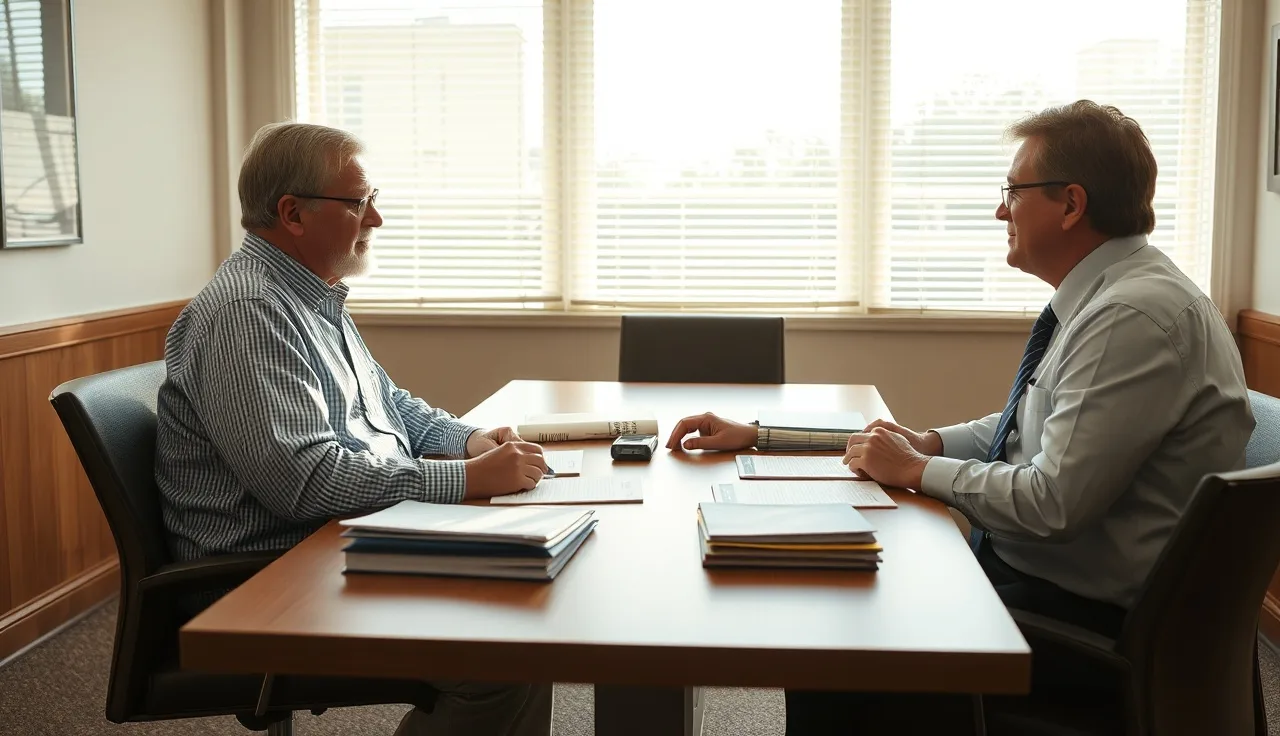
Most property tax appeal hearings are far less formal than people expect. You sit across a table from a board member or hearing officer. No podium. No courtroom. The assessor's office either sends a staff appraiser to defend the value or drops a written packet into the record. You go second, present your evidence, and you have the right to question their witness.
The sequence matters. The assessor's side usually opens, laying out their valuation evidence. You listen, take notes, and wait. Then you present your own case. After that, most boards allow a brief cross-examination of the assessor's appraiser before closing statements. Some jurisdictions flip it and let you cross right after the assessor speaks, before your own presentation. Ask the board's clerk to walk you through the order before things start.
Hearings at the informal or first-level board (often called a Board of Review, Equalization Board, or Appraisal Review Board depending on your state) usually run 15 to 30 minutes per parcel. Formal appeals to state tax courts or circuit courts run longer and have stricter evidence rules. This article is about the first- and second-level administrative hearings where most homeowners actually fight.
Do you have a legal right to cross-examine the assessor?
Yes, in nearly every state. Due process gives a party facing an adverse government decision the right to confront and question the evidence against them. Most state property tax appeal statutes write that right directly into the law.
Texas Property Tax Code Section 41.66(b) says the board must schedule hearings so that "each party is entitled to offer evidence, examine or cross-examine witnesses or other parties, and present argument." Illinois law under 35 ILCS 200/16-180 gives the Property Tax Appeal Board authority to take testimony, and cross-examination is part of that record. Similar language sits in New York Real Property Tax Law Section 706, California Revenue and Taxation Code Section 1606, and most other state appeal statutes.
If a board tries to cut you off mid-question without cause, say for the record: "I'd like to note my objection. The statute provides the right to cross-examination and I'm exercising that right." Don't argue. State it once, clearly, and move on. The record matters if you appeal further.
How do you prepare for cross-examination before the hearing?
Preparation wins or loses this. You need the assessor's evidence package before the hearing, not the morning it starts.
Most jurisdictions require the assessor to exchange evidence in advance. Texas ARBs require evidence exchange at least 14 days before the hearing under Tax Code Section 41.67(d). In Illinois, petitioners can request the assessor's evidence from the PTAB before the scheduled hearing date. Check your state's specific rules. If an exchange deadline exists and the assessor's office misses it, raise that at the start of the hearing and ask the board to exclude the late evidence.
Once you have their package, look for four things: the comparable sales (comps) they relied on, the property record card with your home's characteristics, the methodology they claim to have used, and the effective date of their valuation. Every question you ask at the hearing should tie back to a weakness you found in those four areas.
Gather your own comps from the MLS, county sales records, or a site like Zillow Research. Pull your property record card from the assessor's website or through a public records request. If the card shows wrong square footage, wrong bedroom count, or a garage that doesn't exist, that's a gift. Cross on the data error first, then present your corrected evidence.
Write out your questions word for word. Experienced lawyers do this. So should you. The hearing is not the place to improvise.
What are the most effective cross-examination questions to ask?
The goal of cross-examination is not a debate. It's short, useful admissions on the record. Ask closed questions. "The comp at 123 Elm sold in March 2022, correct?" Not "Tell me about the comps you used."
Here are the question categories that actually move numbers.
On the comparable sales
- "The closest comp you used, 123 Elm Street, is [X] square feet. My home is [Y] square feet. Did you make an adjustment for that difference?"
- "That comp sold [X] months before the assessment date. Did you apply a time adjustment?"
- "That property has a finished basement. Mine does not. What adjustment did you make?"
- "Can you tell me the price per square foot of each comp you used, before adjustments?"
On the property data
- "Your record card shows my home has [X] square feet of living area. Did you personally measure the property?"
- "The card lists [X] bathrooms. The actual count is [Y]. Are you relying on the card as-is?"
- "When was the last physical inspection of my property documented?"
On methodology
- "Is this a mass-appraisal value or an individual appraisal?"
- "What margin of error does your office consider acceptable for mass appraisal?"
- "The IAAO Standard on Ratio Studies calls a coefficient of dispersion below 15 percent acceptable for residential property. Do you know where my neighborhood falls?"
On the effective date
- "The assessment is supposed to reflect market value as of [date]. The comps you used are from [dates]. Are those the best available sales closest to that date?"
Keep answers short. If the witness starts to explain, you can say "Thank you, I think that answers the question" and move to the next one. You're not trying to embarrass anyone. You're building a factual record the board will use when they deliberate.
How do you challenge the comparable sales the assessor used?
Comps are the engine of most residential assessments, and they're the easiest target. A good comp is close geographically, sold near the assessment date, and similar in size, age, condition, and amenities. When the assessor's comps fail on any of those without a documented adjustment, you have a real objection.
The International Association of Assessing Officers recommends that residential sales used as comps fall within the same neighborhood or market area and within a reasonable time of the lien date. Ask the assessor's witness to define the neighborhood boundaries they used. If their comp is across a major road, in a different school district, or in a clearly different subdivision, say so out loud.
Time adjustments matter most in fast-moving markets. If a comp sold 18 months before the assessment date and prices moved meaningfully, an unadjusted sale is misleading. Ask directly: "Did you apply a time-trend adjustment, and if so, what was the monthly percentage?"
Bring your own comps to show the contrast. If their lowest comp sold at $250 per square foot and your three comps all sold at $210, that gap is your argument. You're not trying to win every point. You're creating reasonable doubt about the assessor's value and support for your own.
Large urban counties often value homes with automated models. If you're in Cook County or Los Angeles County, the assessor's witness may not know the specific comp weights the model applied. Ask anyway. "Can you identify which sales the model weighted most heavily for my property?" If they can't, that's worth noting for the board.
What if the assessor's property record card has errors?
This is one of the cleanest wins available. If the assessor valued your home on wrong data, the value is wrong by definition.
Common errors: inflated square footage, rooms that don't exist, condition ratings higher than reality, amenities listed that were removed (a pool filled in, a garage converted to living space). Pull your property record card before the hearing. Many counties post them online. In Montgomery County, Gwinnett County, and most other large counties, you can download the card from the assessor's portal.
Find an error and your question writes itself: "Your record card for my property shows [X]. I have photographs and measurements showing [Y]. Did your office verify this before the assessment?"
Then introduce your evidence during your own presentation. A tape measure and a camera beat almost anything else you can bring. Boards see them rarely. When a homeowner shows up with a labeled floor plan and dated photos that contradict the card, they take it seriously.
After the hearing, win or lose, ask the assessor's office to correct the card. A wrong card means you'll be over-assessed every cycle until someone fixes it.
How do you object to the assessor's evidence during the hearing?
Administrative hearings run looser than courts, but evidence objections still carry weight. Three of them pull the most:
Late submission. If the assessor hands you new comps the morning of the hearing that weren't in the prehearing exchange, object. "This evidence was not provided within the statutory exchange period. I ask the board to exclude it or grant a continuance so I can respond."
Hearsay and unsupported documents. If the assessor introduces a document and the witness can't authenticate it or explain its source, object: "I'd ask the board to require foundation for this exhibit. The witness hasn't established how this data was prepared or verified."
Speculation. If the appraiser guesses about your property's condition without having inspected it, note it: "The witness confirmed they did not personally inspect the property. I'd ask the board to weigh this testimony accordingly."
Don't over-object. Every objection needs a real basis and should matter to your case. A board member who watches you make frivolous objections will discount your credibility on the points that count.
If you're building a full DIY case, tools like the TaxFightBack appeal kit include hearing preparation checklists and sample objection language keyed to the major state procedures, which can keep you from missing a procedural move that matters.
What's the right tone and body language at the hearing?
This sounds soft. It's strategy. Board members are often volunteers or local officials. They respond well to prepared, calm homeowners and poorly to angry ones.
Be polite to the assessor's appraiser. You're questioning their work product, not attacking the person. "I understand you're representing the office today" is a fine opener before your first question. It signals you know the difference.
Take notes where the board can see you doing it. Even if you never use half of them, visible notes tell the board you're organized and paying attention. When the appraiser says something that contradicts their own evidence, write it down and come back to it.
Don't interrupt. Let the appraiser finish even if the answer runs long. If it runs very long, ask the board: "May I redirect? I want to make sure we have time for all my questions." That's a polite way to flag a filibuster.
If you don't understand an answer, say so. "I'm not sure I followed that. Are you saying [X], or [Y]?" Boards like that kind of question. It also forces the appraiser to commit to a position.
Stop your cross-examination before you run dry. Ending on three or four clean points looks confident. Running past them looks desperate.
What are common mistakes homeowners make during cross-examination?
Asking open-ended questions. "What do you think my house is worth?" hands the appraiser a stage. Every question should have a yes-or-no or fill-in-the-blank answer.
Arguing instead of asking. You'll want to tell the board why the assessor is wrong. Save that for your closing statement. During cross, just extract facts.
Letting emotion show when the appraiser gets something wrong. You know things about your property they don't. When they miss, stay calm, note it, and correct the record during your own presentation.
Forgetting the audience. You're not trying to convince the appraiser. They won't suddenly agree with you at the table. You're building a record for the board. Every question is for the board's benefit, not the appraiser's.
Bringing grievances that don't count. "I've paid my taxes for 30 years" is not evidence of value. The board can't use it. Save the personal story for your state rep. Use hearing time for evidence.
Not knowing when to stop. When you've made your three or four key points, say "No further questions" and sit down. Confidence reads better than thoroughness.
How do you handle it if the assessor doesn't send a witness?
This happens more than people expect, especially at informal first-level reviews. The assessor submits a written appraisal packet and no live witness shows up to defend it.
The good news: you still get to address the evidence in their packet. The board has it, you have it, and you can argue against it in your own presentation.
The catch: you can't cross-examine a document. What you can do is point out its weaknesses to the board directly. "The assessor's packet relies on three comps. The first sold 22 months before the assessment date with no time adjustment. The second is 400 square feet larger than my home with no size adjustment. The third is across the highway in a different school district." That's cross-examination of the written record, and it works.
In some jurisdictions, if the assessor fails to appear or send a representative, you can ask the board to rule in your favor on procedural grounds. Texas ARB rules, for example, allow dismissal of the assessment in certain no-show scenarios. Check your state's specific rules before the hearing so you know your options.
For state-specific hearing procedures in major markets, the county assessor's own FAQ pages are usually the most reliable source.
What should you do after the cross-examination?
After cross-examination, you present your own case. Your evidence should answer whatever you just surfaced. If you got the appraiser to admit they made no time adjustment on a sale from 18 months ago, your presentation should show what prices did over those 18 months using your own data.
Then comes closing. Keep it under two minutes. Hit three points: here's what was wrong with the assessor's evidence, here's what my evidence showed, here's the value I'm asking for and why the comps on the table support it.
After the hearing, request a copy of the hearing record and any audio or video the board made. If you lose and want to appeal further to a state board or tax court, that record is your starting point.
Keep copies of everything you submitted. Some boards lose exhibits. Some assessors' offices deny receiving things. Your paper trail protects you.
For state-specific procedures in markets like Santa Clara, NYC, Bexar County, or Hennepin County, check your local county website for the exact post-hearing timeline. Most boards issue written decisions within 30 to 90 days.
A full DIY kit from TaxFightBack can help you organize evidence for the next cycle too, especially if you won a reduction this year and want to hold onto it.
How does cross-examination differ between states and hearing levels?
The fundamentals hold everywhere. The procedural details vary enough that you have to look up your state's rules.
At informal ARB or Board of Review hearings, rules are loose. You can introduce evidence the day of. Cross-examination is conversational. Decisions come fast.
At formal state-level appeals (Illinois PTAB, New York Small Claims Assessment Review, California Assessment Appeals Board), things tighten up. Evidence usually has to be submitted in advance. Cross-examination follows something closer to evidentiary rules. Decisions take longer, sometimes a year or more.
The table below shows the general landscape across five major states.
| State | First-Level Board | Cross-Exam Right | Evidence Exchange Requirement | Avg. Decision Time |
|---|---|---|---|---|
| Texas | Appraisal Review Board (ARB) | Explicit (Tax Code 41.66) | 14 days before hearing | Day-of or within days |
| Illinois | Board of Review | Yes (PTAB if appealed) | PTAB requires advance submission | 6-18 months at PTAB |
| California | Assessment Appeals Board | Yes | 30 days before hearing (AAB rules) | Up to 2 years in some counties |
| New York | Board of Assessment Review | Yes (SCAR for residential) | Case stated at filing | 1-2 years |
| Georgia | Board of Equalization | Yes | At hearing | 30-45 days |
Always verify with your county's official rules. Procedures change, and a rule that applied last cycle may have been amended. For Gwinnett County and Bibb County in Georgia, the Board of Equalization procedures live on each county's assessor website.
Frequently asked questions
Can I cross-examine the assessor at a first-level board of review hearing?
Yes. First-level boards like Boards of Review, Equalization Boards, and Appraisal Review Boards all let property owners question the assessor's representative. The right sits in both state statute and basic due process. The procedures are informal compared to court, but the right to question the opposing witness is real, and you should use it.
What if I don't know how to phrase a legal objection?
You don't need legal language. A plain statement works: "I'd like to object to that exhibit because it wasn't provided to me before the hearing" is enough for the board to understand what you're doing. State your reason briefly and move on. The board rules on it, and the record shows you raised the issue, which matters if you appeal further.
What documents should I request from the assessor before the hearing?
Request the property record card, the appraisal report or valuation summary they intend to present, and the comparable sales list. In most states, these are subject to public records laws. In Texas, evidence exchange is required 14 days before the ARB hearing. In other states, a written public records request submitted 2 to 3 weeks ahead usually produces the documents in time.
Can I cross-examine the assessor if they don't appear and only submit written evidence?
You can't cross-examine a document. But you can argue its weaknesses directly to the board. Walk through each comp or data point in their submission and explain on the record why it's flawed. In some jurisdictions, an assessor's failure to appear can be grounds for a default ruling in your favor. Check your state's rules before the hearing.
How many questions should I ask during cross-examination?
Aim for five to ten focused, closed questions. Quality beats quantity. If you make three solid points, say a missed size adjustment, an outdated comp, and an error on the property card, then stop, you'll look more credible than if you ask 30 questions and half go nowhere. Know your best points in advance and lead with them.
Is it worth hiring a lawyer just for the cross-examination portion?
For most residential homeowners at the first-level administrative hearing, no. The stakes rarely justify the hourly cost, and the procedures are informal enough that a prepared homeowner can handle cross-examination competently. A lawyer makes more sense if you're appealing to a state tax court, dealing with a high-value commercial property, or facing a complicated legal question about exemptions or methodology.
What happens if the board cuts off my cross-examination?
State for the record, calmly and once: "I'd like to note my objection. State law provides the right to cross-examination and I haven't finished." Then comply with the board's direction. An improper cutoff becomes a strong argument on further appeal. Don't argue loudly or repeat yourself. Document it and move on.
Can I introduce my own comparable sales during cross-examination?
Cross-examination is the wrong place for your own evidence. Use cross to expose weaknesses in the assessor's comps, then introduce your own comps during your separate presentation. Trying to introduce evidence through the opposing witness confuses the record and often doesn't work. Keep the two phases distinct.
What if the assessor's appraiser is more technically qualified than I am?
Their credentials don't make their comps right. You know your property better than they do, and you have the sales data in front of you. Focus on specific, documentable facts: this comp is X miles away, this sale was Y months old, my square footage differs by Z. Factual discrepancies don't need matching credentials to point out convincingly.
How do I find out what comparable sales the assessor used before the hearing?
Request their evidence package. In Texas, 14-day advance exchange is required by statute. In other states, file a public records or FOIA request with the assessor's office 3 to 4 weeks before the hearing, asking for all evidence they intend to present. If they comply, you'll have their comps. If they don't, raise the failure at the start of the hearing and ask the board to exclude their evidence.
Does cross-examination work differently for commercial property appeals?
Yes. Commercial valuations often use the income approach or cost approach on top of sales comps. Cross-examination at a commercial hearing digs into cap rate selection, vacancy assumptions, and expense ratios more than sale prices. Commercial cases also go to formal state boards more often, where evidentiary rules are stricter. An appraiser or real estate attorney is more often worth the cost on commercial cases.
What's the most common reason homeowners lose at a hearing they should have won?
They show up without the assessor's evidence in advance, so they see the comps for the first time at the table. Without preparation, they can't cross effectively. The fix is simple: request the evidence package weeks ahead. If your state mandates exchange and they miss the deadline, raise it. That single procedural move changes the whole hearing.
Sources
- Texas Comptroller of Public Accounts, Property Tax Assistance: Informal ARB hearings typically run 15 to 30 minutes per parcel
- Texas Legislature Online, Tax Code Chapter 41 (Local Review): Texas Tax Code Sec. 41.66(b) provides each party the right to offer evidence and examine or cross-examine witnesses; Sec. 41.67(d) requires 14-day advance evidence exchange
- New York State Department of Taxation and Finance, Property Tax: New York Real Property Tax Law provides for evidentiary hearings including cross-examination at tax appeal proceedings
- Illinois Property Tax Appeal Board: Illinois PTAB allows petitioners to obtain assessor evidence before the scheduled hearing date and cross-examine at formal hearings
- Zillow Research, Home Values and Sales Data: Zillow Research provides publicly accessible home sales data usable for comparable sales analysis
- International Association of Assessing Officers (IAAO), Standards and Publications: IAAO standards recommend a coefficient of dispersion below 15 percent for residential mass appraisal and that comparable sales fall within the same neighborhood and within a reasonable time of the lien date
- Cook County Assessor's Office, Property Search: Many large county assessors post property record cards publicly online for download before appeals
- California State Board of Equalization, Property Tax: California Assessment Appeals Board procedures, including evidence exchange rules, are set at the state and county level
- Illinois Property Tax Appeal Board: The hearing record and transcript are the starting point for any further appeal to a state board or tax court
- Georgia Department of Revenue: Georgia Board of Equalization procedures and decision timelines are governed by state law and administered at the county level