Last updated 2026-07-11
TL;DR
At an informal assessor meeting, your job is to present facts, not argue. Show three to five comparable sales below your assessed value, point to errors on the property record card, and ask the appraiser to explain their valuation method. Many counties settle a large share of informal challenges without a formal hearing, so this short conversation is worth getting right.
What actually happens at an informal assessor meeting?
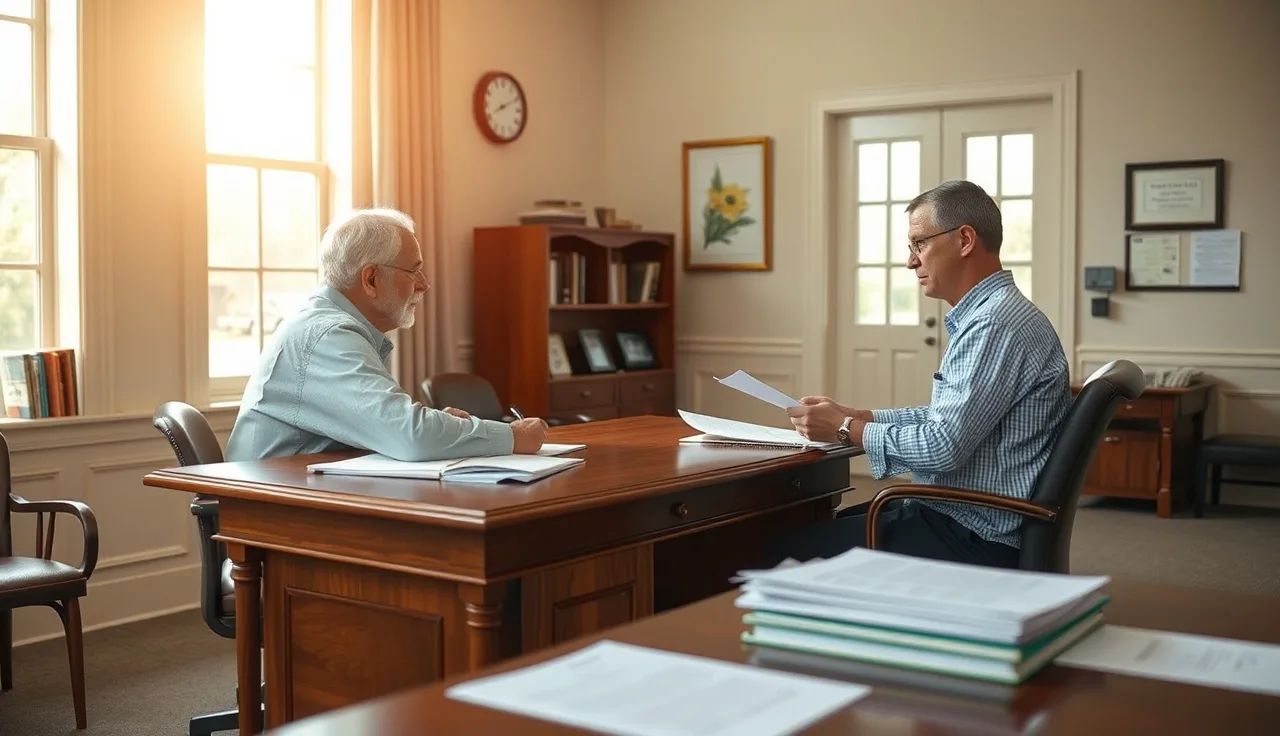
An informal assessor meeting, sometimes called an informal review or administrative review, is a scheduled conversation between you and a staff appraiser at the assessor's office. It happens before you file a formal appeal with the board of review or equalization. No judge. No oath. Just you, an appraiser, and whatever evidence you bring.
The appraiser can adjust your assessment on the spot or recommend a change to a supervisor. They can also say no. Either way, the conversation is off the record in the legal sense, which is good for you. You get to test your arguments, find out what the office really thinks your property is worth, and decide whether a formal appeal makes sense before you commit to that process.
Most counties offer this step either by statute or by policy. Cook County, Illinois runs a formal "Certificate of Error" process for clear factual mistakes plus a separate informal review window tied to each reassessment cycle [1]. In California, county assessors have to offer an informal assessment review before a formal Assessment Appeals Board hearing under Revenue and Taxation Code Section 1603 [2]. The name and structure change from place to place. The mechanics stay about the same.
Expect the meeting to run 15 to 30 minutes. The appraiser will have your property record card in front of them. They have sat through hundreds of these. They are not your enemy, and they are not your advocate either. Your job is to hand them a reason to change the number.
What should you say first when the meeting starts?
Open with one clear statement of purpose. Something like: "I believe my assessed value of $_____ is above market value, and I'd like to show you the evidence I've gathered." That's the whole opening. Don't lead with a complaint about your tax bill, your neighbor's low assessment, or how much your renovation cost. None of that speaks to market value.
Then ask for the property record card if you don't already have a copy. Say: "Can you walk me through the data you're using for my property?" This does two things. It signals you know what a property record card is, which tells the appraiser they're dealing with a prepared homeowner. And it surfaces errors you might have missed on paper, because the appraiser's spoken description sometimes differs from what's printed.
After that, let them talk. Most appraisers will explain the valuation briefly. Listen for the method: sales comparison, cost approach, or income approach. Your rebuttal has to match their method. If they used sales comps, you need better comps. If they used a cost approach, you may need a contractor estimate or a cost-estimating publication showing depreciation.
Don't fill the silence with concessions. Nervous homeowners start saying things like "I know the market has been hot" or "maybe I'm off a little." Those comments cost you. Ask your question, then stay quiet and let the appraiser answer.
What evidence actually changes an assessor's mind?
Comparable sales win informal meetings, and it isn't close. Find three to five properties that sold in the past six to twelve months, within one mile of yours (closer is better), with similar square footage (within 15 to 20 percent), similar lot size, similar age, and similar condition. Pull them from your county's online property records, Redfin, or Zillow's "Sold" filter. Calculate the price per square foot for each comp, then show that your assessed value implies a higher price per square foot than what buyers actually paid.
Put your comps in a simple table. Label each property by address, sale date, square footage, sale price, and price per square foot. Add a row for your property at its assessed value. The visual contrast does most of the arguing for you.
Errors on the property record card are the second strongest lever. Check the card carefully before you go. Common errors: wrong square footage, a bathroom that doesn't exist, a basement listed as finished when it's raw, a garage marked attached when it's detached. These aren't opinions. They're facts the assessor can verify and fix. The National Taxpayers Union Foundation estimates that between 30 and 60 percent of U.S. properties may be over-assessed, with faulty property data a leading cause [3].
Condition issues work too, but they need paper. Roof needs replacing? Bring two contractor quotes. Foundation cracking? Bring a structural engineer's report, or at least a home inspection that flags the defect. An appraiser can't reduce value for damage they can't see or verify.
A recent purchase price is strong evidence if you bought in an arm's-length sale within the past one to two years. In most states, a recent sale of the subject property is treated as the best evidence of market value. Bring your closing disclosure.
What doesn't work: your feelings about the neighborhood, guesses about where the market is headed, your neighbor's assessment with no logical link to yours, or the general complaint that your taxes are too high. Keep everything anchored to market value.
How do you ask the assessor to explain their valuation without being confrontational?
Frame every question as curiosity, not accusation. "Can you help me understand how you arrived at this number?" lands better than "How did you come up with that?" The appraiser didn't personally target you. They ran a mass appraisal model across thousands of parcels, and your property may just be an outlier.
Questions that tend to get useful answers:
- "What comparable sales did you use?" (You want their comps so you can explain why yours are better.)
- "What condition grade did you assign to my property?" (A C+ versus a B- can mean tens of thousands of dollars in assessed value.)
- "Does your model include any adjustments for the items I've listed here?" (Point to your list of deferred maintenance or functional obsolescence.)
- "If I show you sales data that implies a lower value, is that something you can consider today?"
That last question matters most. It tells you whether the person across the desk can actually change the value or is just a note-taker passing your file up the chain. If they say no, ask when and how you can reach whoever does have that authority.
Keep your tone flat and factual the whole time. Appraisers respond to evidence. They've heard every emotional story. What they haven't heard as often is a homeowner who shows up with a clean comps table, a marked-up property record card, and a specific dollar figure they're asking for.
Should you make a specific dollar ask, or just present the evidence?
Make a specific ask. "I think my assessment should be $285,000 based on these five comps averaging $182 per square foot" beats "I just think it's too high" every time. It gives the appraiser a target to evaluate, and it anchors the conversation.
Come in with two numbers: your ideal number and your walk-away number. The ideal number is what the evidence strictly supports. The walk-away number is the floor below which you'd rather take your chances at a formal hearing. Don't announce the walk-away number. Start with the ideal, and if the appraiser counters, you'll know whether their offer is worth taking.
In states where informal meetings carry real settlement power, like Illinois, Texas, and Florida, prepared homeowners often see 10 to 20 percent reductions at this stage without touching a formal board. In Texas, an owner who files a protest and reaches an informal agreement with the appraisal district can settle in writing and skip the Appraisal Review Board hearing entirely, under Tax Code Section 1.111(e) [4]. That's real time and stress saved.
If you've built your comps and evidence with a structured DIY system, TaxFightBack's appeal kit walks you through calculating that target number the same way appraisers do, so your ask lands in a range they can defend internally.
What documents should you physically bring to the meeting?
Bring paper copies of everything, even if you emailed them ahead. Appraisers are busy. Assume they haven't opened your email.
The list:
1. Your assessment notice with the assessed value and parcel number visible. 2. Your property record card with errors circled or highlighted. 3. Your comps table, printed cleanly. Add MLS listing photos if you can get them, because a picture of a genuinely comparable house is persuasive. 4. A one-page summary at the front: your name, parcel number, current assessed value, your requested value, and two or three bullets on why. This is what the appraiser remembers after you leave. 5. Supporting documents: contractor quotes, inspection reports, closing disclosure if you bought recently, photos of condition problems.
Bring two copies of everything. Leave one with the appraiser. Keep one for yourself.
Put your parcel number on every page. Assessor offices process hundreds of appeals, and loose pages get separated. Self-identifying documents survive the shuffle.
Don't bring a lawyer to an informal residential meeting. Attorneys make appraisers guarded and slow the conversation down. Save the legal help for a commercial property worth several million dollars. For a house, you don't need one.
What mistakes do homeowners most often make at these meetings?
The biggest mistake is not asking for a specific reduction. Homeowners present their evidence, then wait for the appraiser to offer something. That's backwards. You're the one making a claim. Make it plainly.
Second most common: arguing about the tax bill instead of the assessed value. Your tax bill is the assessed value multiplied by a mill rate set by local government. The assessor controls the assessed value. They don't control the mill rate. Complaining that your taxes jumped 30 percent when the appraiser only raised assessed value 10 percent is a real grievance, just not one this appraiser can fix. Stay on assessed value.
Third: bringing one comp. A single sale is easy to wave off as unrepresentative. Three to five is the sweet spot. More than seven and you're overcomplicating a meeting that should be tight.
Fourth: taking a partial reduction that's still above market value just to end the stress. An informal reduction usually isn't binding the way a formal settlement is. If the appraiser offers a cut that still leaves you over-assessed, you can take the partial reduction and still file a formal appeal in most jurisdictions. Confirm this with your county before you accept anything. In Cook County, a Certificate of Error adjustment does not waive your right to a formal appeal for the same year [1].
Fifth: showing up without knowing the deadline. Miss the formal appeal deadline while you wait on an informal outcome and you can lose your appeal rights for the year. File the formal appeal paperwork before the deadline, even while the informal process is still open.
How is an informal meeting different from a formal appeal hearing?
A formal appeal hearing (before a Board of Review, Assessment Appeals Board, or Appraisal Review Board depending on your state) is a quasi-judicial proceeding. There's a hearing officer or board panel. Evidence gets submitted in advance. You may be sworn in. The outcome is a written decision. In most states you can appeal that decision to a state tax court.
An informal meeting is none of that. It's a conversation. The outcome is a revised assessment, a denial, or a deferral. No formal record gets created, and the appraiser's refusal to adjust isn't a legal ruling you have to respond to.
The table below lays out the practical differences:
| Feature | Informal Meeting | Formal Hearing |
|---|---|---|
| Sworn testimony | No | Often yes |
| Written decision | Usually no | Yes |
| Evidence deadline | At meeting | Set in advance (varies by jurisdiction) |
| Who decides | Staff appraiser | Board or hearing officer |
| Time to prepare | Days to weeks | Weeks to months |
| Cost | Free | Free to modest filing fee |
| Outcome binding | No (in most states) | Yes, subject to further appeal |
Because informal meetings are faster and lower stakes, they're the right place to test your argument. Lose the informal meeting and you'll know exactly what the assessor's objection is, which lets you sharpen the formal appeal.
What happens after the informal meeting, and what should you do next?
If the assessor agrees to reduce your assessment, get the new value in writing before you leave. Ask for written confirmation or at least an email follow-up. In some counties the change shows up in the online database within a few weeks. Check it. Make sure the corrected number matches what was promised.
If the assessor denies your request or offers a cut you find too small, you have two practical paths. File your formal appeal before the deadline (and if you haven't already filed to protect that deadline, do it now). Or accept the result and plan for the next assessment cycle.
In Texas, formal Appraisal Review Board hearings must be scheduled within 90 days of the appraisal district's written notice of the hearing date under Tax Code Section 41.45 [4]. In Illinois, Board of Review deadlines vary by county but often run about 30 days from the assessor's decision [5]. In California, the Assessment Appeals Board filing deadline is typically September 15 of the assessment year, or six months after the assessment notice, whichever is later [2].
If you do go to a formal hearing, your informal meeting pays off. You know the appraiser's reasoning. You may have their comps. Use that to refine your formal presentation.
For jurisdictions like Los Angeles County, Cook County, or Bexar County, the informal-to-formal pipeline is well documented, and county websites publish specific timelines for each step.
Does the county assessor have to tell you the comparables they used?
In most states, yes. Your property record card and the comparable sales used in your valuation are generally public records. Under state public records laws, you can request the appraisal workup for your property. In Texas, Tax Code Section 41.461 requires the appraisal district to make available all evidence it intends to introduce at a hearing at least 14 days before that hearing [4]. In California, assessors have to explain the basis of the assessment on request under Revenue and Taxation Code Section 408 [2].
At the informal meeting, ask directly: "Can you show me the comparable sales you used for this assessment?" Most appraisers will. If they don't, file a written public records request before or right after the meeting. Knowing their comps lets you explain why yours are more accurate, usually because they're more recent, closer in size, or nearer by.
If the assessor used a cost approach (common for new construction or unusual properties), ask for the replacement cost schedule and the depreciation tables they applied. Those are public too. The Marshall & Swift cost service is widely used by assessors, and the published depreciation schedules are part of the public record in most places.
What if the assessor won't budge at all?
It happens. Some appraisers are told not to adjust at informal meetings, either because the county routes all changes through a formal process or because internal policy limits their discretion. If the meeting feels like a formality, don't sink more than ten minutes into it. Confirm the formal appeal deadline, ask for the name of the hearing officer you'll present to, and leave.
A flat refusal at the informal stage doesn't mean your case is weak. It often means that county funnels disputes to the formal board on purpose. There, the informal meeting is really just a required step before the real proceeding.
The formal board or ARB is where your evidence counts most, judged by people with actual decision authority. Homeowners who file formal appeals with documented evidence win reductions in roughly 40 to 50 percent of cases, according to a 2022 analysis from the Lincoln Institute of Land Policy [6]. That's a strong success rate for a process that costs nothing to file.
If you're heading toward a formal hearing in a large county like Hennepin County or Montgomery County, the evidence submission rules get strict. Building your comps package in the same grid-analysis format the board uses gives you an edge. TaxFightBack's appeal kit includes a fill-in comps grid built to match the format most U.S. assessment boards recognize, which helps you avoid formatting rejections at submission.
Are there things you should never say at an informal assessor meeting?
Yes. A few statements that actively hurt your case:
"I can't afford these taxes." Financial hardship is not a legal basis for cutting an assessment. The appraiser's job is to estimate market value, not to set a bill you can afford. This line makes you sound uninformed and gets you nothing. If affordability is the real problem, ask separately about hardship exemptions, senior exemptions, circuit breaker programs, or payment plans once the assessment conversation is done.
"My neighbor's assessment is lower." Neighbor comparisons feel compelling but they're weak evidence. Your neighbor may have an incorrectly low assessment, or there may be property differences you don't know about. If you want to use a neighbor's property, use it only once it has sold, as a comparable sale, not as an equity argument.
"You people always overcharge." That closes the conversation. In most mass appraisal systems, the person in front of you didn't personally set your value. They ran a model.
"I did $80,000 in renovations, so the value should be higher." Stop. You're here to argue the value is too high. Don't hand the appraiser ammunition to raise it. Only mention renovation costs if the assessor already priced in major improvements and got the numbers wrong on your record card.
"What do I need to say to get this reduced?" This sounds like you're fishing for a script instead of presenting evidence. Say what you actually believe the evidence shows. If the evidence is sound, state it plainly.
Frequently asked questions
Do I have to attend an informal assessor meeting before I can file a formal appeal?
It depends on the state. California requires an informal review attempt before an Assessment Appeals Board hearing under Revenue and Taxation Code Section 1603. Texas and Illinois treat it as optional but strongly encouraged. Most counties publish their process on the assessor's website. Check your jurisdiction's rules. Never skip filing your formal appeal before the deadline while you wait to find out, because missing that deadline ends your rights for the year.
Can I bring someone with me to an informal assessor meeting?
Yes, in almost every jurisdiction. You can bring a spouse, family member, or friend. For residential property, bringing an attorney is usually overkill and can make the appraiser more guarded. A knowledgeable companion who can take notes is genuinely helpful. Some counties let a paid agent or consultant attend on your behalf if you provide written authorization. Check your county's rules on authorized representatives.
How long does an informal assessor meeting usually take?
Plan for 15 to 30 minutes. Assessors schedule them back-to-back, so they move fast. If you're prepared with a one-page summary and a clean comps table, you can make your case in ten minutes and use the rest on questions. Long, rambling presentations lose the appraiser's attention. Brevity backed by clear data is the format that works.
What is a property record card and how do I get one before the meeting?
A property record card is the assessor's file on your property. It lists square footage, bedroom and bathroom count, lot size, construction quality grade, year built, and other features used to calculate value. In most counties you can request it online through the assessor's website, by email, or in person. It's a public record. Getting it before your meeting gives you time to spot errors, which is the fastest way to prepare.
What comparable sales are most persuasive at an informal meeting?
Sales within six months of your assessment date, within half a mile of your property, within 15 percent of your home's square footage, and with similar lot size and condition. The fewer adjustments needed to fit a comp to your property, the more weight it carries. Three to five comps is the right count. Pull them from your county assessor's sales database, Redfin, or Zillow's sold listings. Attach MLS photos if you can.
Can the assessor raise my value at an informal meeting?
Technically, yes. Assessors can correct values in either direction. In practice, most appraisers don't raise values at informal meetings unless you volunteer information about major unreported improvements. Don't describe expensive upgrades unless the appraiser's records already show them and got the numbers wrong. Keep the conversation on why the current value is too high, not on improvements that might justify a higher one.
Should I accept a partial reduction at the informal meeting or hold out for the full amount?
Accept a partial reduction if it's close to what the evidence supports, but confirm first that you keep the right to file a formal appeal. In most states, an informal adjustment doesn't waive your formal appeal rights for the same year. If the partial offer still leaves you over-assessed by a meaningful amount and your evidence is strong, take the partial adjustment and file the formal appeal anyway. Get the partial reduction in writing first.
What if I miss the informal meeting deadline but still want to appeal?
File the formal appeal before the formal deadline, which is a separate and usually later date. Missing the informal window doesn't prevent a formal appeal in most jurisdictions. The informal meeting is a courtesy step. The formal filing deadline is the one that's legally binding. If you've missed both, you'll wait for the next assessment cycle unless your state allows late appeals for newly discovered errors, which some do under limited circumstances.
How do I find out what comparable sales the assessor used?
Ask the appraiser directly at the meeting. In Texas, Tax Code Section 41.461 requires the appraisal district to share all evidence it intends to use at a formal hearing at least 14 days before the hearing. In California, Revenue and Taxation Code Section 408 gives you the right to request the basis of your assessment. Most states have similar public records provisions. You can also submit a written public records request to the assessor's office.
Is it worth appealing if my assessed value is only slightly over market value?
Run the math first. A $20,000 over-assessment on a property with a 1.5 percent effective tax rate costs you $300 a year. If the appeal is informal and free, it's worth the call. If it needs a formal hearing with hours of prep, you're weighing $300 against your time. The informal meeting is low-cost enough that most modest over-assessments are worth raising. The formal hearing is a closer call below about $15,000 in assessed value difference.
What evidence works best if my property has physical damage or deferred maintenance?
Written contractor estimates for repairs are the strongest evidence. Two or three quotes for the same repair scope beat one. A home inspection report that describes and quantifies a defect also works well. Photos alone rarely move an assessor without an attached dollar figure for the repair. If the damage is structural, a licensed engineer's report carries more weight than a general contractor's opinion.
Can I use online home value estimates like Zillow's Zestimate as evidence?
Not really. Assessors dismiss automated valuation models like Zestimates because those tools carry a median error rate around 7 to 8 percent on listed homes and higher on unlisted ones, per Zillow's own accuracy disclosures. Use Zillow and Redfin to find actual closed sale prices of comparable properties, not the estimate tool. The closed sale price of a real comp is evidence. An algorithm's estimate is not.
Does attending an informal meeting make it harder to win a formal appeal later?
No. Attending the informal meeting and losing doesn't prejudice your formal appeal. Nothing you say at an informal meeting is generally admissible at a formal hearing as an admission, because it isn't a sworn proceeding. The only real risk is volunteering information about value-increasing features the assessor didn't already know. Stick to the evidence supporting a lower value and you're fine.
What counties have particularly good informal review processes I should know about?
Cook County, Illinois has a well-structured Certificate of Error process for factual corrections plus a separate informal review tied to each reassessment. Texas appraisal districts are required by statute to offer informal meetings before Appraisal Review Board hearings. Los Angeles County runs an Assessment Appeals process with a pre-hearing informal option. Gwinnett County and Bibb County in Georgia offer informal steps before the Board of Equalization. Check your specific county assessor's site for the exact process.
Sources
- Cook County Assessor's Office, Appeals Overview: Cook County runs a Certificate of Error process for factual corrections and a separate informal review window tied to each reassessment cycle; an informal adjustment does not waive formal appeal rights for the same year.
- California State Board of Equalization, Revenue and Taxation Code Sections 408 and 1603: California requires an informal assessment review before a formal Assessment Appeals Board hearing under Revenue and Taxation Code Section 1603; assessors must explain the basis of an assessment upon request under Section 408.
- National Taxpayers Union Foundation, Property Tax Assessment Fairness Report: Between 30 and 60 percent of U.S. properties may be over-assessed, with factual errors in property data cited as a leading cause.
- Texas Comptroller of Public Accounts, Property Tax Code Sections 41.45 and 41.461 and 1.111(e): Texas Tax Code Section 1.111(e) allows written agreements to settle protests informally; Section 41.461 requires appraisal districts to share all evidence at least 14 days before a formal hearing; Section 41.45 requires ARB hearings to be scheduled within 90 days of notice.
- Illinois Department of Revenue, Property Tax Appeal Information: In Illinois, Board of Review deadlines vary by county but are typically 30 days from the assessor's decision.
- Lincoln Institute of Land Policy, 2022 Property Tax Assessment Appeals Analysis: Homeowners who file formal appeals with documented evidence win reductions in roughly 40 to 50 percent of cases, according to a 2022 Lincoln Institute analysis.
- Los Angeles County Assessor, Assessment Appeals Process: Los Angeles County offers a pre-hearing informal review option as part of the Assessment Appeals process.
- Zillow Research, Zestimate Accuracy Disclosures: Zillow's Zestimate has a median error rate around 7 to 8 percent on listed homes and higher on off-market homes, making it unsuitable as formal valuation evidence.
- International Association of Assessing Officers (IAAO), Standard on Mass Appraisal of Real Property: Mass appraisal models used by assessors are evaluated by accuracy standards published by the IAAO; condition grade assignments are a primary driver of assessed value variation.
- Texas Comptroller of Public Accounts, Property Tax Basics: Protests: Texas property owners who reach an informal agreement with the appraisal district avoid a formal Appraisal Review Board hearing, saving time and reducing stress.