Last updated 2026-07-11
TL;DR
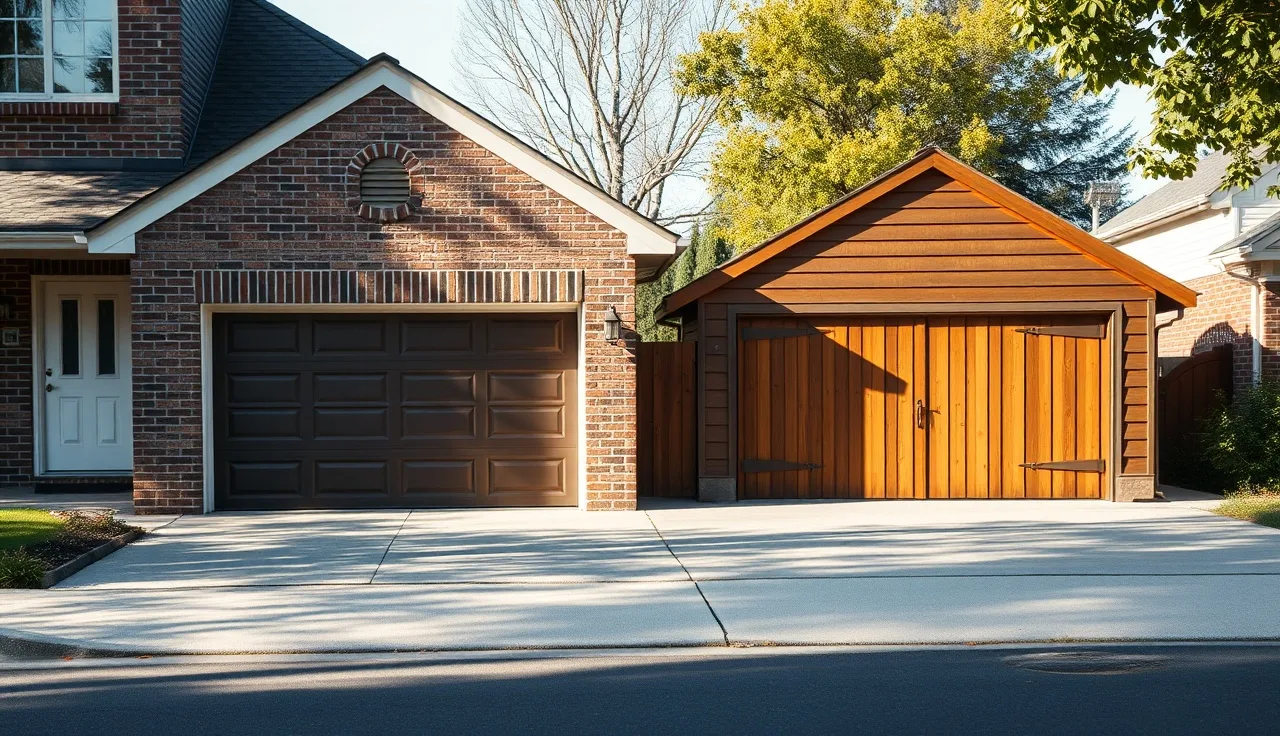
Attached garages get assessed at a higher rate than detached ones because assessors treat them as part of the main house. The gap varies by county but commonly runs 40 to 60 percent higher per square foot. If your garage type is wrong on your record card, that error is one of the cleanest grounds for a winning appeal.
Why does garage type matter for your property tax assessment?
Your tax bill starts with your assessor's estimate of market value, and every physical feature of your property feeds that estimate. Garage type is one of those features. Assessors do not treat all garages the same.
Attached garages share a wall with the house. That shared structure, plus direct access to the living space, makes them worth more to buyers, so assessors assign them a higher contributory value. Detached garages sit on a separate foundation, reached by crossing a yard or driveway. Buyers like them fine. They just pay less for them than for attached space.
Here's the practical result. If your assessor's field card or CAMA (Computer Assisted Mass Appraisal) record has your garage type wrong, you may be paying the attached-garage premium on a building that's actually detached, or the reverse. That single data error can cost you hundreds of dollars a year.
Garage type also steers which comparable sales your assessor pulls. Mass appraisal systems filter and adjust comps partly by garage type. A misclassification drops you into the wrong pool of comparables before the math even starts [1].
How much more is an attached garage worth than a detached garage?
Attached garages typically carry a 40 to 60 percent higher per-square-foot assessment than detached ones, though the exact premium is set county by county and even neighborhood by neighborhood. There's no single national number. Published assessor schedules and appraisal research give a useful range.
The National Association of Realtors reports garage contributory values for resale in the range of $4,000 to $30,000 depending on market and type, with attached units at the high end of local ranges [2]. For mass appraisal, county cost schedules often price finished attached garage space at 40 to 60 percent of the base cost per square foot for finished living area, while detached garages come in at 20 to 40 percent of that same base rate.
The table below shows representative per-square-foot rates from publicly available assessor cost manuals in three states. These illustrate the spread. They aren't universal.
| State / County | Attached garage (per sq ft) | Detached garage (per sq ft) | Premium for attached |
|---|---|---|---|
| Cook County, IL [3] | ~$40 | ~$25 | ~60% |
| Montgomery County, MD [4] | ~$55 | ~$35 | ~57% |
| Santa Clara County, CA [13] | ~$60 | ~$40 | ~50% |
These figures come from assessor cost schedules and shift with annual index adjustments. Pull your own county's schedule for the number that actually applies to your parcel.
For a 400-square-foot garage, that premium is $4,000 to $8,000 in assessed value. At a 1.5 percent effective tax rate, that's $60 to $120 a year from one classification error. Over a decade, real money.
How do assessors actually classify and value your garage?
Most county assessors run a CAMA system that stores a field card for every parcel. The card lists your property's physical characteristics: year built, square footage, construction quality, bedroom count, and yes, garage type and size. That data was probably collected during a physical inspection years ago, maybe decades ago, and may never have been checked since.
Assessors usually split garages into more than two buckets. Common codes include:
- Attached garage (AG): shares at least one wall with the main structure
- Built-in garage (BG): garage sits under living space, often under a second floor or bedroom
- Detached garage (DG): separate structure, own foundation
- Carport: open-sided, roof only, lowest value
- Basement garage: integral to the basement, accessed from inside
Built-in garages often carry the highest per-square-foot rate because they need the most structural integration. A basement garage gets treated differently again, sometimes folded into the basement finish rate instead of a separate garage rate.
Each of these codes pulls a different dollar-per-square-foot multiplier from the cost table. An assessor who checked the wrong box on a field card years ago, or who reassigned your garage type after a permit for an addition, may have your property in the wrong category entirely [1].
What does your property record card actually say about your garage?
Pull your property record card first, before anything else. In most states it's a public document, available on your county assessor's website or by request at the office. Some counties call it a field card, a property data card, or a parcel data sheet.
Look for a section labeled "outbuildings," "improvements," or "garage." You'll see a code or description (often AG, DG, or similar), a size in square feet, and sometimes a condition or grade rating.
Compare what the card says to what's actually on your property. If the card says attached and your garage stands free across the driveway, that's a misclassification. If the card says detached but your garage shares a wall with your mudroom, same problem, just flipped.
Check square footage too. Assessors sometimes overstate garage size, especially when they estimate from aerial imagery instead of an on-site measurement. A garage listed as 576 square feet that actually measures 480 is a separate error worth correcting, independent of the type code.
Illinois residents can verify these characteristics on the Cook County Assessor's property detail pages. See Cook County tax assessor tax bill for a walkthrough of reading that data. Montgomery County, Maryland residents can do the same through the SDAT portal; our Montgomery County property tax guide covers that process.
Can a misclassified garage be grounds for a property tax appeal?
Yes, and it's one of the stronger grounds you have, because it's factual rather than a matter of opinion. Arguing your neighborhood is declining is a judgment call. Arguing your garage is detached, not attached, is not.
Every state lets you challenge the accuracy of the property data behind your assessment. Most statutes frame this as an error of fact or a clerical error, handled differently from a valuation dispute. Some counties let you fix data errors administratively, without a formal hearing, which is faster and simpler.
To win, bring documentation. Photographs showing the garage isn't attached to the house. A site plan or survey if you have one. Your deed description. A tape measure reading of the real square footage. Sometimes a Google Maps satellite image shows the physical separation clearly enough on its own.
The International Association of Assessing Officers (IAAO), which sets professional standards for assessors nationwide, states that "property characteristics data should be verified and corrected when errors are discovered" as part of standard mass appraisal practice [6]. That language matters in a hearing. You're asking the board to follow their own rules.
Texas homeowners file data error protests through the Appraisal Review Board. The Bexar County tax assessor guide covers that workflow. Georgia residents, including those in Gwinnett County, challenge property data through the Board of Equalization; the Gwinnett County tax assessor page explains how.
Does the assessment difference between garage types hold up in real sales data?
It mostly does, which is why assessors use it, but the premium swings hard by price tier and market density.
A 2021 analysis by the Urban Land Institute found garage type and presence had statistically significant effects on sale price in suburban markets, with attached garages adding more value than detached in most markets studied [7]. The premium ran larger in colder climates, where walking from a detached garage in January is a real pain.
Dense urban markets get murkier. In some Brooklyn or Chicago neighborhoods, any off-street parking commands a premium because the baseline is street parking only. There, the attached-versus-detached gap narrows or vanishes. If your assessor applies a fat attached-garage premium in a market where buyers don't care, that's an argument you can make with comparable sales.
California is its own animal. Proposition 13 caps annual assessment increases at 2 percent regardless of what the market does, so garage classification matters most at sale or new construction [5]. Los Angeles County residents can review how their characteristics are recorded through the county assessor portal; see LA County property tax. Santa Clara County residents should check Santa Clara property tax for the CAMA codes used there.
How do built-in garages compare to attached and detached in assessments?
Built-in garages, sometimes called integral garages, are the garage space that sits directly under living area, typically under a bedroom or bonus room. You see them in split-level homes and certain Northeast styles.
Assessors treat built-in garages as the most structurally integrated type, and cost schedules usually price them at the attached rate or a touch higher. The reasoning: building that space forced the main structure to carry the living area above it, which costs more than a plain attached garage wing.
For appeals, the distinction matters if your built-in garage got reclassified after a renovation. Say you converted the space above a built-in garage into a bedroom (or the reverse). The assessor may have updated the living-area count but left the garage code alone, creating an internal contradiction in your record that inflates value.
Always look at the total square footage picture. If your record shows 1,800 square feet of living area plus a 400-square-foot built-in garage, and your actual footprint can't support that total, you have a data error worth investigating.
What evidence do you need to challenge a garage classification?
Keep it simple and visual. Assessors and review boards see stacks of paper. A clear street-level photo showing your detached garage as a separate structure beats a three-page argument every time.
Here's what a strong garage-type evidence package looks like:
1. A printed or digital copy of your current property record card, with the disputed field highlighted. 2. Two to four photographs: one from the street showing the full house and garage, one from the side or back showing no shared wall, and one showing the garage's own foundation if visible. 3. A simple sketch or survey showing the house and garage as separate footprints, with measurements. 4. If you have a survey from your mortgage closing, that works perfectly. 5. Three to five comparable sales of similar homes in your neighborhood with the same garage type as yours. If nearby homes with detached garages sell at prices consistent with the detached rate, that's market evidence the attached premium doesn't apply.
TaxFightBack's DIY appeal kit includes a property data checklist and a comparable sales worksheet built for exactly this kind of factual correction, so you're not starting from a blank page.
Hennepin County, Minnesota residents can verify the per-square-foot rates applied to their record through the county assessor's schedule of values, posted online. See Hennepin County property tax for the direct links.
Does converting an attached garage into living space change your assessment?
Almost certainly yes, and often not the way people expect.
Convert an attached garage into finished living space and that square footage gets reclassified from the garage rate (lower) to the finished living area rate (higher). Your total assessed value can go up, not down, even though you technically removed a garage. Finished living area is the highest-value use per square foot, so the conversion adds value.
The reverse also holds. Convert living space into a garage (rare, but it happens) and the square footage drops from finished-area rate to garage rate, so your value falls.
The trigger is usually a building permit. Once a permit is pulled and an inspector signs off, that data flows to the assessor's office. Some counties get permit data automatically. Others require the assessor to do a follow-up inspection.
Converted without a permit? The assessor may not know yet. But that's a different risk: unpermitted work creates liability at resale and can trigger a retroactive assessment increase if a reclassification review catches it.
One underappreciated point. Add a new detached garage after the home is built and it's assessed as an improvement, tacked onto your base value. Depending on the cost schedule, a new 500-square-foot detached garage might add $12,000 to $25,000 in a mid-tier market. Pull the permit, get the inspection, then verify the assessor's update matches what you actually built [1].
How do you find your county's garage valuation rates?
Start at your county assessor's website. Most post their cost schedules, assessment manuals, or appraisal guides in the forms or documents section. The document you want is sometimes called a "residential cost schedule," "improvement schedule," or "assessor's manual."
Search inside that document for terms like "garage," "outbuilding," or "accessory structure." You'll hit a table listing structure types and their base cost per square foot, indexed by year and sometimes adjusted for quality grade.
If your county doesn't post this, request it under your state's public records law. Every state has one, and cost schedules are public records. A written request to the assessor's office usually does the job; most offices respond within 5 to 10 business days.
Georgia residents can look at how the Bibb County Tax Assessor publishes its assessment schedules, which is fairly typical of Georgia county practice. See Bibb County tax assessor for a template on reading your own county's documents.
Once you have the schedule, the math is simple. Take your garage square footage from the record card, multiply by the per-square-foot rate for your garage type, then multiply by the depreciation factor (assessors usually apply an age-based depreciation). That's the contributory value of your garage. Compare it to what the schedule produces for the correct type, and the overcharge shows up in numbers [6].
What are the appeal deadlines for correcting a garage classification error?
This is where people lose winnable cases. Miss the deadline and you're locked in for another year.
Appeal deadlines are set by state statute and vary enormously. A representative sample:
| State | Appeal deadline | Statute reference |
|---|---|---|
| Illinois | 30 days from assessment notice | 35 ILCS 200/16-55 [8] |
| California | September 15 (most counties) | Rev & Tax Code §1603 [9] |
| Texas | May 15 or 30 days from notice | Tax Code §41.44 [10] |
| Maryland | 45 days from assessment notice | Tax-Property §14-502 [11] |
| Georgia | 45 days from assessment notice | O.C.G.A. §48-5-311 [12] |
For data errors specifically, some states run a separate administrative correction process that isn't tied to the main appeal deadline. In those states you can request a data review any time of year, and if the assessor agrees the data is wrong, they issue a corrected assessment. Check whether your state offers this before you assume you've missed your window.
One wrinkle. Some counties, including many in Los Angeles County (see Los Angeles County property tax), run a rolling assessment notice system, so your personal deadline depends on when your specific notice was mailed, not a county-wide date.
Frequently asked questions
Is an attached garage always assessed at a higher value than a detached garage?
In most counties, yes. Assessors apply a higher cost-per-square-foot rate to attached garages because buyers pay more for direct interior access. The exception is dense urban markets where any off-street parking is scarce; there, the gap narrows or disappears. Check your county's cost schedule for the exact rates applied to each type in your jurisdiction.
How do I find out what garage type my assessor has on file for my property?
Pull your property record card from your county assessor's website or office. It's a public document in every state. Look for a garage or outbuilding section listing a code such as AG (attached), DG (detached), or BG (built-in), plus the recorded square footage. Compare that to what's physically on your property. Any mismatch is a data error you can challenge.
What is the typical per-square-foot assessment difference between attached and detached garages?
Published cost schedules from counties in Illinois, Maryland, and California assess attached garages at roughly 40 to 60 percent of the base finished-living-area rate, while detached garages run 20 to 40 percent of that same base rate. That works out to a 40 to 60 percent higher per-square-foot value for attached over detached. On a 400-square-foot garage, the difference in assessed value commonly runs $4,000 to $8,000.
Can I appeal my assessment if my garage type is listed incorrectly?
Yes, and this is one of the easier appeals to win because it's a factual question, not a valuation dispute. Photograph the garage, gather your property record card showing the wrong code, and submit a formal appeal or administrative correction request before your county's deadline. Some states let you fix data errors outside the normal appeal window through a separate administrative process.
How does a carport compare to an attached or detached garage in assessed value?
Carports are assessed well below either garage type because they lack enclosed walls and offer minimal weather protection. Most county cost schedules price carport space at roughly 10 to 20 percent of the finished-living-area base rate, compared to 40 to 60 percent for an attached garage. If your carport is listed as a detached garage on your record card, that's an overvaluation worth challenging.
Does adding a detached garage increase my property taxes?
Yes. A new detached garage is a taxable improvement. Once a building permit is filed and the structure passes inspection, the assessor adds the contributory value of the new garage to your assessment. In a mid-tier market, a new 500-square-foot detached garage typically adds $12,000 to $25,000 in assessed value. After construction, verify the assessor's record matches the actual size and type of what was built.
If I convert my attached garage to living space, do my taxes go up or down?
Usually up. Converting garage square footage to finished living area moves that space from the lower garage rate to the higher finished-living-area rate in the assessor's cost schedule. Even though you no longer have a garage, the conversion adds more assessed value than it removes. The increase is typically triggered when the building permit for the conversion is closed and reported to the assessor's office.
What is a built-in garage and how is it assessed differently?
A built-in garage sits directly under living space, such as under a bedroom in a split-level home. Assessors treat it as the most structurally integrated garage type, pricing it at the same rate as or slightly above an attached garage. If a renovation changed the living space above a built-in garage, verify that both the living-area count and the garage code in your record were updated consistently, because internal inconsistencies inflate assessed value.
Does garage size matter as much as garage type in the assessment?
Both matter, and they multiply. Your assessed garage value is square footage times the per-square-foot rate for your garage type. An error in either number produces a wrong result. A garage listed as 600 square feet that actually measures 480 is an independent error worth correcting, even if the type code is right. Always verify both the type code and the square footage on your property record card.
Can I use comparable sales to argue my garage adds less value than the assessor claims?
Yes. If homes with detached garages in your neighborhood sell at prices inconsistent with the assessor's detached-garage premium, those sales are evidence the premium is overstated. Pull three to five closed sales of similar nearby homes with the same garage type. If their sale prices imply a lower garage contributory value than what your cost schedule applies, you have a market-based argument to present alongside any data correction.
What documents do I need to prove my garage type for an appeal?
Photographs are the foundation: one from the street showing the full property, one from the side or back showing no shared wall (for a detached appeal), and one showing the separate foundation if visible. A survey from your mortgage closing is ideal. A property sketch with dimensions works too. Bring a printed copy of your property record card with the incorrect code highlighted so the board sees exactly what you're disputing.
Are garage classifications different for commercial properties versus residential?
Yes. Commercial assessments use income or sales comparison approaches rather than residential cost schedules. Garages on commercial parcels, such as service bays or parking structures, are appraised based on their contribution to income potential or on a commercial cost-per-square-foot schedule, which differs substantially from residential rates. If you own a mixed-use property, verify which schedule the assessor applied to each improvement type.
How often do assessors physically inspect garages to verify their type?
Rarely, after the initial assessment. Most counties inspect when a property sells, when a building permit is pulled, or during a countywide reassessment cycle, which can run every few years or as rarely as every decade depending on the state. Between those triggers, the garage type on your record card may not have been checked in years. That's exactly why data errors persist and why checking your own card pays off.
What if my assessor refuses to correct a garage classification error?
File a formal appeal with your county's board of equalization, board of assessment appeals, or appraisal review board, depending on your state. Present your photographic evidence and the property record card showing the discrepancy. If the board also denies the correction, you can appeal to the state tax court or administrative tribunal. An error of fact is harder for an assessor to defend than a valuation judgment, so most factual errors get corrected before reaching that stage.
Sources
- International Association of Assessing Officers, Standard on Mass Appraisal of Real Property: IAAO standards require that property characteristics data be verified and corrected when errors are discovered as part of mass appraisal practice
- National Association of Realtors, Remodeling Impact Report: Garage contributory values for resale range from approximately $4,000 to $30,000 depending on market and garage type
- Cook County Assessor's Office, Residential Cost Schedule: Cook County cost schedules show attached garage space assessed at approximately $40 per square foot versus $25 per square foot for detached
- Maryland State Department of Assessments and Taxation, Residential Assessment Guide: Montgomery County residential cost schedules show attached garage rates approximately 57 percent higher per square foot than detached garage rates
- California State Board of Equalization, California Property Tax: An Overview (Publication 29): Under California Proposition 13, annual assessment increases are capped at 2 percent, making garage type classification most consequential at point of sale or new construction
- International Association of Assessing Officers, Standard on Mass Appraisal of Real Property: IAAO standards state property characteristics data should be verified and corrected when errors are discovered
- Urban Land Institute, Home Attainability Index and Residential Market Analysis, 2021: Garage type and presence had statistically significant effects on sale price in suburban markets, with attached garages adding more value than detached in the majority of markets studied
- Illinois General Assembly, Property Tax Code 35 ILCS 200/16-55: Illinois property tax appeal deadline is 30 days from assessment notice under 35 ILCS 200/16-55
- California Revenue and Taxation Code Section 1603: California property tax assessment appeal deadline is September 15 for most counties under Revenue and Taxation Code Section 1603
- Texas Tax Code Section 41.44, Texas Comptroller of Public Accounts: Texas protest deadline is May 15 or 30 days from the notice of appraised value, whichever is later, under Tax Code Section 41.44
- Maryland Tax-Property Article Section 14-502, Maryland General Assembly: Maryland assessment appeal deadline is 45 days from the assessment notice under Tax-Property Section 14-502
- Georgia Code Section 48-5-311, Georgia General Assembly: Georgia property tax appeal deadline is 45 days from the assessment notice under O.C.G.A. Section 48-5-311
- Santa Clara County Assessor's Office, Assessment Practices and Cost Schedules: Santa Clara County cost schedules show attached garage space assessed at approximately $60 per square foot versus $40 per square foot for detached