Last updated 2026-07-11
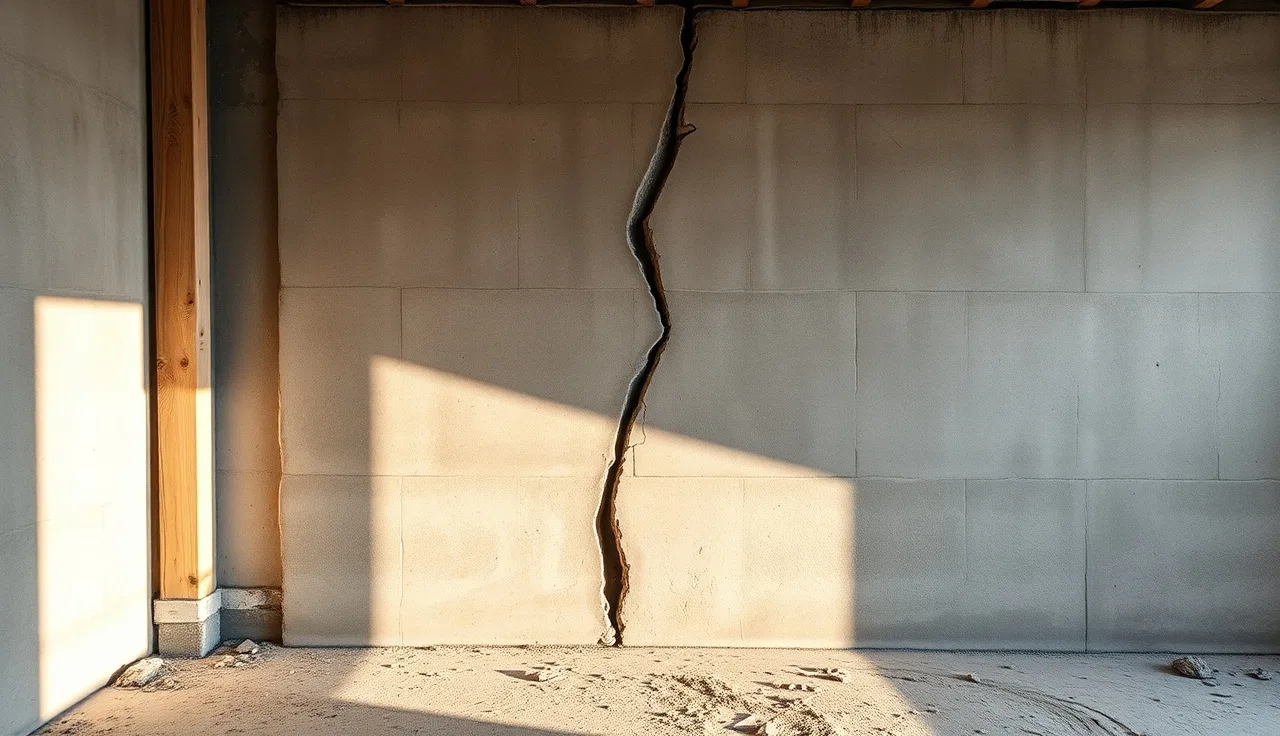
TL;DR
A documented foundation problem is one of the strongest physical-condition arguments in a property tax appeal. Assessors value most homes as if they're in average condition. If yours has active foundation damage, a repair estimate from a licensed structural engineer plus dated photos and a written explanation can support a reduction of 10 to 25 percent, sometimes more, depending on repair cost relative to assessed value.
Why does a foundation problem affect your assessed value?
A foundation defect lowers your assessed value because it lowers what a buyer would pay, and your assessment is supposed to track market value. Assessors don't walk through most homes. They run mass appraisal models that assume average condition for houses of a given size, age, and neighborhood. Your cracked foundation breaks that assumption.
Property tax assessments are supposed to reflect market value. Every state words it a little differently, but the standard is essentially what a willing buyer would pay a willing seller who knows the property's condition. A house with an active foundation problem, one that hasn't been fully fixed, is worth less than an identical house with a clean foundation. That's not an opinion. Buyers and their inspectors walk away from foundation issues or negotiate the price down hard. Your job in an appeal is to turn that market reality into numbers the assessor's office will accept.
The legal basis matters. In most states, the appeal board or hearing officer wants evidence that the assessed value is higher than fair market value as of the assessment date, often January 1 of the tax year. A structural defect documented before that date lands squarely on point. Evidence that surfaces after the assessment date still works as context, but it's messier, so the timing of your documentation is worth thinking about.
What kinds of foundation damage actually support a tax appeal?
The damage that wins appeals is the kind a licensed professional can tie to a real repair cost or a measurable loss in value. Cosmetic cracks don't move an assessor. Structural failure with a five-figure repair estimate does.
The types that carry the most weight:
- Diagonal stair-step cracks in brick or block foundations, which signal differential settlement [1]
- Horizontal cracks in poured concrete or block walls, which point to lateral soil pressure and are considered serious by most structural engineers [1]
- Bowing or inward-leaning foundation walls
- Active water infiltration tied to foundation failure, more than surface drainage
- Floor heave or significant floor slope caused by foundation movement
- Doors and windows that no longer close because the structure shifted
Hairline shrinkage cracks in new poured concrete and minor efflorescence (white mineral deposits) won't do much. The board asks one question: does this defect need professional remediation, and what does that cost? Repair estimates in the $15,000 to $100,000-plus range for pier underpinning, wall anchoring, or full foundation replacement are the ones that genuinely move assessed value. [2]
Geography changes everything here. Expansive clay soils in Texas and parts of the Southeast cause far more foundation movement than the stable glacial soils of the upper Midwest. If you're in a high-movement soil area, your assessor's office has seen plenty of these appeals already. In Bexar County, foundation issues show up in appeals all the time thanks to the expansive black clay soil across much of the county.
How much can a foundation problem reduce your assessed value?
Documented foundation damage usually supports a reduction of 10 to 25 percent of assessed value, scaled to repair cost. Anyone who quotes a precise number without seeing your situation is guessing. Real data from appraisal practice and market studies gives useful ranges.
Disclosed foundation problems track with sale price discounts of roughly 10 to 15 percent versus comparable homes without disclosed defects, holding other factors constant, according to research published in the Journal of Real Estate Research. [3] Home inspection industry standards also flag severe structural defects, the kind requiring foundation repair, as among the defects most likely to make buyers renegotiate or walk. [4]
Boards often anchor to the cost-to-cure method. Your repair estimate as a percentage of assessed value gives you a floor for the reduction you request. Assessed at $400,000 with a $60,000 repair estimate? That's a 15 percent argument. Some boards give you exactly that. Others discount the repair estimate or run a different method. A few split the difference.
Here's a rough framework based on typical board outcomes:
| Foundation Issue Severity | Typical Repair Cost Range | Reasonable Value Reduction Argument |
|---|---|---|
| Minor (crack injection, minor waterproofing) | $2,000 - $8,000 | 1 - 3% of assessed value |
| Moderate (wall anchors, partial underpinning) | $10,000 - $30,000 | 5 - 10% of assessed value |
| Severe (full underpinning, significant structural) | $30,000 - $80,000+ | 10 - 20% of assessed value |
| Catastrophic (replacement or partial rebuild) | $80,000+ | 20 - 30%+ of assessed value |
These ranges come from appraisal practice and reported appeal outcomes, not one authoritative source. [2][3] Your board's history and your local market swing the result a lot.
What documentation do you need before you file?
You need third-party proof a professional stands behind. This is where DIY appeals live or die. Boards are skeptical of homeowner claims with nothing but photos, so bring evidence that carries a name and a license number.
The single most useful document is a written structural engineer's report. Not a home inspector's report (though that helps). Not a foundation repair company's free estimate on its own. A stamped report from a licensed Professional Engineer (PE) describing the type of damage, the likely cause, and the recommended repair scope. [5] A PE report runs about $300 to $700 for a residential inspection. [2] That's real money. It's also the line between a board taking your appeal seriously and waving it off.
Second, get at least two written contractor repair estimates. Foundation repair contractors usually provide these free or cheap. Make sure they're itemized, on company letterhead, with license numbers. One-line generic estimates carry almost no weight.
Third, photograph everything. The damage itself. A ruler or tape measure next to cracks for scale. Related interior damage like sticking doors, floor gaps, and wall cracks. Date-stamped images help prove the problem existed as of the assessment date. Your phone camera is fine.
Fourth, pull permits and prior inspection reports. If a previous owner had foundation work done and the problem came back, that history matters. If your purchase inspection flagged the foundation, include a copy.
Finally, gather comps. If similar homes in your neighborhood without foundation problems sell at or above your assessed value, that supports your case. If you can find even one or two arm's-length sales of homes with disclosed foundation issues that closed at a discount, those comps are gold. Cook County and LA County both run formal comparable-sale submission processes, so read your local procedures first.
How do you calculate the value reduction to request?
You need a specific number. Boards hate vague requests to "lower my taxes because my foundation is bad." Here are three methods, strongest to weakest.
Cost-to-cure method. Take your written repair estimates, use the lower of the two (or the average if they're close), and subtract it from your current assessed value. Assessor valued your home at $350,000 and your PE-backed repair estimate is $45,000? You request an assessed value of $305,000. This is the most defensible single-number argument because it's tied to a documented, specific cost. [6]
Comparable sales method. Find sales of similar homes where the listing disclosed foundation issues and the final price reflected a discount. Calculate the average percentage discount and apply it to your assessed value. This is harder to pull off without a real estate agent or appraiser, but if the comps exist, they hit hard.
Appraiser opinion of value. A licensed residential appraiser gives you a formal appraisal that values your home in as-is condition, with the foundation defect built in. This runs about $350 to $600. [2] It's the strongest evidence you can bring and the priciest option for a DIY appeal. If your potential savings top $3,000 a year in taxes, the math usually works.
For most homeowners with moderate damage, the cost-to-cure approach backed by the engineer's report is the practical path. Lay the calculation out plainly in your appeal letter: assessed value, minus documented repair cost, equals requested assessed value.
What does the appeal process look like, step by step?
The steps vary by jurisdiction, but the sequence is nearly the same everywhere: check your deadline, file, build your evidence packet, show up, and get the decision in writing.
Step 1: Check your appeal deadline. Non-negotiable. Most jurisdictions give you 30 to 90 days from the mailing date of your assessment notice to file. Miss it and you wait a full year. Your notice should list the deadline. Can't find it? Call your assessor's office or check their website. Some counties, including Montgomery County and Hennepin County, post clear deadline calendars online. [7]
Step 2: File your appeal form. Most jurisdictions use a one-page or online form. Don't over-explain here. File it to preserve your right to a hearing. Your evidence comes later.
Step 3: Prepare your evidence packet. Organize the PE report, repair estimates, photos, and comps into a clean folder. Number the pages. Write a one-page cover letter stating your requested assessed value and summarizing your three or four strongest points.
Step 4: Attend the hearing. Usually 15 to 30 minutes before a board of equalization, review board, or hearing officer. Show up. Dress neatly. Be direct. Don't argue about your tax bill, because the board sets assessed value, not the tax rate. Stick to the script: here is my evidence, here is the market value impact, here is the number I want.
Step 5: Get the decision in writing. Win, and you verify the corrected assessment lands on your next tax bill. Lose, and you typically can escalate to a state tax court or administrative tribunal, usually within 30 to 60 days of the board's decision. [7]
Our DIY appeal kit at TaxFightBack walks through this whole process with templates, including a letter template built for physical-condition appeals.
Should you get a structural engineer report before the appeal hearing?
Yes, almost always. The PE report is the single investment most likely to win your appeal. It carries weight nothing else in your packet can match.
Here's why boards trust it. A licensed PE carries professional liability. When they stamp a report saying your foundation has differential settlement needing $55,000 in pier underpinning, they're putting their license on the line. That's a different thing entirely from a homeowner saying "my basement looks bad." Boards know this and weight the evidence accordingly.
The counterargument is cost. A PE report runs $300 to $700 for most single-family homes. If your appeal won't save you more than $500 in taxes, it may not pencil out. A rough rule: assessed value above $200,000 plus moderate to severe foundation damage means the PE report almost certainly pays for itself. Low-value property with minor damage? A well-documented home inspector's report plus contractor estimates might get you a small reduction without the full PE cost.
One move worth trying: get a foundation repair company's free inspection first. If they document serious issues in writing and hand you an itemized estimate on letterhead with a license number, you have something real. Then decide whether the PE upgrade is worth it based on how big a reduction you're chasing.
Can you use foundation problems discovered after the assessment date?
Sometimes, and it depends on your state's rules. Most assessment statutes value property as of a fixed lien date or assessment date, often January 1. The property's condition on that date is what counts. If your foundation failed in March after a January 1 assessment date, the January 1 value arguably didn't reflect it yet.
There are two ways damage discovered later can still help.
First, most structural problems develop gradually over years. A PE can often state that cracks observed in May were already present and progressing as of January 1. That professional opinion, written into the report, bridges the gap.
Second, some states allow mid-year appeals or supplemental assessment reductions when a property's condition changes materially during the tax year. California's calamity reassessment provision (Revenue and Taxation Code Section 170) lets owners apply for a temporary reduction when property suffers damage from a calamity, including certain structural failures. [8] Check your own state's statutes. Santa Clara County has published guidance on California's calamity provisions that helps California homeowners.
If your foundation problem clearly started before the assessment date, document when it began as best you can: neighbor observations, prior inspection reports, or dated phone photos from months earlier.
What mistakes do homeowners make when appealing for foundation damage?
A handful of mistakes sink these appeals over and over. Most of them come down to arguing the wrong thing or bringing evidence too thin to stand on.
Bringing up taxes instead of value. The board controls your assessed value, not your tax rate. Say "my taxes went up $2,000 and that's unfair" and the board can't do anything with it. Your argument has to be: "the assessed value of $X overstates the market value of my property in its current condition by at least $Y, and here's the evidence." Stay on value.
Relying on a single contractor's verbal estimate. Without a written, itemized estimate on company letterhead with a license number, a contractor's opinion is nearly worthless at a hearing. Get it in writing, every time.
Not showing up. In many jurisdictions, a no-show means automatic dismissal. Some boards allow written submissions instead of appearing, but confirm that in advance. Don't assume.
Requesting too small a reduction. Some homeowners lowball to seem reasonable. Don't. Present the full cost-to-cure argument. The board can always give you less. Ask for less than you're owed and less is exactly what you get.
Skipping the informal review. Many counties offer an informal review with an assessor's office staff member before the formal board hearing. That's often where deals get made. Some boards won't grant relief at the formal hearing that they'd have handed you at the informal stage. Take the informal review seriously.
What if the assessor pushes back and says the foundation is already reflected in your assessment?
This happens. The assessor's office may argue your neighborhood's assessments already account for typical soil and foundation conditions, or that a depreciation factor was applied to your home's condition rating. Your response has two parts.
First, ask them to show you your property's condition rating in the assessor's records. Most jurisdictions keep a condition code (like C1 through C5, or Average, Good, Excellent) for each property. If your home is rated Average or Good while carrying a documented structural defect, that's a direct contradiction of the assessor's own data. Request your property record card, which is public record in nearly every state. [9]
Second, point out that whatever generic depreciation factor they applied came from statistical averages, not a site inspection of your specific property. Mass appraisal is not a substitute for evidence of a specific, documented defect. The appeals process exists precisely because mass appraisal produces errors, and a case where the assessor never inspected your cracked foundation is the textbook example.
If you escalate to state tax court, that distinction, mass appraisal assumption versus specific documented evidence, is often where judges side with homeowners.
Are there any tax exemptions or abatements related to foundation damage?
Standard property tax exemptions (homestead, senior, disability, veterans) don't specifically address foundation damage. A few programs intersect in useful ways.
Disaster or calamity provisions. California's Revenue and Taxation Code Section 170 allows temporary assessment reductions for property damaged by disaster. [8] Some other states have their own versions. These run separately from the normal appeal process and sometimes carry different deadlines.
Rehabilitation exemptions. A handful of jurisdictions offer tax abatements or frozen assessments for major home repairs or renovations. Do significant foundation repair, and some municipalities won't raise your assessment for the improvement for a set number of years. Rare, but worth researching locally.
Casualty loss deductions (federal taxes). Foundation damage inside a federally declared disaster area may qualify for a casualty loss deduction on your federal income tax return. That's separate from your property tax appeal, but it's real money. IRS Publication 547 covers the rules. [10] The Tax Cuts and Jobs Act of 2017 cut the deduction down to federally declared disasters only, so ordinary foundation settlement doesn't qualify.
For most people, the property tax appeal is the main relief, not these side programs.
When does it make sense to hire a professional instead of doing this yourself?
This article is for homeowners who want to run their own appeal. Let's be honest about when that gets hard.
DIY works well when your damage is documented, your math is clear, the dollar gap between your requested value and the assessed value is easy to explain, and your jurisdiction's appeal process is accessible.
Hire help (a licensed appraiser or property tax consultant, not a contingency firm) when the dollar amount is very large (assessed value over $750,000), you're appealing commercial or mixed-use property, the assessor is pushing back with their own engineering opinion, or you've lost an informal hearing and are heading to a formal board or tax court.
Contingency firms take 25 to 40 percent of your first year's savings, sometimes more. [11] On a $2,000 reduction that holds for several years, that's real money out of your pocket for work you could handle in a weekend of preparation. The TaxFightBack DIY appeal kit covers foundation appeals and costs a fraction of one year's contingency fee.
If you do hire someone, a licensed residential appraiser who can testify about your home's as-is value beats a general property tax consultant with no appraisal credentials at a board hearing.
Frequently asked questions
How much can a foundation problem lower my property tax assessment?
Documented foundation damage typically supports a reduction of 10 to 25 percent of assessed value, scaled to repair cost severity. A $45,000 repair estimate on a $350,000 assessed home supports roughly a 13 percent reduction argument. The board may grant all of it, part of it, or nothing, depending on how strong your documentation is. A licensed structural engineer's report plus itemized contractor estimates are the key evidence.
Do I need a structural engineer report to appeal my property taxes for foundation damage?
You don't legally need one in most states, but you should get one. A PE-stamped report is the most persuasive evidence at a hearing because the engineer puts their professional license behind the conclusions. Boards treat it far more seriously than a homeowner's photos or a contractor's verbal estimate. The cost ($300 to $700 for a residential inspection) almost always pays for itself in tax savings.
What is the cost-to-cure method in a property tax appeal?
Cost-to-cure is an appraisal concept: a property with a repairable defect is worth at least the cost of fixing that defect less than an equivalent property without it. In a tax appeal, you take your written repair estimate and subtract it from the assessed value to reach your requested assessed value. Boards across the country accept this method, especially when the estimate comes from a licensed contractor on company letterhead.
What if the foundation damage happened after the assessment date?
Most states assess value as of a specific date, often January 1. Damage that occurred after that date is harder to use in the current appeal. A structural engineer can often state that gradual damage was already present and progressing as of the assessment date. Some states also allow mid-year calamity reassessments for sudden structural failures. Check your state's statutes; California has a calamity provision under Revenue and Taxation Code Section 170.
How do I get my property's condition rating from the assessor's office?
Ask for your property record card at the assessor's office or find it on their website. Many counties post record cards online. The card lists the condition code used in your assessment, usually a number or letter grade. If it shows Average or Good while your foundation has documented structural damage, that discrepancy is direct evidence your assessment doesn't reflect your home's actual condition. It's public record.
Can foundation damage from expansive soil support a tax appeal?
Yes. The cause of the damage doesn't change your argument. What matters is the current condition of the foundation and the cost to repair it. Expansive soil damage is common in Texas, Oklahoma, and parts of the Southeast, and assessors there know these appeals well. Document the current damage with a PE report, get repair estimates, and make the cost-to-cure argument. The soil type is context, not your central claim.
Should I fix the foundation before or after I appeal my property taxes?
After, if timing allows. Once the foundation is repaired, the defect no longer affects market value, and your strongest argument disappears. File your appeal based on the as-is condition before repair work begins. You may still appeal after repair by showing the cost incurred, but the live evidence is much stronger. If the damage poses safety risks, address safety first and document everything before, during, and after.
What happens if I lose my foundation appeal at the first level?
In most states you can escalate to a state board of equalization, state tax court, or administrative law judge, typically within 30 to 60 days of the local board's decision. At that level, a formal appraisal and the PE report matter even more. Some homeowners win at the second level after losing at the first, especially when they strengthen their evidence between hearings. Filing the escalation also preserves your right to a refund if you eventually win.
Does a foundation repair permit affect my property tax assessment?
Pulling a permit for foundation repair generally does not increase your assessment, because repair restores the property to its prior condition rather than adding new value. The permit shows work was done but doesn't create a taxable improvement in most jurisdictions. Confirm this with your local assessor before filing, since a small number of jurisdictions treat any permitted work as a reassessment trigger, though that's uncommon for repair permits versus addition or remodel permits.
How do comparable sales of homes with foundation problems help my appeal?
Arm's-length sales of similar homes where the listing disclosed foundation issues and the final price reflected a discount directly support your appeal. Pull them from the MLS, Zillow history, or the county recorder's office. Calculate the percentage discount against non-affected comparable sales. Even one or two clean comps showing a 10 to 15 percent discount carry significant weight, especially paired with your cost-to-cure documentation.
What should I bring to my property tax appeal hearing for foundation damage?
Bring the PE report (three printed copies: one for you, one for the board, one for the file), at least two written contractor repair estimates on company letterhead with license numbers, dated photographs showing the damage with a scale reference, your property record card showing the assessor's condition rating, a one-page cover letter stating your requested assessed value and the calculation, and any comparable sales. Arrive organized. Boards respond well to clear, numbered exhibit packets.
Is foundation damage a casualty loss for federal income taxes, more than property taxes?
Only if the damage occurred in a federally declared disaster area. The Tax Cuts and Jobs Act of 2017 restricted the casualty loss deduction to federally declared disasters. Routine foundation settlement from soil movement, poor drainage, or age doesn't qualify under current federal tax law. Check IRS Publication 547 for the current rules. This is separate from your property tax appeal, which doesn't require a federal disaster declaration.
Can I appeal my property taxes myself for foundation damage, or do I need a lawyer?
You can do this yourself in most jurisdictions at the initial and informal appeal levels. A lawyer is rarely necessary until you reach state tax court, and even then a licensed appraiser who can testify is often more useful than a general attorney. DIY works well when your evidence is clear: a PE report, repair estimates, and a straightforward cost-to-cure calculation. Save attorney fees for cases where the dollar amount is very large or the assessor contests your evidence aggressively.
Sources
- University of Minnesota Extension, Foundation Wall Cracks: Horizontal cracks in foundation walls indicate lateral soil pressure and are considered structurally serious; diagonal stair-step cracks indicate differential settlement.
- HomeAdvisor (Angi), Foundation Repair Cost Guide: Foundation repair costs range from roughly $2,000 for minor crack injection to $100,000+ for full underpinning; structural engineer inspections typically cost $300 to $700 for residential properties.
- Journal of Real Estate Research, studies on disclosed property defects and sale prices: Disclosed foundation problems are associated with sale price discounts of roughly 10 to 15 percent compared to comparable homes without disclosed defects, holding other factors constant.
- American Society of Home Inspectors (ASHI), Home Inspection Standards of Practice: Severe structural defects requiring foundation repair are among the top defects causing buyers to renegotiate price or terminate purchase agreements.
- National Council of Examiners for Engineering and Surveying (NCEES), PE Licensure: A Professional Engineer (PE) license is required to stamp structural reports; the PE carries professional liability for the conclusions stated in the report.
- Appraisal Institute, The Appraisal of Real Estate, 15th Edition, Cost Approach chapter: The cost-to-cure method subtracts the documented cost of repairing a physical defect from market value, and is an accepted depreciation method in real property appraisal.
- International Association of Assessing Officers (IAAO), Standard on Assessment Appeals: Assessment appeal deadlines and multi-level appeal structures, including escalation to state tax courts or tribunals, are standard features of property tax appeal systems in the U.S.
- California Board of Equalization, Revenue and Taxation Code Section 170, Calamity Reassessment: California Revenue and Taxation Code Section 170 allows property owners to apply for a temporary assessment reduction when property suffers damage from a calamity including certain structural failures.
- National Taxpayers Union Foundation, Property Tax Assessment Reform: Property record cards are public record in virtually every U.S. state and contain the condition rating used in mass appraisal assessments.
- IRS Publication 547, Casualties, Disasters, and Thefts: The Tax Cuts and Jobs Act of 2017 restricted the casualty loss deduction to losses attributable to federally declared disasters; routine structural settlement generally does not qualify.
- Lincoln Institute of Land Policy, Property Tax Research: Contingency fee arrangements for property tax appeals typically range from 25 to 40 percent of the first year's tax savings, sometimes higher for commercial properties.