Last updated 2026-07-11
TL;DR
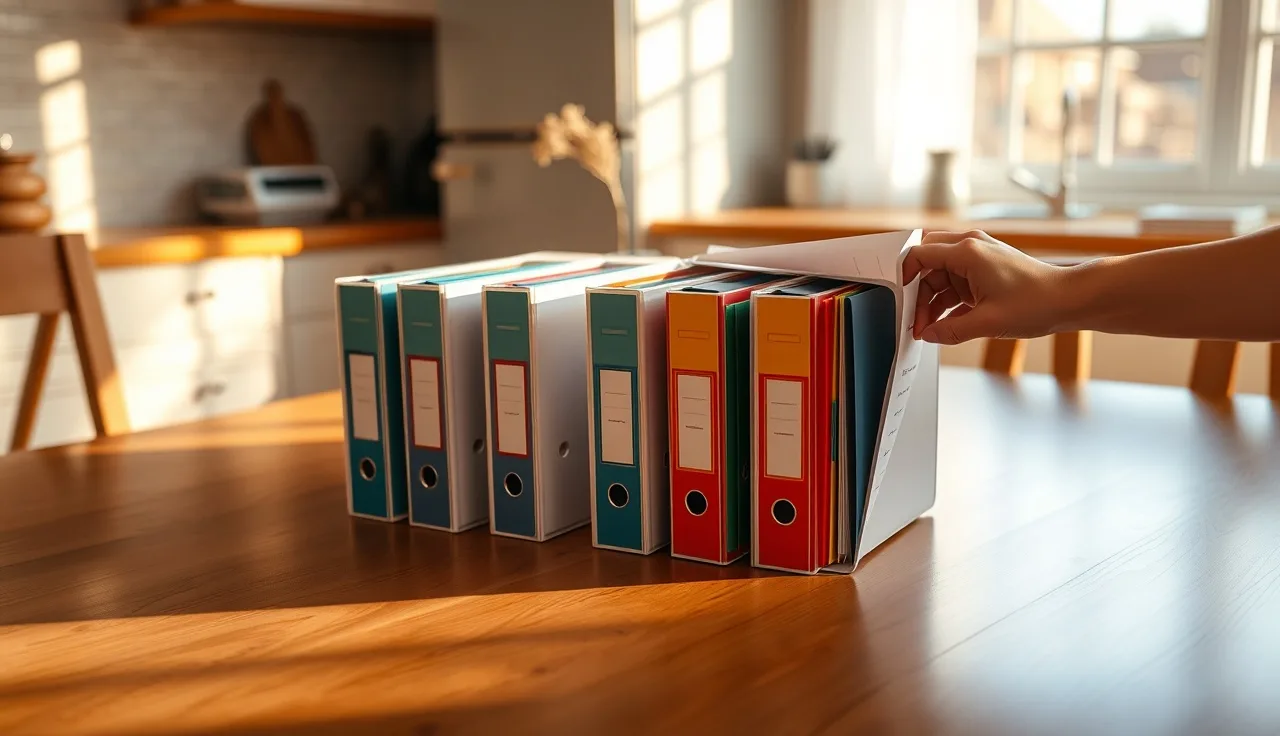
A winning appeal binder has five sections: your assessment notice and property record card, a one-page valuation summary, three to five comparable sales, condition evidence, and supporting documents. Put them in that order behind numbered tabs. Hearing officers read hundreds of these a year. Clean structure is what gets you taken seriously in a ten-minute hearing.
Why does binder organization actually matter at a hearing?
Hearing officers see dozens of cases in a day, sometimes over a hundred. A disorganized pile of printouts does not weaken your argument a little. It buries it. The officer has ten to twenty minutes with you, and if she cannot find your comparable sales fast, she moves on to the next case.
Organization is not about looking professional. It is about controlling the story. Your binder opens to a clean one-page summary: assessed at $420,000, comps support $355,000. You have framed the whole conversation before you say a word.
Boards say the same thing in their own language. California's State Board of Equalization, in its Assessment Appeals Manual, puts the burden of proof on the appellant and expects evidence in a form the board can weigh. The Cook County Assessor and the New York City Tax Commission both publish evidence and hearing rules that assume you show up with an organized record.
Tab labels and page numbers are not fussiness. They are the difference between a volunteer officer helping you find your point and one who checks a box that reads "evidence insufficient."
How many copies of the binder do you need to bring?
Bring at least three. One for the hearing officer or panel, one for the assessor's representative (who almost always shows up in person or by phone), and one for you to follow along.
Some boards want four, especially multi-member panels. Check your jurisdiction's rules before you print a page. The Cook County Assessor's office posts its hearing procedures online, including copy counts [4]. The Gwinnett County Board of Assessors in Georgia does the same [5].
In a large metro like Los Angeles, read the LA County property tax assessment appeals board rules first. They require exhibits to be exchanged with the assessor's office ahead of the hearing in many cases [6].
Print double-sided to cut cost. Use a three-ring binder, never a stapled packet. Stapled packets slide apart on the table and you cannot tab them.
What are the five sections every binder must have?
Treat your binder as a short argument, not a document dump. Here is the order that matches how a hearing officer works through a case.
Tab 1: Your assessment notice and the subject property record card This is your foundation. The notice is the government's claim. The property record card (also called an appraisal card or field card, and available from most assessor websites) shows what the assessor thinks you have: square footage, bed and bath count, condition grade, year built. Any error here is the first place you make money. If the card says you have a finished basement and you do not, that is the opening line of your case.
Tab 2: Your valuation summary page One page. Name, parcel ID, the assessed value, your opinion of value, and the dollar gap. If you cannot fit it on one page, you have not finished thinking. Officers actually read this page.
Tab 3: Comparable sales (comps) This is where most cases are won. Three to five closed sales of similar homes in your market area, ideally within the twelve months before the assessment date. Format every comp the same way: address, sale date, sale price, square footage, price per square foot, and a photo if you have one. Put a comp grid at the front of the tab.
Tab 4: Condition evidence Photos, contractor repair estimates, inspection reports. Anything showing your property is in worse shape than the assessor assumed. Order it by date. Caption each photo.
Tab 5: Supporting documents Recent purchase price (if you bought in the last two to three years), an independent appraisal if you paid for one, or other outside evidence. Some people add a listing history showing a home that failed to sell at or near the assessed value.
Five tabs. That is the whole thing. Do not pad it to look thorough.
How do you build the comparable sales grid?
The comp grid is the most important document in your binder. Get it wrong and nothing else saves you.
Pull sold comps from your county's public records, your local MLS (some areas open it to homeowners, others require a licensed agent), Zillow's "sold" filter, or Redfin. Cross-check against county deed records to confirm the actual sale price, because listing data sometimes shows the list price, not the closed number.
Your grid should look like the table below. Note where each figure came from, because the assessor's rep will ask.
| Address | Sale Date | Sale Price | Sq Ft | $/Sq Ft | Bed/Bath | Distance from Subject |
|---|---|---|---|---|---|---|
| 142 Elm St | 03/14/2024 | $341,000 | 1,620 | $210 | 3/2 | 0.4 mi |
| 87 Oak Ave | 05/02/2024 | $349,500 | 1,700 | $206 | 3/2 | 0.7 mi |
| 210 Pine Rd | 11/19/2023 | $358,000 | 1,750 | $205 | 3/2.5 | 1.1 mi |
| Subject | (Assessment date) | Assessed $420k | 1,680 | $250 | 3/2 | -- |
That last row is the argument. Your price per square foot is $250. The comps cluster around $205 to $210. That is a $67,000 to $75,000 overassessment on a 1,680 square foot house, visible in one glance.
Stay within half a mile in urban areas and one to two miles in the suburbs. The assessor attacks comp distance hard when you reach. Use sales within twelve months of the assessment date. Some states set that window by statute. Minnesota looks at sales in the year before January 2 of the assessment year [7].
Skip short sales, foreclosures, and estate sales unless you specifically argue they show market value. Assessors will attack those, and they are usually right to.
For Montgomery County property tax appeals in Maryland, the state Department of Assessments and Taxation runs its own property search and sales tool. Use it alongside your own research to head off the assessor's objections [8].
What photos should you include and how should you format them?
Photos do one job in your binder: they show condition the assessor could not see or chose to ignore. No glamour shots of the kitchen. Show the cracked foundation, the failing roof, the settling driveway, the water damage.
Print in color, 4x6 minimum, in a separate section within Tab 4 or as numbered exhibits. Add a one-sentence caption under each: "Cracked foundation wall, north corner of basement, photographed April 3, 2024." Dates matter, because assessors sometimes claim the damage happened after the assessment date.
If a contractor's repair estimate matches a photo, place the estimate right behind that photo. The picture, then the dollar figure. That sequence lands.
Five to twelve photos is usually right. Past twenty and you start losing the officer. Pick the ones that do the most work.
Should you include an independent appraisal in your binder?
If you have one, yes. A fee appraisal from a licensed appraiser is the strongest single piece of evidence you can bring, and most boards give it real weight.
The catch is cost. Residential appraisals run about $300 to $600 for a standard single-family home, and complex or high-value properties can push past $800. Say your assessment is $30,000 too high and your effective rate is 1.2%. That is $360 a year in excess tax. The appraisal pays for itself the first year, and you save that money every year after.
If you paid for an appraisal when you bought the house in the last twelve to twenty-four months, that document is often admissible even though you did not order it for the appeal. Put it in Tab 5 with a cover note giving the date and context.
No appraisal? Fine. The comp grid in Tab 3 is your substitute, and plenty of winning appeals never involve a paid appraisal. The TaxFightBack DIY appeal kit is built for that exact case. It walks you through comp selection and grid format so the binder carries the weight.
How should you tab and number the pages?
Use colored plastic tabs or numbered index dividers. The five-section structure maps to five tabs. Label each tab on the side so the officer can flip to any section without asking you where it is.
Number every page. Start at page 1 on your valuation summary (Tab 2) and run straight through to the end. Official county documents in Tab 1 can stay un-numbered, but your own printouts need sequential numbers.
Add a table of contents as the first page, before Tab 1. Five minutes of work, and it tells the officer your binder has a logic to it. It also protects you. If anyone says a document is missing, you point to the table of contents and the gap.
Sample table of contents:
| Tab | Contents | Pages |
|---|---|---|
| 1 | Assessment notice and property record card | pp. A-1 to A-4 |
| 2 | Valuation summary | p. 1 |
| 3 | Comparable sales grid and comp data sheets | pp. 2-18 |
| 4 | Condition photos and repair estimates | pp. 19-31 |
| 5 | Supporting documents (appraisal, purchase history) | pp. 32-40 |
What are the most common binder mistakes that lose hearings?
These are the errors boards name most often in their published guidance and training materials.
Using Zillow estimates as evidence. The Zestimate is an automated valuation model, not an appraisal. Some boards take it as a data point. Many will not. Your grid of actual closed sales is far stronger and much harder to wave off.
Comps that are too different. A 1,200 square foot ranch and a 2,800 square foot two-story are not comps, even on the same street. Adjustments are required, and if you cannot explain yours, the assessor's rep takes them apart. Stick to homes within 20% of your subject's square footage.
No adjustment narrative. Your comps are never identical to your home. Write a one-paragraph note explaining why you picked them and how you handled the differences in size, age, or features. Even two sentences beats nothing.
Leaving personal information in. If your binder holds financial documents or mortgage statements, redact account numbers before you hand copies to the assessor's rep.
Printing from a phone screen. Screenshots are hard to read and look amateur. Print from a desktop browser or export a clean PDF.
Showing up without your own copy. You will be nervous. Your binder is your script. Keep it in front of you.
Do the rules differ by state or county?
Yes, a lot. Here is the honest answer: there is no single national standard.
In Texas, the Appraisal Review Board follows procedures set by the Texas Comptroller's Property Tax Assistance Division, and evidence rules live in that office's ARB Manual. The Bexar County tax assessor page links to ARB hearing procedures that spell out accepted evidence formats [9].
In California, the State Board of Equalization's Assessment Appeals Manual puts the burden of proof on the appellant and expects evidence at or before the hearing unless the board allows a later filing [3].
New York City runs its own Tax Commission, with forms and evidence rules that differ from the rest of New York State. For NYC property tax appeals, the commission requires an income and expense form for income-producing properties, a rule that does not touch most residential appeals elsewhere [2].
Minnesota's Tax Court handles appeals above a value threshold and follows formal rules of evidence. Hennepin County, which covers Minneapolis, runs most appeals through its own board of appeal and equalization before escalation. See the Hennepin County property tax board procedures for local details [7].
The practical rule: find your county assessor's or board of equalization's hearing procedures page before you finalize the binder. Page counts, copy counts, and pre-submission deadlines vary, and a violation can get your evidence thrown out.
What should your one-page valuation summary actually say?
This is what a busy officer reads when she has sixty seconds. Make it count.
Top of the page: your name, the property address, the parcel ID, the assessment date, and the assessed value you are challenging.
Middle: your opinion of value, in dollars. One number. Then three bullet points, one sentence each, that summarize your evidence.
Example:
- Three comparable sales within 0.8 miles closed at an average of $207 per square foot; my home is assessed at $250/sqft.
- The property record card shows a finished lower level; the lower level is unfinished (see photos, Tab 4).
- A 2023 listing at $369,000 drew no offers in 87 days on market (see Tab 5).
Bottom: the tax impact. If the value dropped to your proposed number, what do you save each year? A specific dollar figure keeps the stakes in view. County effective rate of 1.4% and a $65,000 reduction is $910 a year.
Leave out your arguments about an unfair system, your record of paying on time, and anything else that is not evidence of value. Officers have heard all of it. They can only act on market evidence.
When should you submit your binder versus bring it on the hearing day?
Some jurisdictions require pre-submission. You deliver your binder to the assessor's office or the board a set number of days before the hearing. California's assessment appeals boards commonly want evidence five to ten business days in advance. Miss that window and the board can exclude your evidence even if you carry it in by hand [3].
Other places, including many Texas ARBs, let you present evidence for the first time at the hearing. The assessor gets the same right that day, so surprises can cut both ways.
For Santa Clara property tax appeals, the county's assessment appeals board sets out the pre-submission timeline in its procedural rules.
Submit early everywhere. Email or hand-deliver a courtesy copy to the assessor's rep before the hearing even when the rules do not force it. Assessors who read your evidence in advance sometimes call to settle before the hearing date, which saves everyone the trip.
Once you know your hearing date, count backward. Subtract the pre-submission window, subtract a day for printing and assembly, and set that as your internal deadline for a finished binder.
What is the best order to present your argument at the hearing itself?
Your binder is the script. Follow it in order.
Open with your name, the parcel ID, the current assessed value, and your proposed value. Thirty seconds. Hand the officer and the assessor's rep their copies and say, "I will walk through the tabs in order."
Tab 1: Point out any errors on the property record card. One sentence per error, with a reference to where it appears.
Tab 2: Bring them to the valuation summary and walk through the three bullets.
Tab 3: Walk the comp grid. Read the average price per square foot of your comps, read the assessed price per square foot of your home, and let the gap sit for a beat.
Tab 4: Highlight your two or three most serious condition photos.
Tab 5: If you have an independent appraisal, state the appraiser's concluded value. If you have a recent purchase price, state it.
Then stop talking. The officer will ask questions. Answer directly. Do not over-explain.
Most residential hearings take eight to twelve minutes of speaking. If you need twenty, you packed too much into the binder.
If the outcome disappoints you, you usually have a right to escalate to a state body or tax court. The St. Louis County personal property tax path, for example, lets you take a case to the State Tax Commission of Missouri after a local board decision.
Frequently asked questions
What is the most important document to include in a property tax appeal binder?
Your comparable sales grid is the single most important document. It is direct market evidence of value, which is what most states require appellants to prove. The assessment notice and property record card come second, because errors on the record card are your other main avenue. Everything else supports those two pillars.
How many comparable sales should I include in my binder?
Three to five is the right range for most residential appeals. Fewer than three gives the assessor room to attack your sample as too small. More than five starts to look like you are hunting for outliers. Use the sales closest to your home, most similar in size and age, and most recently closed before the assessment date. Quality beats quantity every time.
Can I use Zillow or Redfin printouts as evidence?
Zillow's Zestimate is not accepted as evidence by most boards, because it is an algorithm, not an appraisal. However, Redfin and Zillow's sold data showing actual closed sale prices and property details can support your comp grid, as long as you cross-reference the figures against county deed records. Label the source clearly on each printout.
Do I need a professional appraisal to win a property tax appeal?
No. Many successful residential appeals rely entirely on a well-built comparable sales grid and condition evidence. A licensed appraisal is stronger and harder for the assessor to dismiss, but it costs $300 to $600 and is not required. If the stakes are high, say a $50,000-plus overassessment, an appraisal pays for itself quickly. For smaller overassessments, DIY comps usually suffice.
What if my property record card has errors? Where does that go in the binder?
Put the property record card in Tab 1 and use a highlighter or sticky note to flag the error. Then in Tab 2, your valuation summary should call out the error in one bullet point. If the assessor has the wrong square footage, the wrong number of bathrooms, or credits a finished basement you do not have, that error alone can win a reduction with no comp evidence needed.
How far back can comparable sales be and still count as evidence?
Most states prefer sales within twelve months before the assessment date. Minnesota uses sales in the year preceding the January 2 assessment date [7]. California guidance also emphasizes recent sales. Sales older than eighteen months are generally weak unless you can show the market was stable and no newer comps exist. When in doubt, stick to the twelve-month window.
Can I submit evidence by email or mail instead of bringing a binder to the hearing?
Some boards accept or require advance electronic or mail submission, but for the hearing itself you still need physical copies. Check your jurisdiction's rules. California assessment appeals boards in particular have specific pre-submission timelines. Even if email submission is allowed in advance, bring printed binders on hearing day. Boards do not project your email on a screen for the officer to read.
What if I cannot find comparable sales near my property?
Expand your search radius gradually, from half a mile to one mile to two miles, and document why you had to expand. If your neighborhood genuinely has few sales, use the most similar properties available and write an adjustment note explaining the differences. An alternative is a recent purchase price for your own property, if you bought within two to three years of the assessment date, which is direct evidence of market value.
Should I include my mortgage or purchase documents in the binder?
Include your closing disclosure if it shows a purchase price within the last two to three years, because that is strong arms-length evidence of market value. Redact your account numbers and lender information before copying. Leave out your current mortgage balance, monthly payment, and other financing details. They have no bearing on assessed value and look like you are pleading hardship, which most boards cannot consider.
What happens if the assessor's representative brings evidence I have never seen before?
In many jurisdictions the assessor has the right to present evidence at the hearing just as you do. That is why submitting your binder early and requesting the assessor's evidence in advance is worth doing wherever the rules allow. If the assessor introduces a surprise document at the hearing, you can ask the officer for a continuance to respond. You do not have to accept surprise evidence without time to reply.
How long before my hearing should the binder be ready?
Have a complete draft ready at least two weeks out. That gives you time to fill gaps in your comp data, order a contractor estimate if needed, and meet any pre-submission deadline, which can run five to ten business days before the hearing in California and similar states. Print final copies no later than three days before the hearing so you are not scrambling.
Can I use my neighbor's lower assessment as evidence that mine is too high?
This is an equity argument, and many states allow it alongside a market value argument. You would need your neighbor's property record card and assessed value, which are public records, plus a side-by-side comparison showing your properties are similar. Illinois and Texas explicitly allow equity-based arguments at the board or ARB level. An equity argument alone is weaker than market evidence, so use both if you can.
What if my hearing is conducted by phone or video instead of in person?
Remote hearings became common after 2020 and many boards still use them. Submit your binder physically or electronically before the hearing using whatever method the board specifies. During the call, reference tabs and page numbers clearly so the officer can follow along. Keep your own printed copy in front of you. The structure does not change. The delivery does.
Sources
- Illinois Property Tax Appeal Board (official state site): PTAB requires evidence to be submitted in an organized format and may disregard evidence it cannot evaluate
- New York City Tax Commission (nyc.gov): The NYC Tax Commission publishes evidence submission and hearing procedures, including an income and expense form requirement for income-producing properties
- California State Board of Equalization, Assessment Appeals Manual: California assessment appeals boards place the burden of proof on the appellant and expect evidence at or before the hearing
- Cook County Assessor's Office, Appeal Procedures: Cook County Assessor posts hearing procedures including copy requirements for appeal hearings
- Gwinnett County, Georgia (official county site): Gwinnett County Board of Assessors publishes hearing procedures and evidence requirements for property tax appeals
- Los Angeles County Assessment Appeals Board (lacounty.gov): LA County Assessment Appeals Board requires exhibits to be exchanged with the assessor's office before the hearing in many cases
- Minnesota Department of Revenue, Property Tax (revenue.state.mn.us): Minnesota uses sales from the year preceding January 2 of the assessment year as the relevant comparable sales period
- Maryland Department of Assessments and Taxation, Real Property Search: Maryland SDAT publishes comparable sales and property search tools that appellants can use to support assessment appeals
- Texas Comptroller of Public Accounts, Property Tax: The Texas Comptroller's ARB Manual sets out evidence format and hearing procedures for property tax appeals statewide
- National Taxpayers Union Foundation, Property Tax Relief Research: Research indicates a significant share of residential properties are overassessed relative to market value, supporting the value of appeals
- Lincoln Institute of Land Policy, Property Tax Research: Lincoln Institute research documents variation in assessment accuracy across jurisdictions and the role of evidence in successful appeals