Last updated 2026-07-11
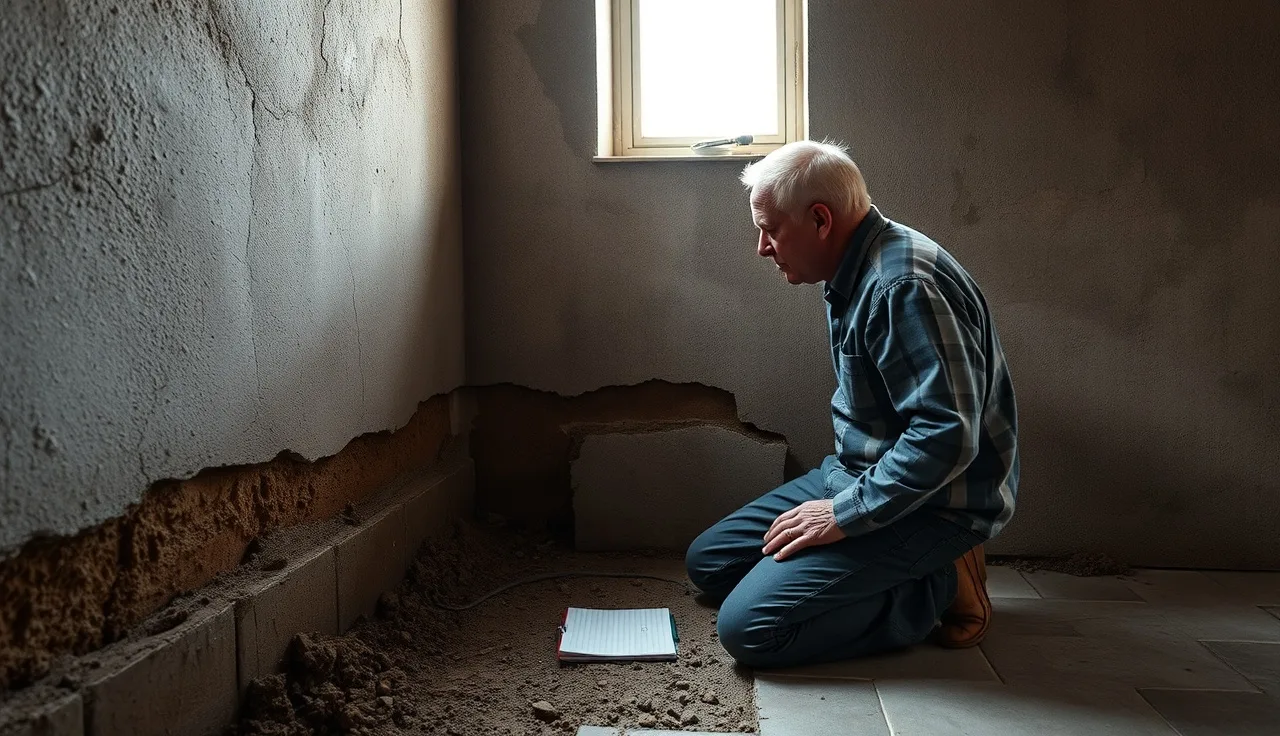
TL;DR
Physical depreciation arguments win when you document specific, measurable defects the assessor's mass-appraisal model missed: roof age, foundation cracks, dead mechanicals, deferred maintenance. The strongest cases pair contractor repair estimates with sales of properties in similar condition. Assessors apply one broad depreciation adjustment. Your job is to prove yours is worse than the neighborhood average, in dollars.
What is physical depreciation in property tax assessment?
Physical depreciation is the value your property loses because of the actual, physical condition of its structure and components. Assessors split depreciation into three buckets: physical, functional, and external. Physical is the one you can see, measure, and photograph.
The International Association of Assessing Officers (IAAO) defines physical depreciation as "a loss in value due to deterioration from use, age, or the elements." [1] That definition matters because it hands you a framework the assessor already accepts. You are not arguing theory. You are arguing that the assessor measured your deterioration wrong.
Mass-appraisal systems, which most county assessors use to value hundreds of thousands of properties at once, apply depreciation with age-life tables. A house built in 1975 gets a standard depreciation percentage against its replacement cost, regardless of whether the roof was replaced last year or is caving in right now. That gap is your opening.
Functional obsolescence (outdated floor plans, low ceilings) and economic obsolescence (highway noise, an industrial neighbor) are separate arguments. This article sticks to physical depreciation. It has the clearest documentation path and the highest win rate for homeowners going it alone.
How do assessors calculate physical depreciation, and where do they get it wrong?
Most residential assessors use one of two methods: the age-life method or a condition-rating table. The age-life method divides effective age by total economic life, then applies that percentage to the improvement's replacement cost. A 20-year-old house with a 60-year economic life gets roughly 33 percent depreciation deducted, no matter what shape it's in. [1]
Condition-rating tables do a little better. They assign each property a rating (excellent, good, average, fair, poor) and tie a depreciation multiplier to each grade. The catch: assessors often set that condition during a drive-by or from permit history alone. If they coded your property "average" and your mechanicals are shot, they used the wrong multiplier.
Three errors show up over and over in hearing records.
1. The assessor used chronological age instead of effective age. A well-kept 1960 home can have an effective age of 30. A neglected 1995 home can have an effective age of 50. You want to argue effective age, not birth year.
2. The assessor ignored deferred maintenance on major systems. Roof, HVAC, plumbing, and electrical move effective age faster than anything else.
3. The exterior inspection missed interior defects. Foundation problems, water intrusion, mold, and structural damage are almost always invisible from the street.
The IAAO's Standard on Mass Appraisal of Real Property admits outright that mass-appraisal models carry built-in error and that individual property characteristics can deviate a lot from the model's assumptions. [1] That admission is your opening. Use it.
Which physical defects actually move the needle at a hearing?
Not every defect wins. Boards and hearing officers have heard every small complaint twice. The defects that change decisions share three traits: they are objectively verifiable, they cost real capital to cure, and the cure cost is large next to the assessed value.
Here is how the major defect categories perform.
| Defect Type | Typical Cost Range | Typical Value Impact | Evidence Needed |
|---|---|---|---|
| Roof replacement (asphalt shingle, 2,000 sq ft) | $8,000-$18,000 | 3-8% of home value | Age + 2 contractor bids |
| HVAC full replacement | $6,000-$15,000 | 2-5% of home value | Age + 1 contractor estimate |
| Foundation repair (moderate crack) | $4,000-$30,000+ | 5-15% of home value | Engineer report required |
| Electrical rewire (full) | $8,000-$20,000 | 2-6% of home value | Licensed electrician scope |
| Plumbing (galvanized replacement) | $5,000-$15,000 | 2-5% of home value | Plumber's written scope |
| Water intrusion / mold remediation | $2,000-$50,000+ | 5-20% or more | Remediation contractor + photos |
| Single cosmetic issue (paint, carpet) | $500-$3,000 | Near zero | Not worth arguing alone |
The value ranges here are rough and depend heavily on your market. Nobody has a single national database mapping repair costs to assessment reductions with statistical precision. The closest published guidance is the CoreLogic (Marshall & Swift) residential cost handbook and the IAAO's depreciation guidance, both of which assessors themselves reference. [1][2]
Foundation problems are the strongest argument you can bring. A structural engineer's report runs $300 to $600, but a signed report from a licensed PE saying your foundation needs repair carries far more weight than photographs ever will. Hearing officers treat PE reports as something close to expert testimony.
Cosmetic defects almost never win. Skip the paint, the landscaping, the dated finishes. Those get coded as functional obsolescence, not physical depreciation, and they're weak even there.
What evidence do you actually need to present a physical depreciation argument?
You need a package that leaves the hearing officer no room to say "I'm not sure this is real." That means four things.
First, proof the defect exists. Timestamped photographs are the floor. For hidden defects, you need third-party reports: a licensed contractor's inspection, a structural engineer's report, a home inspection report, or a remediation company's written scope. A home inspection report (typically $300 to $500) is probably the most cost-effective document you can buy for an appeal. It catalogs every defect a licensed inspector can see, and it's dated and signed.
Second, proof of the cost to cure. Two written contractor estimates on company letterhead, addressed to your property, for a specific scope of work. Recent estimates only, ideally within 12 months of the hearing. Boards discount verbal quotes and online calculators. They respect written scopes from licensed contractors.
Third, proof the assessor's model missed it. Pull your property record card from the assessor's office. It should show the condition code, the effective age assigned, and the depreciation percentage applied. Set that against your evidence. If the card says "good condition" and your inspection report lists a failing roof, a compromised deck, and a dead HVAC, that contrast is the whole argument.
Fourth, ideally, a comparable sale of a similarly distressed property. Hardest piece to find, strongest one to have. Show a house on your street in similar shape that sold 15 percent below what the assessor thinks yours is worth, and you've made a market-based physical depreciation argument that's nearly impossible to wave away. Zillow shows sale prices, but your county recorder's office has the recorded deeds with actual consideration amounts. [3]
For homeowners who want a structured way to organize all of this, TaxFightBack's appeal kit walks through the evidence checklist document by document so nothing gets missed.
How do you calculate the depreciation adjustment to request?
You are doing more than reading off a list of problems. You are handing the board a number: what the assessed value should be once the depreciation error is fixed.
The cost approach gives you the cleanest path. The logic:
Assessment value = Land value + (Replacement cost of improvements - Depreciation applied)
Your claim is that the depreciation applied was too small, so you want to raise it. The adjustment equals your documented cure costs as a share of the assessor's replacement cost for the improvement.
Here's a worked example. The assessor values your house at $350,000. The property record card shows land at $75,000 and improvements at $275,000, with 25 percent depreciation applied to a replacement cost of $367,000 ($367,000 x 0.25 = $91,750). Your documented repair needs total $40,000 in contractor estimates. You argue that $40,000 in cure costs is additional physical depreciation the model missed. $40,000 / $367,000 = 10.9 percent additional depreciation. New improvement value: $275,000 minus $40,000 = $235,000. New total assessment: $235,000 + $75,000 = $310,000. You just built a case for a roughly 11 percent cut.
Not every state uses a pure cost approach for residential property. California assesses on acquisition price adjusted for inflation under Proposition 13, so physical depreciation works differently there. [4] Cook County, Illinois runs mass-appraisal cost models where physical depreciation arguments are routine at the board of review. [5] Check your state's methodology before you build the calculation.
How should you present physical depreciation arguments at the hearing itself?
Most residential appeal hearings run 10 to 20 minutes. Some informal hearings at the assessor's office run shorter than that. You have no time for a long narrative.
Build your presentation in three steps. One: state the assessor's current condition code and effective age from the property record card. Two: present your evidence that the code is wrong, leading with the most expensive defect. Three: state the specific assessed value reduction you want, arithmetic shown.
Bring printed copies of everything. Color photographs, contractor estimates, inspection reports, your calculation sheet. Boards drown in loose paper. A tabbed folder with a one-page summary on top makes you look credible and makes their job easier, which works in your favor.
Skip the emotion. "This house is falling apart" without documentation gets dismissed in seconds. Compare that to this: "The assessor's record shows a condition rating of 'average' and an effective age of 25 years, but this licensed inspector's report dated March 2025 identifies a failed roof, a compromised foundation, and a non-operational HVAC, and two contractors put the cure cost at $54,000, which supports an assessed value of $X." That second version is a hearing officer's dream. It gives them something to write down.
At the informal level, before you ever reach a formal appeals board, assessors often settle fast when they see documented repair estimates that are large next to the assessment. The formal board has more procedural hoops but is still reachable without an attorney in most states.
Headed to a Cook County hearing or a Los Angeles County assessment appeals board hearing? Check the board's evidence submission rules before you show up. [5][6] Both require evidence in advance for formal hearings.
What evidence do hearing boards reject, and why?
Experienced hearing officers see the same weak evidence week after week. Knowing what fails saves you the trip.
Online repair calculators (HomeAdvisor ranges, Angi estimates) get thrown out almost every time. They aren't contractor-specific, aren't addressed to your property, and aren't signed by a licensed professional. Get real estimates.
Photographs alone, with no cost estimate attached, rarely move a board. A photo of a cracked driveway proves the driveway is cracked. It says nothing about value impact. Pair every photograph with a cure cost.
General complaints about the neighborhood or the local market belong in a different argument (sales comparisons or economic obsolescence). Physical depreciation has to stay on the condition of your building.
Hearsay estimates hurt you. "My brother-in-law the contractor said it'd run $30,000" is worth nothing. Written, on letterhead, specific scope, or leave it home.
Overly broad demands sink your credibility. If your home has one bad system and you ask for a 40 percent reduction, the board reads you as unreasonable and your real argument gets tainted with it. Calculate honestly. A tight, defensible number beats a big, hopeful one nearly every time.
Does physical depreciation work differently for commercial properties?
For commercial property, physical depreciation follows the same logic, but the evidence bar sits higher and the dollars run larger. Commercial assessments in most jurisdictions can be appealed to a county board of revision, a state tax appeal board, or in some cases straight to the state tax court. [7]
Commercial buildings carry longer economic lives in the assessor's tables (40 to 60 years for office and retail, 50 to 80 years for industrial, depending on jurisdiction). Longer lives mean small effective-age errors turn into large absolute dollar swings. A 5-year error in effective age on a $5 million building assessed at full replacement cost can mean $250,000 or more in over-assessment.
On commercial property, licensed MAI appraisers almost always get involved. Their reports present physical depreciation using the cost approach in a format boards and courts already accept. The IAAO's guidance on the cost approach is the standard reference. [1]
Own commercial real estate in a major urban market? The stakes usually justify professional representation. Residential DIY appeals sit well within reach of a prepared homeowner. Commercial cases with hundreds of thousands in potential tax reduction are a different calculation.
For large urban commercial portfolios in places like NYC or LA County, physical depreciation is usually one piece of a larger cost-approach case that also folds in functional obsolescence.
What deadlines and procedural rules affect physical depreciation appeals?
Physical depreciation is not a free-floating argument. You can only raise it inside the formal appeal window your jurisdiction grants, and that window is often shorter than homeowners expect.
| Jurisdiction | Typical Appeal Window | Filing Deadline Trigger | Notes |
|---|---|---|---|
| Cook County, IL | 30 days from assessment notice | Township reassessment cycle | Board of Review filing required [5] |
| Los Angeles County, CA | July 2 - November 30 (Assessment Appeals Board) | Annual | Filing fee may apply [6] |
| Bexar County, TX | May 15 or 30 days from notice | ARB protest | Texas Tax Code Sec. 41.44 [8] |
| Gwinnett County, GA | 45 days from assessment notice | Annual notice | Board of Equalization [9] |
| Hennepin County, MN | April 30 (Local Board of Appeal) | Annual | Minn. Stat. § 274.01 [10] |
| Montgomery County, MD | 45 days from assessment notice | Triennial assessment | Md. Tax-Property Article § 14-502 [11] |
Miss the filing deadline and you wait for the next assessment cycle, typically one to three years depending on your state. An airtight physical depreciation argument still gets rejected on procedure if it lands late.
For complete deadline and filing guidance in your county, start with your local assessor's website. Counties like Bexar County, Cook County, Gwinnett County, and Los Angeles County each post their procedures and deadlines publicly.
How do you find comparables that support a physical depreciation argument?
Comps are your backstop. If the cost-approach argument alone doesn't land, a distressed comp that sold below your assessed value can close the case.
The key is matching condition, more than square footage and neighborhood. A structurally sound 1980 ranch down the street is a bad comp for your 1980 ranch with foundation problems. You need a distressed sale (foreclosure, estate sale, or an arm's-length deal where the listing spelled out major repairs) or you need to adjust your comps for condition.
County recorder websites and your assessor's own comparable-sales database are the primary sources for transaction data. [3] MLS data comes through a real estate agent if you know one, or through public tools like Redfin and Zillow, but those tools strip out the MLS condition notes that actually matter. Pull the original listing description for any comp you plan to use. If it said "sold as-is" or "needs TLC," document that language word for word.
Some assessors publish their own comparable-sales adjustment grids. If yours does, check the condition adjustment factor between "average" and "fair" or "poor." If they apply, say, a 5 percent adjustment per condition grade and you're arguing two grades lower, you've got their own math backing your request.
In counties like Montgomery County, MD or Santa Clara County, CA, the assessor's office publishes comparable sale summaries with the assessment notice, which gives you a head start on finding and adjusting the right comps.
Can you win a physical depreciation argument without hiring an appraiser?
Yes, for most residential cases. A licensed appraisal is the gold standard, but it costs $400 to $800 for a residential property and isn't always necessary.
The DIY path works when your defects are clear, your cure costs are documented in contractor estimates, and your property record card shows a condition rating obviously out of step with your evidence. That combination gets results at the informal level with no formal appraisal at all.
When do you probably need an appraiser? When your property has several intersecting issues (physical depreciation plus functional obsolescence plus a bad market location), a licensed appraiser can wrap all three into a single value conclusion. When you've already lost an informal hearing and are heading to a formal board, the credibility bump from a certified appraisal matters more. And when your over-assessment is large (more than $15,000 to $20,000 in tax savings over the assessment period), the math tips toward hiring one.
TaxFightBack's appeal kit is built for the common case: clear physical defects, documented costs, and a homeowner who wants to keep the full savings without paying a contingency fee. The kit gives you the calculation templates and evidence checklist that get you to a hearing-ready package.
On the cost of professional representation versus DIY savings, nobody has published rigorous national data. The closest data point is a Lincoln Institute of Land Policy analysis finding that fewer than 5 percent of eligible residential property owners appeal their assessments in any given year, which means most over-assessed homeowners simply pay and move on. [12]
What happens after you win a physical depreciation reduction?
Winning produces a written order that adjusts your assessed value. The assessor's office then issues a corrected tax bill, typically within one to three billing cycles depending on the jurisdiction.
Most physical depreciation adjustments cover a single assessment year. They don't lock in a lower assessment forever. At the next reassessment, the assessor may re-code your condition exactly as before, especially if they never actually walked the interior. You may have to appeal again.
Some jurisdictions do allow multi-year agreements or automatic carryforward of a condition adjustment when the property hasn't changed. Ask the hearing officer or the assessor's office directly whether yours carries forward.
If you make repairs after winning, the condition code may legitimately rise at the next reassessment. That's fair. If they push your assessment past what the finished repairs actually justify, that's a fresh appeal.
For states with property tax caps or acquisition-value systems (California's Prop 13, Michigan's Proposal A), a physical depreciation win lowers your taxable value in a slightly different way. In California, the assessor can drop your assessment below the Prop 13 base when market value falls below it, and physical depreciation evidence supports that argument. [4] Once markets recover and your physical issues are cured, the assessment climbs back onto the Prop 13 trajectory.
Keep every hearing record: the evidence you submitted, the order you received, the corrected bill. If the assessor ignores the order or re-inflates your value at the next reassessment without re-inspecting, those records are the starting point for your next appeal.
Frequently asked questions
What is physical depreciation and how is it different from functional obsolescence?
Physical depreciation is value loss from actual deterioration of a building's components: roof wear, structural damage, mechanical failure. Functional obsolescence is value loss from outdated design like low ceilings or a one-car garage in a two-car market. Keep the arguments separate at a hearing. Physical depreciation has a clearer documentation path (contractor estimates, inspection reports) and tends to be easier to win without expert witnesses.
How much can a physical depreciation argument reduce my property tax assessment?
It depends on what's wrong and what your assessor's model assumed. Documented cure costs of $30,000 to $60,000 on a $300,000 assessed property can support a 10 to 20 percent reduction. Foundation problems can drive larger cuts, sometimes 15 percent or more, especially with a structural engineer's report. There's no universal number. The reduction should match your documented, reasonable cure costs as a share of the assessor's replacement cost for the improvement.
Do I need a licensed appraiser to make a physical depreciation argument at a residential hearing?
Not for most informal or first-level board hearings. A home inspection report from a licensed inspector, two contractor estimates on company letterhead, and your property record card are usually enough. A licensed appraiser's full report strengthens a formal board or tax court case but adds $400 to $800 in cost. Calculate whether your potential savings justify that expense first. Many straightforward residential cases win without one.
What documents should I bring to a property tax appeal hearing for physical depreciation?
Bring the assessor's property record card showing the current condition code and effective age. Bring dated photographs of every defect. Bring the licensed inspector's report if you have one. Bring two written contractor estimates with specific scopes on company letterhead. Bring your calculation showing the requested assessed value reduction. Organize it all in a tabbed folder with a one-page summary on top. Bring enough copies for the panel plus one for yourself.
Can I use a home inspection report as evidence in a property tax appeal?
Yes. A home inspection report from a licensed inspector is exactly the kind of third-party, dated, signed document boards treat as credible evidence of physical condition. It won't replace a contractor's repair estimate, which sets the dollar cost to cure, but it's strong proof that a defect exists and was assessed professionally. A good inspection report costs $300 to $500 and can support reductions worth far more.
Does roof age alone win a physical depreciation argument?
Rarely by itself. Roof age gets far more traction paired with a roofing contractor's inspection confirming end-of-life condition and a written replacement estimate. Assessors know a 20-year-old asphalt shingle roof may have years of life left depending on installation quality and climate. Prove it needs replacement, more than that it's old. A roofer's written note on granule loss, flashing failures, or active leaking is what turns age into a winnable argument.
What is effective age and how do I argue it in a property tax appeal?
Effective age is the age a building appears to be based on condition, regardless of construction date. A poorly maintained 1990 house can have an effective age of 40 years; a well-kept 1960 house can have an effective age of 25. Your argument is that the assessor used the wrong effective age and applied too little depreciation as a result. Supporting evidence: a home inspection report, contractor estimates for deferred maintenance, and the property record card showing the effective age they actually used.
How does physical depreciation work differently in California under Proposition 13?
Under Proposition 13, California properties are assessed at acquisition value adjusted for inflation at a maximum of 2 percent annually, not at current market value. But if current market value drops below the Prop 13 base (a Proposition 8 temporary reduction), you can request reassessment to market value. Physical depreciation evidence supports that argument by showing your property's condition pulls its market value below the Prop 13 baseline. Once markets recover or repairs are made, the assessment returns to the Prop 13 trajectory. [4]
What's the difference between arguing physical depreciation at the assessor's office versus at the formal appeals board?
At the assessor's informal level, most jurisdictions accept a simple meeting where you show your evidence, and assessors often settle fast when cure costs are well-documented and clearly large. At the formal board level, many counties require advance evidence submission (sometimes 10 to 30 days before the hearing), and the process is more structured. Evidence that settled an informal case may need tighter organization for a board. Check your specific board's rules before showing up.
Can deferred maintenance arguments apply to townhouses and condos, or just single-family homes?
Deferred maintenance arguments apply to any property type, but condos are more complicated. If you own a condo, you own a unit, and most major systems (roof, exterior, HVAC in some buildings) belong to the HOA. Your depreciation argument may need to focus on interior unit condition: kitchen, baths, flooring, in-unit HVAC. For common-area problems, you'd generally need to argue that shared building defects reduce your unit's market value, which is harder to document without a full building inspection the HOA controls.
What if the assessor never inspected the interior of my house?
This is common. Most residential assessors do exterior-only inspections or pure drive-by reviews. If your property record card shows a condition code set without an interior inspection, and your interior has significant documented defects (foundation, mold, plumbing, electrical), you can state plainly at the hearing that the condition rating was made without interior access. That doesn't win the argument on its own, but it explains the gap between their code and your evidence, and it chips at the presumption that their assessment is accurate.
How long does it take to get a corrected tax bill after winning a physical depreciation appeal?
It varies by jurisdiction. Most assessors issue a corrected assessment notice within 30 to 90 days of a hearing order. Tax bills follow the local billing schedule, so your corrected tax may not show up until the next cycle. If you already paid on the over-assessed value, most jurisdictions require a refund or credit within a set period (often 60 to 90 days of the corrected order). Ask your assessor's office about refund timelines when you get your decision.
Are there specific condition defects that hearing boards are skeptical of?
Yes. Cosmetic issues like dated finishes, old carpet, and worn paint almost never move boards because they're cheap to fix and highly subjective. Neighborhood complaints (loud street, nearby commercial use) belong in economic obsolescence, not physical depreciation. Boards also discount homeowner self-assessments and photos of normal wear that matches the property's age. Focus on systems that are objectively failing and need licensed contractors to repair: structure, roof, HVAC, plumbing, electrical.
Does filing a physical depreciation appeal trigger a full reassessment that could raise my taxes?
This fear is common but largely overstated for most residential appeals. In most states, the assessor cannot raise your assessment past the current notice amount simply because you filed. A few states (Missouri and Maryland get cited) allow the board to correct errors in either direction. Check your state's rules specifically. In practice, the large majority of residential appeals end in a reduction or no change, not an increase. The risk of an increase is real in a handful of states but low in absolute frequency.
Sources
- International Association of Assessing Officers (IAAO), Standard on Mass Appraisal of Real Property: IAAO defines physical depreciation as a loss in value due to deterioration from use, age, or the elements; mass-appraisal models carry inherent error and individual property characteristics can deviate significantly from model assumptions
- CoreLogic (formerly Marshall & Swift), Residential Cost Handbook: Residential replacement cost and depreciation tables used by assessors nationally, including age-life depreciation percentages by property type
- National Association of Counties (NACo), County Recorder and Assessor Offices: County recorder offices maintain recorded deeds with consideration amounts; county assessor offices publish comparable sales data used in assessment
- California State Board of Equalization, Proposition 13 and Proposition 8 Assessment: Under Proposition 13, California properties are assessed at acquisition value with 2% annual cap; Proposition 8 allows temporary reduction when current market value falls below the Prop 13 base
- Cook County Board of Review, Illinois: Cook County Board of Review accepts appeals within 30 days of township reassessment notice; evidence submission rules apply for formal hearings
- Los Angeles County Assessment Appeals Board: Los Angeles County assessment appeals run July 2 through November 30 annually, with evidence submission rules for formal hearings and a possible filing fee
- Lincoln Institute of Land Policy, Property Tax in the United States: Commercial assessments can be appealed to county boards of revision, state tax appeal boards, or state tax courts depending on jurisdiction
- Texas Comptroller of Public Accounts, Texas Property Tax Code Section 41.44: Texas Tax Code Section 41.44 sets the protest deadline as May 15 or 30 days from the date of the assessment notice, whichever is later
- Gwinnett County Board of Assessors, Georgia: Gwinnett County property owners have 45 days from the assessment notice to file an appeal with the Board of Equalization
- Minnesota Department of Revenue, Property Tax Appeals, Minnesota Statutes Section 274.01: Minnesota Stat. Section 274.01 governs Local Board of Appeal and Equalization; April 30 is the standard deadline for local board appeals in Hennepin County
- Maryland Department of Assessments and Taxation, Tax-Property Article Section 14-502: Maryland Tax-Property Article Section 14-502 provides 45 days from the assessment notice to appeal; Maryland uses a triennial assessment cycle
- Lincoln Institute of Land Policy, Challenging the Fairness of Property Tax Assessments: Analysis finds fewer than 5 percent of eligible residential property owners appeal their assessments in any given year, leaving significant savings unclaimed