Homestead Exemption vs Homestead Protection: Two Different Things With Similar Names
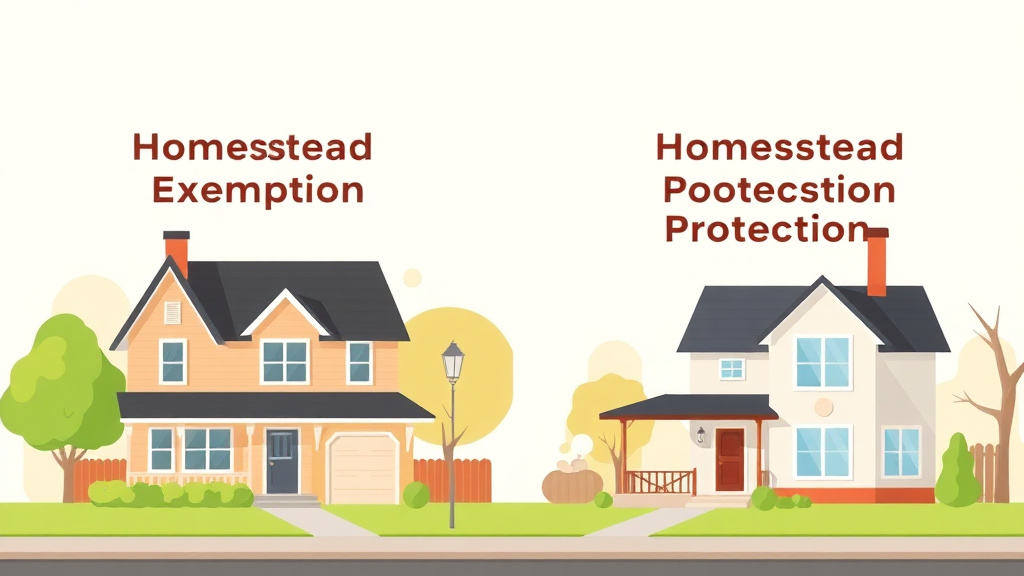
If you have heard the term "homestead" in connection with your home, you might be confused. There are two completely different legal concepts that use the word homestead, and they serve very different purposes. One reduces your property taxes. The other protects your home from creditors. Understanding the difference matters because you might need both.
TL;DR
- Homestead exemption: reduces the taxable value of your home, lowering your property tax bill
- Homestead protection (homestead declaration): shields your home equity from creditors in bankruptcy or lawsuits
- They are completely separate legal protections that serve different purposes
- You should look into both if you own a home
- Filing for one does not give you the other
Homestead Exemption: Property Tax Relief
A homestead exemption is a property tax benefit. It reduces the assessed value of your primary residence for property tax purposes. If your home is assessed at $300,000 and you have a $50,000 homestead exemption, you only pay taxes on $250,000.
Key Features
- Reduces your property tax bill
- Available in most states (amount varies widely)
- Must be your primary residence
- Filed with the county assessor's office
- Does not protect against creditors
- Automatic renewal in many states after initial filing
How Much Does It Save?
| State | Exemption Amount | Approx. Annual Savings |
|---|---|---|
| Texas | $100,000 (school taxes) | $1,200-$2,000 |
| Florida | $50,000 | $450-$600 |
| Louisiana | $75,000 of market value | $300-$500 |
| Idaho | 50% of first $250,000 | $500-$900 |
| California | $7,000 | $50-$75 |
Do not assume you are automatically enrolled. Most exemptions require an application, and many homeowners lose years of savings simply because they never filed. Contact your county assessor's office or check their website for the application form. Bring proof of eligibility (age verification, disability documentation, veteran status, etc.) and file well before the deadline.
If you qualify for multiple exemptions, apply for all of them. In most jurisdictions, exemptions stack. A senior homeowner who is also a veteran can often claim both exemptions simultaneously, doubling the savings.
Homestead Protection: Creditor Shield
Homestead protection (also called a homestead declaration or homestead right) is a legal mechanism that protects your home equity from creditors. If you are sued, go bankrupt, or face debt collection, homestead protection can prevent creditors from forcing the sale of your home to pay debts.
Key Features
- Protects home equity from creditor claims
- Available in most states (protection amount varies widely)
- Some states require you to file a declaration with the county recorder
- Some states provide automatic protection without filing
- Does not reduce property taxes
- Does not protect against all debt (mortgage, tax liens, and some other debts are usually excluded)
How Much Protection?
| State | Protection Amount | Notes |
|---|---|---|
| Texas | Unlimited (10 acres urban, 100 acres rural) | One of the strongest in the nation |
| Florida | Unlimited (up to half acre urban, 160 acres rural) | No dollar cap |
| Kansas | Unlimited (1 acre urban, 160 acres rural) | No dollar cap |
| California | $300,000-$600,000 | Varies by county median home price |
| Massachusetts | $500,000 | Must file declaration |
| New York | $179,950-$399,900 | Varies by county |
Side-by-Side Comparison
| Feature | Homestead Exemption | Homestead Protection |
|---|---|---|
| Purpose | Reduce property taxes | Protect home from creditors |
| Filed with | County assessor | County recorder (in some states) |
| Effect | Lower tax bill | Shield home equity |
| Annual benefit | $50-$5,000+ savings per year | Protection up to state limit |
| When it matters | Every year on your tax bill | Bankruptcy, lawsuit, debt collection |
| Applies to | Primary residence only | Primary residence only |
| Automatic? | No, must apply | Varies by state |
When selecting comparables, focus on properties that match yours in the ways that matter most: location, size, age, and condition. A comparable sale from your same neighborhood carries more weight than a lower sale price from across town. Aim for homes that sold within the past 6 to 12 months, and document each one with the address, sale price, sale date, square footage, and any significant differences from your property.
If you cannot find enough sales in your immediate area, expand your search radius gradually. Start within half a mile, then one mile. Explain to the review board why each comparable is relevant to your property, especially if it is not on the same street.
Do You Need Both?
If you own your home, you should look into both. They serve different purposes and one does not substitute for the other.
- Get the homestead exemption to lower your annual property tax bill. This saves you money every year.
- Consider homestead protection to shield your home from potential creditors. This protects you in worst-case financial scenarios.
Filing for the property tax homestead exemption does not automatically give you homestead protection, and vice versa. They are separate filings with different government offices in most states.
Understanding this topic fully means looking at both the big picture and the specific details that apply to your situation. Every property is different, and the strategies that save the most money are the ones tailored to your particular home, location, and circumstances.
Start by gathering the basic facts about your property: its assessed value, the tax rate in your jurisdiction, and any exemptions currently applied. Then compare your situation to what is available. You may find opportunities for savings that you did not know existed.
Related Guides
Check Your Property Tax Exemptions
Make sure you are not missing any property tax exemptions you qualify for. Our free assessment analyzer identifies all available exemptions for your property and checks whether your assessment is accurate.
Check your property now to see what savings are available.
Do not assume you are automatically enrolled. Most exemptions require an application, and many homeowners lose years of savings simply because they never filed. Contact your county assessor's office or check their website for the application form. Bring proof of eligibility (age verification, disability documentation, veteran status, etc.) and file well before the deadline.
If you qualify for multiple exemptions, apply for all of them. In most jurisdictions, exemptions stack. A senior homeowner who is also a veteran can often claim both exemptions simultaneously, doubling the savings.
How to Apply: Step by Step
Filing for a property tax exemption is straightforward, but each step matters. Here is the process most counties follow.
1. Confirm eligibility. Before you fill out any forms, verify that you meet every requirement. Age thresholds, income limits, residency requirements, and disability status all have specific documentation needs. Gather these documents first.
2. Get the application form. Most county assessor offices post exemption application forms on their website. If not, call the office and request one. Some counties allow online filing; others require paper forms submitted in person or by mail.
3. Complete the form accurately. Fill in every field. Attach all required documentation. Incomplete applications are the top reason for exemption denials and delays. If you are unsure about a field, call the assessor's office and ask rather than guessing.
4. Submit before the deadline. Exemption deadlines are strict. Late applications are typically rejected without review. File at least two weeks before the deadline to allow time for any issues.
5. Follow up. After submitting, call the assessor's office to confirm your application was received and is being processed. Check your next tax bill to verify the exemption was applied. If it was not, contact the office immediately.
Your Next Steps
Do not let this information sit. Take action this week:
- Review your most recent assessment notice. Pull it out and check every line. Look for errors in square footage, lot size, bedroom count, and property features. Mistakes here are more common than most homeowners realize.
- Pull comparable sales data. Find 3 to 5 similar properties near you that sold recently. If they sold for less than your assessed value, you have the foundation of a strong appeal.
- Check your exemption status. Contact your county assessor's office and confirm which exemptions are currently applied to your property. Many homeowners qualify for exemptions they have never filed for.
- Set a deadline reminder. Find your appeal deadline and put it on your calendar with a 2-week advance warning. Missing the deadline costs you a full year of potential savings.
Try our free tools
Frequently Asked Questions
How do they compare in terms of homestead exemption vs homestead protection: two different things with similar names?
If you have heard the term "homestead" in connection with your home, you might be confused. There are two completely different legal concepts that use the word homestead, and they serve very different purposes. One reduces your property taxes.
How does a homestead exemption provide property tax relief?
A homestead exemption reduces the assessed value of your primary residence for property tax purposes. For example, if your home is assessed at $300,000 and you have a $50,000 homestead exemption, you only pay taxes on $250,000.
Why is homestead protection important for shielding home equity from creditors?
Homestead protection, also called a homestead declaration or homestead right, is a legal mechanism that protects your home equity from creditors. If you are sued, go bankrupt, or face debt collection, homestead protection can prevent creditors from accessing the equity in your home.
Do You Need Both??
If you own your home, you should look into both. They serve different purposes and one does not substitute for the other. Get the homestead exemption to lower your annual property tax bill. This saves you money every year. Consider homestead protection to shield your home from potential creditors. This protects you in worst-case financial scenarios.
Can I check if I'm receiving all available property tax exemptions?
Make sure you are not missing any property tax exemptions you qualify for. Our free assessment analyzer identifies all available exemptions for your property and checks whether your assessment is accurate. Do not assume you are automatically enrolled in all exemptions.