Last updated 2026-07-09
TL;DR
Solar panels are a permanent improvement, so they can raise your home's assessed value and your tax bill. But as of 2025, at least 36 states have passed solar property tax exemptions that shield some or all of that added value. Your protection depends on your state, and sometimes your county. Check the statute before you install.
Do solar panels raise your property tax assessment?
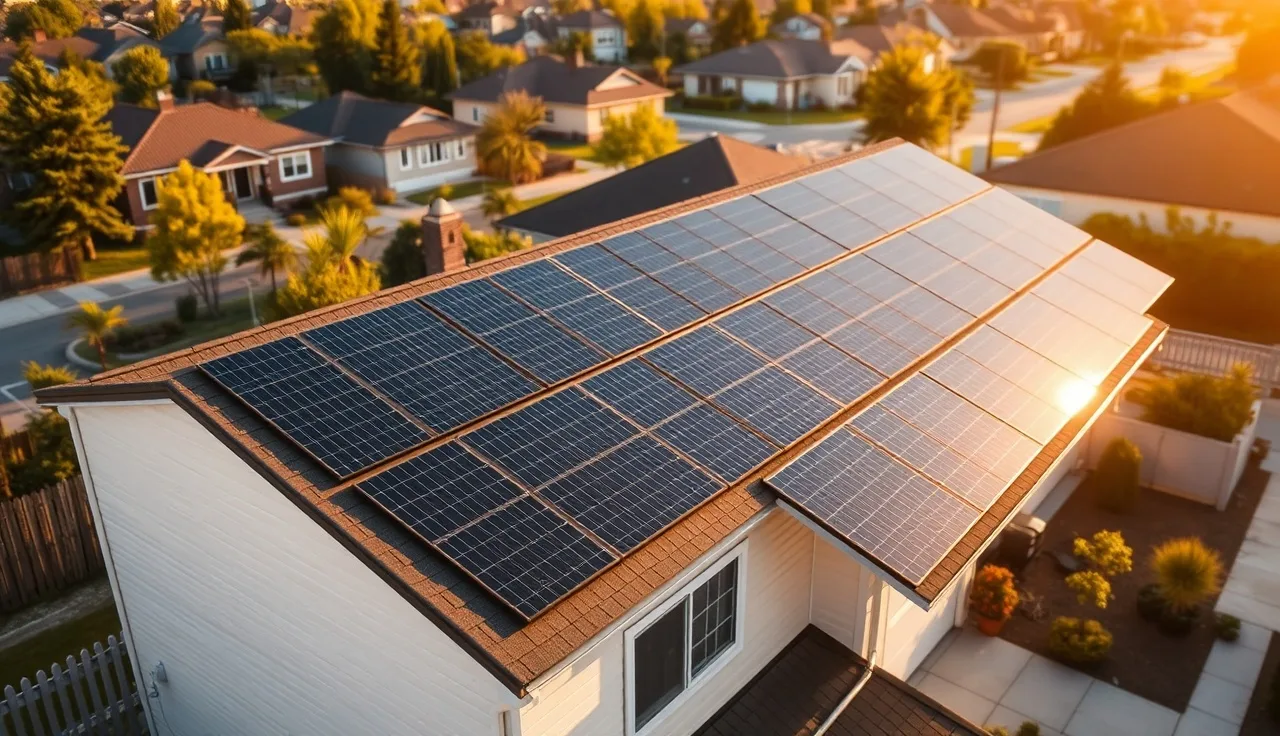
Yes, they can. Solar panels count as a permanent improvement to real property, the same category as an addition, a finished basement, or a new kitchen. When an assessor revalues your home, the panels show up as added value. Added value usually means a higher assessment and a bigger tax bill.
How much bigger depends on two things: the method your assessor uses to value the system, and whether your state has an exemption that strips that value back out.
The National Renewable Energy Laboratory studied home sales in 2015 and found each watt of installed solar capacity added roughly $4 to the selling price in the markets it examined [1]. A typical residential system today runs 8 to 12 kilowatts. That puts the market premium somewhere between $32,000 and $48,000 on an average install, depending on the market. Your assessor may land at a different number, but that gives you a ballpark for what's in play.
Here's the good news. Most states decided that taxing solar at full value discourages people from installing it, so they carved out exemptions. Here's the catch. Those exemptions are not automatic everywhere, they are not always full, and some make you file paperwork before a deadline.
Which states have a solar property tax exemption?
As of 2025, the Database of State Incentives for Renewables and Efficiency (DSIRE) lists property tax exemptions for solar in at least 36 states [2]. The form and depth of those exemptions vary a lot.
| State | Type of exemption | Notes |
|---|---|---|
| California | Full exemption for active solar energy systems | Cal. Rev. & Tax. Code § 73; applies to new construction and retrofits [3] |
| Florida | Full exemption for residential solar | Fla. Stat. § 196.182; must apply with county [4] |
| Texas | Full exemption for solar and wind devices | Tex. Tax Code § 11.27; no application required, assessor must exclude [5] |
| New York | Full exemption for 15 years | Real Property Tax Law § 487; some municipalities have opted out [6] |
| New Jersey | Full exemption, residential | N.J.S.A. 54:4-3.113 |
| Arizona | Full exemption | A.R.S. § 42-11054 |
| Colorado | Full exemption | C.R.S. § 39-3-118.5 |
| Massachusetts | Full exemption, 20 years | M.G.L. ch. 59, § 5, cl. 45 |
| Illinois | Full exemption | 35 ILCS 200/10-5 |
| Minnesota | Partial; first $100,000 of market value excluded | Minn. Stat. § 272.02, subd. 24 [10] |
| Georgia | Partial; varies by county | No statewide mandate; local option |
| Virginia | Partial; local option | Some counties exempt 80%, others nothing |
| Tennessee | No solar exemption | Added value is fully taxable |
| Indiana | No solar exemption | Added value is fully taxable |
That last column matters. Even in states with strong exemptions, there are gaps. New York's exemption lets municipalities opt out, so a homeowner in one town gets full protection while the neighbor two towns over gets none [6]. Georgia has no statewide solar exemption at all. It's entirely a local-option question.
Go straight to your state's department of revenue or taxation and read the statute, not a third-party summary. DSIRE (dsireusa.org) is the most complete aggregator I know of, but it lags on recent opt-outs and local tweaks [2].
How do assessors calculate the value solar panels add?
Assessors use three standard approaches, and jurisdictions pick different ones, sometimes in combination. The one your assessor chose decides how aggressive your number is.
The sales comparison approach looks at what homes with solar sell for versus comparable homes without, and takes the difference as the value added. This is what the NREL study used [1]. It's the most market-grounded method, but it needs enough paired sales in your local market to hold up.
The income approach treats the solar system like a small income-producing asset. The assessor estimates the energy savings the panels generate over their life, discounts that stream to present value, and lands on a lump sum. Lawrence Berkeley National Laboratory has published a lot of research on this method, and some state appraisal boards use its work as guidance [8].
The cost approach just looks at what the system cost, depreciated for age and condition. It tends to overvalue old systems and undervalue new ones in markets where buyers pay a strong premium.
Most county assessors reach for the cost approach because it's simple and they already have the permit data. If your assessment jumped hard after an install, request the work papers and see which method they used. The cost approach is often the most aggressive and the most challengeable.
California homeowners can look at how the Santa Clara County Assessor's office runs the state's active solar exemption. It's a large, solar-heavy county, and it makes a decent model for what to expect in similar places. See santa clara property tax for more on that county's process.
Does the federal solar tax credit affect your property assessment?
No, and people mix this up constantly. The federal Residential Clean Energy Credit (once called the Investment Tax Credit) gives you a credit equal to 30% of a qualified solar install against your federal income tax [7]. That credit never touches your state or local property tax calculation.
Your property tax is based on the assessed value of your real property, not your federal tax position. The federal credit lowers what you paid out of pocket. If your assessor happens to use actual net cost, that might nudge a cost-approach number down a hair, but most assessors use gross installed cost before incentives. The real effect of the federal credit on your property tax bill is zero in most places.
Don't confuse the property tax exemption (state-level, value-based) with the sales tax exemption on equipment purchases that some states also offer. Separate programs. Separate rules.
Do you need to apply for the solar exemption, or is it automatic?
It depends on your state, and sometimes your county. Some exemptions are automatic, meaning the assessor must exclude solar value with no action from you. Texas works this way. Tex. Tax Code § 11.27 directs the assessor to exclude the added value of solar and wind devices with no application required [5].
Other states make you file an application with your local assessor, sometimes before a deadline tied to the assessment cycle. Florida's exemption needs a separate application with the county property appraiser [4]. New York requires the owner to apply, and the exemption takes effect on the following year's assessment roll after approval [6].
Miss the deadline and you can lose a full year of protection. If you installed solar in the last two or three years and never applied, check whether your state and county require an application, find the form, and file it. Some counties allow a retroactive application for a prior year if you can show you were eligible and just missed the filing.
Los Angeles County homeowners: the county assessor handles the California active solar exemption under Rev. & Tax. Code § 73, and it's worth a direct call. See los angeles county property tax for how LA County handles assessment reviews.
What if your assessment went up after solar and your state has no exemption?
You have two options. Pay the higher bill, or challenge the assessment. Challenging is your right in every state.
You're not arguing that solar panels have no value. You're arguing that the assessor's estimate of how much value they added runs higher than what the market actually supports. That's a factual question, and you can answer it with evidence.
The strongest evidence is recent local sales data. Homes with solar sold for X, comparable homes without sold for Y, so the market premium is X minus Y. If your assessor used the cost approach and you can show the market premium is lower, you have a real appeal.
Pull the permit records too and verify the assessor has the right system size and install date. Assessors sometimes grab an installation cost from a permit application that includes equipment since depreciated, or pick up a system size and inflate the value estimate off it.
The process varies by state, but you generally file with the county board of review or equalization, present your comps, and argue the market value. A DIY approach using the TaxFightBack appeal kit walks you through building a comps-based evidence package without handing a contingency firm 30 to 40% of your first-year savings.
Deadlines are tight. Most states give you 30 to 90 days from the date on your assessment notice. Miss that window and you're usually waiting for the next cycle.
Does a leased solar system affect your property taxes differently than one you own?
Yes, and hardly anyone thinks about it. When you lease panels, the leasing company owns the equipment, not you. Under most state property tax frameworks, only property you own gets added to your assessment. A leased system sits on your roof but legally belongs to a third party, so many assessors never add it to your residential assessment at all.
The leasing company may still pay property or personal property tax on that equipment through its own filings. That cost could be baked into your monthly lease rate, but it's not your direct tax liability.
Own your system outright or through a loan where you hold title? Then it's yours, and it's assessed as part of your real property.
Power Purchase Agreements work like leases here. The company keeps ownership of the panels, so the equipment usually doesn't show up on your residential assessment. Read your contract and find the clause that says who holds title.
Can solar panels actually lower your property tax bill in some cases?
Technically, no. Solar panels don't lower your bill. But in a full-exemption state, the net effect can feel like a win.
Here's how it plays out. Say your home was assessed at $400,000 before installation. You add a $30,000 solar system. In Texas, under § 11.27, the assessor must exclude that $30,000 in added value [5]. Your assessment stays at $400,000. Your tax bill doesn't move. Your electricity bill drops a lot. So it looks like a property tax reduction, when really the exemption just blocked an increase.
In states where the exemption exists but needs an application, homeowners who never apply pay tax on the added value until they do. If you've been paying tax on solar value you should have been exempt from, ask your assessor about filing a retroactive exemption claim and a refund of the overpaid tax. The retroactive rules vary by state, but it costs nothing to ask.
How do community solar subscriptions affect your property taxes?
Community solar (also called solar gardens or shared solar) means you subscribe to a share of an array located off your property and get a credit on your electricity bill. No panels go on your home.
Since nothing is attached to or installed on your property, your assessed value doesn't change at all. You get no property value premium, since buyers don't necessarily pay more for a subscription that may not even transfer, and you carry no property tax exposure from the arrangement.
The array itself gets taxed as commercial personal property or real property where it sits, and that burden falls on the array's owner, not the individual subscribers.
This is one of the cleaner tax pictures in solar. Community solar subscribers have essentially zero property tax consequences.
What documentation should you save when you install solar?
If you ever need to appeal an assessment or apply for an exemption, these are the records that win it.
Keep the full contract and invoice showing the system cost, the equipment specs (panel model, inverter, system size in kilowatts), and the install date. The cost figure matters for cost-approach challenges.
Keep the building permit and inspection records. Your county assessor probably got a copy of the permit when the install was approved. If the permit lists a cost estimate that differs from your actual final cost, you want to document the gap.
If your jurisdiction requires an exemption application, save a copy of the application and the approval confirmation. Some counties confirm by mail, others by posting a change to your online assessment record.
Save any sales listings for comparable homes in your neighborhood that sold with or without solar after your install. Those are your comps if you appeal. Lawrence Berkeley National Lab's Tracking the Sun dataset is a public resource documenting solar installation characteristics and costs across the U.S., and its related work on home value premiums is citable evidence in an appeal [8].
In larger metro areas, county-specific guides are a good starting point for how your assessor handles solar additions. The la county property tax and montgomery county property tax pages cover those jurisdictions in detail.
Are there income tax deductions or credits related to solar that also affect your property tax position?
No direct connection, but a few intersections are worth knowing.
The federal Residential Clean Energy Credit covers 30% of installation costs for systems placed in service through 2032, then steps down to 26% in 2033 and 22% in 2034 before expiring, unless Congress extends it [7]. This credit reduces your federal income tax, not your property tax.
Some states also offer their own income tax credits for solar, on top of or instead of property tax exemptions. Maryland has offered a state income tax credit for residential clean energy systems, for example. Those are income-side benefits and don't touch your assessment.
Sell your home, and the IRS treats the solar system as a capital improvement, which raises your cost basis. A higher basis cuts any capital gains tax you owe on the sale. That's an income tax consequence of solar, not a property tax one.
One property-tax-adjacent wrinkle on the income side: if you use your home partly for business and claim depreciation on the solar system, some states may reclassify part of your property as mixed-use for assessment, which can affect your residential homestead exemption. It's rare, but flag it to a tax professional if you run a home-based business.
What happens to the solar exemption if you sell your home?
In most states the exemption runs with the property, not the person, as long as the property keeps qualifying. A buyer who takes over a home with an active solar exemption on file usually keeps it for the remaining term.
New York's 15-year exemption under Real Property Tax Law § 487 is a clean example. The exemption was granted to the installation, not the owner, so a new purchaser benefits for whatever years are left on the original grant [6].
The exception is any exemption tied to owner-occupancy or income. That's less common for solar, but it exists in a handful of jurisdictions. If the exemption requires an owner-occupant and the buyer uses the home as a rental, they may lose it at the next assessment cycle.
Some real estate deals address solar directly. Owned panels (not leased) are real property and transfer with the deed. Leased panels either transfer to the new buyer (with the leasing company's approval) or the seller buys out the lease at closing. Both happen all the time, and both should be spelled out in the purchase agreement.
Frequently asked questions
Will my property taxes go up if I add solar panels?
Maybe. Solar panels can increase your assessed value because they're a permanent improvement. Whether your taxes actually rise depends on whether your state has a solar property tax exemption. At least 36 states exempt some or all of the added value from assessment, so check your state's statute before assuming you'll see a higher bill.
Which states have no solar property tax exemption?
As of 2025, states without a clear statewide solar property tax exemption include Tennessee, Indiana, and several others. Georgia has no statewide mandate, though some counties offer local exemptions. DSIRE (dsireusa.org) keeps the most current list of state and local incentives. Always verify against the actual statute, because DSIRE can lag behind recent legislative changes.
How much can solar panels add to an assessed home value?
A 2015 NREL study found buyers paid roughly $4 per installed watt in premium for solar-equipped homes. A typical 8-to-12 kilowatt system puts the market premium between $32,000 and $48,000 in those markets. Assessors may use cost, income, or sales comparison methods to reach their own figure, and results vary a lot by jurisdiction and approach.
Do I have to apply for the solar property tax exemption, or does it apply automatically?
It depends on your state. Texas's exemption applies automatically by law. Florida, New York, and several others require you to file an application with your local assessor or property appraiser, sometimes before a deadline tied to the assessment cycle. Missing that window can cost you a full year of protection, so check your local assessor's office for the specific form and deadline.
Does California tax solar panels?
No, for most residential systems. California Revenue and Taxation Code § 73 exempts new active solar energy systems from property tax assessment for both new construction and retrofits. The exemption was set to expire but has been extended by the legislature. You don't need a separate application; the assessor must exclude the solar value. Confirm current status with your county assessor.
Does the 30% federal solar tax credit reduce my property taxes?
No. The federal Residential Clean Energy Credit reduces your federal income tax, not your property tax. Your property tax is based on the assessed value of your real estate, not your federal tax position. The credit may cut the net cost of your system, but most assessors use gross installed cost, so the practical effect on your property tax assessment is typically zero.
Do leased solar panels affect my property tax assessment?
Generally not. When you lease panels, the leasing company owns the equipment. Because you don't hold title, most assessors don't add the system's value to your residential assessment. Power Purchase Agreements work the same way. If you own your system outright or through a loan where you hold title, the system is yours and is assessed as part of your real property.
Can I appeal my assessment if it went up after solar installation?
Yes. You can challenge the assessor's estimate of how much value the panels added. The strongest argument is comparable sales data showing the actual solar premium in your neighborhood is lower than what the assessor used. Pull the assessor's work papers, check the method used, and file your appeal within the deadline on your assessment notice, typically 30 to 90 days.
How do community solar subscriptions affect my property taxes?
They don't. Community solar means you subscribe to output from an off-site array. Nothing is installed at your home, so your assessed value is unchanged. The array itself is taxed as property at its physical location, and that burden falls on the array's owner, not subscribers. Community solar is one of the cleanest property-tax-neutral ways to access solar energy.
What happens to my solar exemption when I sell my home?
In most states the exemption runs with the property and transfers to the new owner for its remaining term. New York's 15-year exemption under RPTL § 487 works this way. The exception is any exemption tied to owner-occupancy: if the new owner uses the home as a rental and the exemption requires owner-occupancy, they may lose it at the next assessment cycle. Confirm the transfer terms with your local assessor.
Can I get a refund if I should have been exempt but wasn't?
Possibly. If you qualified for a solar exemption but missed the application, or the assessor failed to apply an automatic one, ask your local assessor's office about filing a retroactive correction and requesting a refund of the overpaid tax. Retroactive rules vary by state. Some allow a one-to-three year lookback; others allow no retroactive adjustment at all.
Does solar affect property taxes differently on commercial property?
Yes, sometimes a lot. Commercial solar arrays are often assessed under the income approach, which capitalizes the energy savings or lease income the panels generate. Depreciation schedules differ from residential, and many state exemptions apply only to residential property. Commercial owners should read the specific exemption language in their state statute closely, since residential exemptions often don't extend to commercial uses.
What records do I need to keep after installing solar?
Keep the full contract and invoice with system specs and cost, the building permit and inspection records, any exemption application and approval confirmation, and sales listings for comparable nearby homes with and without solar. These support both exemption applications and any future appeal. Lawrence Berkeley National Lab's Tracking the Sun dataset is a public resource for documenting installation cost benchmarks.
Sources
- DSIRE (Database of State Incentives for Renewables and Efficiency), NC State University: At least 36 states have property tax exemptions for solar or renewable energy systems as of 2025
- California Legislative Information, Revenue and Taxation Code § 73: California exempts new active solar energy systems from property tax assessment for new construction and retrofits
- Florida Legislature, Florida Statutes § 196.182: Florida provides a full property tax exemption for residential solar energy devices; application required with county property appraiser
- Texas Legislature Online, Tax Code § 11.27: Texas Tax Code § 11.27 exempts the added value of solar and wind energy devices from property assessment; no application required
- New York State Legislature, Real Property Tax Law § 487: New York provides a 15-year property tax exemption for solar installations; municipalities may opt out; application required
- IRS, Residential Clean Energy Credit (Form 5695 instructions and guidance): The federal Residential Clean Energy Credit equals 30% of qualified solar installation costs for systems placed in service through 2032, stepping down in 2033 and 2034
- Lawrence Berkeley National Laboratory, Tracking the Sun dataset: Tracks solar installation characteristics and costs across the U.S.; related LBNL work documents income approach methodology and home value premium research used by appraisal boards
- U.S. Department of Energy, Office of Energy Efficiency and Renewable Energy, Solar Energy Technologies Office: Background on residential solar system sizing, costs, and federal incentive programs including the Residential Clean Energy Credit
- Minnesota Legislature, Statute § 272.02, subd. 24: Minnesota exempts the first $100,000 of market value added by a solar energy system from property taxation