How Property Taxes Work for Multifamily Properties: 2-4 Units vs 5+
TL;DR
Small multifamily (2-4 units) and large multifamily (5+ units) are treated differently for property tax purposes. Small multifamily is usually assessed like residential property using comparable sales. Large multifamily is assessed like commercial property using the income approach. The dividing line at 5 units matters for assessment ratios, appeal procedures, and valuation methods. Understanding which side you fall on determines your appeal strategy.
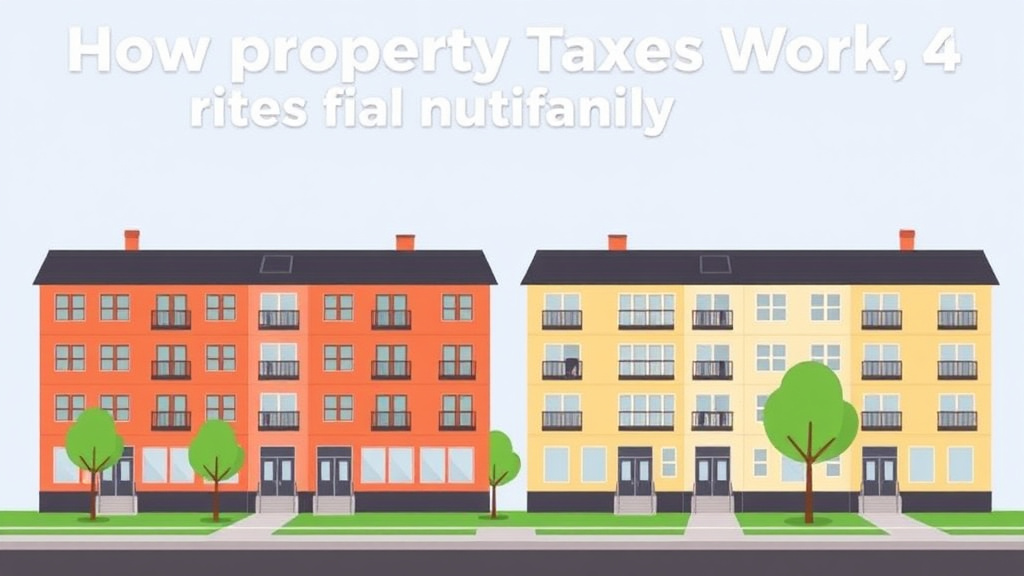
The 5-Unit Dividing Line
In most states and for most purposes (lending, assessment, insurance), the dividing line between "residential" and "commercial" multifamily is 5 units. Properties with 2-4 units are classified as residential. Properties with 5+ units are classified as commercial.
This classification affects:
| Factor | 2-4 Units (Residential) | 5+ Units (Commercial) |
|---|---|---|
| Primary valuation method | Sales comparison | Income approach |
| Assessment ratio (in split-ratio states) | Residential rate | Commercial rate |
| Appeal procedure | Standard residential process | May require different board or process |
| Evidence expected | Comparable sales | Income/expense data, cap rates |
| Professional appraisal | Rarely needed | Often expected for larger properties |
Small Multifamily (2-4 Units)
How They Get Assessed
Assessors typically value duplexes, triplexes, and fourplexes using the sales comparison approach, just like single-family homes. They look for recent sales of similar 2-4 unit properties and adjust for differences.
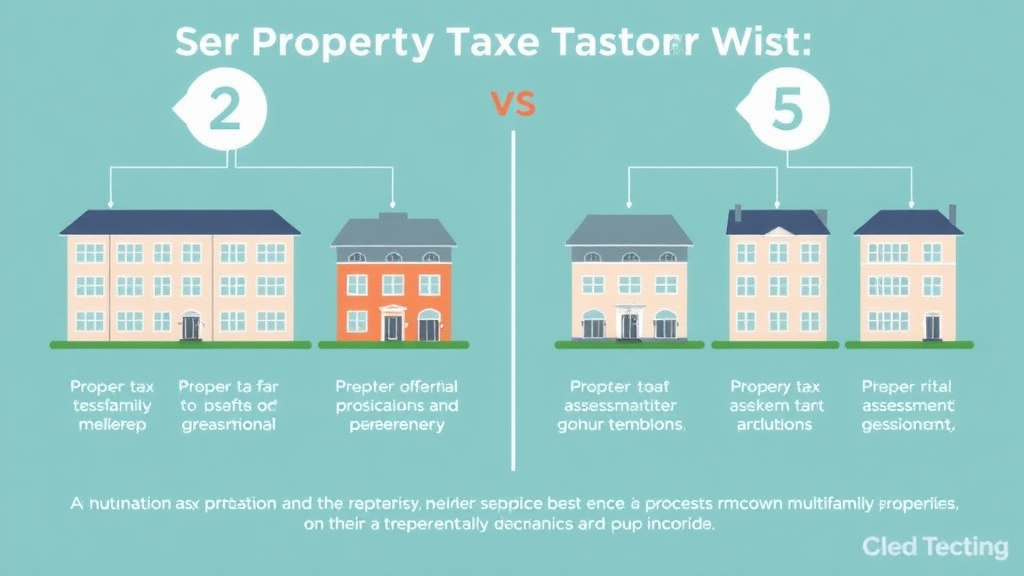
The challenge: comparable sales of small multifamily properties are less common than single-family sales. In many neighborhoods, there may only be a handful of duplex sales per year. This scarcity can lead to assessors using comps that are not truly comparable, stretching the geographic range or time window, or using single-family comps with adjustments.
Appeal Strategy for Small Multifamily
You have a unique advantage with 2-4 unit properties: you can use both the sales comparison approach AND the income approach, even though the assessor primarily uses sales comparison.
Sales comparison: Find 3-5 sales of similar small multifamily properties. Focus on same unit count, similar size, and same general area. Adjust for condition, age, and amenity differences.
Income approach: Calculate the income-supported value using your actual rent roll. Many hearing boards will consider the income approach even for small multifamily, especially if comparable sales are scarce.
Present both. Use whichever produces the lower value as your primary argument.
Owner-Occupied Duplexes: Special Considerations
If you live in one unit and rent the others, you may qualify for a homestead exemption on your unit. This does not affect the total assessment, but it can reduce the taxable value. Rules vary by state:
- Some states allow full homestead exemption on the entire property
- Others prorate the exemption based on the percentage you occupy
- A few states do not allow homestead on any property with rental units
Large Multifamily (5+ Units)
How They Get Assessed
Properties with 5+ units are assessed primarily using the income approach. The assessor estimates the property's income potential, applies an expense ratio, and capitalizes the resulting NOI to arrive at a value.
The problem: assessors often use market assumptions rather than your actual property data. They may use market rent instead of your actual (lower) rent, assume a 3-5% vacancy rate when your actual vacancy is 8-12%, and apply an expense ratio that is too low.
Appeal Strategy for Large Multifamily
Your appeal should challenge the assessor's assumptions with your actual data:
- Actual rent roll vs assessor's assumed rents. If the assessor is using market rent and your actual rents are lower (due to long-term tenants, unit condition, or market softness), show the difference.
- Actual vacancy vs assumed vacancy. Bring 2-3 years of occupancy data. Show the real vacancy and collection loss rate.
- Actual expenses vs assumed expenses. Present complete operating statements. If your expense ratio is 55% and the assessor assumed 40%, that gap is worth a lot of money.
- Cap rate evidence. Gather cap rates from verified sales of similar apartment properties. A 0.5% cap rate difference on a $2 million property changes the value by over $100,000.
For a detailed guide to the income approach for apartments, see our apartment complex appeal guide.
The Assessment Ratio Trap
In states with different assessment ratios for residential and commercial property, the 5-unit line has a direct tax impact.
Example in a state with 10% residential and 25% commercial assessment ratios:
| Property | Market Value | Assessment Ratio | Assessed Value | Tax Rate | Annual Tax |
|---|---|---|---|---|---|
| 4-unit (residential) | $400,000 | 10% | $40,000 | 10% | $4,000 |
| 6-unit (commercial) | $600,000 | 25% | $150,000 | 10% | $15,000 |
The 6-unit property has 50% more value but pays nearly 4x the taxes. The assessment ratio creates a massive tax disadvantage for properties just above the 5-unit threshold.
Strategic Implications for Investors
This assessment ratio gap influences acquisition strategy in split-ratio states:
- Fourplexes may outperform sixplexes on an after-tax cash flow basis despite lower gross income
- The tax differential should be factored into any comparison between small and large multifamily investments
- Properties right at the boundary (5-6 units) deserve extra scrutiny on the tax side
Converting Between Small and Large Multifamily
If you convert a large single-family home into apartments or add units to a small multifamily, crossing the 5-unit threshold can change your property's classification and dramatically increase your taxes. Before any conversion:
- Check how the reclassification affects your assessment ratio
- Calculate the tax impact of the new classification
- Factor the higher taxes into your renovation and conversion analysis
- Consider whether stopping at 4 units makes more financial sense in your tax jurisdiction
Appeal Your Multifamily Assessment
Whether you own a duplex or a 50-unit complex, an overassessment costs you money every month. The TaxFightBack analyzer builds evidence packets tailored to your property's size and classification, using the appropriate valuation approach and comparable data. For investors with multiple multifamily properties, the Multi-Property plan at $149 covers up to 5 properties. Even a modest 8-10% assessment reduction on a multifamily property can save hundreds to thousands per year per property.
Try our free tools
Frequently Asked Questions
How Property Taxes Work for Multifamily Properties: 2-4 Units vs 5+?
Small multifamily (2-4 units) and large multifamily (5+ units) are treated differently for property tax purposes. Small multifamily is usually assessed like residential property using comparable sales. Large multifamily is assessed like commercial property using the income approach.
How does the 5-unit dividing line affect multifamily property taxes?
In most states and for most purposes (lending, assessment, insurance), the dividing line between "residential" and "commercial" multifamily is 5 units. Properties with 2-4 units are classified as residential, while properties with 5+ units are considered commercial.
What are the key differences in how small (2-4 units) and large (5+ units) multifamily properties are assessed?
Assessors typically value duplexes, triplexes, and fourplexes using the sales comparison approach, just like single-family homes. Properties with 5+ units are assessed primarily using the income approach, estimating the property's income potential and applying an expense ratio.
Why is the 5-unit threshold important for property tax assessments?
In states with different assessment ratios for residential and commercial property, the 5-unit line has a direct tax impact. Crossing this threshold can change a property's classification and dramatically increase its taxes.
Can converting a property between small and large multifamily affect its property taxes?
If you convert a large single-family home into apartments or add units to a small multifamily, crossing the 5-unit threshold can change your property's classification and dramatically increase your taxes. It's important to consider the tax implications before any conversion.
When should I appeal my multifamily property's tax assessment?
Whether you own a duplex or a 50-unit complex, an overassessment costs you money every month. The TaxFightBack analyzer builds evidence packets tailored to your property's size and classification, using the appropriate valuation approach and comparable sales data to support your appeal.
Is there a difference in how small and large multifamily properties are valued for tax purposes?
Yes, the assessment approach differs. Duplexes, triplexes, and fourplexes are valued using the sales comparison approach, while properties with 5+ units are assessed primarily using the income approach, estimating the property's income potential and applying an expense ratio.