South Carolina Investment Property Tax Guide: What Landlords and Investors Need to Know
TL;DR
South Carolina assesses owner-occupied homes at 4% of fair market value but non-owner-occupied properties (including all rentals) at 6%. This 50% higher assessment ratio for investment properties is a significant cost factor. The 15% reassessment cap limits how much the value can increase in a single revaluation cycle. The effective property tax rate for investment properties in South Carolina is typically 0.50-0.70%. South Carolina uses a every 5 years (county-specific reassessment schedule) reassessment cycle with an assessment ratio of 4% (owner-occupied) / 6% (non-owner-occupied residential and commercial). Appeals go through the County Board of Assessment Appeals. The filing deadline is 90 days from assessment notice. For investment properties, every dollar saved on property taxes flows directly to NOI and improves your returns.
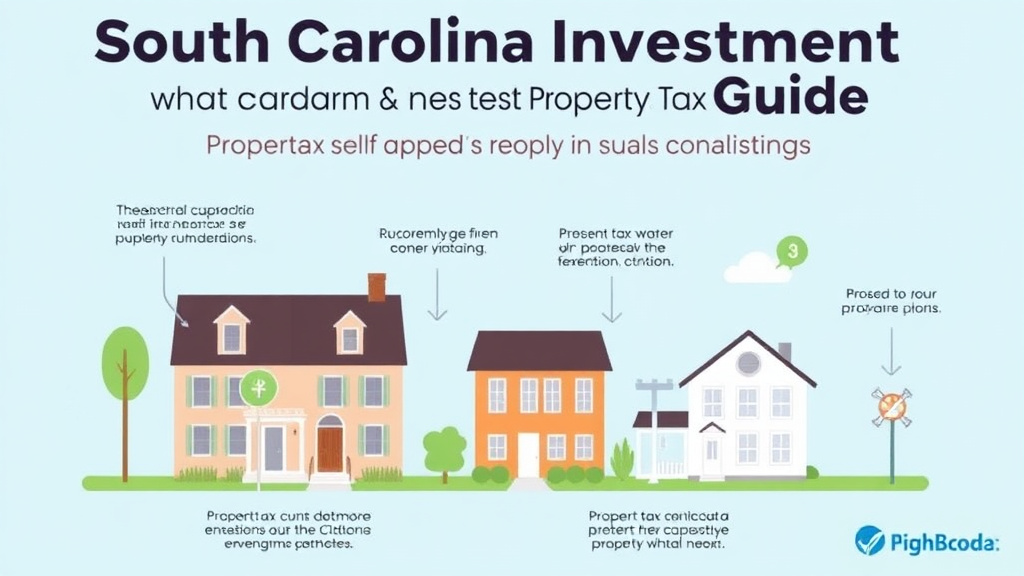
South Carolina Property Tax Overview for Investors
The 4% vs 6% assessment ratio is the most important number for South Carolina investors. If you buy a property that was previously owner-occupied at 4%, it automatically jumps to 6% when you use it as a rental. On a $200,000 property, the assessed value goes from $8,000 to $12,000 - a 50% increase in taxes from classification alone. The 5-year reassessment cycle with a 15% cap on value increases provides some protection between revaluations.
For real estate investors, understanding South Carolina's property tax system is not optional. It is a core part of deal analysis, ongoing portfolio management, and exit strategy. Property taxes are typically the largest single operating expense on investment properties in South Carolina, and they directly affect your cap rate, cash-on-cash return, and property value.
Key Numbers for South Carolina Investors
| Factor | Details |
|---|---|
| Effective Tax Rate Range | 0.50-0.70% |
| Assessment Ratio | 4% (owner-occupied) / 6% (non-owner-occupied residential and commercial) |
| Reassessment Cycle | Every 5 years (county-specific reassessment schedule) |
| Appeal Body | County Board of Assessment Appeals |
| Appeal Deadline | 90 days from assessment notice |
How South Carolina Assesses Investment Properties
South Carolina assesses property at 4% (owner-occupied) / 6% (non-owner-occupied residential and commercial). For investment properties, this means your assessed value should reflect what the property would sell for on the open market, adjusted to the state's assessment ratio. If your assessed value exceeds this level, you have grounds for an appeal.
The reassessment cycle determines when your assessment changes. Between reassessment events, your assessed value may stay relatively stable unless you make significant improvements, the property changes ownership in a way that triggers reassessment, or the jurisdiction applies equalization adjustments.
Investment Properties vs Owner-Occupied
In South Carolina, investment properties generally do not qualify for homestead or owner-occupied exemptions. This means:
- Your effective tax rate may be higher than what owner-occupants pay on comparable properties
- Any assessment caps or growth limits that apply to homesteads do not protect your investment properties
- You pay the full tax rate on the full assessed value
This distinction is critical when underwriting a purchase. The seller's tax bill, if they had a homestead exemption, will be lower than what you will pay as an investor. Always calculate YOUR projected tax bill based on the non-homestead rate.
The South Carolina Appeal Process
File an appeal with the County Board of Assessment Appeals within 90 days of the assessment notice. South Carolina allows both formal and informal appeals. Bring comparable sales adjusted to the 6% assessment ratio and income approach data for rental properties. If denied, appeal to the Administrative Law Court.
Step-by-Step Appeal Guide for South Carolina
- Review your assessment notice. When the notice arrives, compare the assessed value to your estimated market value. Check for factual errors on the property record card: wrong square footage, incorrect unit count, features you do not have.
- Gather evidence. Pull 3-5 comparable sales of similar investment properties. If you own a rental, calculate the income-supported value using actual rent rolls, expenses, and market cap rates.
- File before the deadline. The South Carolina appeal deadline is 90 days from assessment notice. Missing it means waiting until the next cycle. Mark it on your calendar as soon as you receive the assessment notice.
- Present your case. At the hearing, lead with your strongest evidence. Be organized, concise, and stick to the data. Hearing boards in South Carolina respond to well-prepared, factual presentations.
- Escalate if needed. If the initial appeal is denied and you believe the overassessment is significant, pursue the next level of appeal. The cost is minimal compared to years of overpaying.
Income Approach for South Carolina Investment Properties
For rental properties in South Carolina, the income approach to valuation is a powerful appeal tool. This method calculates what the property is worth based on its income stream:
Value = Net Operating Income / Capitalization Rate
To build your income approach case:
- Document actual income. Use your real rent rolls, not market rent estimates. Include vacancy and collection loss based on your actual experience.
- Include all operating expenses. Property taxes, insurance, maintenance, management fees, utilities (if owner-paid), administrative costs, and reserves.
- Use market cap rates. Pull cap rates from recent sales of similar investment properties in your South Carolina market. Sources include local commercial brokerages, CoStar, and Marcus and Millichap market reports.
If the income-supported value is below your assessed value, you have a strong case for reduction.
South Carolina Investor-Specific Considerations
South Carolina's investor-friendly landlord laws and growing markets (Charleston, Greenville, Columbia) attract out-of-state investors. But the 6% non-owner rate is a hidden cost that many newcomers miss. Always use the 6% rate in your underwriting, not the 4% rate you see on the seller's tax bill. The Myrtle Beach area and Hilton Head are popular vacation rental markets with their own tax considerations.
Market Overview
Charleston is the hottest market with rapidly rising values. Greenville-Spartanburg is growing with strong industrial employment. Columbia is the most affordable major market. Myrtle Beach and Hilton Head serve the vacation rental investor segment.
Impact on Investment Returns
Here is how property taxes affect a typical South Carolina rental property's returns:
| Metric | Before Appeal | After $1,500 Tax Savings |
|---|---|---|
| Annual Property Tax | $5,500 | $4,000 |
| NOI | $14,500 | $16,000 |
| Cap Rate (on $250K value) | 5.80% | 6.40% |
| Monthly Cash Flow | $225 | $350 |
| Cash-on-Cash Return | 4.32% | 6.72% |
A $1,500 annual savings transforms this from a mediocre deal to a solid cash-flowing investment. Over a 5-year hold, that is $7,500 in direct savings plus an additional $25,000+ in property value at sale (at a 6% cap rate).
Common Mistakes South Carolina Investors Make
- Using the seller's tax bill in underwriting. If the seller had a homestead exemption or a capped assessment, your taxes will be higher. Always calculate your own projected bill.
- Not appealing after purchase. If your new assessment seems high relative to what you paid or what the income supports, appeal immediately.
- Missing the deadline. South Carolina's appeal deadline is firm: 90 days from assessment notice. Mark it. Set reminders. Missing it costs you a full year or more of potential savings.
- Ignoring the income approach. Many investors only bring comparable sales to their appeal. For rental properties, the income approach is equally or more powerful. Bring both.
- Not checking for data errors. Assessment records contain errors more often than you think. Wrong square footage, incorrect property class, phantom features. Check every detail.
Build Your South Carolina Appeal Evidence
The TaxFightBack analyzer generates South Carolina-specific appeal evidence packets with comparable sales, income approach calculations, and assessment error checks tailored to South Carolina's assessment rules and appeal process. For investors with multiple South Carolina properties, the Multi-Property plan at $149 covers up to 5 properties for under $30 each. The average successful appeal saves $1,200-$3,000 per year per property, making the ROI on building a solid evidence packet one of the best investments you can make.
Try our free tools
Frequently Asked Questions
How do property taxes work for investment properties in South Carolina?
South Carolina assesses owner-occupied homes at 4% of fair market value but non-owner-occupied properties (including all rentals) at 6%. This 50% higher assessment ratio for investment properties is a significant cost factor. The 15% reassessment cap limits annual increases.
What is the difference between owner-occupied and investment property tax rates in South Carolina?
The 4% vs 6% assessment ratio is the most important number for South Carolina investors. If you buy a property that was previously owner-occupied at 4%, it automatically jumps to 6% when you use it as a rental. On a $200,000 property, the assessed value increases from $8,000 to $12,000.
How South Carolina Assesses Investment Properties?
South Carolina assesses property at 4% (owner-occupied) / 6% (non-owner-occupied residential and commercial). For investment properties, this means your assessed value should reflect what the property would sell for on the open market, adjusted to the state's assessment ratio. If your assessed value exceeds this level, you have grounds for an appeal.
Can I appeal my investment property's tax assessment in South Carolina?
File an appeal with the County Board of Assessment Appeals within 90 days of the assessment notice. South Carolina allows both formal and informal appeals. Bring comparable sales adjusted to the 6% assessment ratio and income approach data for rental properties.
How can the income approach be used to appeal investment property taxes in South Carolina?
For rental properties in South Carolina, the income approach to valuation is a powerful appeal tool. This method calculates what the property is worth based on its income stream: Value = Net Operating Income / Capitalization Rate. To build your income approach, gather rents, expenses, and cap rates for similar properties.
What are some key considerations for investors buying property in South Carolina?
South Carolina's investor-friendly landlord laws and growing markets (Charleston, Greenville, Columbia) attract out-of-state investors. But the 6% non-owner rate is a hidden cost that many newcomers miss. Always use the 6% rate in your underwriting to accurately model returns.
How do South Carolina's investment property tax rates impact returns?
Here is how property taxes affect a typical South Carolina rental property's returns: The 6% assessment ratio instead of 4% reduces cash flow and increases the amount financed, lowering the overall return on investment.