Market Value vs Assessed Value: What Every Homeowner Should Know
TL;DR
Market value is what your home would sell for today. Assessed value is the number your county uses to calculate your property taxes. They're related but often different. In many states, assessed value is a fixed percentage of market value. When assessed value exceeds what your home is actually worth, you're overpaying on taxes. Understanding the gap between these two numbers is the key to knowing whether your tax bill is fair.

Two Numbers, Two Purposes
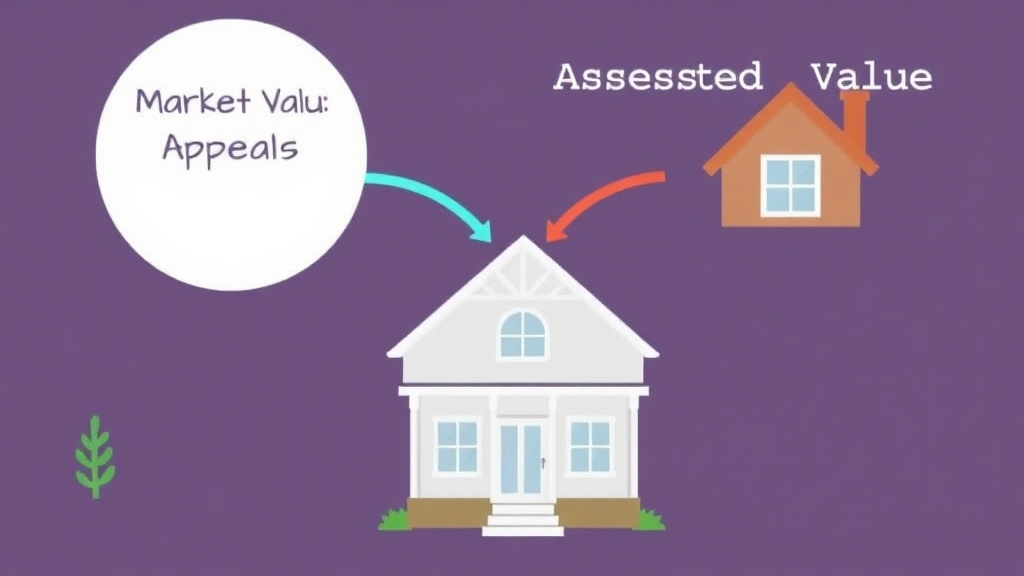
Your home has several "values" attached to it at any given time, and the two most important are market value and assessed value. They sound similar, but they serve completely different purposes and are determined by completely different people using different methods.
Market value answers the question: "What would a buyer pay for this home today?" It's set by the real estate market, driven by supply, demand, location, condition, and comparable sales.
Assessed value answers the question: "What number should the county use to calculate property taxes?" It's set by your county assessor, and it may or may not equal market value depending on your state's laws.
How Market Value Is Determined
Market value is what happens when a willing buyer and willing seller agree on a price, with both having reasonable knowledge of the property and neither being under pressure to act. In practice, market value is estimated using:
- Comparable sales (comps): What similar homes in your area have sold for recently
- Current listings: What similar homes are listed for right now
- Market conditions: Whether it's a buyer's market, seller's market, or balanced
- Property features: Size, condition, upgrades, lot, views, and other physical characteristics
- Location factors: School district, neighborhood desirability, proximity to amenities
Nobody officially assigns your home a market value. It's an estimate that shifts constantly with market conditions. A real estate agent's CMA (comparative market analysis) and a bank appraiser's report both try to pin down market value, but they can come to different conclusions.
How Assessed Value Is Determined
Your assessed value is determined by the county assessor's office using mass appraisal techniques. Unlike a private appraisal where someone visits your specific home, mass appraisal uses statistical models to value thousands of properties at once.
The assessor considers many of the same factors as a market appraisal but applies them through computer models rather than individual analysis. The assessor also works from a specific valuation date (the lien date or assessment date), which may be 6-18 months before you see the number on your tax bill.
After estimating market value, the assessor applies the state's assessment ratio to arrive at assessed value. This ratio varies widely:
| State | Assessment Ratio | $400,000 Home Market Value | Assessed Value |
|---|---|---|---|
| Alabama | 10% | $400,000 | $40,000 |
| South Carolina | 4% | $400,000 | $16,000 |
| Ohio | 35% | $400,000 | $140,000 |
| Georgia | 40% | $400,000 | $160,000 |
| Indiana | 100% | $400,000 | $400,000 |
| Washington | 100% | $400,000 | $400,000 |
Why They're Often Different
Even in states that assess at 100% of market value, your assessed value and actual market value rarely match perfectly. Here's why:
Timing Lag
Assessments are based on data from a specific date, sometimes a year or more in the past. In a rapidly rising or falling market, the assessed value can be significantly behind (or ahead of) current reality. If your home's value jumped 15% in the last year, your assessment might not reflect that yet.
Mass Appraisal Limitations
The assessor values thousands of properties using models, not individual inspections. These models can miss condition issues (that leaky roof, the outdated kitchen), location nuances (backing up to a busy road), and unique features that affect value. Your specific home might be worth more or less than the model predicts.
Assessment Caps
Several states limit how much assessed value can increase each year, regardless of market value changes. California's Proposition 13 caps increases at 2% per year. Florida caps homesteaded properties at 3%. Michigan caps at 5% or the rate of inflation, whichever is less. Over time, these caps can create a massive gap between assessed value and market value.
Reassessment Frequency
Reassessment cycles vary from annual to every 10+ years. Between reassessments, assessed values stay the same (or change only by capped amounts), while market values move freely. A home in a jurisdiction that reassesses every 6 years could have an assessed value significantly different from its current market value.
Which Number Matters More?
It depends on what you're doing:
| Situation | Which Value Matters |
|---|---|
| Selling your home | Market value |
| Buying a home | Market value |
| Paying property taxes | Assessed value |
| Appealing property taxes | Both (you use market value to challenge assessed value) |
| Getting a mortgage | Appraised value (closely related to market value) |
| Home equity loan | Appraised value |
| Insurance coverage | Replacement cost (different from both) |
| Estate planning | Market value |
For property tax purposes, assessed value is the only number that counts. But market value is the benchmark against which you can judge whether your assessment is fair.
When the Gap Works Against You
The gap between market value and assessed value becomes a problem when your assessed value is higher than your actual market value. This means you're being taxed as if your home is worth more than it is.
Here are common scenarios where this happens:
- Market decline: Home prices dropped, but the assessor hasn't caught up yet
- Overestimated improvements: The assessor thinks your renovation added more value than it actually did
- Data errors: Wrong square footage, extra rooms, or incorrect property features in the assessor's records
- Neighborhood issues: Your specific block has challenges (noise, flooding, commercial activity) that the mass appraisal model doesn't capture
- Post-purchase reassessment bump: You bought in a competitive market at above-market value, and the assessor uses your purchase price as the new baseline
When the Gap Works For You
The flip side is also true. Assessment caps and infrequent reassessments can mean your assessed value is well below market value, saving you money on taxes. Longtime homeowners in states with assessment caps often pay a fraction of what new buyers on the same street pay. In California, it's common to see neighbors with identical homes where one pays $3,000 in annual taxes and the other pays $12,000, simply because one has owned for 20 years and the other bought recently.
How to Compare Your Values
To check whether your assessment is in line with market value, follow these steps:
- Find your assessed value. Check your tax bill, assessment notice, or county assessor's website.
- Calculate implied market value. Divide your assessed value by your state's assessment ratio. If your assessed value is $140,000 and your ratio is 35%, your implied market value is $400,000.
- Estimate your actual market value. Look at recent sales of comparable homes, check online estimates (Zillow, Redfin), or get a CMA from a real estate agent.
- Compare. If the implied market value from step 2 is significantly higher than your actual market value from step 3, you may be overassessed.
A difference of 5-10% is generally within normal range for mass appraisal. If the gap is larger than that, particularly 15% or more, it's worth looking into an appeal.
How This Affects Buying a Home
When you're shopping for a home, don't confuse assessed value with what the home is worth. A home assessed at $200,000 could easily sell for $280,000 in a hot market. The assessed value tells you roughly what the current owner is paying in taxes and what your taxes might be (keeping in mind that a purchase can trigger a reassessment in some states).
In states with assessment caps, buying a home resets the assessed value to current market value, which can mean a dramatic tax increase compared to what the seller was paying. Ask about the current tax bill and factor in a potential increase when budgeting for the purchase.
Try our free tools
Frequently Asked Questions
Should assessed value match market value?
In states that assess at 100% of market value, they should be close but rarely match exactly. In states with assessment ratios below 100%, assessed value should equal market value multiplied by the ratio. Small discrepancies are normal; large ones suggest overassessment or underassessment.
Can my assessed value be higher than my home's sale price?
Yes, especially if you bought during a market dip or got a good deal. In states with frequent reassessments, the assessor should adjust. In states with less frequent cycles, an inflated assessment could persist for years. If this happens to you, an appeal using your purchase price as evidence can be effective.
Why did my assessed value go up when the market went down?
This usually happens because of timing. Assessments may be based on sales data from 6-18 months before the notice date. The data the assessor used may not yet reflect the downturn. You can appeal using current market data showing the decline.
Does a low assessed value hurt me when selling?
No. Buyers determine what they're willing to pay based on market conditions, not assessments. A low assessed value is actually a selling point because it means lower property taxes for the buyer. However, in states where a sale triggers reassessment, the buyer knows their taxes will increase regardless.
Is assessed value the same as appraised value?
No. Assessed value and appraised value are different. Assessed value is for taxes, set by the county assessor using mass appraisal. Appraised value is for lending, set by a licensed appraiser who individually inspects the property. They can be very different amounts.
How much lower is assessed value than market value?
It depends entirely on your state's assessment ratio. In South Carolina, assessed value for owner-occupied homes is just 4% of market value. In Ohio, it's 35%. In states like California and Indiana, assessed value aims to equal 100% of market value. There's no universal relationship.
Can I use Zillow's estimate as my market value for a tax appeal?
Zillow's Zestimate and similar automated valuations are generally not accepted as primary evidence in tax appeals. They're useful as a starting point but lack the rigor of a formal appraisal or a comparative market analysis from a licensed appraiser. Most appeal boards want to see actual comparable sales data.
Does my assessed value affect my mortgage rate?
No. Mortgage rates are based on your credit score, down payment, loan type, and market conditions. Lenders use the appraised value (from their own appraisal) to determine loan-to-value ratios, not the assessed value. However, your assessed value affects your tax payments, which are factored into your total monthly housing cost.
What if the assessor won't change my assessed value?
If the assessor declines to adjust your value informally, you have the right to file a formal appeal with your local board of review or equalization. If that's unsuccessful, most states allow further appeal to a state-level tax tribunal or court. Each level of appeal has its own deadlines and procedures.
Do renovations affect market value and assessed value the same way?
Not always. A kitchen remodel might add $30,000 to your market value but only $15,000 to your assessed value, or vice versa. Market value reflects what buyers will actually pay more for; assessed value reflects what the assessor's model predicts the improvement is worth. The two don't always align.
Is Your Assessed Value Out of Line?
The gap between market value and assessed value could be costing you money every year. TaxFightBack helps you analyze your assessment, compare it against actual market data, and determine whether you have a strong case for a reduction. Stop guessing and start knowing exactly where you stand.