Maryland Property Tax Exemptions: Complete Guide for 2026
TL;DR
People often underestimate how much maryland Property Tax Exemptions: Complete Guide for 2026 matters. People often underestimate how much maryland Property Tax Exemptions: Complete Guide for 2026 matters.

People often underestimate how much maryland Property Tax Exemptions: Complete Guide for 2026 matters. If you are dealing with maryland property tax exemptions: complete guide for 2026, start here.
Summary of Maryland Property Tax Exemptions
| Exemption | Benefit |
|---|---|
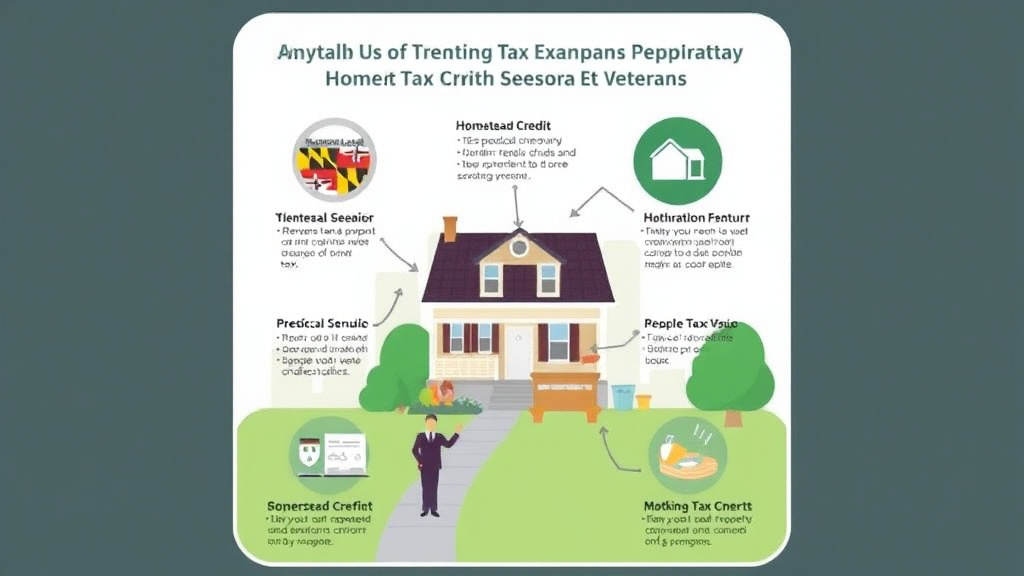
| Homestead Tax Credit | Caps annual assessment increases at 10% (statewide) or lower in some jurisdictions. Baltimore City caps at 4%. |
| Homeowners Tax Credit | Income-based credit. Reduces taxes to a percentage of income for qualifying homeowners. |
| Disabled Veterans Tax Credit | Complete exemption from property taxes |
| Renters Tax Credit | Up to $1,000 credit based on income |
| Agricultural Use Assessment | Assessment at agricultural use value rather than market value |
Detailed Exemption Guide
Homestead Tax Credit
| Amount | Caps annual assessment increases at 10% (statewide) or lower in some jurisdictions. Baltimore City caps at 4%. |
| Who Qualifies | Owner-occupied primary residences |
| How to Apply | Apply through SDAT (State Department of Assessments and Taxation) |
| Deadline | Must apply to receive. Apply any time through SDAT website. |
Homeowners Tax Credit
| Amount | Income-based credit. Reduces taxes to a percentage of income for qualifying homeowners. |
| Who Qualifies | Homeowners with combined income below threshold levels |
| How to Apply | Apply through SDAT. File Form HTC-1. |
| Deadline | September 1 for the current tax year |
Disabled Veterans Tax Credit
| Amount | Complete exemption from property taxes |
| Who Qualifies | Veterans with 100% permanent, service-connected disability |
| How to Apply | Apply through SDAT with VA documentation |
| Deadline | Apply any time. Takes effect for the year approved. |
Renters Tax Credit
| Amount | Up to $1,000 credit based on income |
| Who Qualifies | Renters 60+ or disabled with income limits |
| How to Apply | Apply through SDAT |
| Deadline | September 1 |
Agricultural Use Assessment
| Amount | Assessment at agricultural use value rather than market value |
| Who Qualifies | Land meeting agricultural use requirements |
| How to Apply | Apply through SDAT |
| Deadline | Varies |
How to Maximize Your Savings
Stack Multiple Exemptions
Many of these exemptions can be combined. For example, you can claim a homestead exemption and a veteran exemption at the same time. Check each exemption's eligibility requirements, and apply for every one you qualify for.
Combine Exemptions with an Assessment Appeal
Exemptions reduce your taxable value, but if the underlying assessed value is too high, you are still overpaying. File for exemptions and appeal your assessment for maximum savings. See our Maryland property tax appeal guide for step-by-step instructions.
Do Not Miss Deadlines
Most exemptions have application deadlines. Missing the deadline means waiting another year. Mark the dates on your calendar and file early.
How TaxFightBack Can Help
Exemptions are just one piece of the puzzle. If your assessed value is too high, TaxFightBack can help you build a strong appeal case for $79. You get comparable sales data, equity analysis, and county-specific filing instructions. Combined with the right exemptions, you can significantly reduce your annual tax bill.
The Maryland Appeal Process: Timeline and What to Expect
Understanding the full appeal timeline helps you plan ahead and avoid getting caught off guard. Here is how a typical Maryland property tax appeal plays out from start to finish.
Step 1: Receive Your Assessment Notice
Your county assessor mails your assessment notice, usually once a year. This document shows the assessed value of your property for the upcoming tax year. Read every detail on it. Check the property description, square footage, lot size, and any listed features. Errors here are more common than you might think, and they directly inflate your tax bill.
Step 2: File Your Appeal
In Maryland, appeals go to the Department of Assessments and Taxation. You will need to complete a formal petition or protest form. Most counties accept these online or in person. The form asks for your parcel number, current assessed value, the value you believe is correct, and a brief explanation of why. Keep the explanation factual. Stick to evidence, not opinions about whether your taxes are fair.
Step 3: Prepare Your Evidence Package
Between filing and your hearing date, assemble your case. The strongest evidence is comparable sales data showing similar homes sold for less than your assessed value. Supplement this with photos of your property's condition, documentation of any needed repairs, and your property record card with errors highlighted. Organize everything clearly so the review board can follow your argument in a few minutes.
Step 4: Attend Your Hearing
Most Maryland appeals begin with an informal review. This is a conversation, not a trial. Present your comparable sales first since that is what carries the most weight. Be prepared to answer questions about your property and your comparisons. Stay calm and stick to facts. If the informal review does not resolve your case, you may have the option to proceed to a formal hearing or a higher appeal body.
Step 5: Receive the Decision
After the hearing, the board issues a written decision. If they reduce your assessment, the reduction applies to your current tax year and typically carries forward until the next reassessment. If they deny your appeal, you usually have the right to escalate to a state-level board or court, though this adds time and complexity.
Key Deadlines for Maryland Homeowners
Missing a deadline in Maryland means waiting a full year for your next chance to appeal. That is another 12 months of overpaying. Here are the dates you need to know.
Assessment notice. When your notice arrives, your appeal clock starts. In most Maryland counties, you have 30 to 45 days from the notice date (not the date you received it) to file. Check the notice itself for the exact deadline.
Exemption applications. Most exemptions must be filed before the start of the tax year or within a specific window after you purchase your home. If you recently moved to Maryland or turned 65, check whether you qualify for exemptions you have not yet claimed. Late applications typically mean you lose the benefit for the entire year.
Payment due dates. Even if you are appealing, you generally still need to pay your tax bill on time. Failing to pay while appealing can result in penalties and interest. If your appeal succeeds, you receive a refund or credit for the overpayment.
Pro tip: Set a calendar reminder for 2 weeks before each deadline. That gives you time to gather documents and file without rushing.
Try our free tools
Frequently Asked Questions
Do I need to reapply for exemptions every year in Maryland?
It depends on the exemption. Some (like homestead exemptions) are one-time filings that auto-renew. Others (especially income-based exemptions for seniors) require annual renewal. Check the specific requirements for each exemption you claim.
Can I apply for exemptions retroactively?
Some Maryland exemptions allow retroactive applications for prior tax years. Check with your county assessor or tax office for the specific rules. In many cases, you can recover 1-2 years of missed exemptions.
What happens to my exemption if I sell my home?
Exemptions tied to owner-occupancy (like homestead exemptions) do not transfer to the buyer. The new owner must apply for their own exemptions. When you buy a new home, remember to file for exemptions at your new address.
How do I know if I am already receiving an exemption?
Check your property tax bill or assessment notice. Exemptions are usually listed as line items. You can also check with your county assessor or auditor to see which exemptions are on file for your property.
Start Saving on Your Maryland Property Taxes
File for every exemption you qualify for. It is free money that reduces your tax bill every year. Then, if your assessed value seems too high, use TaxFightBack to build your appeal case. The combination of exemptions and a successful appeal can save you thousands.