Property Tax Appeal for Condos: How Condo Assessments Work Differently
TL;DR
Condo assessments are based on comparable unit sales within your building or complex, not detached home sales in the neighborhood. Find 3-5 similar condo units that sold recently for less than your assessed value. Consider floor level, view, unit size, parking, and storage in your comparisons. HOA fees do not directly affect assessed value, but special assessments and building condition issues can support a lower assessment.
People often underestimate how much property Tax Appeal for Condos: How Condo Assessments Work Differently matters. Condos are assessed as individual units, not as part of the building.
Keep your tone professional and factual. Review boards respond to evidence, not complaints. If you walk in with 3 strong comparable sales and a calm, organized presentation, you are already ahead of most appellants.
How Condo Assessments Differ
Condos are assessed as individual units, not as part of the building. Your assessment reflects the market value of your specific unit, which depends on factors unique to condo living:
- Unit location within the building. Higher floors typically command premium prices. Corner units and those with better views also sell for more.
- Unit size and layout. Square footage is the primary size factor, but layout quality matters too.
- Parking and storage. Assigned parking spaces and storage units add value. Units without them are worth less.
- Building amenities. Pool, gym, concierge, and other amenities are shared and reflected in all unit assessments.
- HOA financial health. Special assessments, reserve fund deficits, and pending major repairs affect the building's desirability.
Finding the Right Comparables
For condos, your best comparables are other units in your building. Same building means same location, same amenities, same HOA, same building condition. The only variables are unit-specific: size, floor, view, and interior condition.
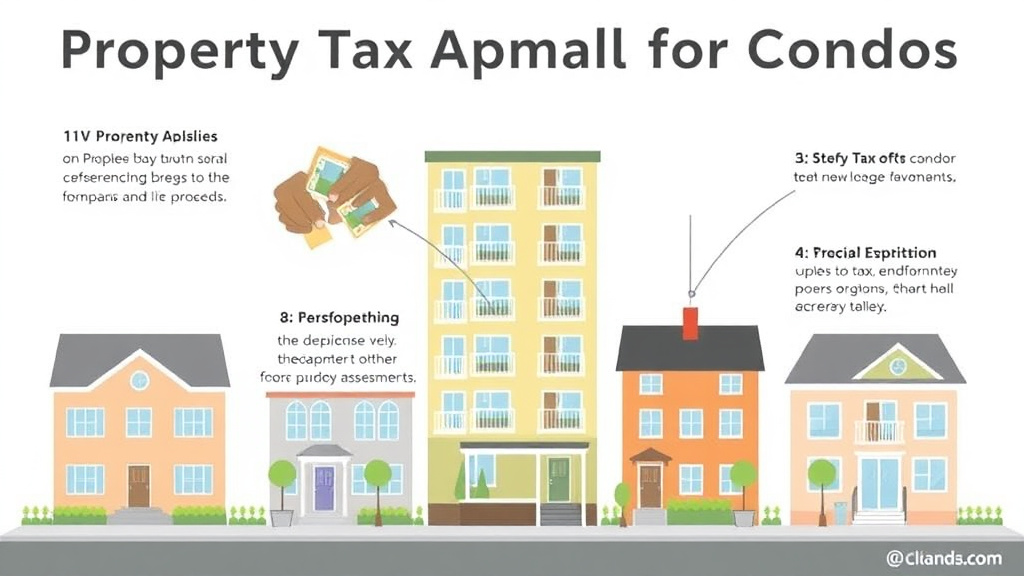
Best Comparable Sources
- Your building's recent sales. Check county records for any unit sales in your building in the past 12 months.
- Your complex's recent sales. If your building is part of a larger condo complex, sales in other buildings with similar layouts count.
- Similar buildings nearby. If your building has limited sales, look for similar condo buildings within a mile that were built around the same time.
Adjustments for Condo-Specific Factors
| Factor | Typical Adjustment |
|---|---|
| Higher floor (per floor) | +$2,000-$10,000 depending on market |
| Better view | +$5,000-$25,000 |
| Parking space | +$5,000-$50,000 (urban markets higher) |
| Storage unit | +$2,000-$5,000 |
| Balcony/patio | +$3,000-$15,000 |
| Corner unit vs. interior | +$3,000-$10,000 |
Using HOA Issues in Your Appeal
While HOA fees themselves do not directly reduce your assessment, these condo-specific situations can support a lower value:
- Pending special assessment. A large upcoming special assessment for roof, elevator, or structural repairs signals building issues that reduce unit values.
- Underfunded reserves. If the building's reserve fund is insufficient for planned maintenance, buyers factor this risk into their offers.
- Building condition issues. Concrete deterioration, water intrusion, elevator problems, or other building-wide issues affect all unit values.
- Litigation. Pending lawsuits against the HOA or developer create uncertainty that depresses prices.
Document these issues with HOA meeting minutes, reserve studies, special assessment notices, or building inspection reports.
The appeal process is designed to be accessible to regular homeowners, not just attorneys and tax professionals. You do not need to hire anyone to file. The key is preparation. Gather your evidence before the hearing, organize it clearly, and practice presenting your case in under 10 minutes. Lead with comparable sales, then cover any property record errors, and finish with photos or documentation of condition issues.
Keep your tone professional and factual. Review boards respond to evidence, not complaints. If you walk in with 3 strong comparable sales and a calm, organized presentation, you are already ahead of most appellants.
Your Next Steps
Do not let this information sit. Take action this week:
- Review your most recent assessment notice. Pull it out and check every line. Look for errors in square footage, lot size, bedroom count, and property features. Mistakes here are more common than most homeowners realize.
- Pull comparable sales data. Find 3 to 5 similar properties near you that sold recently. If they sold for less than your assessed value, you have the foundation of a strong appeal.
- Check your exemption status. Contact your county assessor's office and confirm which exemptions are currently applied to your property. Many homeowners qualify for exemptions they have never filed for.
- Set a deadline reminder. Find your appeal deadline and put it on your calendar with a 2-week advance warning. Missing the deadline costs you a full year of potential savings.
Why Most Homeowners Overpay
Studies consistently show that a large percentage of residential properties are over-assessed. The Lincoln Institute of Land Policy found that roughly 40% of assessments are off by more than 10%. That is not a rounding error. On a $350,000 home, a 10% overvaluation means you are paying taxes on $35,000 of value that does not exist.
The reason is simple: assessors use mass appraisal models to value thousands of properties at once. They cannot inspect every home individually. The models rely on averages, which means homes that are below average in condition, location, or desirability often get assessed too high. If your home has any characteristics that reduce its value compared to the average home in your area, your assessment may be inflated.
The only way to fix this is to check your assessment yourself. Compare it to actual sales of similar properties. If the numbers do not match, file an appeal. The process exists for exactly this purpose, and homeowners who use it save an average of $1,000 to $3,000 per year.
Appealing does not increase your assessment. In most jurisdictions, the review board can only lower your value or leave it unchanged. There is no downside to filing a well-prepared appeal.
Try our free tools
Frequently Asked Questions
How do condo assessments work differently?
Condo assessments are based on comparable unit sales within your building or complex, not detached home sales in the neighborhood. Find 3-5 similar condo units that sold recently for less than your assessed value. Consider floor level, view, unit size.
How Condo Assessments Differ?
Condos are assessed as individual units, not as part of the building. Your assessment reflects the market value of your specific unit, which depends on factors unique to condo living: unit location within the building, unit size and layout, and any special features or upgrades.
What are the best comparables for a condo tax appeal?
For condos, your best comparables are other units in your building. Same building means same location, same amenities, same HOA, same building condition. The only variables are unit-specific: size, floor, view, and interior condition. Check your building's recent sales.
Can HOA issues help in a condo tax appeal?
While HOA fees themselves do not directly reduce your assessment, these condo-specific situations can support a lower value: a pending special assessment for major repairs, an underfunded reserve fund for planned maintenance, or ongoing building condition issues.
Get Condo-Specific Comparable Sales
Our $79 Evidence Packet finds comparable condo unit sales in your building and area, with adjustments for floor, size, and features. Built for condos, not just houses.