Property Tax Appeal Guide for Elderly Homeowners: Simplified Process
TL;DR
Seniors have the same appeal rights as any homeowner, plus additional exemptions and deferral programs in most states. Before appealing, check if you qualify for a senior exemption, freeze, or deferral that could reduce your bill without an appeal. If your assessed value is still too high after exemptions, appeal using the same comparable sales evidence as anyone else. Many counties offer simplified appeal processes, phone hearings, and assistance for elderly homeowners.

Property Tax Appeal Guide for Elderly Homeowners: Simplified Process is one of those subjects where specifics count. Before going through the appeal process, make sure you are claiming all available exemptions.
Keep your tone professional and factual. Review boards respond to evidence, not complaints. If you walk in with 3 strong comparable sales and a calm, organized presentation, you are already ahead of most appellants.
Check for Senior Exemptions First
Before going through the appeal process, make sure you are claiming all available exemptions. Many seniors miss thousands in annual savings simply by not applying for programs they already qualify for.
Common Senior Property Tax Programs
| Program | What It Does | Typical Eligibility |
|---|---|---|
| Senior homestead exemption | Reduces assessed value by a fixed amount | Age 65+, primary residence |
| Senior tax freeze | Locks your tax bill at current level | Age 65+, income limits vary |
| Tax deferral | Delays payment until sale of home | Age 62-65+, income limits |
| Circuit breaker credit | Limits taxes as a percentage of income | Age and income requirements vary |
Contact your county assessor or tax office to ask about available programs. Many require a one-time application.
When to Appeal Your Assessment
Even after claiming exemptions, your assessed value may be too high. Appeal if:
- Similar homes in your neighborhood are assessed lower
- Recent sales nearby are below your assessed value
- Your home has condition issues the assessor does not account for
- The assessor has incorrect data about your property (wrong square footage, features, etc.)
The appeal process is designed to be accessible to regular homeowners, not just attorneys and tax professionals. You do not need to hire anyone to file. The key is preparation. Gather your evidence before the hearing, organize it clearly, and practice presenting your case in under 10 minutes. Lead with comparable sales, then cover any property record errors, and finish with photos or documentation of condition issues.
Keep your tone professional and factual. Review boards respond to evidence, not complaints. If you walk in with 3 strong comparable sales and a calm, organized presentation, you are already ahead of most appellants.
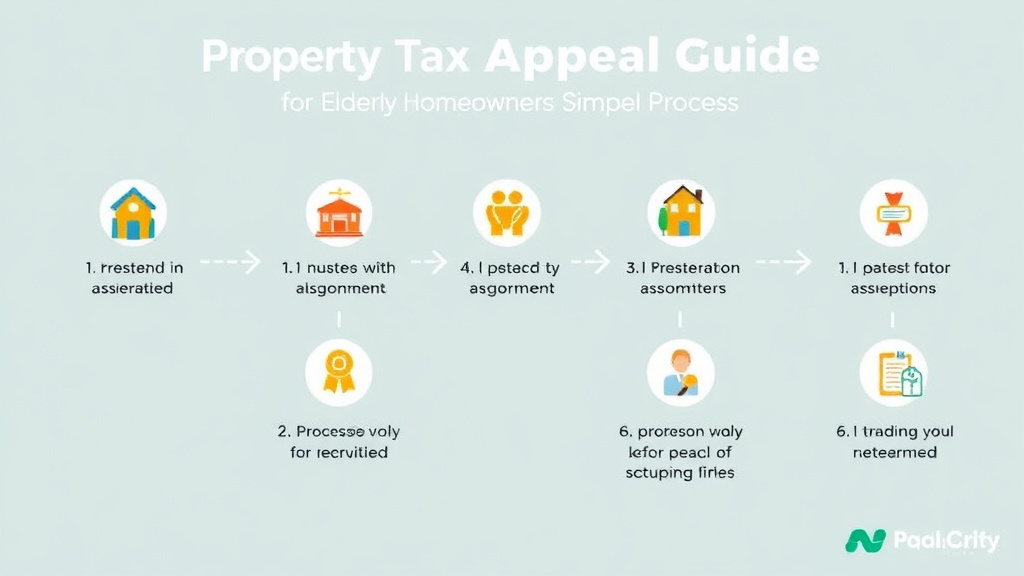
The Simplified Appeal Process
Step 1: Get Your Assessment Notice
Your county mails this annually. It shows your assessed value and the deadline to appeal. Mark the deadline immediately.
Step 2: Check Your Property Record
Call the assessor's office and ask for your property record card. Verify the square footage, room count, features, and condition rating. Errors are common and easy to correct.
Step 3: Find 3-5 Comparable Sales
Look for homes similar to yours that sold recently for less than your assessed value. Use Zillow, Redfin, or ask a real estate agent. You need the address, sale price, sale date, and basic property details for each.
Step 4: File Your Appeal
Submit the appeal form by the deadline. Many counties now accept these online. If you need help with the form, call the assessor's office. Staff are generally helpful with procedural questions.
Step 5: Attend Your Hearing
Bring your comparable sales data and any photos or documents. Keep your presentation to 5 minutes. State what value you believe is correct and why. Many counties offer phone or video hearings if travel is difficult.
Getting Help
If the process feels overwhelming, consider these options:
- County assessor's office. Staff can answer procedural questions and sometimes review your data informally.
- Local senior center. Some offer free property tax appeal assistance.
- Legal aid. Low-income seniors may qualify for free legal help with appeals.
- Family member. In most states, a family member can file and present the appeal on your behalf with a signed authorization.
Understanding this topic fully means looking at both the big picture and the specific details that apply to your situation. Every property is different, and the strategies that save the most money are the ones tailored to your particular home, location, and circumstances.
Start by gathering the basic facts about your property: its assessed value, the tax rate in your jurisdiction, and any exemptions currently applied. Then compare your situation to what is available. You may find opportunities for savings that you did not know existed.
Your Next Steps
Do not let this information sit. Take action this week:
- Review your most recent assessment notice. Pull it out and check every line. Look for errors in square footage, lot size, bedroom count, and property features. Mistakes here are more common than most homeowners realize.
- Pull comparable sales data. Find 3 to 5 similar properties near you that sold recently. If they sold for less than your assessed value, you have the foundation of a strong appeal.
- Check your exemption status. Contact your county assessor's office and confirm which exemptions are currently applied to your property. Many homeowners qualify for exemptions they have never filed for.
- Set a deadline reminder. Find your appeal deadline and put it on your calendar with a 2-week advance warning. Missing the deadline costs you a full year of potential savings.
Why Most Homeowners Overpay
Studies consistently show that a large percentage of residential properties are over-assessed. The Lincoln Institute of Land Policy found that roughly 40% of assessments are off by more than 10%. That is not a rounding error. On a $350,000 home, a 10% overvaluation means you are paying taxes on $35,000 of value that does not exist.
The reason is simple: assessors use mass appraisal models to value thousands of properties at once. They cannot inspect every home individually. The models rely on averages, which means homes that are below average in condition, location, or desirability often get assessed too high. If your home has any characteristics that reduce its value compared to the average home in your area, your assessment may be inflated.
The only way to fix this is to check your assessment yourself. Compare it to actual sales of similar properties. If the numbers do not match, file an appeal. The process exists for exactly this purpose, and homeowners who use it save an average of $1,000 to $3,000 per year.
Appealing does not increase your assessment. In most jurisdictions, the review board can only lower your value or leave it unchanged. There is no downside to filing a well-prepared appeal.
Try our free tools
Frequently Asked Questions
How can elderly homeowners appeal their property taxes?
Seniors have the same appeal rights as any homeowner, plus additional exemptions and deferral programs in most states. Before appealing, check if you qualify for a senior exemption, freeze, or deferral that could reduce your bill without an appeal.
What senior exemptions should elderly homeowners check for first?
Before going through the appeal process, make sure you are claiming all available exemptions. Many seniors miss thousands in annual savings simply by not applying for programs they already qualify for.
When to Appeal Your Assessment?
Even after claiming exemptions, your assessed value may be too high. Appeal if: similar homes in your neighborhood are assessed lower, recent sales nearby are below your assessed value, your home has condition issues the assessor does not account for, or the assessor has incorrect data about your property.
When is the deadline to appeal property taxes for elderly homeowners?
Step 1: Get Your Assessment Notice. Your county mails this annually. It shows your assessed value and the deadline to appeal. Mark the deadline immediately. Step 2: Check Your Property Record. Call the assessor's office and ask for your property reco
Can elderly homeowners get help with the property tax appeal process?
If the process feels overwhelming, consider these options: the county assessor's office (staff can answer procedural questions and sometimes review your data informally), your local senior center (some offer free property tax appeal assistance), lega
Get Your Evidence Packet
Our $79 Evidence Packet does the comparable sales research for you. We pull the data, calculate adjustments, and create a formatted document ready for your hearing. No complicated software or research needed.