Last updated 2026-07-09
TL;DR
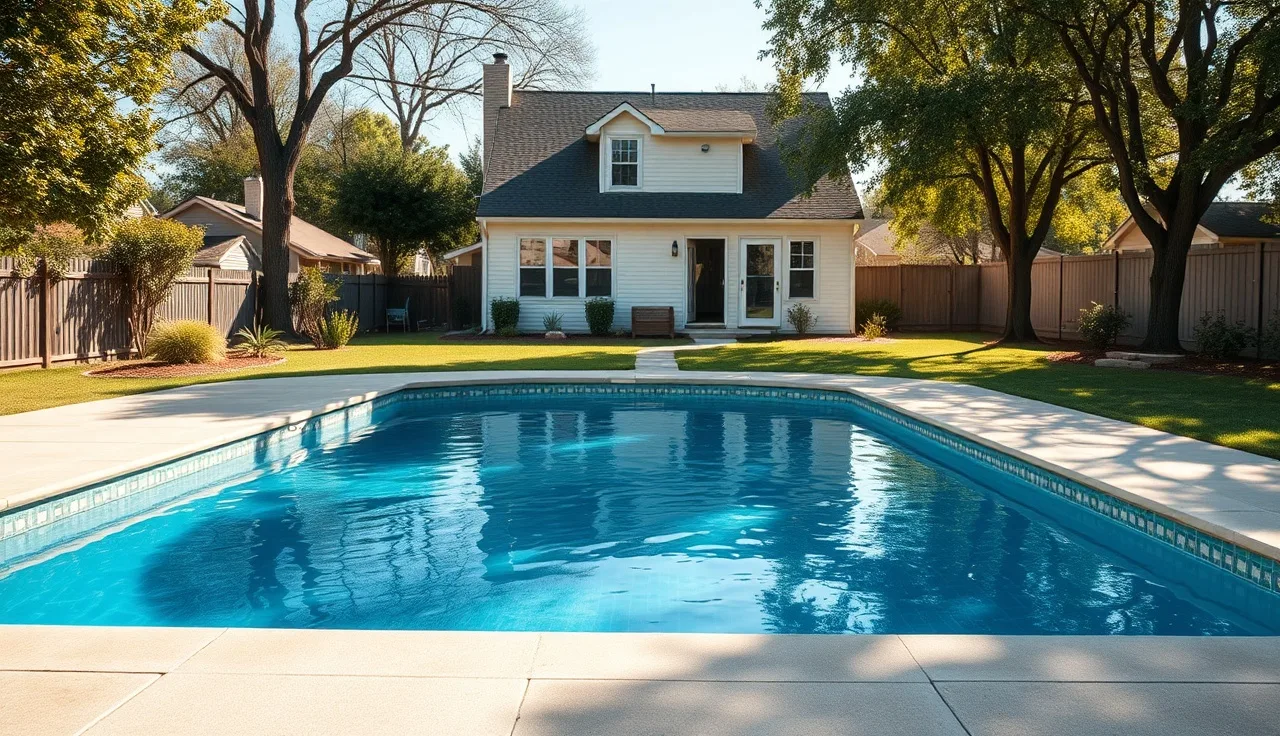
Yes, adding a pool almost always raises your property taxes. Assessors typically add $10,000, $40,000 to your home's assessed value for an in-ground pool, which translates to roughly $500, $2,500 per year in extra taxes depending on your local tax rate. The exact hit varies by pool type, local market, and how your assessor defines contributory value. You can challenge it.
How do assessors find out you built a pool?
Most homeowners assume their pool is a private matter between them and their backyard. It isn't.
Permit records are the most common discovery tool. When you pull a building permit to install an in-ground pool, that permit gets filed with your local building or planning department, and most county assessors have automated data feeds pulling new permits daily or weekly [1]. Above-ground pools usually don't require permits and are far less likely to trigger a reassessment, though some jurisdictions do catch them through aerial surveys.
Aerial and satellite imagery is the second major channel. Many assessors now contract with companies that fly or license satellite imagery annually and run it through change-detection software that flags new structures, pool shapes included. Counties like Cook County, Illinois and Los Angeles County, California have both discussed or implemented imagery-based discovery programs in recent years [2].
Neighbor sales can also expose you. If a home near yours sells and the buyer's lender orders an appraisal, that appraisal notes the pool in the neighborhood comp data. That data eventually makes its way into the assessor's sales analysis. You may not get a notice until your next regularly scheduled reassessment cycle, which in some states is annual and in others is every three to five years.
The short answer: plan to be found. The better question is whether the value the assessor assigns is accurate.
How much value does a pool actually add to assessed value?
This is where things get real, and where homeowners often get overcharged.
Assessors use two approaches. The first is cost approach: they look up the depreciated replacement cost of the pool as an improvement. The second, and more defensible, is the sales comparison (market) approach: they study actual sales of homes with and without pools in your neighborhood and calculate the contributory value, meaning how much more buyers actually paid for the pool.
The problem is that those two numbers diverge significantly. A concrete in-ground pool might cost $60,000, $100,000 to build in 2025, but the National Association of Realtors and Remodeling Magazine's annual Cost vs. Value report have consistently found that pools return only 50 to 70% of construction cost in resale value [3]. In cooler climates, that return can fall below 40%.
Here's a rough range of what assessors commonly add for an in-ground pool, based on county assessor guidance documents and published cost schedules:
| Pool type | Typical added assessed value | Approx. annual tax increase (at 2% effective rate) |
|---|---|---|
| Basic vinyl in-ground (12x24) | $8,000, $18,000 | $160, $360 |
| Mid-range concrete/fiberglass | $15,000, $35,000 | $300, $700 |
| Large custom pool with spa | $30,000, $60,000 | $600, $1,200 |
| Above-ground pool | $0, $5,000 | $0, $100 |
These ranges come from published county cost manuals and real estate literature; your assessor's actual schedule may differ. To find the precise schedule your county uses, request their personal property or improvement cost manual, which most assessors are legally required to make available to the public [1].
One number worth remembering: the 2021 National Association of Realtors study found that a pool adds a median of about 7% to a home's sale price in warm-weather markets, but as little as 2 to 3% in markets where pools are uncommon [4]. If your assessor is using 15 to 20% added value, you may have a strong argument.
What is the typical property tax increase for a pool?
The dollar increase depends on two variables: how much value the assessor adds and what your effective property tax rate is.
Effective rates vary enormously. The Tax Foundation reports that effective property tax rates in 2023 ranged from 0.28% in Hawaii to 2.23% in Illinois and 2.47% in New Jersey [5]. So a pool assessed at $25,000 in additional value costs you:
- About $70/year in Hawaii
- About $558/year in Illinois
- About $618/year in New Jersey
In high-tax Northeastern states and parts of the Midwest, the annual tax hit from a pool is real money. In sunbelt states like Florida, Texas, or Arizona, where pools are extremely common and tax rates tend to be lower, the increase per dollar of value is smaller.
Texas deserves a special note because it has no income tax and leans heavily on property taxes, with an average effective rate around 1.6% statewide [5]. A $30,000 pool assessment bump there runs about $480/year. That's before any local school district or municipal levies that sit on top.
The math is simple enough: (added assessed value) x (your effective tax rate) = annual increase. Your effective tax rate appears on your tax bill as a total millage or levy rate. If you can't find it, divide your current annual tax bill by your current assessed value.
Does a pool raise taxes differently in warm vs. cold climates?
Yes, and the difference is meaningful for appeals.
In warm-weather markets like Phoenix, Miami, Tampa, or San Diego, pools are common enough that they generate clear comparable sales data. Assessors in those markets usually have solid evidence for what pools contribute. But even in those markets, the contributory value from market data often comes in below what a cost-based assessment would suggest, because buyers factor in maintenance costs, liability, and the fact that many buyers in those markets expect pools anyway.
In cold-weather markets like Minnesota, Wisconsin, or upstate New York, pools are a much smaller fraction of the housing stock. That makes comparable sales harder to find. Assessors in those states sometimes default to cost schedules that overstate value because they don't have enough pool-to-pool sales to calibrate the market adjustment. If you live in a climate where outdoor pools are usable only four months a year, that's a legitimate argument in an appeal: the market evidence for your area simply doesn't support a $30,000 value bump.
Worth knowing for Minnesota homeowners: Hennepin County's assessor publishes property record details online where you can check exactly what improvement value has been assigned to each structure on your parcel, including pools [6]. If you're in that area, start there. A similar lookup is available through the cook county tax assessor tax bill portal for Illinois properties.
Can you appeal a property tax increase caused by a pool?
Absolutely. And it's often worth doing, especially if the assessor used cost value rather than market value.
The appeal process works the same way regardless of what triggered the reassessment. You file an informal complaint or formal appeal with your county's board of review, equalization board, or appraisal review board (the name varies by state) within the statutory deadline, which is typically 30 to 90 days from when your assessment notice was mailed [7].
For a pool-specific appeal, your argument has two possible angles. First, you can argue the contributory value assigned to the pool is higher than what comparable sales in your neighborhood support. This means pulling sales of similar homes with and without pools within the past 12 to 24 months and calculating the actual price premium buyers paid. If the assessor says your pool adds $40,000 and your comp analysis shows buyers in your neighborhood paid $18,000 more for pools, you have a real case.
Second, if you're in a jurisdiction that uses cost-based schedules, you can challenge whether the cost schedule reflects current market depreciation. A pool that's 15 years old should carry substantial physical and functional depreciation, which reduces its contributory value. Request the cost manual, look up the depreciation table for pools, and verify the assessor applied it correctly.
Documentation matters more than passion in these hearings. Bring a clear one-page summary, your comps printed from MLS or Zillow or Redfin (noting the pool status for each), and a photo of your pool if there's any question about its size or condition. The assessor's office is usually open to adjusting pool values when a homeowner shows up with real data.
If you want a structured guide through the comparable evidence step, the TaxFightBack appeal kit walks you through building exactly this case without paying a contingency firm 30 to 40% of your refund.
What evidence do you need to appeal a pool assessment?
Good evidence for this kind of appeal is more accessible than most homeowners realize.
Start with your assessment notice or property record card. Most counties post these online now. The card should list the pool as a specific improvement line item with its assigned value. That number is what you're challenging.
Next, find at least three to five comparable sales in your neighborhood within the last 12 to 24 months. You're looking for two groups: homes with pools similar to yours that sold, and similar homes without pools that sold. The difference in average sale price between the two groups, adjusted for other differences (square footage, age, condition), is the market-derived contributory value of a pool in your area.
Real estate sites like Redfin, Zillow, and Realtor.com let you filter searches by pool. More authoritative sources include MLS printouts (ask a friendly agent to pull them) or county recorder sale records. For jurisdictions where public access to sale records is strong, the assessor's own comparable sales search tool is actually the best source because it's what the assessor uses.
Photos of the pool's current condition matter if it's old, damaged, or undersized. A cracked plaster pool that needs $20,000 in repairs to function properly is not contributing $35,000 to your home's value. Age and condition adjustments are legitimate.
For la county property tax and California specifically: Proposition 13 limits increases to 2% annually unless there's a change of ownership or new construction [8]. A new pool is "new construction" under California law, so it triggers a supplemental assessment. The base assessment for the pool locks in at that point and grows only 2%/year. That's actually a protection once you understand it.
For Texas property owners in the San Antonio area, the bexar county tax assessor office maintains an online portal where you can pull your property record, see the pool's assigned value, and file an appeal, all in one place. In Georgia, the gwinnett county tax assessor has a comparable portal with a 45-day appeal window from the date of the annual assessment notice.
Do above-ground pools raise property taxes?
Generally no, or only minimally.
Above-ground pools are almost always classified as personal property (removable, not attached to the land) rather than real property improvements. Most states' assessment guidelines explicitly exclude items that are not permanently affixed. The legal standard in most jurisdictions is whether the item is a "fixture," meaning it's attached to the real estate in a way that makes removal impractical.
An inflatable or soft-sided pool sitting on grass with a filter plugged into an outlet is clearly personal property. A large above-ground pool bolted to a deck structure with plumbing connections and a permit is more ambiguous, and some assessors will assess it.
If your assessor has added value for an above-ground pool that is clearly not permanently attached, that's an easy appeal. The argument is simply that the item doesn't meet the legal definition of a taxable improvement under your state's assessment code. Cite the relevant statute. Most state property tax codes define real property and improvements in their opening sections.
Are there any states where pools don't affect property taxes much?
Florida is probably the most notable example, and it's counterintuitive given how pool-saturated the market is there.
Because pools are so common in Florida, their contributory value in many markets is near zero or actually negative in some communities where buyers see them as a maintenance burden. Miami-Dade County's assessment data has shown this in suburban ZIP codes where essentially every comparable home has a pool. When pools are everywhere, they stop separating one house from the next.
California's Proposition 13, as noted above, caps annual increases at 2% after the initial assessment [8]. So even if a pool triggers a $30,000 bump in year one, it will grow slowly. After 20 years, the pool's assessed value increase from that original event is still only the compounded 2% growth on the original supplemental.
Hawaii has the lowest effective property tax rate in the country at 0.28% [5], so even a $30,000 pool assessment adds only about $84/year, which is barely noticeable.
On the other end, New Jersey and Illinois homeowners should pay the most attention. Those states combine high tax rates with frequent reassessment cycles, meaning an overvalued pool assessment compounds into real money fast.
What if you're buying a home with a pool? How do you estimate the tax impact before you close?
Smart question to ask before, not after, you sign.
Step one: pull the current property record card for the home you're considering. In most states this is free and available on the county assessor's website. Look at how the pool is currently assessed. If the sellers installed the pool three years ago and the assessor hasn't picked it up yet (it happens), you could be walking into a reassessment shortly after closing.
Step two: if you're in a state with change-of-ownership reassessment rules, buying a home with a pool means the new market-value assessment applies to the whole property including the pool. California is the clearest example: the sale price establishes the new base value for everything on the parcel [8]. In states without that rule, the pool's assessed value carries over from the prior owner.
Step three: calculate the marginal tax cost using your target county's effective rate. Your lender's good-faith estimate should include a property tax escrow projection, but it's often based on the current tax bill, which may not reflect a pending reassessment.
For buyers in Montgomery County, Maryland, the montgomery county property tax assessor's site has a property search that shows improvement breakdowns including pools, so you can see exactly what the prior owner was assessed for that structure.
How is a pool's value calculated on your property record card?
Most assessors use a cost manual, often the Marshall & Swift Residential Cost Handbook or a state-specific equivalent, to set the base cost of pool construction per square foot of water surface area [9]. They then apply a depreciation factor based on the pool's effective age and condition.
The formula looks like this:
Replacement Cost New (RCN) x (1 - Depreciation) = Contributory Value
A 500-square-foot concrete pool with an RCN of $90 per square foot is $45,000 new. If the assessor applies 30% total depreciation for a pool that's 15 years old and average condition, the assessed improvement value is $31,500.
That's the number you want to verify. Check: did they get the square footage right? Measure your pool. Did they use the right construction type (vinyl liner, fiberglass, concrete)? Those cost differently. Did they apply the right depreciation percentage for the pool's actual age and condition?
Errors in any of those inputs are common and each one reduces the assessed value when corrected. This is why pulling your property record card is always the first step, not the last.
Does a pool raise taxes the same year it's built?
Usually yes, but the timing depends on when the assessor catches it and how your state handles mid-year additions.
Most states allow a supplemental or interim assessment when new construction is completed mid-year. California does this explicitly: when a new pool is completed and recorded as new construction, the county assessor issues a supplemental assessment prorated to the portion of the fiscal year remaining [8]. You can receive that supplemental bill two to six months after the pool is finished.
In states without supplemental assessment authority, the new value typically takes effect on January 1 of the following year, assuming the assessor discovers it before the assessment date. If they don't catch it until the year after that, some states allow back-assessment for prior years (typically one to three years back). A few states prohibit retroactive assessment entirely.
The safest assumption is that you'll see a tax increase either partially in the year the pool is finished or fully in the following tax year. Budget accordingly.
Is the extra property tax worth it? What do the numbers actually say?
This is the question most pool articles avoid answering honestly.
The Remodeling Magazine Cost vs. Value Report, which surveys real estate agents and appraisers annually across U.S. markets, has found that no outdoor pool project consistently recoups its full cost at resale [3]. The 2023 report did not rank pools separately, but prior editions consistently showed returns in the 40 to 70% range depending on climate and local market norms.
The annual carrying cost of a pool, separate from taxes, runs $3,000, $5,000 on average when you add chemicals, electricity, maintenance, and insurance premium increases, according to HomeAdvisor/Angi consumer surveys (though the exact figure shifts year to year and varies by pool size and climate) [10].
So the full annual cost of a pool is: extra property tax ($300, $1,200 in most cases) plus operating costs ($3,000, $5,000) = roughly $3,300, $6,200 per year. On a $50,000 pool construction cost, that's a heavy ongoing commitment.
Personally, I wouldn't let the property tax component drive the decision. The tax impact is real but it's the smallest part of the ongoing cost. What I would do is fight like crazy if the assessor overvalues it, because that error costs you money every single year until you fix it. Use your actual market comps, not the assessor's cost schedule, and appeal if the numbers don't match.
If you want to run your own appeal without handing 30 to 40% of your savings to a contingency firm, the TaxFightBack appeal kit gives you the exact comparable evidence framework used in formal hearings.
Frequently asked questions
How much does a pool add to property taxes per year on average?
Most homeowners see $300, $1,200 per year in added property taxes from an in-ground pool, based on assessors typically adding $15,000, $40,000 in assessed value and effective tax rates between 1% and 2.5% nationally. The extremes run from under $100/year in Hawaii (0.28% rate) to over $1,500/year in New Jersey or Illinois with a large custom pool.
Does building a pool automatically trigger a reassessment?
In most states, yes. A building permit for a new pool flags it as new construction, which is a recognized reassessment trigger under most state assessment codes. Even without a permit, assessors increasingly use aerial imagery to catch new pool installations. The reassessment usually takes effect either mid-year via a supplemental bill or on January 1 of the following tax year.
Do above-ground pools raise property taxes?
Rarely. Above-ground pools that aren't permanently attached are typically classified as personal property, not real estate improvements, and are excluded from most property tax assessments. If yours has permanent plumbing and is bolted to a deck structure, some assessors may assess it. If they do, and it's clearly removable, you have a straightforward appeal based on your state's fixture definition.
How do I find out if my pool is on my property assessment?
Pull your property record card from your county assessor's website, which most counties now make available for free online. Look for a line item listing structures or improvements beyond the main dwelling. Your pool should appear as a separate line with its dimensions, construction type, and assigned value. If you see a value you think is wrong, that's your starting point for an appeal.
Can I appeal the property tax increase from a new pool?
Yes. The appeal process for a pool-driven reassessment is the same as any assessment appeal. Gather comparable sales of homes with and without similar pools in your neighborhood, calculate the actual price premium buyers paid, and compare it to what the assessor assigned. File within your jurisdiction's deadline, typically 30 to 90 days from the assessment notice. Bring written evidence, more than a verbal objection.
Does California's Prop 13 protect you from a big tax jump when you add a pool?
Partially. Under Proposition 13, a new pool triggers a supplemental assessment as new construction, so the pool's value is added to your base. But once assessed, that pool value grows no more than 2% per year regardless of what happens to the market. You do face a real initial increase, but you're protected from runaway annual escalation after that. The supplemental bill arrives within a few months of the pool's completion.
Does a pool raise taxes more in Texas or Florida?
Typically more in Texas. Texas has no income tax and leans on property taxes, with an average effective rate near 1.6% statewide, versus Florida's roughly 0.89%. More importantly, pools are so common in many Florida markets that their contributory value in comparable sales approaches zero in some neighborhoods. In Texas, a $25,000 pool assessment runs about $400/year in extra taxes; in much of Florida, it might be half that or less.
What's the difference between the cost approach and market approach for valuing a pool?
The cost approach calculates what it would cost to replace the pool today, then subtracts depreciation for age and condition. The market approach looks at actual sales of comparable homes with and without pools and measures what buyers actually paid extra. The two often diverge significantly, especially for older pools or in markets where pools are uncommon. For appeal purposes, the market approach almost always produces a lower value.
Can a pool actually decrease my property's value and taxes?
In some markets, yes. In cool climates where pools are a liability for much of the year, or in neighborhoods where buyers actively avoid the maintenance cost, pools can contribute zero or negative value. If your comparable sales analysis shows homes with pools selling at the same price or lower than homes without, you have an argument that the pool contributes nothing to value and the assessed improvement value should be minimal.
How far back can the assessor go if they missed my pool for several years?
This varies by state statute. Most states allow the assessor to back-assess for one to three prior years if an improvement was missed. Some states, including California, limit back-assessment of escaped improvements to one supplemental cycle. A few states prohibit retroactive assessments entirely. Check your state's assessment code or ask your assessor's office directly; the rules are usually in the statutes governing escape or omitted assessments.
Does homeowners insurance affect property taxes when you add a pool?
Insurance and property taxes are separate systems. Adding a pool will likely raise your homeowners insurance premium because pools increase liability exposure, but that increase doesn't affect your property tax assessment. The assessor doesn't use insurance values. However, if an insurance appraisal assigns a replacement value to the pool, that document can actually serve as supporting evidence in a cost-approach assessment appeal.
If I fill in my pool, will my property taxes go down?
Yes, typically. Demolishing or permanently filling an in-ground pool removes it as a taxable improvement. You should notify your assessor with documentation of the demolition, including a permit if one was required, and request a reassessment. The timing of the tax reduction depends on your jurisdiction: some apply it mid-year, others wait for the next assessment cycle. Always confirm with your assessor's office in writing.
What is the pool's contributory value and why does it matter?
Contributory value is the dollar amount a specific feature adds to a home's market value based on what buyers actually pay. It's distinct from construction cost. Assessors are supposed to assess market value, not replacement cost. If your assessor values your pool at $40,000 because that's what it cost to build, but market data shows buyers in your area pay only $18,000 more for pool homes, the $22,000 gap is a valid appeal argument.
Are pool cabanas, heaters, or slides included in the tax assessment?
Often yes, if they're permanent structures. A pool house or cabana with a foundation is almost always assessed separately as an accessory structure. Permanently mounted slides and diving boards are typically included in the pool assessment. Portable equipment like detachable slides or freestanding shade structures is usually personal property. Check your property record card to see what specific items your assessor listed.
Sources
- International Association of Assessing Officers (IAAO), Standard on Mass Appraisal of Real Property: Assessors use building permit records as a primary mechanism to discover new improvements including pools, and cost manuals must be made publicly available
- Cook County Assessor's Office, Illinois: Large urban counties including Cook County have explored or implemented aerial and satellite imagery programs to detect unreported property improvements
- Remodeling Magazine, Cost vs. Value Report: Swimming pools historically return 50–70% of construction cost in resale value, and returns can fall below 40% in cooler climates
- National Association of Realtors, Remodeling Impact Report and market studies: A pool adds a median of approximately 7% to home sale price in warm-weather markets but as little as 2–3% where pools are uncommon
- Tax Foundation, Property Taxes by State 2023: Effective property tax rates range from 0.28% in Hawaii to 2.23% in Illinois and 2.47% in New Jersey; Texas averages approximately 1.6% statewide
- Hennepin County Assessor, Minnesota: Hennepin County publishes online property record details showing individual improvement line items, including pools, with assigned values
- Lincoln Institute of Land Policy, Property Tax Appeal Procedures Across States: Statutory deadlines for property tax appeals are typically 30 to 90 days from the mailing of the assessment notice, varying by state
- California State Board of Equalization, Proposition 13 Overview: California Proposition 13 limits assessed value increases to 2% annually; new pool construction is classified as new construction triggering a supplemental assessment prorated to the remaining fiscal year
- Marshall & Swift Residential Cost Handbook, CoreLogic: Most U.S. assessors use the Marshall & Swift Residential Cost Handbook or a state-equivalent cost manual to set replacement cost new for pool improvements by construction type and square footage
- Angi (HomeAdvisor), Annual Cost to Maintain a Pool: Annual pool operating costs including chemicals, electricity, and maintenance average $3,000–$5,000 depending on pool size and climate
- Gwinnett County Tax Assessor, Georgia: Gwinnett County's online property assessment portal allows homeowners to view improvement values including pools and file appeals within the statutory 45-day window
- Bexar County Appraisal District, Texas: Bexar County's appraisal district provides an online portal for homeowners to view property records, pool assessments, and file protests with the Appraisal Review Board
- Montgomery County Department of Assessment, Maryland: Montgomery County Maryland's assessor website provides property search tools showing improvement breakdowns by structure type including pools