Last updated 2026-07-11
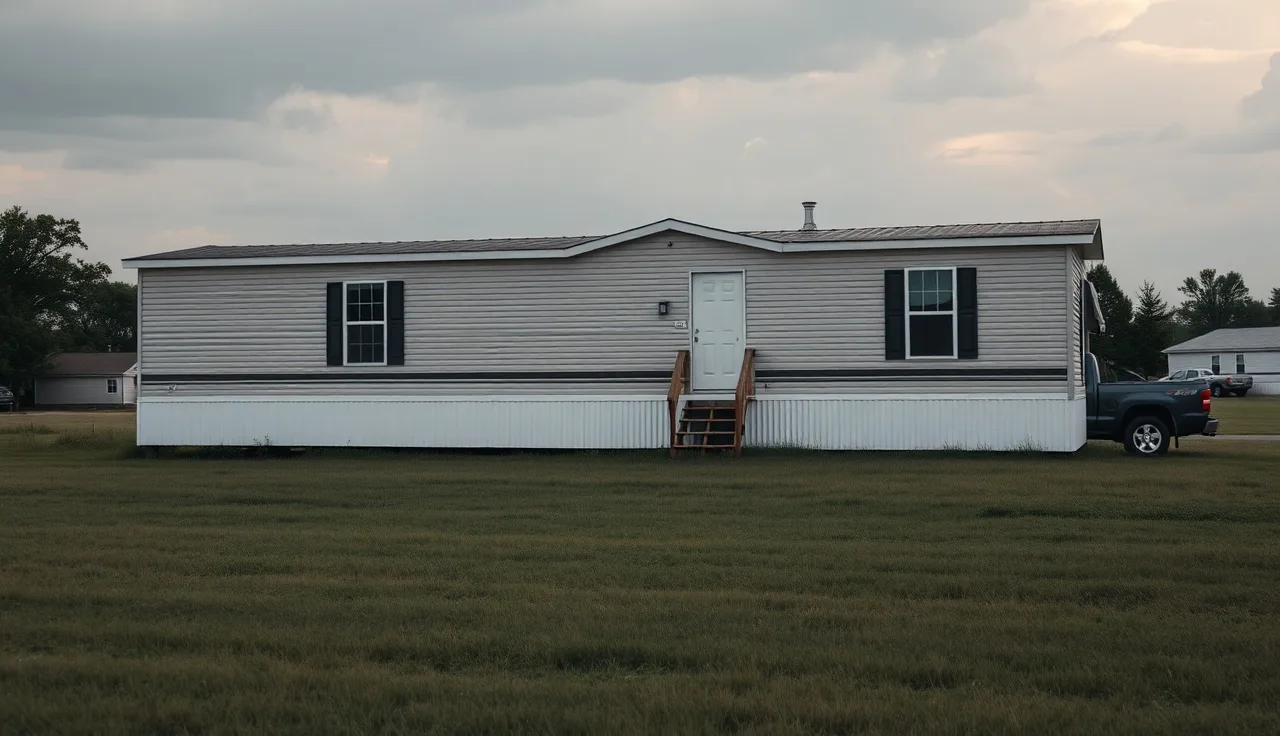
TL;DR
Your tiny home or manufactured home gets taxed as real property or personal property based on two facts: do you own the land, and has the home been permanently affixed and de-titled. Real property status usually means lower effective rates and homestead exemptions. Personal property status can mean higher rates, appeal windows as short as 30 days, and a separate bill entirely.
Why are tiny homes and manufactured homes taxed differently from regular houses?
Property tax law was written for houses that sit on land the owner also owns. Tiny homes and manufactured homes break that assumption. The home might sit on rented land, or stay on wheels, or keep a vehicle title that never got converted. Any one of those facts pushes the home into a different tax category.
Most states sort property into two buckets: real property (land plus permanently attached improvements) and personal property (everything else, including vehicles and movable structures). A conventional site-built house always lands in the real property bucket. A manufactured home or tiny home can land in either one, and which bucket it hits depends on facts you actually control.
The legal foundation is the federal Manufactured Housing Improvement Act of 2000, which set national construction and safety standards (the HUD Code) for manufactured homes but left taxation entirely to the states. [1] That single choice explains the chaos. Rules vary wildly from one state to the next, and your neighbor two counties over might pay a completely different effective rate on an identical home.
What is the difference between a manufactured home, a mobile home, and a tiny home for tax purposes?
These three terms are not interchangeable in most tax codes, and confusing them is one of the most common mistakes homeowners make when reading their bills. Each term maps to a different set of rules.
Manufactured home is the federal legal term for a factory-built home constructed after June 15, 1976, under HUD standards. [1] It's what most people call a mobile home if it was built before that date. Post-1976 HUD-code homes carry a data plate and a certification label.
Mobile home is the colloquial term, and many state statutes still use it for pre-1976 units. Some states tax pre-1976 homes exclusively as personal property regardless of land ownership.
Tiny home has no federal definition. For tax purposes, a tiny home is classified by how it's titled and where it sits. A tiny home on a permanent foundation with a deed gets taxed like any other house. A tiny home on wheels (THOW) is usually titled as a recreational vehicle through your state's DMV and taxed as personal property, often through vehicle excise tax rather than property tax at all.
The table below shows how these categories usually map to tax treatment:
| Home Type | Typical Titling | Tax Classification | Who Bills You |
|---|---|---|---|
| Site-built house | Real property deed | Real property | County assessor |
| Manufactured home on owned land, de-titled | Real property deed | Real property | County assessor |
| Manufactured home on owned land, titled | Certificate of title (DMV) | Personal property | County assessor or treasurer |
| Manufactured home in a park | Certificate of title (DMV) | Personal property | County assessor or treasurer |
| Tiny home on permanent foundation | Real property deed | Real property | County assessor |
| Tiny home on wheels (THOW) | RV title (DMV) | Personal property or excise tax | DMV / county treasurer |
[2]
How does land ownership change the property tax on a manufactured home?
Land ownership is the single biggest lever. Own the land your manufactured home sits on, and most states let you convert the home from personal property to real property by surrendering the vehicle title and recording a deed or affidavit of affixture with the county recorder. Once that's done, the home and land get assessed together as one parcel.
Rent the land, as millions of manufactured home residents do in land-lease communities, and the home almost always stays personal property. The landowner gets a real property assessment on the lot. You get a personal property assessment on the structure. You pay both, just indirectly: your lot rent covers the landowner's tax, and you get a separate bill for your home.
The practical difference can be large. Real property assessments follow standard mass-appraisal cycles and carry the same appeal rights as any house. Personal property assessments often run on depreciation schedules that may or may not track actual market value. [3] Some states cap personal property rates below real property rates. Others do the opposite. There's no national pattern.
Buying a manufactured home on land you'll own? Check your state's de-titling statute before closing. Many title companies handle it automatically. Not all do. A missed de-titling step can cost you homestead exemption eligibility and lock you into personal property billing for years.
What does 'permanently affixed' mean and why does it matter for your tax bill?
Permanently affixed is the phrase most state statutes use to describe a manufactured home that qualifies for real property treatment. The exact requirements vary by state, but three elements show up almost everywhere:
1. The wheels, axles, and hitch have been removed. 2. The home sits on a permanent foundation (concrete perimeter, piers with tie-downs, or a full basement, depending on state requirements). 3. The vehicle title has been surrendered to the DMV and an affidavit of affixture or similar instrument has been recorded in the land records.
California uses a process called conversion to real property under Health and Safety Code Section 18551, which requires surrendering the title and recording a document with the county. [4] Texas uses an Affidavit of Affixture under Texas Tax Code Section 25.025 and related property code provisions. [5]
Skip any one of these steps and the assessor treats the home as personal property, even if it looks permanently installed. The home can sit on a concrete slab for 20 years and still generate a personal property tax bill if the title was never surrendered. Homeowners usually discover this the hard way, when they try to refinance or sell.
For tiny homes built on a permanent foundation and permitted as residential structures, the permanently-affixed question answers itself through the building permit. The permit requires a permanent foundation, and the assessor rolls the home into the real property parcel automatically.
Which states tax manufactured homes as personal property, and which treat them as real property?
Every state has its own statute. Roughly speaking, states fall into three camps.
Default to real property once the home is on owned land and de-titled (examples: California, Oregon, Washington, Minnesota, Texas): These states have clear conversion statutes. Follow the de-titling process and the assessor folds the home into the real property roll. [4][5][11]
Allow real property treatment but make it optional or complicated (examples: Florida, Georgia, Alabama): Florida assesses manufactured homes on owned land as real property, but the process requires a separate application and, in some counties, a survey. [6]
Tax manufactured homes as personal property regardless of land ownership (a shrinking group, but a few states still do this for homes that were never formally converted): These homeowners pay personal property taxes assessed against the home using depreciation schedules rather than market value.
Nobody has a clean national dataset broken down by state, and the rules change through state legislation fairly often. The closest authoritative source is Urban Institute research on manufactured housing policy, which maps conversion availability by state. [7] For your own state, the most reliable source is your state's department of revenue or housing finance agency.
Readers in Texas can look at how the Bexar County tax assessor or Gwinnett County tax assessor handle personal versus real property splits for manufactured housing.
Are tiny homes on wheels subject to property tax at all?
Usually not, at least not as traditional property tax. A tiny home on wheels (THOW) is typically registered with the state DMV as a recreational vehicle or a special-purpose vehicle. That registration generates an annual excise tax or vehicle license fee, not a county property tax assessment.
Here's the catch. Some counties have started issuing property tax assessments on THOWs parked long-term on a property, treating them as improvements to the land. The practice is inconsistent and legally contested in several states. If you get a property tax bill on a THOW that has a valid vehicle title and registration, you likely have grounds to challenge the classification. First step: contact the assessor's office in writing and present the DMV title as evidence.
Park a THOW permanently and pull the axles and wheels, and you're on the path toward real property treatment. Building permits, utility hookups, and septic permits all draw assessor attention that can trigger a real property assessment. That's not always bad. Real property treatment usually opens up homestead exemption eligibility. But it's a surprise if you weren't expecting a property tax bill at all.
Park-model RVs (sometimes marketed as tiny homes) sit in yet another category. They're built to ANSI A119.5 standards rather than HUD code, and they're almost universally treated as personal property or vehicle property unless they're permanently installed and permitted. [2]
How are manufactured homes assessed and what determines market value?
Assessors use different methods depending on whether the home counts as real or personal property. Two methods, two very different outcomes.
Real property method (cost or market approach): When the home is part of the real property parcel, assessors use the cost approach (replacement cost minus depreciation) or the sales comparison approach using comparable sales. Same methodology as any house. The home and land get assessed together, and you get one bill.
Personal property depreciation schedule: When the home stays on the personal property roll, assessors in many states use a depreciation schedule tied to the home's age and original retail value. [3] Some counties use their own schedules. The result can diverge sharply from actual market value, and that gap is exactly what you want to document if you're thinking about an appeal.
The depreciation-schedule method is where homeowners get over-assessed. A manufactured home in a park that's genuinely worth $35,000 might be assessed at $60,000 if the assessor ran a schedule based on original cost without accounting for the local market. Pulling actual sale prices of comparable manufactured homes (yes, you can find these in most county deed records and on MLS databases) is the strongest evidence in an appeal.
For homeowners in large metro counties with complex assessment rolls, the process is well-documented in the Los Angeles County property tax system and the Cook County tax assessor tax bill process, which both address manufactured and mobile home assessments in their appeal procedures.
Can manufactured home owners claim homestead exemptions?
Yes, in most states, but the eligibility rules usually require real property classification first. That one requirement trips up a lot of park residents.
Homestead exemptions reduce the taxable value of a primary residence. Most state homestead statutes were written with site-built houses in mind and explicitly require the home to be classified as real property. So a manufactured home still on the personal property roll may not qualify even if it's the owner's only residence.
Some states fixed this with specific manufactured housing provisions. Texas extends the homestead exemption to manufactured homes under Texas Tax Code Section 11.13 as long as the owner occupies the home as a principal residence, even when it's on the personal property roll, but the owner has to file a specific application. [5] Florida extends homestead to manufactured homes on owned land under Article VII, Section 6 of the Florida Constitution, and again requires a proper application. [6]
Senior and disability exemptions follow the same logic. The exemption is usually available, but you have to apply, and some require real property classification.
Don't assume the exemption got applied automatically. Pull your assessment record, check which exemptions are listed, and compare that to your state's exemption statute. If homestead is missing and you qualify, filing for it retroactively (usually possible for one to two prior years in most states) can produce a refund.
TaxFightBack's DIY appeal kit includes worksheets for exactly this scenario: documenting a missing exemption and filing a correction request alongside a value appeal.
How do you appeal a property tax assessment on a manufactured home?
The appeal process for manufactured homes follows the same general structure as any property tax appeal: notice of assessment, informal review with the assessor, formal appeal to a review board, and sometimes court. But manufactured housing carries a few wrinkles worth knowing before you file.
Classification challenge: If you think the home is misclassified (assessed as personal property when it should be real, or the reverse), that's a classification appeal rather than a value appeal. Many appeal boards handle these differently, and in some jurisdictions you challenge classification through the DMV or recorder's office rather than the assessor. Start by asking the assessor's office in writing how the home is classified and on what legal basis.
Deadline differences: Personal property assessments often carry different appeal deadlines than real property assessments. In some states the window is as short as 30 days from the bill date. Real property appeals usually follow the annual assessment cycle with 30 to 90 day windows after notice. Miss the deadline and you typically wait another full year.
Evidence for value appeals: For a personal property value appeal, your best evidence is actual sale prices of comparable manufactured homes in your area. Pull these from county deed records (personal property transfers of manufactured homes are recorded differently in some counties), from MLS data, or from sites like MHVillage that track manufactured home sales. [8] Show the assessor what similar homes actually sold for versus what the depreciation schedule produced.
Comparable sale adjustments: Condition, lot size, age, and amenities (covered porch, newer roof, updated HVAC) all matter. Document what your home has and what the comparables have, then adjust. The Montgomery County property tax appeal guide gives a useful template for structuring comparable-sale adjustments that many assessors accept.
One honest caveat. Appeals on manufactured homes in land-lease parks can get complicated because the park owner controls much of the information about comparable rents and land values. Don't let that stop you. Your appeal is on the home's value, not the land, and you have access to comparable home sales regardless.
What are the property tax implications of converting a manufactured home to real property?
Converting from personal property to real property through de-titling usually helps homeowners, but check a few things before you file the paperwork. One of them can raise your bill.
Assessed value may increase at conversion: If your personal property assessment was running on a depreciation schedule that undervalued the home, converting to real property can trigger a new assessment using the cost or market approach. That might raise your taxable value. Before converting, ask the assessor informally what value they'd place on the home as real property. Most offices give a rough estimate.
Homestead exemption access: Conversion typically opens homestead, senior, and disability exemptions that weren't available on the personal property roll. In high-exemption states the exemption savings can easily outweigh any increase in assessed value.
Financing: Manufactured homes titled as real property can be financed with conventional mortgages (Fannie Mae's MH Advantage program, for example, requires real property classification). [9] This is often the biggest financial benefit of conversion, bigger than the tax savings.
Irreversibility: In most states, once you surrender the vehicle title and record the affidavit of affixture, you can't reverse it. The home is real property permanently. Fine for most owners, but it matters if you ever want to move the home.
The conversion process itself usually costs $200 to $500 in recording and filing fees, plus whatever a title company or attorney charges to prepare the documents. In California, the Department of Housing and Community Development handles the title surrender and charges a fee set by statute. [4]
What happens to property tax when a manufactured home is in a land-lease park?
This is where manufactured home owners get most confused. You're paying taxes on a home you own that sits on land you don't own.
In a land-lease park, the park owner pays real property taxes on the land. You pay personal property taxes on your home. Your monthly lot rent usually folds in the park's land tax as an implicit cost, so economically you cover both taxes. But your tax bill only shows the home. [12]
Some states tried to address the fairness issue by creating special assessment categories for manufactured home parks. California assesses manufactured home parks as a whole under a special procedure, and some counties pass through a version of that assessment to residents through the park's rent structure rather than a direct tax bill. [4]
In most states, though, the picture is plain: you get a personal property tax bill for your home, assessed on a depreciation schedule. You can't deduct or challenge the land portion you're paying through lot rent. Your appeal rights are limited to the value assigned to your home.
The St. Louis County personal property tax process is a good example of how a large county handles manufactured home personal property assessments, including the appeal timeline, which differs from the real property roll.
Are there any states with especially favorable or unfavorable manufactured home tax rules?
A few states stand out based on how their statutes are written.
Texas has relatively clear de-titling procedures and extends the homestead exemption to manufactured homes even on the personal property roll, which makes it more owner-friendly than average. The state also has an over-65 freeze that applies to manufactured homes once they're properly classified. [5]
Florida extended homestead to manufactured homes on owned land through the state constitution, and the Save Our Homes cap (which limits annual assessment increases to 3% or the rate of inflation, whichever is lower) applies once the home is on the real property roll. [6]
Minnesota has a well-developed manufactured home property tax statute that provides real property treatment for homes on owned land and a specific personal property tax rate for park homes that runs lower than the general personal property rate. [11] The Hennepin County property tax system documents how this plays out for the Minneapolis metro area.
California has detailed procedures but also a quirk: homes in parks may be assessed on the local assessment roll using a method that doesn't always match what the resident paid, and conversion runs through the Department of Housing and Community Development rather than just the county. [4]
New York is generally unfavorable for manufactured home owners. NYC's property tax system is famously complex, and manufactured homes in the metro area often face assessment practices that don't reflect market value well. The NYC property tax system applies to manufactured homes that have been converted to co-op or condo structures, which adds another layer.
If you're in a state where manufactured home tax treatment feels genuinely unfair or legally unclear, the Manufactured Housing Institute's state law database is a reasonable starting reference, though it's not always current. [10]
Frequently asked questions
Do tiny homes on wheels get property tax bills?
Usually no. A tiny home on wheels with a valid vehicle title and DMV registration is typically subject to an annual vehicle excise tax, not a county property tax assessment. Some counties assess them as personal property if they're parked long-term on a parcel. If you get a property tax bill on a THOW, show the assessor the DMV title and registration and request a classification review in writing.
What is an affidavit of affixture and do I need one?
An affidavit of affixture is a legal document recorded in county land records that formally declares a manufactured home permanently attached to the land. Most states require it, along with title surrender, to convert a manufactured home from personal property to real property. You need one if you want real property classification, homestead exemption eligibility, or conventional mortgage financing on a manufactured home you own on your own land.
Can I appeal a personal property tax assessment on my manufactured home?
Yes. The process mirrors a real property appeal: request an informal review, gather evidence of actual market value (comparable manufactured home sales from county records or MHVillage), and file a formal appeal if the informal review doesn't resolve it. Watch the deadline, which for personal property assessments can be as short as 30 days from the bill date in some states, shorter than the real property appeal window.
Does a manufactured home in a land-lease park qualify for a homestead exemption?
In many states, yes, but you must apply specifically. Texas extends homestead even to park residents on the personal property roll. Florida requires the home to be on owned land. Most other states tie homestead eligibility to real property classification. Check your state's exemption statute, pull your current assessment record to see what exemptions are applied, and file an application if homestead is missing.
How does the assessor value a manufactured home for tax purposes?
For personal property assessments, most assessors use a depreciation schedule based on the home's original retail price and age. For real property assessments, they use cost or sales comparison approaches like any house. Depreciation-schedule values can run higher than actual market value, especially for older homes in lower-demand areas, which makes an appeal worth pursuing if you can document actual comparable sales.
What is the HUD code and how does it affect how my home is taxed?
The HUD code is the federal construction and safety standard for manufactured homes built after June 15, 1976, established under the National Manufactured Housing Construction and Safety Standards Act. HUD-code homes carry a certification label and data plate. Assessors and title examiners use these to verify the home's status. Pre-1976 homes (called mobile homes) may face stricter personal property treatment under some state statutes regardless of land ownership.
If I convert my manufactured home to real property, will my taxes go up?
They might, if the depreciation schedule was undervaluing the home. Converting triggers a fresh assessment using cost or market methods, which could be higher. But conversion also opens homestead and senior exemptions that often offset any increase. Ask the assessor informally for an estimated value before you file the affidavit of affixture. In most cases, exemption savings plus better financing options make conversion worthwhile.
Are manufactured homes taxed the same as site-built homes in all states?
No. Even in states with the most owner-friendly manufactured housing statutes, the tax treatment differs in at least some ways, whether in appeal procedures, exemption application requirements, or assessment methodology. A handful of states still default to personal property treatment that diverges sharply from how site-built homes are assessed. There is no state where the two types are treated identically in every respect.
How do I find comparable sales for a manufactured home appeal?
Start with county deed records, which in most states record transfers of titled manufactured homes separately from real property deeds. MHVillage (mhvillage.com) lists manufactured home sales and works as a market reference, though it shows listing prices, not always closed sales. Your county MLS may include manufactured home sales if agents listed them. Document at least three comparables within the last 12 to 18 months and adjust for age, size, and condition.
What is the difference between a park-model RV and a manufactured home for tax purposes?
A park-model RV is built to ANSI A119.5 recreational vehicle standards, not HUD code. It's almost always titled as a vehicle and assessed as personal property or excise-taxed as an RV. A manufactured home is built to HUD code and can qualify for real property treatment if properly affixed and de-titled. The distinction matters because park-models rarely qualify for homestead exemptions and are typically excluded from manufactured housing conversion statutes.
Can a tiny home on a permanent foundation get a homestead exemption?
Yes, in most states. A tiny home built on a permanent foundation, permitted as a residential structure, and assessed as real property qualifies for homestead exemptions on the same terms as any other house. The key is that it must be permitted and assessed as real property, not classified as a vehicle or accessory structure. If you're unsure, check your assessment record to confirm the home appears as a real property improvement.
What appeal deadlines apply to manufactured home personal property assessments?
Deadlines vary sharply by state. Some states give 30 days from the bill date for personal property appeals, others allow 60 to 90 days. Real property appeals typically follow the annual assessment notice cycle. Personal property deadlines are often shorter and easier to miss. Check your state's department of revenue website or the back of your assessment notice for the exact deadline, and don't assume it matches the real property appeal window.
Does the age of a manufactured home affect how it's taxed?
Yes, in two ways. First, pre-1976 mobile homes may face different (often more restrictive) classification rules under state statutes. Second, depreciation schedules for personal property assessments reduce taxable value with age, but assessors don't always apply this correctly. If your older home's assessed value seems too high compared to what similar homes actually sell for, that's the most common grounds for a successful value appeal.
Sources
- U.S. Department of Housing and Urban Development, Manufactured Housing Program (Manufactured Housing Improvement Act of 2000): The federal Manufactured Housing Improvement Act of 2000 set national HUD construction standards for manufactured homes but left taxation to the states; HUD-code homes must be built after June 15, 1976.
- U.S. Department of Housing and Urban Development, guidance distinguishing manufactured, modular, and recreational structures: Distinctions between manufactured homes (HUD code), park-model RVs (ANSI A119.5), and site-built homes for classification and titling purposes.
- Appraisal Institute, cost and depreciation approaches to valuing manufactured housing: Assessors valuing manufactured homes on the personal property roll commonly use age-and-original-cost depreciation schedules that can diverge from market value.
- California Department of Housing and Community Development, Manufactured and Mobilehome Programs: California Health and Safety Code Section 18551 governs conversion of manufactured homes to real property, requiring title surrender and document recordation with the county.
- Texas Comptroller of Public Accounts, Property Tax: Texas Tax Code Section 11.13 extends the homestead exemption to manufactured homes occupied as a principal residence; Texas also uses an Affidavit of Affixture for real property conversion.
- Florida Department of Revenue, Property Tax: Florida extends homestead exemption to manufactured homes on owned land under the state constitution; a proper application is required and the home must be assessed as real property.
- Urban Institute, Housing Finance Policy Center, manufactured housing research: Urban Institute research maps manufactured home de-titling and real property conversion availability by state.
- MHVillage, Manufactured Home Sales and Listings: MHVillage lists manufactured home sales and can be used as a market reference for comparable-sale evidence in a tax appeal.
- Fannie Mae, Manufactured Housing financing: Fannie Mae's MH Advantage program requires manufactured homes to be titled as real property for conventional mortgage financing eligibility.
- Manufactured Housing Institute, State Regulatory Resources: The Manufactured Housing Institute maintains a state law and regulatory database covering manufactured home tax and titling rules by state.
- Minnesota Department of Revenue, Property Tax: Minnesota statute provides real property treatment for manufactured homes on owned land and a specific lower personal property tax rate for park-sited homes.
- National Consumer Law Center, manufactured housing resources: Manufactured homes in land-lease parks are assessed for personal property tax on the home while the park owner pays real property tax on the land, creating a split assessment structure.