Last updated 2026-07-10
TL;DR
Photograph every defect with dated photos, get written contractor estimates, pull your assessor's property record card and mark its errors, then write a one-page condition summary tying each defect to a dollar amount. Boards cut assessments when they see specific, organized evidence. Condition evidence often carries a DIY appeal further than comparable sales alone.
Why does your home's condition matter so much in a tax appeal?
Your assessor almost certainly never walked through your house. The mass-appraisal models most counties run estimate value from public records: square footage, bedroom count, year built, maybe a construction grade. They cannot see the cracked foundation, the rotting deck, the HVAC unit held together with tape, or the basement that flooded twice and still smells like it.
That gap between the model's assumption and your home's reality is where appeals get won.
Assessors are required by law to appraise at market value, meaning the price a willing buyer would pay a willing seller who both know the home's actual condition. A buyer who walked your house and saw real defects would discount the offer. Your job on appeal is to put that discount on paper, with evidence a board can weigh.
The International Association of Assessing Officers (IAAO) publishes the mass-appraisal standards most state assessing agencies adopt [1]. Those standards treat condition as a core component of value, separate from location and size. Show that the assessor got condition wrong, and you have standing to argue the whole valuation is wrong.
Boards see hundreds of appeals. Testimony that your house is 'in bad shape' does nothing. Dated photos, written estimates with dollar amounts, and a clean argument about what a buyer would actually pay: that moves the number.
What defects actually count as evidence in a property tax appeal?
The test is simple. Would a real buyer pay less because of it? Cosmetic gripes like outdated paint or carpet you dislike almost never qualify. Structural, mechanical, and functional problems do.
Here is a working list of the defect categories appeals boards consistently treat as legitimate:
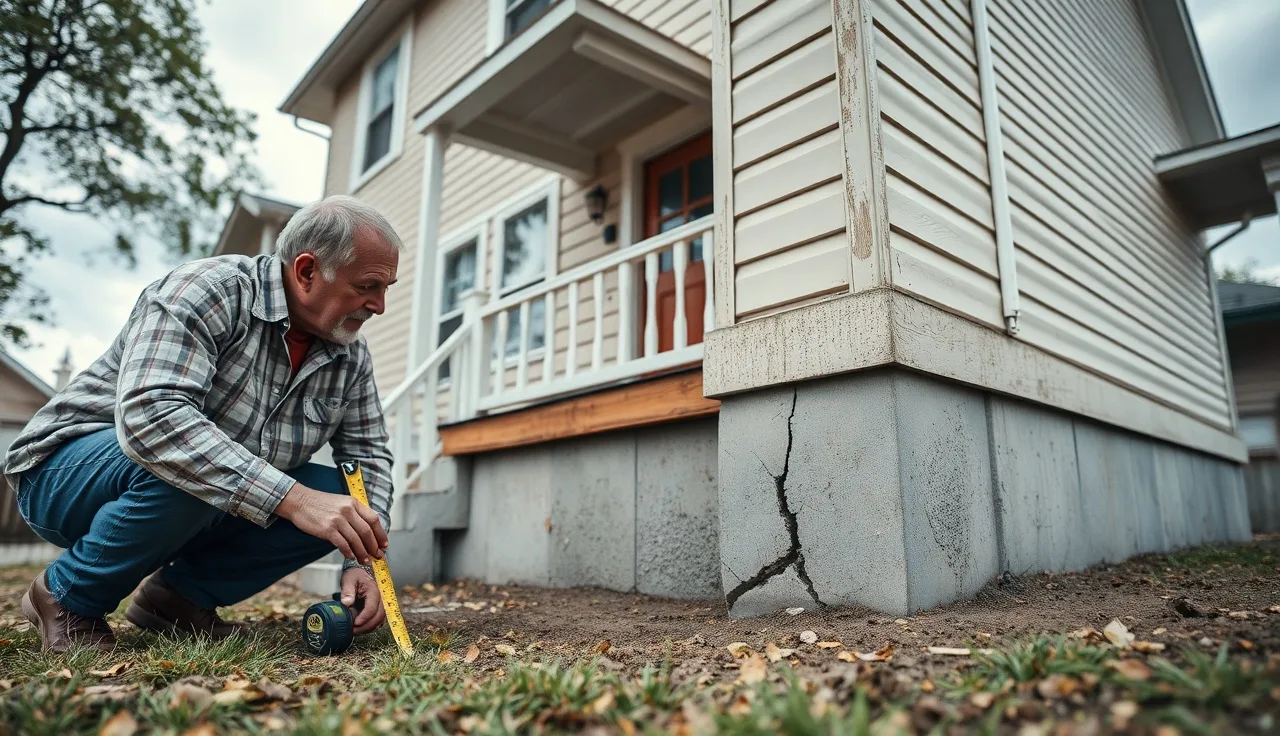
Structural defects: Foundation cracks, settling, bowing walls, failing piers. These are your strongest cards because they are expensive to fix and they scare buyers.
Roof condition: Age paired with documented deterioration, missing shingles, active leaks, or an inspection report flagging end-of-life. A 30-year-old roof on a house the assessor graded 'good' is a real discrepancy.
Mechanical systems: HVAC, plumbing, and electrical that are outdated, undersized, or failing. Knob-and-tube wiring. Galvanized pipes showing corrosion. A boiler past its service life.
Water intrusion and moisture: Basement flooding history, crawl space moisture, mold documentation. This one hits hard because buyers either walk away or demand big cuts the moment moisture lands on an inspection report.
Functional obsolescence: Layout problems a buyer would discount, like a four-bedroom house with one bathroom, a garage converted without permits, or a floor plan that forces you to walk through one bedroom to reach another.
External problems: A nuisance that has worsened since the last cycle, documented noise or odor sources, or a confirmed issue like a leaking underground storage tank nearby.
What does not usually work: general wear and tear without specifics, complaints about the neighborhood, or comparisons to homes in other towns. Stay concrete and documentable [2].
How do you photograph home defects for a tax appeal?
Photography is your cheapest persuasive tool. Done right, it shows the board what a buyer would see. Done carelessly, it reads as amateur snapshots and gets waved off.
A few rules that actually matter:
Date and geotag everything. Most smartphone cameras embed GPS coordinates and a timestamp in the EXIF data automatically. Confirm location services are on for the camera app before you start. Then shoot a screenshot of today's date as the first image in the sequence, so the date shows inside the photo itself and more than in the metadata.
Shoot context, then close up. For every defect, take one wide shot showing where it sits in the room, then a close-up showing the detail. A wall crack means more when the board can see it runs floor to ceiling than when they see a two-inch fragment.
Include a scale reference. Put a ruler, a tape measure, or even a coin next to cracks, gaps, and damage so the board can judge severity without standing in your house.
Photograph the record card's stated condition, too. If the card says 'average' and your house is clearly 'fair' or 'poor' under the assessor's own rubric, side-by-side documentation makes the argument for you.
Organize before you submit. Label photos by room and defect. A PDF grouped under headers like 'Foundation, North Wall' and 'HVAC, Original 1987 Unit' reads as evidence. Raw files dumped in no order read as noise and get ignored.
You do not need a professional photographer. You need systematic coverage and clear labels. Someone who has never seen your house should understand exactly what is wrong and where [3].
Do you need a professional inspection report to win an appeal?
No. It helps in two specific spots: when the defects are structural or mechanical (things a layperson cannot credibly diagnose), and when the dollars at stake justify spending a few hundred on an inspection.
A licensed inspector's report carries weight because a credentialed professional signed it, with errors and omissions insurance behind the opinion. Boards take language like 'recommend immediate evaluation by a licensed structural engineer' more seriously than the same words from a homeowner.
A standard home inspection runs roughly $300 to $500 for a typical single-family home, per American Society of Home Inspectors industry surveys [4]. If your appeal could save $800 a year, paying for an inspection is an easy call. If you are fighting over $200 a year, skip it and lean on photos and contractor estimates.
A building contractor's written estimate, on company letterhead with a license number, substitutes for an inspection report in many cases. It itemizes what is broken and what the fix costs, which is exactly what a board needs to size the buyer's discount. Get at least two estimates on major items so nobody accuses you of cherry-picking one inflated number.
Avoid verbal estimates. Boards want documentation. A contractor's spoken guess that your roof 'might last another two years' does nothing without a signed letter or estimate on paper.
How do you pull your property record card and find assessor errors?
Your property record card is the assessor's working file on your home. It lists the data the model used: living area square footage, bathroom count, finished basement square footage, construction grade, effective age, and condition rating.
Factual errors on this card are some of the easiest wins in property tax appeals. Assessors work from permit data, aerial images, and sometimes field notes years old. Mistakes pile up.
To get yours:
1. Go to your county assessor's website and search your parcel by address. 2. Look for a link labeled 'property record card,' 'appraisal card,' 'property details,' or 'building data.' 3. Download or print the full record.
Then walk the house with the card in hand and check every field. Common errors: a finished basement that is actually unfinished, an overstated bedroom count, credit for a garage torn down years ago, or a 'good' condition grade on a house that should be 'fair' under the county's own definitions.
Say the card lists 2,200 square feet of living area and your home is really 1,950. That alone may win a reduction. Bring your own measurement, taken with a laser or tape, and back it with photos. Many assessors correct the record on the spot once you show the discrepancy, which can end the whole appeal before a formal hearing [5].
Cook County, Illinois homeowners have one of the more detailed online records systems in the country to work from; see the Cook County Assessor's portal for what a good one looks like. Los Angeles County homeowners can pull records through the LA County Assessor's system.
What should a condition summary letter say?
Most boards want a written narrative alongside your photos and estimates. Keep it short. One to two pages. Longer does not persuade; it just hands the board more places to lose your argument.
A structure that works:
Paragraph 1: What you are asking for. State your parcel number, the current assessed value, the value you believe is correct, and the reason in one sentence: 'The assessed value of $340,000 overstates market value because the property has significant structural and mechanical defects the current assessment does not reflect.'
Paragraph 2: Summary of defects. List your three to five strongest items, each with a dollar amount. '(1) Foundation settlement on north wall, repair estimate $18,000 to $24,000 (see Exhibit A). (2) Original 1984 HVAC system, replacement estimate $8,500 (see Exhibit B). (3) Active roof leak over master bedroom, repair estimate $6,200 (see Exhibit C).'
Paragraph 3: What a buyer would do. Connect defects to value. A buyer getting an inspection would either walk from these issues or demand a price cut at least equal to the repair costs. The assessor's value assumes a condition the property does not have.
Paragraph 4: What you want the board to do. Request a specific number. 'I am requesting a reduction to $290,000' beats 'I think my assessment is too high.' A specific number signals you did the math.
Attach exhibits in numbered order, with a cover sheet listing each one. Sign and date the letter. That is your condition file.
How do repair costs translate into a lower assessment?
Here is where homeowners get confused. Having $30,000 in repair estimates does not automatically drop your assessment $30,000. The relationship is looser than that, but the logic holds and boards understand it.
The argument runs like this. Your assessor valued the home as if it sat at the condition grade on the record card, usually 'average' or 'good.' A home in that condition would sell for the assessed amount. But yours has defects that cost $30,000 to fix. A rational buyer subtracts that full amount, or subtracts more to cover the hassle, risk, and carrying cost of managing repairs after closing.
Real estate research generally supports buyers discounting more than a dollar for every dollar of needed repairs, especially on structural issues and deferred maintenance. One Appraisal Journal analysis found deferred maintenance can cut market value by 1.0 to 1.5 times the estimated repair cost, because buyers price in uncertainty and inconvenience beyond the raw number [6].
In practice you argue: 'A buyer would require a price concession of at least $30,000 for these documented defects, putting fair market value no higher than $295,000, not the assessed $325,000.'
Some boards meet you partway. Others grant the full reduction when the evidence is airtight. Almost none grant anything if you show up without numbers.
What is the difference between physical depreciation and functional obsolescence in an appeal?
These are appraisal terms, and knowing them helps you frame evidence correctly. Assessors and board members speak this language, so using it makes you more credible.
Physical depreciation is wear and tear: a roof aged past its useful life, a corroding furnace, soft deck boards. It is the most straightforward condition evidence. You document it with photos and repair estimates.
Functional obsolescence is a layout or design defect that cuts value regardless of physical condition. A four-bedroom, one-bathroom house in a market where buyers expect two baths is functionally obsolete. So is a home where every bedroom sits on the first floor except one, or a non-conforming addition that cannot legally be permitted. Harder to document, but very real.
External obsolescence is a value loss caused by something off your lot: a new commercial development next door, a highway expansion, a landfill that opened nearby. Document external factors separately from the physical file, using news articles, government records, or sales data showing price declines in the affected area.
For most homeowners, physical depreciation is the most actionable category. Functional and external obsolescence take more analysis and sometimes an appraiser's opinion letter, which runs $300 to $600 in most markets [7].
Gwinnett County, Georgia homeowners, where residential assessments run on a one-to-three-year cycle, often find functional obsolescence arguments land well for older ranch homes in neighborhoods buyers have passed over for newer subdivisions. See how that process works at the Gwinnett County Tax Assessor resources.
How do you organize your condition evidence package before submitting?
Organization is the whole game. Boards and hearing officers move through dozens of cases. A clean, labeled package gets read. A pile of paper does not.
Here is a structure that works in most jurisdictions:
| Section | What goes here |
|---|---|
| Cover sheet | Parcel number, address, current value, requested value, your contact info |
| Condition summary letter | 1-2 pages as described above |
| Exhibit A: Property record card | Your corrections marked directly on the card |
| Exhibit B: Photographs | Organized by room/defect, labeled, dated |
| Exhibit C: Inspection report (if any) | Full report with inspector's license number visible |
| Exhibit D: Contractor estimates | At least two estimates per major item, on company letterhead |
| Exhibit E: Comparable sales (optional but powerful) | 3-5 sales of genuinely similar condition homes nearby |
Submit two copies at minimum: one for the board, one for you. Filing electronically? Keep a dated confirmation email.
Check your county's submission rules before you finalize. Some jurisdictions require evidence filed a set number of days before the hearing, not at the hearing itself. Miss that pre-hearing deadline and your evidence can be excluded even after you show up in person. Bexar County, Texas, for one, has specific evidence exchange deadlines for ARB hearings [8]. The Bexar County property tax appeal procedures show how Texas counties typically handle this.
Want a pre-built template for the whole package? The TaxFightBack appeal kit includes condition documentation worksheets, a photo log, and a condition summary letter template that mirrors what boards in most states expect.
Montgomery County, Maryland homeowners should read the Montgomery County property tax appeal process for its specific requirements before finalizing anything.
When is the right time to gather condition evidence?
The best time is right after your assessment notice arrives, while the deadline is still weeks out. Most states give you 30 to 90 days from the notice date to file [9]. Some jurisdictions run as short as 30 days. Do not wait.
A realistic timeline:
Days 1 to 3: Pull the property record card and hunt for factual errors. Find one? Call the assessor's office right away. Some errors get fixed administratively, no formal appeal needed, which saves you the whole process.
Days 4 to 10: Walk the house with your phone and photograph every defect systematically. Shoot the exterior too: roof condition, foundation visible at grade, any drainage problems.
Days 10 to 20: Get contractor estimates for the significant items. Aim for two per major defect. Scheduling a formal inspection? Book it in this window so the report lands before your filing deadline.
Days 20 to 28: Write the condition summary letter, assemble your exhibit package, and reread your county's submission rules one more time.
Day 28 or earlier: File. Never wait for the last possible day. Fax machines jam. Websites go down. Offices close early.
Missed your deadline for this cycle? Mark your calendar for next year's notice date and start building the file now. Photograph defects today and date them. That evidence stays just as valid next year, and you will not be scrambling.
What mistakes do homeowners make when documenting condition?
A few patterns show up over and over in failed condition appeals.
Photographs without context. A blurry close-up of what might be a crack could be anything. No wide shot showing location, no scale reference, no visible date, no proof.
Verbal estimates instead of written ones. A contractor who will not put a number on paper is useless to your appeal. Insist on a written estimate on company letterhead with a license number.
Claiming every imperfection as a defect. Boards see straight through a list of 40 minor complaints. Pick your three to five strongest, most expensive items and document those cold. A focused argument beats a sprawling one.
Not connecting defects to market value. Documenting damage is half the job. You still have to explain why a buyer would pay less. List problems without tying them to price impact and the board has no basis to reduce anything.
Ignoring the assessor's condition grade. If the card says 'average' and you argue 'fair,' look up how your county defines those grades. Many assessors publish grading rubrics. Quoting the county's own definition against the county's own grade is a strong move.
Filing at the deadline. Late filings get rejected. Counties are inflexible on appeal deadlines because statute sets them, not internal policy. The New York City Tax Commission states that applications received after the March 1 deadline are not accepted under any circumstances [10]. The NYC property tax appeal process covers those rules in detail.
Assuming the board will ask follow-up questions. Some boards stay silent through the whole hearing. Present your full case in the written package as if nobody will ask you anything, because sometimes nobody does.
Can you use a recent home sale, appraisal, or inspection from a purchase as condition evidence?
Yes, and these can be the strongest documents in your file.
If you bought the house in the last one to three years and paid less than the assessed value, that sale price is direct market evidence of what a willing buyer paid knowing the home's actual condition. Many state statutes explicitly allow a recent arm's-length sale as evidence of value [11]. In some states, a sale within one to two years of the assessment date creates a rebuttable presumption that the sale price is the correct value.
The home inspection report from your purchase is just as useful. A licensed inspector wrote it, you paid for it at arm's length, and it predates your appeal by a credible interval. If it flagged the foundation, the roof, the HVAC, or the moisture, those findings are independently documented. Bring the full report, not the summary page.
A pre-purchase appraisal is harder to use directly, because lenders sometimes appraise at or near the purchase price and may not fully adjust for condition. But if the appraiser noted physical depreciation or deferred maintenance with specific dollar adjustments, those line items back your argument.
One limitation. If your purchase price came in above the assessed value, be careful about waving the sale around. In that case the purchase is evidence against you, not for you. Know which way your numbers cut before you cite them.
Frequently asked questions
How many photos do I need for a property tax appeal condition file?
There is no required number, but most successful condition appeals include 20 to 40 photos for a home with several significant defects. Cover each defect with at least two shots: one wide establishing shot showing location, one close-up showing severity. Label every photo with the room name, the defect described, and the date taken. Quality and organization matter far more than quantity.
Will the assessor visit my home after I file an appeal based on condition?
Sometimes, but not always. Some counties send a field reviewer after a condition appeal is filed. If they visit, be cooperative and let them see the defects you documented. Do not repair anything before the hearing. If the assessor upgrades their read on your condition after visiting, you may get a reduction before the formal hearing ever happens, which saves you time.
Does my house need to be in bad shape to appeal? Can I appeal based on mild defects?
You can appeal on any documented condition issue that affects market value, but mild cosmetic issues rarely generate meaningful reductions. The practical test most boards apply: would a typical buyer adjust their offer because of the defect? If yes and you can document it, the argument is worth making. If defects total under 5 to 10 percent of assessed value, condition alone may not be your strongest play; look at comparable sales too.
Can I get a contractor estimate just for the appeal, or does the work have to be done?
You can get an estimate without doing the work. That is standard practice and boards expect it. The estimate documents what remediating the defect would cost, which is what a buyer factors into an offer. Get it on company letterhead with the contractor's license number. You do not need to have completed or even scheduled the repair to use the estimate as evidence.
What if the assessor's property record card has wrong square footage? How do I prove it?
Measure the home yourself with a laser measure or tape, following the ANSI Z765 standard appraisers use: measure exterior dimensions at each floor level, exclude garages and unfinished areas. Photograph the measurements in progress. If the discrepancy is large, consider hiring an appraiser or floor plan service for a certified measurement, roughly $150 to $300. Submit your measurement with the photos as an exhibit.
How do I find my county's condition grading rubric?
Start at your county assessor's website and search 'assessment manual,' 'appraisal guidelines,' or 'condition grades.' Many counties publish their full cost manual, which defines grades like excellent, good, average, fair, and poor with specific descriptions. If yours does not publish one, ask the assessor's office directly. They are required to apply written standards, and those standards are public records in most states.
Can I appeal based on condition if my home sold recently for more than the assessed value?
Technically yes, but it is a weak position. If you paid more than the assessed value, the assessor can argue the assessment is already conservative, and your appeal could backfire in jurisdictions that allow upward corrections. Focus only on specific documented defects the assessment does not reflect, and calculate carefully whether a condition-based reduction would bring you below your purchase price before you file.
Do I need a licensed appraiser's opinion letter for a condition-based appeal?
Not for most residential appeals. Photos, contractor estimates, and a clear written argument are enough in most county hearing formats. An appraiser's letter, typically $300 to $600, adds authority when defects are structural, when the dollar amount at stake is large, or when you are appealing to a state-level board after losing at the county level. For a first-round appeal, spend on a good inspection report before a full appraisal.
What is the deadline to file a property tax appeal based on condition?
Deadlines vary by state and county, running from 30 to 90 days after the assessment notice is mailed. Some states set a fixed annual deadline regardless of when notices go out. There are no universal extensions. Look up your county assessor's website or your state's department of revenue for the exact statutory deadline. Filing even one day late will almost certainly get you rejected.
Can I submit my condition evidence by email or online, or does it have to be mailed?
It depends entirely on your county. Many jurisdictions now take digital submissions through a portal or by email; others still require paper filed in person or by certified mail. Check your county assessor's appeal instructions before assuming. Mailing? Use certified mail with return receipt so you have proof of timely delivery. Never assume a submission arrived without confirmation.
If I win a condition-based appeal, does the lower assessment carry forward to future years?
Usually yes, until the next reassessment cycle. Your county uses the corrected value as the base for future assessments, which compounds your savings over time. But if the assessor runs a new mass appraisal next year and your home lands high again, you may need to appeal again. Keep your condition documentation file active and update it after each assessment notice arrives.
Does mold count as a condition defect in a property tax appeal?
Yes, documented mold is legitimate condition evidence, especially when a licensed inspector or industrial hygienist identified it. A mold assessment report plus a remediation estimate from a licensed contractor is the format boards take seriously. Buyers and their agents treat mold as a major red flag, so the market value hit is real. Photograph visible mold with context shots showing the extent, and note any prior water intrusion that caused it.
Sources
- International Association of Assessing Officers (IAAO), Standard on Mass Appraisal of Real Property: IAAO standards define condition as a core component of value in mass appraisal models, separate from location and size.
- National Taxpayers Union Foundation, Property Tax Assessment Appeal Guide: Legitimate defect categories in appeals include structural problems, mechanical system failures, water intrusion, and functional obsolescence; cosmetic issues generally do not qualify.
- Cook County Assessor's Office, Evidence and Documentation Guidelines: Organized, labeled photographic documentation is a standard evidentiary requirement for property tax appeal hearings.
- American Society of Home Inspectors (ASHI), Industry Survey on Inspection Costs: Standard home inspection costs run roughly $300 to $500 for a typical single-family home based on industry surveys.
- The Appraisal Journal, research on deferred maintenance and market value adjustment: Deferred maintenance can reduce market value by 1.0 to 1.5 times the estimated repair cost, because buyers price in uncertainty and inconvenience beyond the raw repair number.
- Appraisal Institute, Uniform Standards of Professional Appraisal Practice (USPAP) and fee surveys: An appraiser's opinion letter for a residential property typically costs $300 to $600 in most U.S. markets.
- Bexar County Appraisal District, ARB Hearing Procedures: Bexar County, Texas has specific evidence exchange deadlines for Appraisal Review Board hearings; evidence not submitted by the deadline may be excluded.
- Lincoln Institute of Land Policy, Significant Features of the Property Tax: Appeal Deadlines by State: Most states give homeowners 30 to 90 days from the assessment notice date to file a formal appeal.
- New York City Tax Commission, Application Instructions and Deadlines: New York City Tax Commission states that applications received after the March 1 deadline are not accepted under any circumstances.
- California State Board of Equalization, Assessment Appeals Manual: Many state statutes explicitly allow a recent arm's-length sale price as direct evidence of market value in a property tax appeal.
- Maryland State Department of Assessments and Taxation, Appeal Procedures: Property tax appeals in Maryland must include supporting documentation; the state allows evidence of physical condition defects as grounds for value reduction.
- Texas Comptroller of Public Accounts, Property Tax Taxpayer Assistance, Protesting Your Property Appraisal: Texas law allows property owners to protest assessed value based on unequal appraisal or value in excess of market value, with condition as a relevant factor.