Last updated 2026-07-10
TL;DR
Photographs of property defects, shot systematically and paired with repair estimates or comparable sales, are among the most persuasive exhibits you can bring to a property tax appeal. A board member sees the problem in seconds. Shot badly, they help nothing. This guide covers what to photograph, how to document it, and how assessors and boards actually weigh visual evidence.
Do photos actually help win a property tax appeal?
Yes, and often more than people expect. Most boards are made up of people who are not appraisers. They process dozens of cases per session, and they react to concrete visual information faster than they react to spreadsheets. A photo of a cracked foundation, a collapsed soffit, or a flooded basement shows a problem in a way a written description cannot.
Photos almost never win alone, though. They work as corroborating evidence behind a broader argument about market value. The argument is simple: your assessor assumed a condition that does not match reality, so the assessed value is inflated. Photos prove the condition. Comparable sales, repair estimates, or an independent appraisal prove the dollar impact. You need both pieces.
The International Association of Assessing Officers (IAAO) publishes the standard reference for assessment practice. Its Standard on Mass Appraisal of Real Property lists condition among the primary value-affecting factors in any valuation model [1]. When your photos show the assessor's assumed condition grade is too high, you have a factual dispute. Factual disputes are exactly what appeal boards exist to settle.
Nobody has clean national data on win rates by evidence type. But county hearing officers consistently describe photographic evidence of defects as one of the three most common factors in successful residential appeals, alongside comparable sales and independent appraisals.
What defects are worth photographing for a tax appeal?
Stick to defects with a measurable effect on market value. A scuff on a baseboard does not move value. A failed septic system does. The test is whether a buyer, knowing about the defect, would pay less or demand a price cut to cover repairs.
Here are the categories that assessors and appraisers recognize as condition adjustments:
| Defect Category | Example Defects | Why It Affects Value |
|---|---|---|
| Structural | Foundation cracks, settling, bowing walls | Reduces structural integrity, scares buyers |
| Roof system | Missing shingles, visible sagging, damaged flashing | Near-term replacement cost, water risk |
| Mechanical systems | Failed HVAC, outdated electrical panel, corroded plumbing | Buyer repair reserve reduces offer price |
| Water intrusion | Active leaks, staining, mold, efflorescence | Health risk, disclosure obligation in most states |
| Exterior envelope | Rotted siding, failed caulking, damaged windows | Weather tightness, deferred maintenance signal |
| Site conditions | Drainage problems, erosion, flooding history | Limits use, increases insurance cost |
| Interior finish | Damaged floors, water-stained ceilings, failed plaster | Condition grade downgrade in cost approach |
| Functional obsolescence | Low ceiling height, awkward floor plan, bedroom-bath ratio | Limits buyer pool, reduces per-square-foot value |
Functional obsolescence is one category photos handle beautifully. A photo of a bathroom you can only reach through a bedroom, or a kitchen with no natural light, makes the argument in a glance. Boards and courts have upheld functional obsolescence as a legitimate basis for reduction. The Illinois Property Tax Appeal Board explicitly lists it as a recognized ground for appeal [2].
Do not photograph normal wear. Carpet that is five years old is normal. Carpet soaked with pet urine and creating a biohazard is a defect worth photographing and pricing.
How should you photograph defects so boards take them seriously?
The goal is a photo a stranger can read without your explanation. If a board member has to squint and ask what they are looking at, the photo failed. Here is the approach that works.
Shoot context first, then close up. For every defect, take two shots: one wide enough to place the defect in the house or on the lot, and one tight enough to show it clearly. A close-up of a crack means nothing if the board cannot tell whether it is in the foundation or the drywall.
Use natural light. Flash throws harsh shadows and can make a defect look better or worse than it is. Open the blinds, shoot during the day, and step back a foot farther than feels necessary.
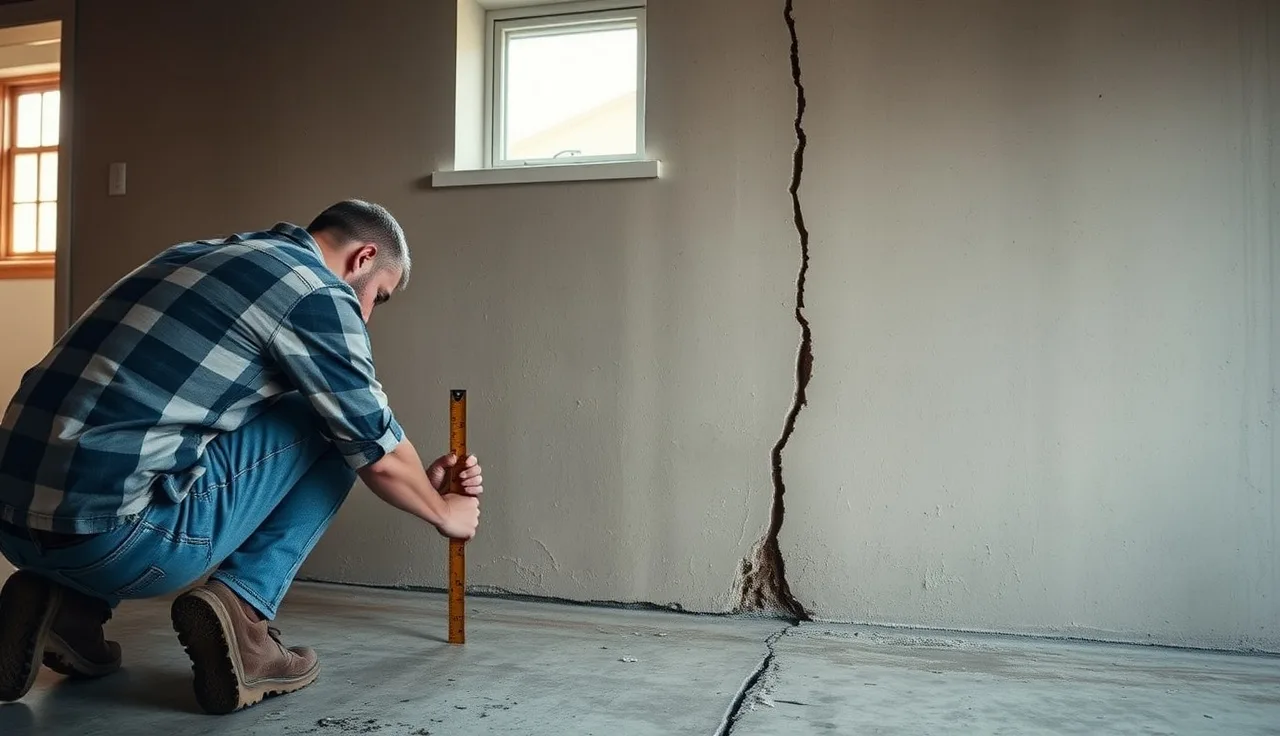
Include a scale reference. A ruler, a coin, or a standard brick in the frame tells the viewer how big the damage really is. A hairline crack and a half-inch crack look identical in a photo with nothing to measure against.
Leave the timestamp and GPS metadata on. Most smartphones embed EXIF data with date, time, and often location. Do not strip it. That data proves the photos came from your property before the appeal, not from somewhere else. Printed photos will not show EXIF, so print the date in the caption or list it on a cover sheet.
Print at 4x6 minimum. Boards review paper exhibits all the time. A photo shrunk to 2x2 in the corner of a page is useless in a hearing room. Print one defect per page, with a caption below naming the defect, the location (for example, "northwest basement wall, 4 feet from the floor joists"), and the date photographed.
Build a photo log. Number every photo. List each number, location, defect type, and any linked repair estimate in a one-page table that becomes your exhibit cover sheet. It tells the board you are organized and serious, which matters more than people admit.
How many photos do you need for a property tax appeal?
Ten to twenty focused photos beat a fat binder almost every time. Boards give each case limited time, often 15 to 30 minutes at the informal level. Submit 80 photos and most get ignored.
If you have five different defects, use two photos per defect (context and close-up), then add one photo of any contractor estimate or engineering report shot in frame with the property address visible. That is roughly 11 to 15 photos, which slots neatly into a short exhibit packet.
One catastrophic defect, say a failed foundation, might justify 8 to 10 photos on that issue alone, backed by an engineer's report. That kind of focus signals to the board what the core issue is and how seriously you documented it.
The Cook County Assessor's Office in Illinois, one of the busiest assessment jurisdictions in the country, processes tens of thousands of appeals a year [3]. Its informal hearings are short. A tight, well-captioned packet gets more traction than a thick binder, which is consistent with the office's own guidance on evidence submission.
What else do you need besides photos to win on condition?
Photos prove the defect exists. They do not, on their own, prove how much the defect knocks off the value. You need at least one more document to close that gap.
Repair estimates are the easiest option for most homeowners. Get two or three written estimates from licensed contractors, on company letterhead with the license number, for each major defect. Each estimate should describe the scope and the total cost. Those numbers feed straight into an economic obsolescence argument: a buyer discounts the price by the cost to cure the defect.
An independent appraisal is the strongest single document you can bring. A licensed appraiser accounts for condition in both the sales comparison and cost approaches, and the signature carries professional weight. Expect to pay $300 to $700 for a residential appraisal, depending on your market [4]. That cost pays off when the tax savings run larger, which they usually do once the assessed value is off by more than 10 percent.
Comparable sales of properties in similar or worse condition, if you can find them, hit hard because they show what the market actually paid. A comp at $220,000 for a house in condition close to yours, against an assessment implying $310,000, is a hard number to argue with.
For anyone doing this without a hired firm, the TaxFightBack Appeal Kit walks through assembling photos, comps, and repair estimates into a submission-ready packet, organized in the exhibit format most county boards expect.
Skip Zillow and Redfin estimates as value evidence. Boards know these are automated valuations with wide error bars. They are fine as a sanity check and close to worthless as a primary exhibit.
How do assessors determine property condition in the first place?
Most residential assessments run on mass appraisal, not individual inspections. The office assigns a condition grade from the last time a data collector visited, plus aerial imagery, permit records, and neighborhood-level assumptions. In many jurisdictions, that visit happened years ago [1].
The IAAO Standard on Mass Appraisal states that "condition is typically coded on a scale" and that these codes drive real value differences in the cost approach [1]. A property coded "average" versus "fair" might differ by 10 to 20 percent in assessed value, depending on how the assessor calibrated the model.
If your property has deteriorated since that last inspection, or the data collector simply recorded the wrong grade, you have a legitimate dispute. Requesting your property record card (sometimes called the field card or property data card) is the first move. It is a public record in all 50 states. It shows the condition grade, year of last inspection, square footage, bedroom and bathroom count, and any special features the assessor recorded.
When your photos show a condition that contradicts the grade on that card, you have a direct, documentable discrepancy. That is the strongest framing for a photo-based appeal: "The record card shows condition grade X. My photos, taken on [date], show Y. Here is the contractor estimate confirming the scope."
Some jurisdictions let you submit photos through an online appeal portal. Los Angeles County lets appellants attach digital evidence to Assessment Appeals Board filings [5]. Check your county's process, because file size limits and accepted formats vary.
What format do boards want for photo evidence?
Most boards accept both printed and digital evidence, and some now require digital-only submission. Check your county's rules before you do anything else. This is the step people skip and regret.
For printed submissions, standard practice is:
- 4x6 color prints, one per page, captioned beneath
- A numbered photo log as a cover sheet
- Exhibits labeled with a letter or number matching your appeal filing (Exhibit A, Exhibit B, and so on)
- A copy for the board and one for yourself
For digital submissions, most portals accept PDF or JPG. Convert your photos into a single PDF with captions embedded. Keep the file under 25MB unless the portal says otherwise. Some counties set specific upload limits, so read the fine print.
A few jurisdictions require pre-submission, sometimes 10 to 14 days before your hearing. Miss that deadline and your photos get excluded no matter how good they are. Pull the local rules from your assessor or appeals board website. Georgia's appeal window runs 45 days from the date of the assessment notice under O.C.G.A. Section 48-5-311 [6]. Miss that, and no amount of evidence matters.
Here is how a few major jurisdictions handle evidence submission:
| Jurisdiction | Evidence Format | Submission Deadline |
|---|---|---|
| Cook County, IL | Digital via online portal or printed at hearing | Submitted at informal hearing |
| Los Angeles County, CA | Digital upload or mailed to Assessment Appeals Board | At least 5 days before hearing for written evidence |
| Harris County, TX | Digital upload via iFile or printed at ARB hearing | Before hearing date |
| New York City (Tax Commission) | Online portal or mailed | With application or before hearing |
Sources: respective county assessor and appeals board websites [3][5][7][8].
Can you use photos of a neighbor's better-maintained property as evidence?
Probably not the way you are picturing it. Photos of a neighbor's house in better shape than yours do not directly establish your property's value. They might support a separate equity argument, but equity arguments ("my neighbor pays less") are evaluated on a different track from condition arguments.
What you can legitimately do is photograph comparable sales properties when they are visible from a public street. If a comp you are citing sold at $280,000 and looks to be in better condition than your home, a photo of that condition, paired with MLS data or a public record showing its assessed condition grade, strengthens your case that the two properties are not genuinely comparable.
Stay on public property when you shoot. Do not step onto private land for any photo you plan to use. Beyond the legal risk, any challenge to how the photo was obtained can get it thrown out.
What mistakes kill a photo-based appeal?
A handful of patterns show up again and again in failed condition appeals.
Undated, uncaptioned photos are the most common. If the board cannot tell when a photo was taken or what it shows, the photo adds nothing. Always caption. Always timestamp.
Shooting cosmetic issues instead of value-affecting defects is a close second. Fresh paint in an ugly color is not a defect. A wall with active water infiltration is. Aim at what a buyer would negotiate over.
Missing the link between defect and dollars. Show a problem without pricing it and the board has to guess at the impact. Pair every major defect photo with a repair estimate or an appraiser's note on value impact.
Submitting photos as the only evidence. Boards in most jurisdictions have the legal authority to cut an assessment based on evidence, but a photo with no document showing value impact gives them nothing to hang a number on. Texas Property Tax Code Section 41.43 requires the appellant to show the appraisal district's value exceeds market value, not merely that the property has problems [9]. Photos build the factual basis. A dollar figure builds the value argument.
Skipping the property record card. If you do not know what condition grade the assessor assigned, you cannot frame the contradiction. Get the card before you photograph anything.
How do you build a complete condition-based appeal packet?
Here is the sequence that reliably produces a clean submission.
Step 1: Request your property record card from the assessor's office. It is free and usually available online or by mail. Note the condition grade, the square footage, and any special features listed.
Step 2: Walk your property room by room, then around the exterior, looking for anything that contradicts the assessor's data or counts as a value-affecting defect. Take notes first, then photograph.
Step 3: Photograph every defect with the context-then-close-up method. Include a scale reference. Keep timestamps on.
Step 4: Get contractor estimates for any defect that will cost more than a few thousand dollars to fix. Two or three beat one.
Step 5: Pull comparable sales from your county's public sales records or assessor portal. Gwinnett County, Cook County, and LA County all keep public sales databases. Look for sales in the last 6 to 12 months, within a half-mile to one mile, with similar square footage and lot size.
Step 6: Assemble the photo log, number your exhibits, and write a one-page cover statement: "The record card shows condition grade [X], implying a value of [Y]. The attached photos, taken on [date], show [specific defects]. The attached repair estimates total $[Z], indicating the correct value is no more than [adjusted value]."
Step 7: File before the deadline. This is non-negotiable. Most states give you 30 to 90 days from the date of the assessment notice, but the window varies by state and sometimes by county [10].
The TaxFightBack Appeal Kit includes a photo log template and an exhibit numbering guide built around the formats most county boards use. You still do all the work. You just skip inventing the organization from scratch.
For large metros like Bexar County or Montgomery County, the assessor websites publish their own appeal instructions. Read those alongside any general guide, because local quirks matter.
What happens if the assessor argues your defects are already factored in?
This is the pushback you will hear most. The assessor's representative says the condition grade already reflects the age and condition of the property, or that the mass appraisal model already accounts for neighborhood-level depreciation.
Your counter is specific documentation. If the record card shows condition grade "average" but your photos show a foundation needing an $18,000 repair and a roof within 18 months of the end of its life, that is not average condition. Pull comparable sales of homes in genuinely average condition and show the price gap.
Ask the representative what condition data they used and when the last physical inspection happened. If the answer is five or eight years ago, and the defects in your photos developed since then, that is a solid basis for arguing the record is stale.
Burden of proof rules differ by state. In Texas, the appraisal district carries the burden if the assessed value is more than the prior year's value and the taxpayer filed a timely protest, under Tax Code Section 41.43 [9]. In many other states, the taxpayer carries it. Know which rule applies before you walk in, because it changes how much evidence you need to bring.
If you are appealing in Hennepin County or Santa Clara County, the local assessor websites spell out burden of proof rules and evidence standards in their appeal guides. Reading those first is time well spent.
Are there costs to gathering photographic evidence yourself?
Almost none, beyond your time. A smartphone camera handles the vast majority of residential appeals. You do not need a professional photographer.
The costs that add up are not photographic. Contractor estimates usually run $0 to $150 per visit, depending on your market and the contractor. Many write estimates free when there is a real chance of landing the repair job. An independent appraisal runs $300 to $700 for most residential properties, though complex properties or high-value markets push that to $900 or more [4].
Hire a contingency firm instead of doing this yourself and the typical fee is 25 to 40 percent of first-year tax savings [11]. On $1,000 of annual savings, that is $250 to $400 handed to someone for work you could have done in an afternoon. For most homeowners, DIY wins.
Professional photography is worth considering in one case: a commercial appeal involving large dollar amounts, where exhibit quality and formatting get scrutinized harder. For a single-family home, your phone is fine.
Frequently asked questions
Can I use photos taken by a previous owner or from an old listing?
Usually not effectively. Boards want current condition, and old photos may predate the assessment period in dispute. If you use historical photos, pair them with current shots showing the same defect persists or has worsened, and label when each set was taken. A 2018 MLS photo showing water damage you are now claiming in a 2025 appeal requires you to establish continuity.
Do I need to hire a professional photographer for my appeal?
No. A modern smartphone camera is fully adequate for residential appeal photos. Resolution, lighting, and composition matter more than the gear. The one exception is a large commercial property appeal where exhibit quality gets heavy scrutiny and the dollar amounts justify higher production costs.
What if I can't access all areas of my property safely to photograph them?
Photograph what you can reach safely. For attics, crawl spaces, or steep rooflines, a licensed inspector or contractor can document defects during a paid inspection and provide a written report, which often carries more weight than homeowner photos anyway. An inspector's written report of a defect you cannot photograph is still valid evidence.
How do I prove the photos were taken at my property and not somewhere else?
EXIF metadata in smartphone photos includes date, time, and often GPS coordinates. Do not strip it. For printed exhibits, put the date in the caption and note the property address. A unique feature in the background (a street number, a distinctive architectural element) helps too. Boards rarely challenge photo authenticity in residential appeals, but being ready is worth it.
Can photos alone get my assessment reduced without other evidence?
Rarely. Photos prove a condition exists. They do not prove how much that condition reduces market value. Most boards need a dollar anchor, either a repair estimate, an independent appraisal, or a comparable sale of a similarly conditioned property, to justify a specific reduction. Photos without a value number earn sympathy but not a legal basis for a specific figure.
What if my county doesn't allow photos as evidence?
Almost no jurisdiction outright bans photographs, but some set formatting requirements or submission deadlines for documentary evidence. A handful of boards will not accept evidence not filed in advance of the hearing. Check your county's appeal rules before assuming you can walk in with a photo packet. The assessor's website or the appeals board rules document spells out what is accepted.
Should I photograph the entire interior or just the problem areas?
Focus on problem areas. Photographing every room when most are in normal shape dilutes your packet and can undercut you if the board notices the rest of the property looks fine. Document defects specifically, and let the contractor estimates establish scope. A 12-photo focused exhibit beats a 60-photo tour.
How do repair estimates connect to my assessed value reduction?
The logic is buyer-side: a buyer who knew about a $20,000 roof replacement and a $15,000 foundation repair would offer $35,000 less than for an identical property in good condition. That $35,000 is a reasonable value adjustment. If your assessment implies $350,000, those estimates support a claim that market value is closer to $315,000. State that math explicitly in your written statement.
What's the difference between a condition-based appeal and an equity appeal?
A condition-based appeal argues your property's market value is lower than assessed because of physical defects or functional problems. An equity appeal argues your property is assessed at a higher percentage of value than comparable properties, regardless of absolute value. Photos of defects support the condition argument. Equity arguments usually rely on assessment ratio comparisons across similar properties.
Do I need to disclose defects I photograph if I sell the property later?
Generally yes. In most states, known material defects must be disclosed to buyers. Photographing a defect for a tax appeal creates a documented record that you knew about it. That is not a reason to avoid documenting defects for an appeal. It is a reason to either repair them or plan to disclose them. Failing to disclose known defects after documenting them in a legal proceeding carries real liability risk.
Can I submit photos to an informal assessor review before filing a formal appeal?
Yes, and it is often the fastest path to a reduction. Most jurisdictions run an informal review before the formal board stage. Bringing photos and a repair estimate to an informal meeting can produce a negotiated reduction without a hearing. File the formal appeal first to preserve your rights, then pursue informal resolution.
What property defects do tax appeal boards most commonly accept as basis for reduction?
Structural defects (foundation, framing), roof failures needing near-term replacement, active water intrusion or documented mold, failed mechanical systems, and significant functional obsolescence (like non-conforming room configurations) are the categories boards accept most reliably. Cosmetic issues, minor deferred maintenance, and preference items like flooring color are weak candidates.
How far back can my appeal go if I find defects that existed during prior assessment years?
It depends on your state's statute of limitations for property tax appeals. Most states allow appeals only for the current assessment year, filed within 30 to 90 days of the notice. A few allow refund claims going back two to three years in cases of clear error. Texas generally limits refund claims to the current year under Tax Code Section 41.43. Check your state statute directly.
Sources
- International Association of Assessing Officers (IAAO), Standard on Mass Appraisal of Real Property: Condition is one of the primary value-affecting factors in mass appraisal models; condition is typically coded on a scale that drives significant value differences in the cost approach.
- Illinois Property Tax Appeal Board, Evidence Guidelines: Functional obsolescence is recognized by the Illinois Property Tax Appeal Board as a legitimate basis for assessment reduction.
- Cook County Assessor's Office, Appeal Process Overview: Cook County processes tens of thousands of residential appeals per year; informal hearings are brief and focused evidence packets are standard practice.
- Appraisal Institute, Residential Appraisal Fee Survey: Residential appraisal fees typically range from $300 to $700, with higher costs in complex properties or high-value markets.
- Los Angeles County Assessment Appeals Board: Los Angeles County allows appellants to attach digital evidence to Assessment Appeals Board filings; written evidence is due at least 5 days before the hearing.
- Georgia General Assembly, O.C.G.A. Section 48-5-311: Georgia property tax appeal deadline is 45 days from the date of the assessment notice under O.C.G.A. Section 48-5-311.
- Harris County Appraisal District, Protest and Appeal Process: Harris County allows digital evidence upload via iFile or printed evidence submission at Appraisal Review Board hearings.
- New York City Tax Commission, Application Instructions: NYC Tax Commission accepts evidence submitted through their online portal or by mail, with the application or before the scheduled hearing.
- Texas Legislature, Texas Property Tax Code Section 41.43: Under Texas Tax Code Section 41.43, the appraisal district bears the burden of proof if the assessed value exceeds the prior year's value and a timely protest was filed; appellants must establish that assessed value exceeds market value.
- Lincoln Institute of Land Policy, A Guide to Property Taxes: The Role of Individual State Provisions: Most states provide a 30 to 90 day window from the assessment notice date to file a property tax appeal, with significant variation by state.
- National Taxpayers Union Foundation, Property Tax Protest Industry Analysis: Contingency firms handling property tax appeals typically charge 25 to 40 percent of first-year tax savings as their fee.