Last updated 2026-07-11
TL;DR
Deferred maintenance, meaning repairs you've put off because of cost, can legally reduce your property's assessed value if you document it right. You need timestamped photos, contractor repair estimates, and a written cost-to-cure summary. Assessors routinely miss visible deterioration unless you force the issue with organized evidence. A well-documented appeal reduces assessed value by 10 to 25 percent in many jurisdictions.
What is deferred maintenance and why do assessors miss it?
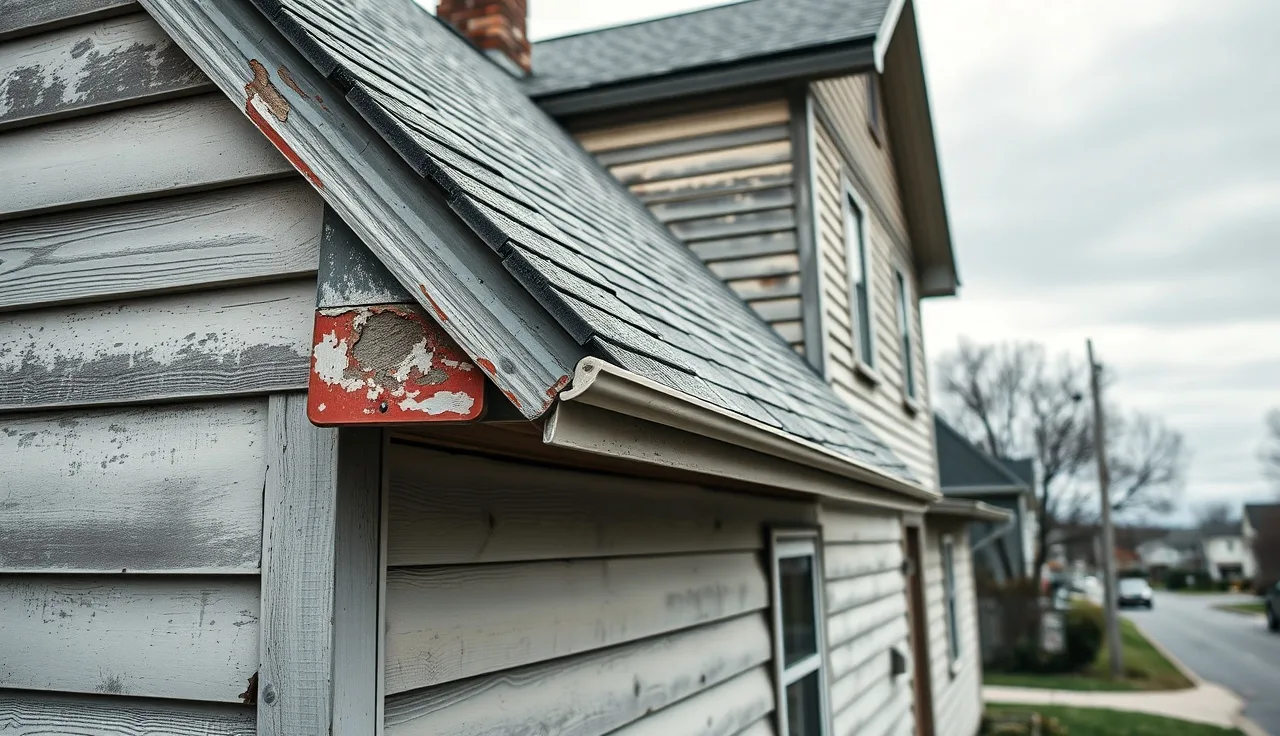
Deferred maintenance is any repair you've postponed: a failing roof, rotting fascia boards, a cracked foundation, an ancient furnace, or plumbing that limps along but hasn't been replaced. The word "deferred" carries the weight. It signals real, documented deterioration, more than cosmetic wear.
Assessors work at scale. In a county with 300,000 parcels, the appraiser assigned to your neighborhood might spend two to four minutes on your property record before assigning a value. Mass appraisal models, the kind most jurisdictions use under the IAAO (International Association of Assessing Officers) standard, start from a base replacement cost and subtract a depreciation percentage tied to age. [1] The trouble is that the depreciation schedule is an average. Your house isn't average if the roof is 26 years old, the furnace is dying, and the bathroom tile is peeling off the wall.
The assessor almost certainly never went inside. Even exterior inspections are often drive-bys or aerial image reviews. Deterioration the model didn't see never gets priced in. That gap, between the model's assumed condition and your property's actual condition, is exactly what a deferred maintenance argument closes.
The cost-to-cure approach is recognized appraisal method, not a gimmick. Under the sales comparison and cost approaches to value, physical deterioration that is "curable" (meaning it would be economically rational to fix) is subtracted dollar-for-dollar from the property's value. [2] Prove $45,000 in legitimate deferred maintenance and you have a credible argument that your assessed value is $45,000 too high, before you touch a single comparable sale.
Which types of deferred maintenance actually move the needle at a hearing?
Not everything counts equally. Review boards want items a buyer would negotiate over, the kind of thing that shows up in a home inspection and triggers a price cut. Those items fall into a few clear buckets.
Structural and envelope problems carry the most weight: roof failure or end-of-life condition, foundation cracks or settling, water intrusion, siding rot. They're expensive, they're visible, and every informed buyer discounts for them.
Mechanical systems are a close second. HVAC beyond its expected service life (typically 15 to 20 years for central air, 15 to 25 years for furnaces), failed or galvanized plumbing, outdated electrical panels (60-amp or knob-and-tube), and water heaters past their rated life. [3]
Curable functional obsolescence also qualifies: a single bathroom in a neighborhood where buyers expect two, an outdated kitchen layout, or a garage conversion that killed covered parking.
What doesn't move the needle much? Cosmetic stuff. Paint, carpet, dated fixtures. Unless it's severe enough to count as real deterioration (peeling lead paint carries a genuine remediation cost), small items won't matter on their own. The goal is a cumulative picture of a property that needs serious money spent on it.
A useful rule from real appraisal practice: if a repair would show up as a line item in a buyer's counter-offer after a home inspection, it belongs in your evidence file.
How do you photograph deferred maintenance for maximum impact?
Photography is your cheapest and most persuasive evidence. Done well, a review board can't wave it off. Done poorly, blurry phone shots with no context, it looks like you photographed every scuff mark and wasted everyone's time.
Use your device's native camera, not a filter app. Confirm the timestamp and GPS data are embedded in the EXIF metadata. Most modern smartphones do this automatically, but check your settings. [4] Holding that day's newspaper in the frame is old-fashioned but it still works if you want an extra layer of proof.
For each problem area, shoot three types of images. An orientation shot showing where on the property you are, like a wide shot of the north elevation with the damaged area visible. A mid-range shot of the specific defect. A close-up where the deterioration is unmistakable. For a failing roof, that means a full roofline shot, then curling shingles from 10 feet away, then a close-up of granule loss or exposed decking.
Label every photo when you build your packet. "Photo 3: Roof, north slope. Approx. 30% of shingles show granule loss and cupping. Roof is 24 years old per permit records." That annotation turns a photo into evidence.
For interior issues, photograph water stains and trace them to their source. A basement stain under a first-floor bathroom means something different than one under an exterior wall. Board members aren't contractors. Make the story obvious.
Plan on 20 to 50 photos for a typical single-family home with real deferred maintenance. Put them in a PDF with a table of contents. Page one: property address and appeal reference number. Page two: a summary table of defects. Pages three onward: annotated photos grouped by system.
Do you need a contractor estimate, or is a home inspection report enough?
You want both. If you can only get one, get contractor estimates.
A licensed home inspector's report proves the problems are real and professionally observed. Inspectors use standard condition rating language, and their reports are dated, signed, and hard to dismiss. Cost runs $300 to $600 for a single-family home. [5] The weakness of an inspection report alone: it doesn't translate defects into dollar costs, which is what a review board needs to cut your assessment.
Contractor estimates do that translation. Get at least two estimates per major repair item, ideally three. They should be on company letterhead, signed, dated, and specific: "Replace 28 squares of asphalt shingle roofing including underlayment and ice shield, $18,400." Vague ranges like "roof work, approximately $10,000 to $20,000" hand the board room to pick the low number or dismiss the whole thing as guesswork.
When several systems are failing, pay a licensed contractor for a written scope-of-work and cost breakdown across all items. Some general contractors do a written assessment for $200 to $500 and apply it toward future work.
Pull any permits for prior repairs or renovations from your county's permit office. They fix the age and original installation date of systems, which backs up your claim that replacement is genuinely due.
One honest caveat: getting three contractor estimates on a tight appeal deadline is hard. Do this the day your assessment notice arrives, not two weeks before the hearing.
How do you calculate and present a cost-to-cure deduction?
The cost-to-cure method is simple in concept. Add up the total cost to bring the property to average condition, then argue that cost is a dollar-for-dollar reduction in market value. The logic: a rational buyer discounts the purchase price by exactly what they'd have to spend to fix known defects.
Here's the structure appraisers use, which you should mirror:
| Defect | System Age | Expected Life | Remaining Useful Life | Repair/Replace Cost |
|---|---|---|---|---|
| Roof (asphalt shingle) | 24 years | 25 years | 1 year | $19,200 |
| Furnace | 22 years | 20 years | 0 (past life) | $6,800 |
| Main sewer line (clay tile, cracked) | Unknown | 50-70 years | Unknown | $12,500 |
| Electrical panel (60-amp, Federal Pacific) | 45 years | N/A | 0 | $4,200 |
| Total cost to cure | $42,700 |
Put this table on one page of your evidence packet. Under it, write one sentence: "The above costs are supported by contractor estimates attached as Exhibits C through F."
One nuance: review boards sometimes push back on full cost-to-cure when an item is only partially worn. A roof with one year of life left is easy to argue at full replacement cost. A roof with eight years left on a 25-year run might get only a proportional deduction from a strict board. Know this going in so nothing catches you flat.
The Appraisal Institute's guidance on physical deterioration holds that curable items are those where the cost to cure does not exceed the value added by the repair. [2] For everything on a typical deferred maintenance list, that threshold is easily met.
What does a complete deferred maintenance evidence packet look like?
Treat your evidence packet as a short brief. Organize it so a board member who spends five minutes on it grasps your whole argument.
A solid packet for a single-family home appeal has these sections:
1. Cover page: property address, parcel ID, tax year, appeal reference number, your contact information. 2. Executive summary (one page): your current assessed value, your proposed value, the total cost-to-cure, and three or four bullet points naming the major defects. 3. Property condition summary table: the table shown above, with defects, ages, and costs. 4. Supporting contractor estimates: labeled as exhibits, one exhibit per contractor per trade. 5. Home inspection report (if obtained): full report or relevant pages with defects highlighted. 6. Photo log: organized by system, annotated as described above. 7. Permit records (if relevant): showing original installation dates. 8. Market value context (optional but strong): one or two comparable sales of similar homes in similar condition that sold at a discount. This ties your cost-to-cure to actual market behavior.
Keep the whole packet under 40 pages if you can. Board members see dozens of appeals per session. Concise and labeled beats exhaustive and chaotic every time.
For a DIY appeal, the TaxFightBack Appeal Kit walks through how to structure this packet for your jurisdiction, including what evidence format each state's review boards expect.
If your county has online filing, like Cook County's assessor portal or LA County's online system, check the file size and page limits before you build the packet.
How do comparable sales of distressed properties strengthen your case?
The cost-to-cure argument stands on its own. Pair it with sales comparables of similar distressed properties and it gets much harder to dismiss.
The logic: if houses in your neighborhood in average condition sell for $380,000, and houses in below-average condition sell for $330,000 to $345,000, the market has already priced the discount you're arguing for. Your job is to show your property's condition matches the lower-priced tier.
Find these sales through your county's property transfer records (usually public and searchable), the MLS if you have access, or Zillow and Redfin, which often flag properties as distressed or show price cuts with inspection contingencies in the listing history. Pull properties that sold in the last 12 months, sit within a mile or two, and carry a documented condition issue. One or two solid examples help.
For each comparable, note the sale price, the square footage, the condition issue (from the listing or transfer record), and the implied price-per-square-foot. Then show your subject property's price-per-square-foot at the current assessed value and set it against the distressed comparable. If the math shows your assessed value implies better-than-average condition on a property with $43,000 in needed repairs, you've made your case.
In high-assessment jurisdictions like Los Angeles County, Santa Clara, or Montgomery County, even a small percentage cut on a high base value is real money.
What are the deadlines for filing a property tax appeal with deferred maintenance evidence?
This is where people lose before they start. Miss your appeal deadline and the assessment locks in for the year, no exceptions in most jurisdictions.
Deadlines vary a lot by state and sometimes by county. Most states tie the window to the date the assessment notice is mailed, usually 30, 45, or 90 days out. [6] A few use a fixed calendar window no matter when your notice arrives.
| State | Typical Appeal Window | When Clock Starts |
|---|---|---|
| California | 60 days (Sept 15 deadline for July 2 lien date) | Assessment notice or fixed calendar |
| Illinois (Cook County) | 30 days from township notice | Notice mailing date |
| Texas | May 15 or 30 days from notice, whichever is later | Notice of Appraised Value |
| New York (outside NYC) | Varies by county; often grievance day in May/June | Fixed calendar |
| Florida | 25 days from TRIM notice | TRIM notice mailing (usually Aug-Sept) |
| Georgia | 45 days | Assessment notice date |
If you're in Texas, the deadline is "the later of May 15 or the 30th day after the date you received the notice," per Texas Tax Code Section 41.44. [7] Georgia gives you 45 days from the date printed on the assessment notice under O.C.G.A. 48-5-311. [8]
Start gathering contractor estimates and photos the day your notice lands. Don't wait to decide whether the number seems off. By the time you commit to an appeal, you may have two weeks left to build your evidence.
Can you use a deferred maintenance argument for commercial property tax appeals?
Yes, and it often hits harder on commercial property because the dollar values are larger and the income approach opens a second front.
Commercial deferred maintenance shows up in two ways. It directly cuts the cost approach value, the same dollar-for-dollar cost-to-cure used for residential. It also drags on the income approach: a building with deferred maintenance commands lower rents, carries higher vacancy, and draws a higher capitalization rate from investors pricing in risk. A commercial appraiser accounts for all three channels.
For a commercial appeal, bring the same documentation package described above, plus any evidence that condition has affected rent levels or tenant retention. Leases showing below-market rents in a strong market, vacancy data, and property manager records of repair requests all support the argument.
If you own property in high-value commercial markets like Hennepin County or New York City, the review process is more formal and often runs through a board with professional appraisers. Your evidence has to meet that bar, which usually means hiring your own MAI-designated appraiser to prepare a formal appraisal that folds in the deferred maintenance. That's expensive, typically $2,500 to $7,500, but still far below the tax savings on a large commercial parcel.
For smaller commercial properties under $1 million in assessed value, a well-organized DIY packet with contractor estimates often carries enough weight on its own.
What happens at the hearing and how do you present deferred maintenance evidence?
Most informal hearings before an assessor's office run 15 to 30 minutes. Formal board of equalization hearings give you more time but expect tighter evidence.
Bring printed copies: one for the board, one for the assessor's representative, one for yourself. Don't count on digital-only presentation unless the jurisdiction specifically uses tablet-based review.
Lead with the number. "I'm appealing the assessed value of $412,000. Based on documented deferred maintenance totaling $47,500 in cost-to-cure, I believe the correct assessed value is $364,500 or lower." State it in 20 seconds, then walk through your evidence in order.
For each major defect, reference the relevant photo page and the contractor estimate. Don't read estimates aloud. Just point to them. "Exhibit C is a signed estimate from a licensed roofing contractor for $19,200 to replace the roof. The roof is 24 years old, confirmed by the 2001 permit in Exhibit G."
Expect the assessor's representative to argue that the assessment reflects the property's value as of the assessment date, not a future repair cost. Your response: "The cost-to-cure isn't a future cost. It reflects the property's condition as of the lien date, which is exactly what an informed buyer would have negotiated."
Don't get emotional about how long you've owned the house or how much you've paid in taxes. Board members hear that in every hearing. Stick to condition and cost.
Are there situations where a deferred maintenance argument won't work?
A few real limits are worth knowing.
In a hot seller's market where buyers waive inspections and pay over asking regardless of condition, a review board can argue the market never discounted for the defects. They'd need comparable sales data to prove it, but it's a genuine counter-argument for 2021 to 2023 vintage assessments from peak-market periods.
If your deferred maintenance is cosmetic rather than structural or mechanical, the dollar impact shrinks and the board has room to discount your evidence. Cosmetic wear exists on most houses. Boards have heard every version of "it needs updating."
If you can't get contractor estimates in time, you're weakened. The IAAO holds that a board needs competent evidence, not bare assertions, to adjust a value. [1] Oral testimony alone rarely moves anyone.
And if your assessed value already sits below market despite the deferred maintenance, you won't get traction. The appeal has to show the assessed value exceeds actual market value. Deferred maintenance is evidence toward that conclusion, not a standalone claim divorced from the market.
For how specific county assessors handle condition evidence, the Gwinnett County Tax Assessor office publishes its appeal procedures online, and Bexar County's assessor keeps a guide to informal hearing evidence. Your county likely has something similar.
How do you get repair estimates quickly when your appeal deadline is close?
This is a real logistics problem, so here's a practical answer.
Start with roofing and HVAC contractors. They compete hard for work and are usually the most willing to turn around a quick written estimate. Call three the same day. Explain you need a signed written estimate on letterhead for a property tax appeal. Most deliver within a week, sometimes faster.
For foundation or structural issues, both licensed structural engineers and foundation repair companies give estimates. Foundation companies often do free evaluations. Structural engineers charge $200 to $600 for a written assessment but carry more credibility with review boards. [9]
For plumbing, a camera scope of a sewer line costs $150 to $300 and produces a report with photos, excellent evidence of a line's condition. This is one of the best buys in your whole file because the deterioration is invisible otherwise.
Angi, HomeAdvisor, and Thumbtack connect you to contractors fast, but confirm whoever you use is licensed in your state. Most review boards want to see license numbers on estimates.
If you genuinely can't get proper estimates before the deadline, file the appeal anyway with what you have: photos and a written description of defects. In many jurisdictions you can add evidence before the actual hearing date, even after the filing deadline passes. Ask the board's clerk directly whether supplemental evidence is accepted and by what date.
The TaxFightBack Appeal Kit includes a contractor request template you can send to speed up estimates and get the right format for your jurisdiction's board.
Frequently asked questions
How much can deferred maintenance reduce my assessed value?
There's no universal number, but appeals built on well-documented deferred maintenance commonly land 10 to 25 percent reductions. A $400,000 assessed value with $50,000 in documented cost-to-cure can realistically settle at $350,000 to $380,000, depending on the jurisdiction and the board. Your savings equal the tax rate times the assessment drop. At a 1.5% effective rate, a $40,000 reduction saves $600 a year.
Does the deferred maintenance have to be fixed before I appeal?
No. The whole point is that you haven't fixed it and the cost is still pending. The assessment should reflect the property's condition as of the lien date. If the repairs were done before the lien date and you have receipts, that's different evidence showing what it cost to bring the property to condition. Either way, document the timeline clearly.
What if the assessor says my property sold recently and the sale price sets the value?
A recent arm's-length sale is strong evidence of market value, and most jurisdictions give it heavy weight. If the sale price already reflected the deferred maintenance because buyers knew about it, that's your best evidence: the market priced it in. If the sale predates the visible deterioration, or wasn't arm's-length (estate sale, family transfer, foreclosure), argue the sale price isn't reliable market evidence.
Can I use a home inspection report from when I bought the house years ago?
A years-old report is weak by itself because it shows condition at purchase, not at the assessment date. Use it to establish timeline: a defect was identified years ago and never repaired, which actually strengthens the deferred maintenance story. Pair it with current photos and a fresh contractor estimate showing the defect still exists and has likely gotten worse.
Do I need a professional appraisal to document deferred maintenance?
For residential appeals under roughly $1 million in assessed value, a formal appraisal usually isn't required. Contractor estimates, a home inspection report, and organized photos are enough in most jurisdictions. For high-value residential or commercial property, a formal appraisal from an MAI-designated appraiser that explicitly folds in a cost-to-cure analysis carries more weight and is worth the $500 to $2,500 cost.
What if I only have photos and no contractor estimates yet?
File the appeal with your photos and a written description of each defect. Include your best estimate of repair costs and a note that you're obtaining contractor estimates. Ask the board's clerk whether you can add evidence before the hearing date. In many jurisdictions, the filing deadline and the evidence submission deadline are different, giving you time to add estimates after filing.
How do I find my property's permit history to prove system ages?
Most counties keep building permit records online. Search your county government website for "building permits" or "permit history" plus your county name. Many are searchable by address. If yours isn't online, visit the building department in person; records are typically public. Permit records show when a system was installed or replaced, which directly supports your argument about remaining useful life.
Can I appeal every year if the deferred maintenance is still there?
Yes, in most states. Each tax year generates a new assessment and a new appeal right. If your deferred maintenance stays unfixed, the condition argument holds year after year. Some states limit how often you can appeal (California's Prop 13 system works differently than most), so check your state's rules. In annual assessment states like Texas and Georgia, you can and often should appeal every year the condition justifies it.
Will documenting deferred maintenance hurt my property's resale value?
No. The documentation you build for an appeal is for your own use; you don't file it with a title company or on your deed. Sellers must disclose known defects in most states, but that obligation exists whether or not you create a written record. Knowing the scope of your maintenance backlog is useful for planning repairs, more than for tax purposes.
What if the review board denies my appeal based on deferred maintenance?
You generally have the right to escalate to a higher board, a state-level tribunal, or a suit in your county's court, depending on the jurisdiction. Each step has its own deadline, typically 30 to 90 days from the board's denial letter. At the court level the evidence bar rises and you're more likely to need a formal appraisal. Weigh escalation cost against the annual tax savings before proceeding.
Does deferred maintenance include code violations or unpermitted work?
Code violations and unpermitted additions are related but distinct. Unpermitted additions sometimes add assessed value without adding legal usable space, which is its own appeal argument. Code violations, especially ones requiring costly remediation, function like deferred maintenance: document them with official violation notices and remediation cost estimates. Some jurisdictions specifically recognize outstanding code violations as a value-reducing factor.
How do I organize my evidence if the appeal is filed online?
Compile everything into a single PDF with bookmarks or a table of contents page so reviewers can jump to each exhibit. Most online appeal portals accept PDFs up to 25 to 50 MB. Compress your photos to a reasonable resolution before inserting them; 150 dpi is usually enough for print-quality clarity. Name your file clearly: "Smith_123MainSt_Appeal_2025_Evidence.pdf". Format requirements vary by county, so check the portal's instructions first.
Sources
- International Association of Assessing Officers (IAAO), Standard on Mass Appraisal of Real Property: Mass appraisal models use standardized depreciation schedules based on property age, which may not reflect actual physical condition of individual properties.
- Appraisal Institute, The Appraisal of Real Estate, 15th Edition (cost approach and physical deterioration guidance): Curable physical deterioration is measured by the cost to cure, subtracted dollar-for-dollar from the property's value under the cost approach; curable items are those where the cost to cure does not exceed the value added.
- U.S. Department of Energy, Energy Saver: Heating and Cooling Equipment Lifespans: Central air conditioning systems typically last 15 to 20 years; gas furnaces 15 to 25 years depending on maintenance.
- National Institute of Standards and Technology (NIST), EXIF Metadata and Digital Image Authentication: EXIF metadata embedded in digital photographs includes timestamp and GPS coordinates that can be used to establish when and where an image was taken.
- American Society of Home Inspectors (ASHI), Home Inspection Cost and What to Expect: Licensed home inspections for single-family homes typically cost $300 to $600 depending on property size and region.
- Lincoln Institute of Land Policy, Significant Features of the Property Tax: Appeal Deadlines by State: Most states set appeal windows of 30 to 90 days from the date an assessment notice is mailed to the property owner.
- Texas Comptroller of Public Accounts, Texas Tax Code Section 41.44: Deadline for Filing Notice of Protest: Texas Tax Code Section 41.44 sets the protest deadline as the later of May 15 or the 30th day after the property owner received the notice of appraised value.
- Georgia Department of Revenue, Property Tax Appeals: O.C.G.A. 48-5-311: Under O.C.G.A. 48-5-311, property owners in Georgia have 45 days from the date of the assessment notice to file an appeal.
- HomeAdvisor / Angi, True Cost Guide: Structural Engineer Inspection Cost: Licensed structural engineers typically charge $200 to $600 for a written property assessment report covering foundation and structural conditions.
- Florida Department of Revenue, TRIM Notice and Petition Process: Florida property owners have 25 days from the mailing of the TRIM (Truth in Millage) notice to file a petition with the value adjustment board.
- California State Board of Equalization, Assessment Appeals Manual: California assessment appeals must generally be filed between July 2 and September 15 for the regular roll, or within 60 days of the date of the assessment notice for changed assessments.