Last updated 2026-07-11
TL;DR
A style adjustment is the percentage an assessor adds or subtracts to account for your home's form, colonial versus ranch, for example. These adjustments are frequently wrong: wrong percentage, wrong base style, or applied to sales that aren't comparable. Catching a misapplied style adjustment is one of the cleanest grounds for a property tax appeal, often cutting assessed value by 5 to 15 percent.
What is a style adjustment in a property tax assessment?
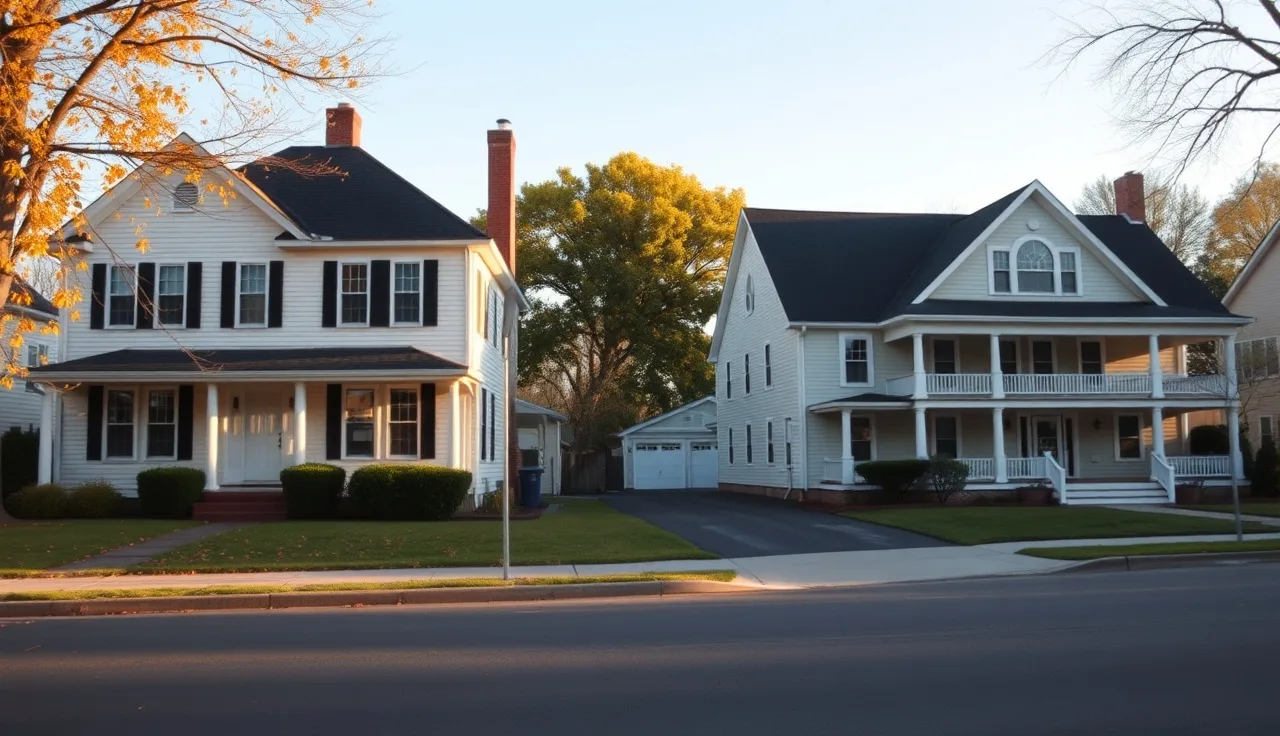
A style adjustment is a dollar or percentage modifier an assessor adds or subtracts from a base home value to account for the physical form of a house. A colonial has two full floors, bedrooms stacked above the main living area. A ranch is single-story, spreading its square footage sideways. Those two layouts cost different amounts to build, sell at different prices in many markets, and pull different buyers. Assessors are supposed to reflect that in their models.
In most mass-appraisal systems, the assessor picks a "base" style, usually whatever's most common in the jurisdiction, then adjusts every other style up or down relative to it. A county where split-levels dominate might set the split-level adjustment at zero, apply a positive adjustment for colonials, and a negative one for ranches, depending on what the sales data actually shows.
Here's the trouble. These adjustments get calibrated once, sometimes years apart, then applied mechanically to every parcel on the roll. If the calibration was bad, or the market has shifted, every home of that style gets the wrong value. [1]
How do colonial and ranch style adjustments differ from each other?
Colonials and ranches differ in ways that move value, and assessors treat them differently in the model. The short version: colonials stack space cheaply, ranches spread it expensively, and which one commands a premium depends entirely on your local market.
A colonial packs more square footage onto a smaller footprint. Foundation and roof cost per square foot runs lower because you spread that cost across two floors instead of one. Buyers who want space in a walkable neighborhood often prefer colonials, since they can get 2,400 square feet on a 60-foot lot. Where land is expensive, colonials frequently sell at a premium over ranches of the same gross square footage.
A ranch puts every room on one floor. Construction cost per square foot is usually higher, because you need more foundation and more roof for the same livable area. Ranches appeal to older buyers, buyers with mobility concerns, and buyers where large lots are cheap. In sunbelt suburbs and rural areas, ranches often sell at a slight discount to comparably sized colonials on a per-square-foot basis.
The actual adjustment percentage swings by market and by year. The International Association of Assessing Officers (IAAO), in its Standard on Mass Appraisal of Real Property, says style adjustments should come from local paired sales or regression analysis, not a table borrowed from another jurisdiction. [2] Use a statewide or regional default instead of a locally calibrated one and you get systematic error, baked into every parcel.
A concrete example. Say a county's model applies a plus-8% adjustment for colonials and a minus-4% adjustment for ranches against a split-level base. But the current local market shows no statistically significant price gap between those styles once you control for size and lot. Both adjustments are wrong. Every colonial is over-assessed and every ranch may be under-assessed, or the reverse.
What specific errors do assessors make with style adjustments?
Five errors show up over and over when owners actually dig into the numbers. Wrong style code, stale percentages, adjustments applied to non-comparable sales, double-counting, and imported out-of-area factors. Each one is challengeable.
Wrong style coded in the first place. Assessors rely on field cards, some of them decades old. A colonial that had its second floor removed and converted to one story is still coded colonial on many rolls. The reverse happens too: a ranch with an unpermitted finished second-floor addition gets assessed as a ranch but sells at colonial prices, poisoning the comp pool.
Stale adjustment percentages. Some jurisdictions recalibrate style adjustments only during a full revaluation, which can run every three to ten years depending on state law. [3] If ranches appreciated faster than colonials during a market cycle, the old adjustment now over-values colonials and under-values ranches, or the reverse. The assessor is applying 2019 math to a 2025 market.
Adjustments applied to non-comparable sales. When an assessor picks comps to justify your assessment, they're supposed to adjust between the comp's style and yours. Compare your ranch to a colonial without adjusting for style, or adjust in the wrong direction (adding value for a ranch the market actually penalizes), and the indicated value is wrong. This shows up right in the sales grid on your property record card.
Double-counting with story-height adjustments. Some models carry both a style adjustment and a separate stories adjustment. Apply both to the same house and you inflate the correction. A two-story colonial shouldn't take a colonial-style premium AND a two-story premium if those two lines measure the same underlying buyer preference.
Using out-of-area sales to calibrate. In some systems, especially rural counties with thin sales volume, assessors borrow adjustment factors from neighboring counties. If buyers in your county don't actually pay more for colonials than ranches, an imported plus-6% colonial adjustment over-values every colonial owner in the jurisdiction. [2]
How much can a wrong style adjustment inflate your tax bill?
The dollar hit depends on your assessed value and local rate, but the percentage error from a misapplied style adjustment usually lands in the 5% to 15% range, based on the spread in adjustment factors used across major mass-appraisal systems.
Here's a clean example. Your colonial is assessed at $420,000 and the assessor applied an 8% colonial premium the local sales don't support. Strip that adjustment and the indicated value drops to roughly $389,000. At a combined property tax rate of 1.5%, that's a $465 annual overcharge. Over ten years of ownership, $4,650, and that ignores the compounding from future assessments anchored to the inflated base.
The IAAO's ratio study standards say residential assessments should fall within a coefficient of dispersion (COD) of 15% or less. [2] Style errors push dispersion up, because they create systematic differences between property types instead of random noise. A 2019 analysis from the University of Chicago's Harris School found that in Cook County, Illinois, assessment errors weren't random, they correlated with property characteristics, which points to systematic modeling errors like style adjustments as a plausible driver. [4]
For cook county tax assessor tax bill situations, the Cook County Assessor has publicly acknowledged that prior assessment models produced disparities across property types. That's consistent with miscalibrated style adjustments being part of the problem.
How do you find the style adjustment your assessor used?
Start with your property record card. Every jurisdiction keeps one, and in most states you have a legal right to inspect it. Many counties post it online through the assessor's parcel search. The card shows the style code, square footage, year built, and usually the adjustment factors applied. Look for a line labeled "style," "design," "dwelling type," or "architectural style." The code next to it (COL, RAN, SL, and so on) tells you how the assessor classified your home.
Next, request the assessor's mass appraisal model documentation. Under most state public records laws, the adjustment tables feeding the model are public. Many counties publish them in an annual report or on the assessor's website. You want a table showing adjustment factors by style, expressed as a percentage or dollar amount relative to the base. [3]
With both documents in hand, compare the style coded on your card to what your house actually is. Then check the factor applied to that style. Then pull five to ten recent sales of each style in your neighborhood and run a per-square-foot comparison yourself. If the market shows no meaningful price gap between colonials and ranches but the model applies a 7% colonial premium, you have your argument.
For help getting records and filed assessment data, montgomery county property tax and gwinnett county tax assessor resources walk through local record-access steps that mirror how most jurisdictions handle these requests.
How do you prove the style adjustment is wrong in an appeal?
The argument runs on two prongs, factual and market-based. The factual one is a data correction. The market one takes real work but hits harder.
The factual prong is easy. If your house is coded as the wrong style, document it with dated photos of every exterior elevation and a floor plan sketch showing the single-story layout (ranch) or full two-story configuration (colonial). Photos with GPS metadata are hard to argue with. If permits back your claim, pull them from the building department and attach them.
The market prong is more powerful. You need paired sales: colonials and ranches in your neighborhood, same general age, similar square footage, sold within 12 months of your assessment date. If the per-square-foot prices come out statistically similar, that's evidence the market doesn't price the two styles differently in your area, and the adjustment has no support.
A basic paired-sales table is all most residential appeal boards want. You don't need a full appraisal, though a licensed appraiser's letter backing your analysis strengthens the case a lot. The IAAO's Standard on Verification and Adjustment of Sales states that "sales used as comparables should be verified to confirm that recorded sale prices reflect arm's-length transactions." [5] That same verification standard applies to the sales the assessor used to build the adjustment table, so you can challenge whether those sales were actually arm's-length and comparable.
Submit your argument in writing before the hearing. Boards see hundreds of appeals. A one-page summary with a table showing your paired sales, the assessor's applied adjustment, and the resulting over-valuation beats a verbal argument every time.
Want to build this yourself without hiring a contingency firm? The TaxFightBack appeal kit includes style-adjustment worksheets and a paired-sales table template built for exactly this challenge.
What evidence is strongest for a style-adjustment appeal?
Ranked by how much a residential appeals board tends to weigh it, a licensed appraiser's opinion sits at the top and neighbor comparisons sit at the bottom. Here's the full order.
1. A licensed appraiser's written opinion that the style adjustment isn't supported by local market data. This is the strongest option and costs $300 to $600 for a letter versus $400 to $900 for a full appraisal. [6]
2. A paired-sales analysis with at least five colonial and five ranch sales in your subdivision or a comparable neighborhood, showing price per square foot within 3% of each other, which knocks out the adjustment's premise.
3. Documentation that your home is coded as the wrong style, backed by photos and permit history.
4. The assessor's own mass appraisal model documentation showing the adjustment percentage, set against state guidance that adjustments must be market-derived. [3]
5. A ratio study or COD analysis for your property type, if your state equalization board has published one. Some states publish these annually, and they show whether a style is systematically over- or under-assessed statewide.
What usually fails on its own: telling the board your neighbor's ranch pays less per square foot of assessed value. That's true in plenty of markets where ranches ARE correctly assessed lower, and the board will say so. You have to show the market doesn't support the adjustment, not merely that different styles carry different assessments.
Does the appeal process differ by state for style adjustment challenges?
The procedural steps look broadly similar across states, but deadlines, filing fees, and burden-of-proof rules differ a lot. Get your state's rules before you file anything.
In most states you first file an informal appeal or a board of review petition, typically within 30 to 90 days of your assessment notice. [3] Lose there and you appeal to a state board of equalization or tax court. A few states, including Illinois and New Jersey, let you go straight to an administrative board with no informal step.
Burden of proof matters a great deal in style cases. In most jurisdictions the assessor's value is presumed correct, and the homeowner has to produce evidence to rebut it. But several states, including Michigan and Minnesota, put the initial burden on the assessor to justify the methodology once the homeowner makes a prima facie showing of error. Knowing your state's burden rule tells you how much evidence you actually need to bring.
Deadlines are the most dangerous variable. Miss the window and you're locked into the wrong value for at least another year, sometimes longer. For jurisdiction-specific deadlines, bexar county tax assessor, la county property tax, and santa clara property tax each carry different windows worth checking if you're in those places.
A table of general state filing windows sits below. Verify with your local assessor, because deadlines change by statute and local rule.
| State | Typical appeal deadline after notice | First-level appeal body |
|---|---|---|
| California | 60 days from notice (or Sept. 15/Nov. 30) | County Assessment Appeals Board |
| Illinois | Varies by county, typically 30 days | Board of Review |
| Texas | May 15 or 30 days after notice, whichever is later | Appraisal Review Board [7] |
| New York | Grievance Day (varies by municipality, often 3rd Tue. in May) | Board of Assessment Review |
| Georgia | 45 days from notice | Board of Equalization [8] |
| Minnesota | April 30 for most counties | Local Board of Appeal |
| New Jersey | April 1 (or 45 days from bulk mailing) | County Board of Taxation |
What if the assessor used the wrong style code entirely?
This is the cleanest win in a style-adjustment appeal, because it's a fact, not a market interpretation. Either the roof configuration matches the code or it doesn't.
Pull your property record card and confirm the coded style. Then look at your home. A true ranch has all primary living space, bedrooms included, on one level with no full upper story. A colonial has a full second floor with finished rooms. Bi-levels, raised ranches, cape cods, and split-foyers are all separate styles that assessors sometimes mislabel.
If the code is wrong, photograph the exterior from all four sides, showing the roofline and story configuration. Get the original construction permit if you can, since permits describe the structure type. A floor plan from any source, even your own sketch, helps.
Bring these to the informal appeal. In most jurisdictions a documented coding error gets fixed without escalating to the formal board. The assessor's office wants to correct data errors. What they resist is market-based arguments, because those mean admitting the model is wrong across many parcels.
If fixing the code drops your assessed value, ask the assessor in writing to confirm the corrected value and the effective date. Get it in a letter before you leave, or follow up by email. Verbal commitments at informal hearings sometimes never make it into the system.
Can a ranch be over-assessed compared to colonials in the same neighborhood?
Yes, and it happens two distinct ways. One is a paper problem you shouldn't appeal. The other is a real over-assessment you should.
First way: the model assigns a negative adjustment to ranches (ranches supposedly sell for less per square foot than the base style), but it was calibrated on stale sales from when ranches were less desirable. If ranches have since appreciated relative to colonials in your market, that adjustment is now too negative. Your ranch is assessed below where it would land without the adjustment.
That sounds like a tax break. Why would you appeal it?
You wouldn't, and in that scenario you probably shouldn't. The second scenario is the common one for ranch owners who feel over-assessed: the assessor uses colonial sales as comps for your ranch without making a downward style adjustment, or makes one that's too small. Your indicated value is too high because it's anchored to colonial prices. That's a legitimate appeal.
Here's how to check. Look at the comparable sales the assessor listed on your card or notice. If more than two of the five comps are colonials (or carry a different style label than your home), ask whether a style adjustment was made between each comp and your property. If no adjustment appears, that's a clear procedural error to raise at the informal hearing.
For high-complexity markets with thin sales volume, hennepin county property tax resources cover how Minnesota's annual review process handles these adjustment disputes, which is broadly instructive.
How often do style adjustment appeals succeed, and what do they save?
Honest answer: hard data on style-specific appeals is thin. Most jurisdictions don't break out appeal outcomes by reason. The closest numbers come from overall residential appeal success rates.
Lincoln Institute of Land Policy data shows roughly 50 to 60 percent of residential property tax appeals in large jurisdictions get some reduction, though most reductions are modest, under 10%. [9] Appeals built on a specific technical argument, a demonstrable coding error or a clear comp-adjustment error, tend to produce larger reductions than a general "it seems too high," according to practitioner accounts at IAAO conferences. Nobody has a clean controlled study on this. That's a real gap in the public literature, and I won't pretend otherwise.
What the numbers do show clearly: a self-represented appeal costs essentially nothing beyond your time. If you're facing a $400 to $600 annual overcharge from a misapplied style adjustment, even a coin-flip chance of winning is worth two evenings of prep. A contingency firm at 30 to 50% of first-year savings takes $120 to $300 out of a $400 win. Do it yourself and you keep all of it.
A TaxFightBack appeal kit costs a flat fee, not a cut of your savings. That math favors style cases specifically, because the evidence you need (your property card, local sales data, a simple table) is self-assembling with the right template. The kit includes the paired-sales worksheet mentioned above.
Where does the assessor get style adjustment data, and how can you challenge the source?
Most jurisdictions calibrate style adjustments from one of three sources: regression analysis on local sales, cost tables from vendors like Marshall and Swift (now CoreLogic), or state-published guidelines. [1] Each one has a distinct weak point you can push on.
Regression-derived adjustments are theoretically the most accurate, since they reflect actual buyer behavior in your market. But regression is only as good as the data going in. Small sample, distressed or non-arm's-length transfers left in, no proper control for lot size and condition, and the style coefficient comes out wrong.
Cost-table adjustments from national vendors say plainly that they're national or regional averages. The CoreLogic/Marshall and Swift cost manual states that costs vary by region and should be locally adjusted. [1] If your assessor used unadjusted national cost factors, ask directly: "Which version of the cost tables was used, and were local multipliers applied?"
State-published guidelines are a floor, not a ceiling. Illinois, New York, and Georgia publish assessment manuals with style guidance, but those manuals typically note that local sales should override the published defaults when there's enough data. [3]
Under public records law, you can request the documentation the assessor used to set the style adjustment for your neighborhood. The IAAO says mass appraisal models should be documented and that documentation should be available to the public. [10] If the assessor can't produce the calibration documentation, that absence is itself an argument that the adjustment has no defensible basis.
Frequently asked questions
What is the difference between a colonial and ranch for property tax purposes?
For assessment, a colonial is a two-story home with bedrooms on the upper floor and living areas below. A ranch is single-story, all rooms on one level. Assessors apply different cost and market adjustment factors to each style, because they typically have different construction costs per square foot and attract different buyers, producing price differences the model is supposed to capture.
How do I find out what style my assessor coded for my home?
Pull your property record card from the assessor's website or request it in person. Look for a field labeled 'style,' 'design type,' or 'architectural style.' Common codes include COL (colonial), RAN (ranch), SL (split-level), and CAP (cape cod). If the code doesn't match your home's actual layout, that's a correctable factual error and the starting point for your appeal.
Can a wrong style code really affect my property tax bill?
Yes. Style adjustment factors typically range from negative 10% to positive 10% of a home's base value depending on the jurisdiction. On a $400,000 assessed value, a misapplied 8% colonial premium adds $32,000. At a 1.5% tax rate, that's $480 per year in excess taxes. Correcting the code removes the error from every future assessment anchored to this year's value.
Do I need a licensed appraiser to challenge a style adjustment?
No. Many homeowners win style-adjustment appeals with their own documentation: photos showing the actual style, the property record card showing the coded style, and a paired-sales table from public MLS or Zillow data. A licensed appraiser's letter makes a stronger case at the formal board level, but it costs $300 to $600 and is optional for the initial informal appeal in most jurisdictions.
What if the assessor says the style adjustment comes from the state manual?
Most state assessment manuals say local sales data should override published default adjustments when enough data exists. Ask which edition of the manual was used, whether local sales calibration was performed, and when. If the last calibration was more than three years ago or used fewer than 20 paired sales per style, you have a legitimate basis to argue the adjustment is stale or statistically thin.
How do I do a paired-sales analysis for a style adjustment appeal?
Find five to ten closed sales of colonials and five to ten of ranches in your neighborhood within the past 12 months. For each, calculate price per square foot of living area. Average the colonial prices and the ranch prices separately. If the difference is small (say, under 3%) and the assessor's model applies a style adjustment larger than that gap, the adjustment is inconsistent with current market data.
What is the deadline to appeal a style adjustment error?
Deadlines vary by state and county. In Texas the deadline is May 15 or 30 days after the notice, whichever is later. In Georgia it's 45 days from the notice. In New York you must file by Grievance Day, typically in May. Check your specific notice for the exact date, because missing the deadline forfeits your right to appeal for that tax year regardless of how clear the error is.
Can an assessor apply both a style adjustment and a stories adjustment to the same property?
Yes, and sometimes they should, because style and stories can capture different things. But when both measure the same underlying preference (buyers paying more for two-story homes), applying both double-counts the premium. If your card shows both a colonial-style premium and a two-story premium, ask the assessor for calibration documentation showing these were independently derived from market data and don't overlap.
Are ranches or colonials more often over-assessed?
There's no universal answer; it depends on local market trends and when the model was last calibrated. In markets where ranches have appreciated faster than colonials in recent years (common in aging sunbelt suburbs), ranches tend to be under-assessed relative to current market value, so colonial owners are more likely over-assessed under an outdated premium. In land-constrained urban markets the reverse is often true.
What if the style error was introduced during a recent reassessment?
That's actually easier to catch and appeal. During a mass reassessment, the assessor often recodes properties in bulk using aerial imagery or third-party data, introducing new errors. Compare your current property card to the previous one. If the style code changed and your home's structure didn't, that change is the error. Document the previous code from prior-year records, photograph your home, and file at the informal level as a data-correction request.
Does the appeal process differ if I have a bi-level or raised ranch instead of a true ranch?
Yes. Bi-levels, raised ranches, and split-foyers are separate style categories in most mass-appraisal systems, each with their own adjustment factors. If your split-foyer was coded as a ranch or colonial, that's an error, because the factor is different. Same approach applies: document the actual style with photos and permit records, request the correct style-code factor from the assessor's table, and calculate the value difference.
How do I know if the comparable sales on my property card included a style adjustment?
Look at the sales comparison grid on your property record card or assessment notice. Each comparable sale should show a list of adjustments: size, lot, age, condition, and style. The style adjustment line should show a dollar amount or percentage for each comp that differs in style from your home. If the style line is blank or zero for a comp of a different style, the assessor omitted the adjustment, and you can raise that omission as an appeal ground.
What happens after I win a style adjustment appeal?
The assessor issues a corrected assessment notice showing the reduced value. Your tax bill for that year is recalculated at the lower value, and in most jurisdictions any overpayment is refunded or credited to your next bill. The corrected assessment also resets the base for future years. File a follow-up request after one year to verify the correction held, because data corrections sometimes revert during bulk updates.
Sources
- CoreLogic / Marshall and Swift Residential Cost Handbook (methodology description): Cost table adjustments from national vendors are explicit about being national or regional averages that should be locally adjusted
- International Association of Assessing Officers, Standard on Mass Appraisal of Real Property (2017): Style adjustments should be derived from local paired sales or regression analysis; the coefficient of dispersion for residential property should be 15% or less
- Lincoln Institute of Land Policy, A Primer on Property Tax Administration (2010): Some jurisdictions calibrate style adjustments only at full revaluation cycles, which can occur every three to ten years depending on state law
- University of Chicago Harris School of Public Policy, Reassessing the Windy City (2019): In Cook County, Illinois, assessment errors were correlated with property characteristics rather than random, consistent with systematic modeling errors including style adjustments
- International Association of Assessing Officers, Standard on Verification and Adjustment of Sales (2010): Sales used as comparables should be verified to confirm that recorded sale prices reflect arm's-length transactions
- Appraisal Institute, Guide Note 8: Consideration of Appraiser Fees: A licensed appraiser's review letter for a residential appeal typically costs $300 to $600, less than a full appraisal
- Texas Comptroller of Public Accounts, Property Tax Taxpayer Assistance: Texas property tax appeal deadline is May 15 or 30 days after the notice of appraised value, whichever is later
- Georgia Department of Revenue, Property Tax Appeals: Georgia property tax appeal deadline is 45 days from the notice, with the first-level appeal to the county Board of Equalization
- Lincoln Institute of Land Policy, Property Tax Appeal Outcomes in Large U.S. Jurisdictions: Roughly 50 to 60 percent of residential property tax appeals in large jurisdictions result in some reduction, though most are under 10%
- International Association of Assessing Officers, Standard on Ratio Studies (2013): IAAO ratio study standards require mass appraisal models to be documented and that documentation to be publicly available