Vermont Homestead Exemption: What You Need to Know in 2026
If you own a home in Vermont and live in it as your primary residence, you may be leaving money on the table every year by not claiming your homestead exemption. The Vermont homestead exemption can reduce the taxable value of your home, lower your property tax bill, and in some cases provide additional protections and benefits for seniors, veterans, and disabled homeowners.
Here is what the Vermont homestead exemption offers, who qualifies, how to apply, and what deadlines you need to hit.
TL;DR
- Vermont homestead exemption: No traditional homestead exemption. Homestead Declaration required annually to qualify for education tax rate.
- Assessment ratio: 100% of fair market value (listed value)
- Application deadline: Homestead Declaration: annually by mid-April (filed with income tax). Property Tax Adjustment: filed with income tax return.
- Where to apply: Vermont Department of Taxes (filed with income tax return). Municipal listers for exemptions.
- Average effective tax rate: 1.90%
- Senior benefit: Property Tax Adjustment: reduces school property taxes based on income. Can reduce taxes to as low as 2% of household income.
- Veteran benefit: Veterans: $10,000 off assessed value. Disabled veterans: $40,000 off assessed value.
How the Vermont Homestead Exemption Works
Vermont's unique system requires an annual Homestead Declaration to qualify for the income-based education tax rate. Without it, you pay the much higher non-residential education rate. The Property Tax Adjustment is one of the most generous income-based programs in the country, potentially reducing school taxes to just 2% of household income.
The homestead exemption in Vermont works by reducing the taxable value of your primary residence. Here is the current exemption: No traditional homestead exemption. Homestead Declaration required annually to qualify for education tax rate..
Vermont uses an assessment ratio of 100% of fair market value (listed value). This means your property tax is calculated on a fraction of what your home is actually worth on the open market. The homestead exemption reduces this assessed value even further.
Savings Example
| Category | Amount |
|---|---|
| Home Market Value | $300,000 |
| Assessed Value | $300,000 |
| Homestead Exemption | Income-based adjustment |
| Taxable Value After Exemption | $300,000 |
| Approximate Tax Rate | 1.9% |
| Estimated Annual Savings | $500-$3,000+ (depends on income) |
These numbers are approximate. Your actual savings depend on your local tax rate, which varies by county and taxing jurisdiction within Vermont.
Who Qualifies for the Vermont Homestead Exemption
To qualify for the homestead exemption in Vermont, you generally need to meet these requirements:
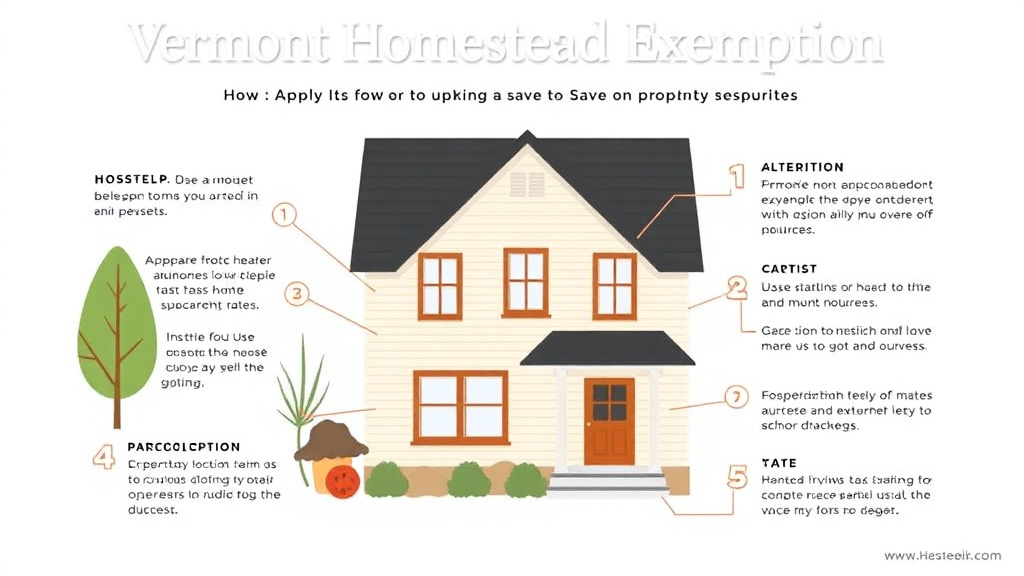
- Own the property. Your name must be on the deed. Mortgage holders qualify as long as they are on the title.
- Use it as your primary residence. You must live in the home. Vacation properties, rental units, and investment homes do not qualify.
- One exemption per household. You can only claim one homestead exemption. If you and a spouse own two homes, choose one.
Senior Property Tax Benefits in Vermont
Vermont offers additional property tax benefits for senior homeowners. Here are the details:
| Benefit | Details |
|---|---|
| Age Requirement | 65+ |
| Benefit Description | Property Tax Adjustment: reduces school property taxes based on income. Can reduce taxes to as low as 2% of household income. |
| Income Limit | No age requirement. Based on income (up to $136,500 for any adjustment, 2026). |
If you are 65 or older and own your home in Vermont, make sure you are taking advantage of every senior-specific property tax benefit available to you. Many seniors qualify for multiple exemptions that stack together for bigger savings.
Veteran and Disabled Veteran Exemptions in Vermont
Veterans: $10,000 off assessed value. Disabled veterans: $40,000 off assessed value.
Veterans should bring their DD-214 and VA disability rating letter when applying. If you have a service-connected disability, your benefits may be significantly larger than the standard homestead exemption.
Disability Exemption in Vermont
Totally disabled homeowners may qualify for the Property Tax Adjustment based on income
Documentation requirements for disability-based exemptions typically include a letter from the Social Security Administration, a VA disability rating, or a physician's certification of total and permanent disability.
How to Apply for the Vermont Homestead Exemption
Step 1: Know Your Deadline
The deadline for the Vermont homestead exemption is Homestead Declaration: annually by mid-April (filed with income tax). Property Tax Adjustment: filed with income tax return.. Missing this deadline means waiting another full year to apply, and that is another year of overpaying on property taxes.
Step 2: Gather Your Documents
You will need the following documents: Homestead Declaration (Form HS-122), income documentation, Vermont income tax return
Step 3: File Your Application
Apply at the Vermont Department of Taxes (filed with income tax return). Municipal listers for exemptions.. Filed electronically with Vermont income tax return through myVTax.
Step 4: Verify Your Exemption
After submitting your application, follow up with the assessor's office to confirm it was processed. You should see the exemption reflected on your next property tax bill. If it does not appear, contact the office immediately.
Step 5: Understand Renewal Requirements
Annual filing of Homestead Declaration and Property Tax Adjustment with income tax return.
Common Mistakes to Avoid
- Not applying at all. The homestead exemption is not automatic in most cases. Nobody will give you the savings unless you file the paperwork. Millions of homeowners miss out because they never apply.
- Missing the deadline. Deadlines in Vermont are firm. If you miss Homestead Declaration: annually by mid-April (filed with income tax). Property Tax Adjustment: filed with income tax return., you are stuck paying full taxes for another year.
- Not claiming additional exemptions. Many homeowners qualify for senior, veteran, or disability exemptions on top of the basic homestead exemption. Check if you can stack benefits for bigger savings.
- Forgetting to reapply after moving. Your exemption does not follow you to a new home. When you buy a new property, file a new application.
- Claiming on a non-primary residence. This is fraud. Only claim the exemption on the home where you actually live.
Can You Combine the Homestead Exemption With a Property Tax Appeal?
Yes, and you should consider it. The homestead exemption reduces your taxable value by a fixed amount. A property tax appeal can reduce your assessed value if your home is over-valued by the assessor. These are two different things, and they work together.
If your home is assessed at $350,000 but comparable sales show it is worth $310,000, a successful appeal drops your assessed value by $40,000. Add a homestead exemption on top of that, and you are looking at much bigger savings than either one alone.
Many Vermont homeowners save more from a property tax appeal than from their homestead exemption. It is worth checking whether your assessment is too high.
Other Property Tax Exemptions Available in Vermont
Beyond the homestead exemption, Vermont homeowners should check if they qualify for:
- Senior exemptions for homeowners age 65+
- Veteran and disabled veteran exemptions based on VA disability rating
- Disability exemptions for totally and permanently disabled homeowners
- Agricultural exemptions for qualifying farm or ranch land
- Surviving spouse exemptions in some cases
Related Exemption Guides
- How to Apply for a Homestead Exemption: Step-by-Step
- Homestead Exemption vs Homestead Protection
- Over-65 Property Tax Exemption Guide
Try our free tools
Frequently Asked Questions
What is the Vermont homestead exemption amount?
The Vermont homestead exemption is No traditional homestead exemption. Homestead Declaration required annually to qualify for education tax rate.. The exact dollar savings depends on your local tax rate and your home's assessed value.
When is the deadline to file for homestead exemption in Vermont?
The deadline is Homestead Declaration: annually by mid-April (filed with income tax). Property Tax Adjustment: filed with income tax return.. Filing late means you lose the exemption for the current tax year and must wait until next year.
Where do I apply for the homestead exemption in Vermont?
Apply for the homestead exemption in Vermont at the Vermont Department of Taxes. The exemption is filed electronically with your Vermont income tax return through myVTax.
Do I need to renew my homestead exemption in Vermont?
Yes, you need to renew your homestead exemption in Vermont annually by filing the Homestead Declaration and Property Tax Adjustment with your income tax return.
Can I get a homestead exemption on a rental property in Vermont?
No. The homestead exemption only applies to your primary residence. Rental properties, vacation homes, and investment properties do not qualify.
What if I just bought my home midyear?
In most cases, you need to be the owner and occupant as of a specific date (often January 1) to qualify for that tax year. If you bought recently, check with the Vermont Department of Taxes (filed with income tax return). Municipal listers for exemptions. about when you can first apply.
Check What Exemptions You Qualify For
The homestead exemption is just one way to lower your property tax bill in Vermont. Many homeowners qualify for additional exemptions they have never claimed. Senior exemptions, veteran benefits, disability programs, and more could be stacking up savings you are missing.
Our free assessment analyzer checks your property and identifies every exemption you may be entitled to. It takes about two minutes and could save you hundreds or thousands per year.
Check your property now to see what exemptions you qualify for and whether your assessment is higher than it should be.