Property Tax vs Homeowners Insurance: Two Different Bills Explained
TL;DR
Property taxes and homeowners insurance are both part of your monthly mortgage payment but serve completely different purposes. Property taxes fund local government services (schools, roads, fire departments). Homeowners insurance protects you against damage and liability. Both are collected through your escrow account if you have a mortgage. You can appeal your property tax assessment to lower that bill. You can shop around for homeowners insurance. Confusing the two is common, but understanding each helps you manage your housing costs.
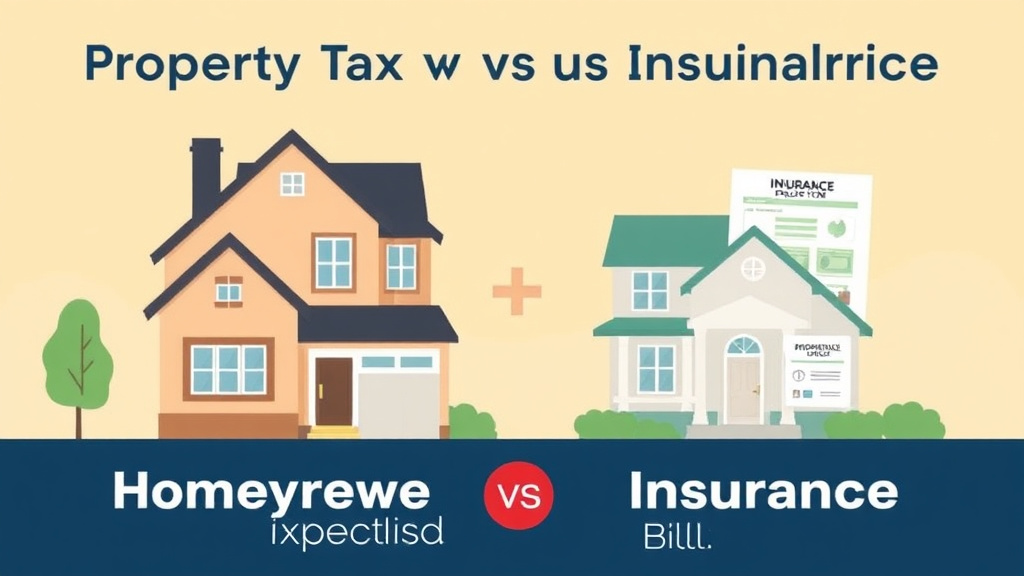
If you need to understand property Tax vs Homeowners Insurance: Two Different Bills, this is the place. If you have a mortgage with an escrow account, both property taxes and homeowners insurance are collected monthly as part of your mortgage payment (PITI: Principal, Interest, Taxes, Insurance).
If paying the full amount creates a hardship, check whether your jurisdiction offers installment plans or partial payment options. Some counties allow you to pay the undisputed portion while your appeal is pending.
Key Differences
| Feature | Property Tax | Homeowners Insurance |
|---|---|---|
| Purpose | Funds local government | Protects against loss/damage |
| Who sets the amount | County assessor (value) + taxing authorities (rate) | Insurance company (based on risk) |
| Based on | Assessed value of property | Replacement cost of home |
| Required? | Yes, by law | Required by most lenders, not by law (in most states) |
| Can you reduce it? | Yes, appeal the assessment or claim exemptions | Yes, shop carriers, raise deductible, bundle |
| Paid to | County tax collector | Insurance company |
| Tax deductible? | Yes (up to $10,000 SALT cap) | No (unless home office) |
Understanding this topic fully means looking at both the big picture and the specific details that apply to your situation. Every property is different, and the strategies that save the most money are the ones tailored to your particular home, location, and circumstances.
Start by gathering the basic facts about your property: its assessed value, the tax rate in your jurisdiction, and any exemptions currently applied. Then compare your situation to what is available. You may find opportunities for savings that you did not know existed.
How They Are Collected
If you have a mortgage with an escrow account, both property taxes and homeowners insurance are collected monthly as part of your mortgage payment (PITI: Principal, Interest, Taxes, Insurance). Your lender pays both from the escrow account when they come due.
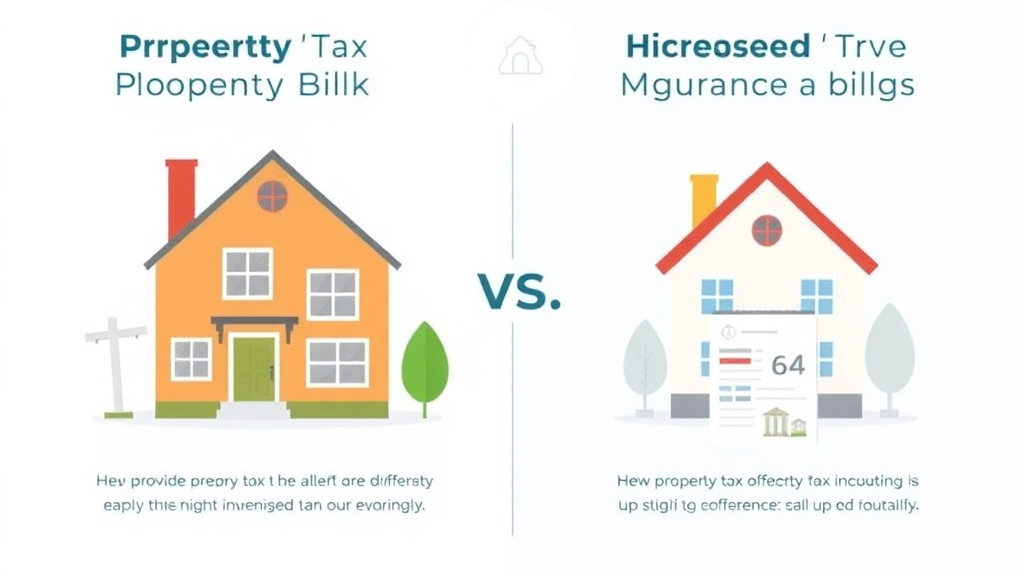
If you own your home outright, you pay property taxes directly to the county and insurance premiums directly to your insurer.
Understanding this topic fully means looking at both the big picture and the specific details that apply to your situation. Every property is different, and the strategies that save the most money are the ones tailored to your particular home, location, and circumstances.
Start by gathering the basic facts about your property: its assessed value, the tax rate in your jurisdiction, and any exemptions currently applied. Then compare your situation to what is available. You may find opportunities for savings that you did not know existed.
Why Your Mortgage Payment Changes
When either property taxes or insurance premiums change, your total monthly mortgage payment adjusts. The principal and interest portion stays fixed (on a fixed-rate mortgage), but the escrow portion fluctuates. An increase in either property taxes or insurance will increase your total payment.
Even if you are appealing your assessment, you typically must pay your tax bill on time. Failing to pay while appealing can trigger penalties and interest charges that offset any savings from a successful appeal. Pay the amount due, and if your appeal succeeds, you will receive a refund or credit for the overpayment.
If paying the full amount creates a hardship, check whether your jurisdiction offers installment plans or partial payment options. Some counties allow you to pay the undisputed portion while your appeal is pending.
How to Lower Each
Lowering Property Taxes
- Appeal your assessed value if over-assessed
- Apply for all exemptions you qualify for
- Correct any errors in property records
Lowering Homeowners Insurance
- Shop multiple carriers annually
- Increase your deductible
- Bundle with auto insurance
- Improve home security
- Maintain a claims-free record
Start with our free property tax analyzer to see if you are overpaying on the tax portion of your monthly bill.
The most effective strategy combines multiple approaches. Start with exemptions since they are free to file and provide guaranteed savings if you qualify. Then check your property record for errors since corrections are straightforward and hard for the assessor to dispute. Finally, if your assessed value still exceeds your home's market value, file a formal appeal with comparable sales data.
Each of these steps compounds. A homeowner who claims an overlooked exemption, corrects a square footage error, and wins an appeal on comparable sales can reduce their annual tax bill by 20% or more. That savings repeats every year until the next reassessment.
Your Next Steps
Do not let this information sit. Take action this week:
- Review your most recent assessment notice. Pull it out and check every line. Look for errors in square footage, lot size, bedroom count, and property features. Mistakes here are more common than most homeowners realize.
- Pull comparable sales data. Find 3 to 5 similar properties near you that sold recently. If they sold for less than your assessed value, you have the foundation of a strong appeal.
- Check your exemption status. Contact your county assessor's office and confirm which exemptions are currently applied to your property. Many homeowners qualify for exemptions they have never filed for.
- Set a deadline reminder. Find your appeal deadline and put it on your calendar with a 2-week advance warning. Missing the deadline costs you a full year of potential savings.
Why Most Homeowners Overpay
Studies consistently show that a large percentage of residential properties are over-assessed. The Lincoln Institute of Land Policy found that roughly 40% of assessments are off by more than 10%. That is not a rounding error. On a $350,000 home, a 10% overvaluation means you are paying taxes on $35,000 of value that does not exist.
The reason is simple: assessors use mass appraisal models to value thousands of properties at once. They cannot inspect every home individually. The models rely on averages, which means homes that are below average in condition, location, or desirability often get assessed too high. If your home has any characteristics that reduce its value compared to the average home in your area, your assessment may be inflated.
The only way to fix this is to check your assessment yourself. Compare it to actual sales of similar properties. If the numbers do not match, file an appeal. The process exists for exactly this purpose, and homeowners who use it save an average of $1,000 to $3,000 per year.
Appealing does not increase your assessment. In most jurisdictions, the review board can only lower your value or leave it unchanged. There is no downside to filing a well-prepared appeal.
Try our free tools
Frequently Asked Questions
How do they compare in terms of property tax vs homeowners insurance: two different bills explained?
Property taxes and homeowners insurance are both part of your monthly mortgage payment but serve completely different purposes. Property taxes fund local government services like schools, roads, and fire departments. Homeowners insurance protects you against damage and liability. Both are collected through your escrow account if you have a mortgage.
How They Are Collected?
If you have a mortgage with an escrow account, both property taxes and homeowners insurance are collected monthly as part of your mortgage payment (PITI: Principal, Interest, Taxes, Insurance). Your lender pays both from the escrow account when they come due.
Why Your Mortgage Payment Changes?
When either property taxes or insurance premiums change, your total monthly mortgage payment adjusts. The principal and interest portion stays fixed (on a fixed-rate mortgage), but the escrow portion fluctuates. An increase in either property taxes or insurance will increase your total payment.
How to Lower Each?
To lower your property taxes, you can appeal your assessed value if it's over-assessed, apply for all exemptions you qualify for, and correct any errors in your property records. To lower your homeowners insurance, you can shop multiple carriers annually, increase your deductible, bundle with auto insurance, improve home security, and maintain a claims-free record. Start with our free property tax analyzer to see if you are overpaying on the tax portion of your monthly bill.