New Construction Property Tax Timeline: When Your First Bill Arrives
TL;DR
When you build a new home, your first property tax bill typically arrives 4-18 months after construction is complete. During construction, you are usually taxed on just the land value. Once the home is finished (or a certificate of occupancy is issued), the assessor adds the improvement value. Some states send a supplemental tax bill for the partial year. Your initial assessment is often based on construction cost, which may or may not match market value. Review the first assessment carefully because errors set early tend to persist.
How New Construction Gets Assessed
Property tax on new construction unfolds in stages. The assessor cannot tax a building that does not exist yet, so the process starts with land and adds the structure later.
Stage 1: Land Only
Before construction begins, you are taxed on the land value alone. If you bought a vacant lot, the lot's assessed value is your tax basis. This is usually much lower than the finished property will be.
Stage 2: Construction Period
During construction, most counties continue taxing just the land. Some counties will add a partial improvement value if the structure is significantly complete by the assessment date (often January 1 or another fixed date). This varies by jurisdiction.
Stage 3: Completion
When construction is complete and a certificate of occupancy is issued, the assessor adds the full improvement value to the land value. This creates the total assessed value for your new home.
| Stage | What Is Taxed | Typical Assessment |
|---|---|---|
| Vacant Lot | Land only | $50,000-$150,000 |
| During Construction | Land + partial improvements | $50,000-$200,000 |
| Completed Home | Land + full improvements | $300,000-$500,000+ |
When Your First Full Tax Bill Arrives
The timing depends on when construction finishes relative to your county's assessment and billing cycle.
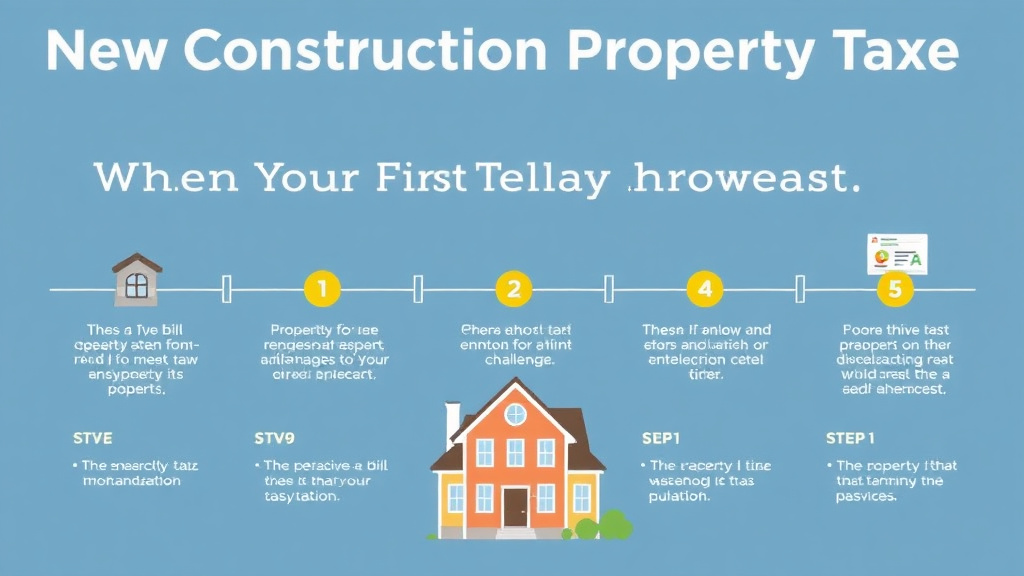
Scenario 1: Completed before the assessment date. If your home is done before the county's assessment date (often January 1), the full value will be on the next tax bill, typically mailed 6-12 months later.
Scenario 2: Completed after the assessment date. If your home is finished after the assessment date, you may not see the full value on a tax bill until the following year. That means your first full bill could be 12-18 months after completion.
Scenario 3: Supplemental assessment states. States like California send a supplemental tax bill that covers the period from completion to the end of the fiscal year. This arrives separately from your regular tax bill, usually within 6 months of the reassessment.
How the Initial Value Is Set
Assessors determine the value of new construction using several methods:
- Construction cost: The total cost to build, including materials, labor, permits, and contractor fees. This is the most common starting point.
- Sales price: If you bought the home from a builder, the purchase price is often used as the initial value.
- Cost approach: The assessor estimates replacement cost minus depreciation (which is zero for a new home) plus land value.
- Market comparison: Comparing to recent sales of similar new construction in the area.
Why Initial Assessments Are Often Too High
New construction assessments tend to come in high for several reasons:
- Construction costs include builder profit margins that may not translate to market value
- The assessor may not account for a cooling market between when you started building and when you finished
- Custom features that cost a lot to build may not add proportional market value
- The assessment may use the wrong comparable sales (higher-end neighborhood, different lot sizes)
Building Permits Trigger Assessment
When you pull a building permit, that information goes to the assessor's office. In most jurisdictions, building permits are automatically shared between the permitting department and the assessor. The permit tells the assessor:
- New construction is happening at your address
- The estimated cost of the project
- The scope of work (new building, addition, renovation)
- When the work is expected to be complete
This is how the assessor knows to reassess your property once construction is done. You do not need to notify them separately.
Escrow Adjustments for New Construction
If you financed the construction with a mortgage, your lender's initial escrow estimate was based on the land-only tax. Once the full assessment hits, your escrow payment will increase significantly. Expect:
- A large escrow shortage notification from your lender
- A substantial increase in your monthly mortgage payment
- The option to pay the shortage as a lump sum or spread over 12 months
Plan for this. If your land tax was $1,200/year and your completed home tax is $6,000/year, your monthly escrow payment jumps from $100 to $500 per month.
Review Your First Assessment Carefully
The first assessment on a new home is critical because it sets the baseline. In states with assessment caps (like California's Prop 13 or Michigan's Proposal A), future increases are limited to a small percentage per year. If the initial value is wrong, you are locked into overpaying from the start.
Check these items on your first assessment notice:
- Square footage: Does it match your plans and the actual build?
- Room count: Bedrooms, bathrooms, garage bays
- Quality classification: Are you rated as "standard" or "premium" construction?
- Land value: Is the lot value reasonable compared to similar lots?
- Total value: Compare to what similar new homes are actually selling for
If anything is off, appeal immediately. The appeal window is short, usually 30-90 days from the assessment notice.
Our free property tax analyzer can help you determine whether your new home's assessment is in line with the local market. Catching an over-assessment in the first year saves you money every year going forward.
Try our free tools
Frequently Asked Questions
How soon will I receive my first property tax bill after new construction?
When you build a new home, your first property tax bill typically arrives 4-18 months after construction is complete. During construction, you are usually taxed on just the land value.
How New Construction Gets Assessed?
When you pull a building permit, that information goes to the assessor's office. In most jurisdictions, building permits are automatically shared between the permitting department and the assessor. The permit tells the assessor that new construction is happening at your address, the estimated cost of the project, and the scope of work (new building, addition, renovation).
When Your First Full Tax Bill Arrives?
The timing depends on when construction finishes relative to your county's assessment and billing cycle.
How the Initial Value Is Set?
If you financed the construction with a mortgage, your lender's initial escrow estimate was based on the land-only tax. Once the full assessment hits, your escrow payment will increase significantly. Expect a large escrow shortage notification from your lender, a substantial increase in your monthly mortgage payment, and the option to pay the shortage as a lump sum or spread over 12 months.
What information does the assessor's office get from my building permit?
When you pull a building permit, that information goes to the assessor's office. In most jurisdictions, building permits are automatically shared between the permitting department and the assessor. The permit tells the assessor details about the new construction.
Can I expect changes to my escrow payments after the full property assessment?
If you financed the construction with a mortgage, your lender's initial escrow estimate was based on the land-only tax. Once the full assessment hits, your escrow payment will increase significantly.
Why is it important to review the first assessment on a new home carefully?
The first assessment on a new home is critical because it sets the baseline. In states with assessment caps, future increases are limited to a small percentage per year. If the initial value is set too high, it can be difficult to get it reduced later.