Property Tax Proration at Closing: How Buyer and Seller Split the Bill
TL;DR
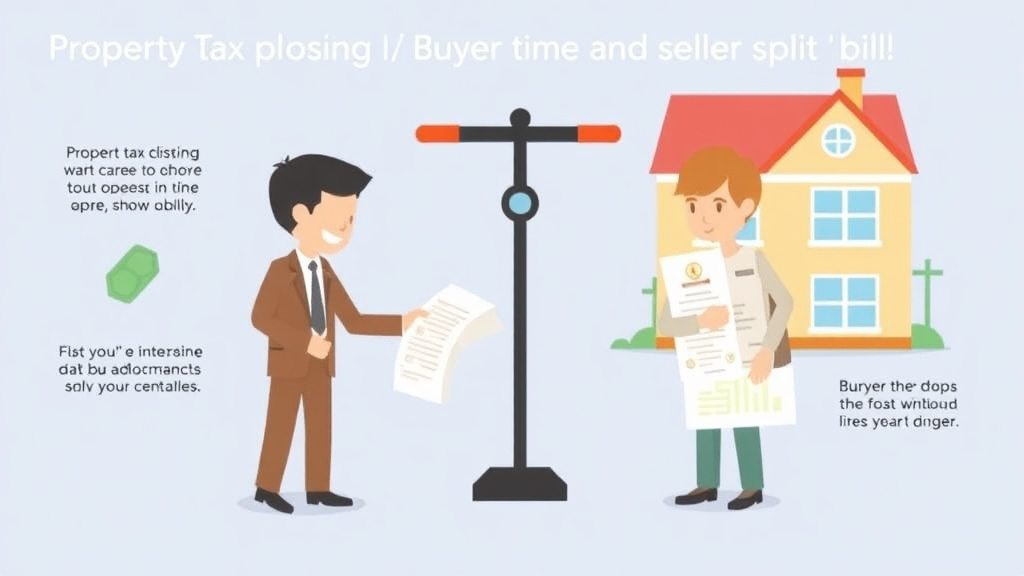
Property tax proration is how the annual property tax bill gets divided between buyer and seller at closing. The seller pays for the portion of the year they owned the home, and the buyer takes over from the closing date forward. The closing agent calculates the split on the settlement statement. Whether taxes are paid in advance or in arrears affects who owes what at closing. Getting this right prevents either party from paying more than their fair share for the time they owned the property.

What Is Property Tax Proration?
Property taxes cover a specific period, usually a calendar year or fiscal year. When a home sells mid-period, the tax needs to be split fairly between the buyer and seller based on how long each party owned the property during that period. This split is called proration.
The closing agent (title company, escrow officer, or attorney) calculates the proration and includes it as a credit or debit on the settlement statement (Closing Disclosure).
Paid in Arrears vs. Paid in Advance
How proration works depends on whether property taxes in your area are paid in advance or in arrears:
Taxes Paid in Arrears
In most states, property taxes are paid in arrears, meaning you pay for a period that has already passed. For example, a tax bill due in November 2026 covers January through June 2026.
When taxes are paid in arrears and you sell mid-year, the seller has been living in the home without having paid taxes for that period yet. At closing, the seller gives the buyer a credit for the seller's portion of the unpaid taxes. The buyer then pays the full bill when it comes due.
Taxes Paid in Advance
In a few states, taxes are paid in advance, meaning you pay for a period that hasn't happened yet. If the seller already paid taxes for the rest of the year but is selling mid-year, the buyer owes the seller a credit for the portion the seller won't be living there.
How the Calculation Works
The basic proration calculation:
- Determine the annual (or semi-annual) tax amount
- Calculate the daily rate: Annual tax / 365 (or 366 in a leap year)
- Count the days: Number of days each party owns the home during the tax period
- Multiply: Daily rate x number of days = each party's share
Example: Taxes Paid in Arrears
| Item | Amount |
|---|---|
| Annual property tax | $6,000 |
| Daily rate | $6,000 / 365 = $16.44 |
| Closing date | September 15 |
| Seller's days (Jan 1 - Sep 14) | 257 days |
| Seller's share | 257 x $16.44 = $4,225 |
| Buyer's days (Sep 15 - Dec 31) | 108 days |
| Buyer's share | 108 x $16.44 = $1,775 |
Since taxes haven't been paid yet (arrears), the seller credits the buyer $4,225 at closing. The buyer will pay the full $6,000 tax bill when it comes due and is effectively out only their $1,775 share.
Example: Taxes Paid in Advance
If the seller already paid the full $6,000 for the year and closes on September 15, the buyer credits the seller $1,775 for the remaining 108 days the seller already paid for but won't be living there.
What Shows Up on Your Closing Disclosure
Property tax prorations appear on the Closing Disclosure (formerly HUD-1) under the proration/adjustments section. You'll see something like:
- For the seller (credit to buyer): "Property taxes, Jan 1 to Sep 14 at $16.44/day: $4,225.00"
- For the buyer (debit): A corresponding debit that reduces the seller's proceeds
The proration is automatic, calculated by the closing agent. But you should verify the math. Errors happen, and they can go either way.
Common Proration Methods
Calendar Year Method
The most common. Taxes are prorated based on the calendar year (January 1 to December 31). The daily rate uses 365 days.
Fiscal Year Method
Some states (notably California) use a fiscal year (July 1 to June 30). The proration is calculated based on the fiscal year period.
30-Day Month Method
Some areas use a simplified method where each month is treated as 30 days and the year is 360 days. This slightly changes the daily rate but simplifies the calculation.
Short Proration vs. Long Proration
In a "short proration," the seller is responsible only through the day before closing. In a "long proration," the seller is responsible through the day of closing. This is a small difference (one day's tax), but it's defined by local custom and should be specified in the purchase agreement.
What Happens When Tax Bills Haven't Been Issued Yet
Sometimes a home sells before the current year's tax bill has been issued. In this case, the proration is based on the previous year's tax bill (or an estimate). The settlement statement will note that the proration is based on estimated taxes.
If the actual bill comes in higher or lower than the estimate, the buyer and seller may need to make a post-closing adjustment. Whether this adjustment happens depends on what the purchase agreement says. Many contracts include a clause addressing estimated vs. actual tax prorations.
Special Situations
Homestead Exemption Changes
If the seller has a homestead exemption that the buyer won't qualify for (or vice versa), the proration should account for this. The seller's share might be based on the exempted tax amount, while the buyer's share is based on the non-exempted amount. This can create confusion; make sure the closing agent handles it correctly.
Supplemental Taxes
In states like California, a change of ownership triggers a supplemental tax bill. This is separate from the regular proration and is typically the buyer's responsibility, though it can be negotiated.
Delinquent Taxes
If the seller has unpaid back taxes, they must be paid at closing. The title company will not transfer clear title with outstanding tax liens. The delinquent amount (plus penalties and interest) is deducted from the seller's proceeds.
Tax Reassessment After Sale
In states where a sale triggers reassessment, the buyer should know that their future tax bill may be significantly different from the prorated amount at closing. The proration is based on the current (pre-sale) assessment. The post-sale reassessment could increase taxes substantially. More on how purchase price affects taxes.
How to Verify Your Proration
- Confirm the tax amount used in the calculation (check the county assessor's website).
- Verify whether taxes are paid in arrears or advance in your jurisdiction.
- Count the days and do the math yourself.
- Check whether the proration uses the calendar year or fiscal year.
- Ask the closing agent to explain any discrepancies.
Try our free tools
Frequently Asked Questions
Who pays property taxes at closing, the buyer or seller?
Both. The seller pays for the time they owned the home, and the buyer pays for the time from closing forward. This is handled through credits and debits on the settlement statement. In arrears states, the seller typically provides a credit to the buyer. In advance-pay states, the buyer typically provides a credit to the seller.
Can the buyer and seller agree to split taxes differently?
Yes. The proration method is negotiable and should be specified in the purchase agreement. Some contracts call for the seller to pay taxes through the day of closing; others say the day before. The financial difference is usually minimal, but it should be agreed upon in advance.
What if the tax bill comes in higher than the prorated estimate?
If the purchase agreement includes a reproration clause, the buyer and seller adjust the difference after the actual bill is issued. If the agreement doesn't address this, the buyer typically absorbs any difference. Discuss this with your real estate agent before closing.
Are prorated property taxes tax-deductible?
Yes. Both the buyer and seller can deduct the property taxes they actually paid (or were credited for) during the tax year. The seller deducts taxes through the closing date. The buyer deducts taxes from the closing date forward. Both are subject to the $10,000 SALT cap.
Does the proration cover special assessments?
It depends on the purchase agreement. Regular property taxes are almost always prorated. Special assessments may or may not be prorated depending on whether they're for ongoing maintenance or a capital improvement. This should be addressed in the contract.
What happens if the seller's escrow account has a balance?
The seller's escrow account is closed after the sale. Any remaining balance is refunded to the seller by their lender, usually within 20-45 days. The proration at closing is separate from the escrow refund.
How does proration work for a mid-year purchase in California?
California uses a fiscal year (July 1 to June 30). Taxes are due in two installments: November 1 and February 1. The proration is calculated from the beginning of the fiscal year or from the last installment payment date through the closing date, depending on when in the year the sale occurs.
Can I see the proration calculation before closing?
Yes. You should receive the Closing Disclosure at least 3 business days before closing. Review the tax proration line items carefully. If anything looks wrong, raise it with the closing agent before signing.
Buying a Home? Know What Your Taxes Will Really Be.
The prorated amount at closing is based on the seller's tax bill. Your future bill could be very different, especially in states that reassess on sale. TaxFightBack helps prospective buyers estimate their real property tax liability and identify potential issues before they become expensive surprises.