Property Taxes in Michigan: Rates, Exemptions, and How They Work (2026)
TL;DR
Michigan property taxes revolve around two key values: State Equalized Value (SEV) at 50% of market value, and Taxable Value, which is capped at the lesser of 5% or CPI increase per year under Proposal A. The cap resets ("uncaps") to SEV when the property transfers, which can mean a large tax increase for buyers. The Principal Residence Exemption (PRE) eliminates 18 mills of school operating tax on your primary home. Appeal to the March Board of Review, then the Michigan Tax Tribunal if needed. Average effective rate is about 1.38%.

Most guides on property Taxes in Michigan: Rates, Exemptions, and How They Work (2026) skip the details that matter. Most guides on property Taxes in Michigan: Rates, Exemptions, and How They Work (2026) skip the details that matter.
If you qualify for multiple exemptions, apply for all of them. In most jurisdictions, exemptions stack. A senior homeowner who is also a veteran can often claim both exemptions simultaneously, doubling the savings.
SEV vs Taxable Value
Michigan has two values on your property record:
| Value | Definition | How It Changes |
|---|---|---|
| State Equalized Value (SEV) | 50% of market value | Changes with market conditions |
| Taxable Value | The value taxes are calculated on | Capped at 5% or CPI increase/year (Proposal A) |
Your taxes are based on Taxable Value, not SEV. For long-term owners, Taxable Value is often well below SEV, providing significant tax savings.
Uncapping on Transfer
When a property is sold or transferred, the Taxable Value "uncaps" and resets to SEV (50% of market value). This can cause a dramatic tax increase for the new owner. A home with a Taxable Value of $80,000 and an SEV of $150,000 would see the new owner's taxable value jump from $80,000 to $150,000.
Principal Residence Exemption (PRE)
If you live in the home as your primary residence, you qualify for the PRE, which eliminates 18 mills of school operating tax. This saves roughly $18 per $1,000 of taxable value. On a home with $150,000 taxable value, that is $2,700/year in savings.
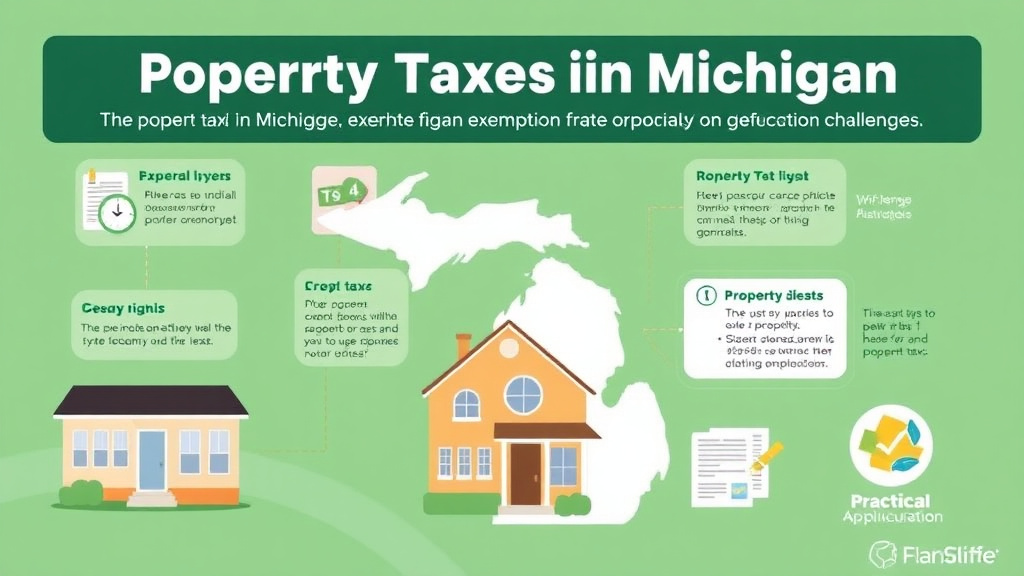
File Form 2368 with your local assessor by June 1 to receive the PRE for that tax year.
Do not assume you are automatically enrolled. Most exemptions require an application, and many homeowners lose years of savings simply because they never filed. Contact your county assessor's office or check their website for the application form. Bring proof of eligibility (age verification, disability documentation, veteran status, etc.) and file well before the deadline.
If you qualify for multiple exemptions, apply for all of them. In most jurisdictions, exemptions stack. A senior homeowner who is also a veteran can often claim both exemptions simultaneously, doubling the savings.
Other Exemptions
| Exemption | Benefit | Who Qualifies |
|---|---|---|
| Poverty Exemption | Partial or full exemption | Household income below federal poverty guidelines |
| Disabled Veterans | Full exemption | 100% disabled veterans |
| Agricultural (PA 116) | Reduced assessment for farmland | Qualifying agricultural properties |
Do not assume you are automatically enrolled. Most exemptions require an application, and many homeowners lose years of savings simply because they never filed. Contact your county assessor's office or check their website for the application form. Bring proof of eligibility (age verification, disability documentation, veteran status, etc.) and file well before the deadline.
If you qualify for multiple exemptions, apply for all of them. In most jurisdictions, exemptions stack. A senior homeowner who is also a veteran can often claim both exemptions simultaneously, doubling the savings.
Appeal Process
- March Board of Review: File a protest by the first Monday in March (or Tuesday). Hearings through mid-March.
- July Board of Review: For hardship/poverty exemptions and certain corrections
- Michigan Tax Tribunal: Appeal within 35 days of Board of Review decision. Small Claims Division for residential under $100,000 SEV.
The appeal process is designed to be accessible to regular homeowners, not just attorneys and tax professionals. You do not need to hire anyone to file. The key is preparation. Gather your evidence before the hearing, organize it clearly, and practice presenting your case in under 10 minutes. Lead with comparable sales, then cover any property record errors, and finish with photos or documentation of condition issues.
Keep your tone professional and factual. Review boards respond to evidence, not complaints. If you walk in with 3 strong comparable sales and a calm, organized presentation, you are already ahead of most appellants.
Payment Schedule
Summer taxes due July 1 (delinquent September 14). Winter taxes due December 1 (delinquent February 14 with 1% interest per month). Delinquent taxes are turned over to the county treasurer on March 1.
Check your Michigan assessment with our free property tax analyzer. The uncapping on transfer makes accurate initial assessment critical for new homeowners.
Even if you are appealing your assessment, you typically must pay your tax bill on time. Failing to pay while appealing can trigger penalties and interest charges that offset any savings from a successful appeal. Pay the amount due, and if your appeal succeeds, you will receive a refund or credit for the overpayment.
If paying the full amount creates a hardship, check whether your jurisdiction offers installment plans or partial payment options. Some counties allow you to pay the undisputed portion while your appeal is pending.
Your Next Steps
Here is exactly what to do this week to start lowering your Michigan property taxes:
- Pull your property record card. Contact your county assessor's office or check their website. Compare every detail to your actual property. Flag anything that looks wrong.
- Check recent sales in your neighborhood. Look up 3 to 5 homes similar to yours that sold in the past 12 months. If they sold for less than your assessed value, you have a case.
- File for any exemptions you have not claimed. If you are a senior, veteran, or disabled homeowner in Michigan, there may be exemptions saving you hundreds or thousands per year that you have not applied for yet.
- Mark your appeal deadline. Find the date on your most recent assessment notice and set a reminder for two weeks before. Do not let the deadline pass without acting.
Try our free tools
Frequently Asked Questions
How are property taxes calculated in Michigan?
Michigan property taxes revolve around two key values: State Equalized Value (SEV) at 50% of market value, and Taxable Value, which is capped at the lesser of 5% or CPI increase per year under Proposal A. The cap resets ('uncaps') to SEV when the property is sold.
How do they compare in terms of sev vs taxable value?
Michigan has two values on your property record: State Equalized Value (SEV) which is 50% of market value and changes with market conditions, and Taxable Value which is the value taxes are calculated on and is capped at 5% or CPI increase per year (Proposal A). For long-term owners, Taxable Value is often well below SEV, providing significant tax savings.
What is the principal residence exemption (PRE) in Michigan?
If you live in the home as your primary residence, you qualify for the PRE, which eliminates 18 mills of school operating tax. This saves roughly $18 per $1,000 of taxable value. On a home with $150,000 taxable value, that is $2,700/year in savings.
When are property taxes due in Michigan?
Summer taxes are due July 1 (delinquent September 14). Winter taxes are due December 1 (delinquent February 14 with 1% interest per month). Delinquent taxes are turned over to the county treasurer on March 1.