How Reassessment Affects Your Property Tax Bill: Before vs After
A reassessment updates your home's assessed value to reflect current market conditions. In a rising market, that usually means a higher assessment and a bigger tax bill. The average reassessment increase is 10% to 30%, but in hot markets, increases of 40% to 60% are common. Here's exactly what happens during a reassessment, how it changes your bill, and what you can do about it.
TL;DR
- Reassessments update your home's assessed value, typically every 1 to 5 years depending on your state
- In rising markets, reassessments increase assessments by 10% to 60%
- Your tax bill changes based on the new assessment times the current tax rate
- Some states cap how much your assessment can increase annually (2% to 10%)
- You can appeal a reassessment if the new value exceeds actual market value
What Is a Reassessment?
A reassessment (also called reappraisal or revaluation) is when your county assessor updates the assessed values of all properties to reflect current market conditions. This is different from a simple annual adjustment, where values are changed by a flat percentage.
Reassessment cycles vary by state:
| Reassessment Frequency | States |
|---|---|
| Annual | Texas, Georgia, Idaho, Indiana, Iowa, Kansas |
| Every 2 years | Washington, Montana |
| Every 3 years | Illinois (Cook County), Ohio, Kentucky |
| Every 4-5 years | Michigan, Minnesota, North Carolina, South Carolina |
| Every 5-10 years | Connecticut, New York (varies by jurisdiction) |
| Rarely/Irregularly | New Jersey, Pennsylvania (some counties decades between) |
| On sale only | California (Prop 13) |
Before vs. After: Real Numbers
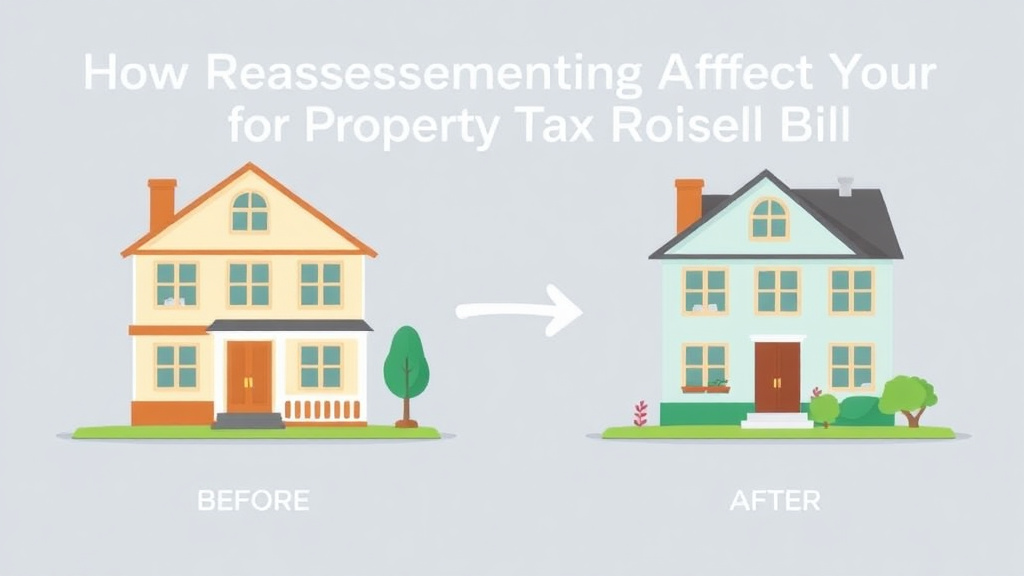
Here's what a typical reassessment looks like for a homeowner:
| Item | Before Reassessment | After Reassessment | Change |
|---|---|---|---|
| Assessed value | $280,000 | $370,000 | +$90,000 (+32%) |
| Homestead exemption | -$50,000 | -$50,000 | No change |
| Taxable value | $230,000 | $320,000 | +$90,000 |
| Tax rate | 2.0% | 2.0% | No change |
| Annual tax bill | $4,600 | $6,400 | +$1,800 (+39%) |
| Monthly impact (escrow) | $383 | $533 | +$150/month |
A $90,000 increase in assessed value translates to $1,800 more per year, or $150 more per month in your mortgage payment if you pay through escrow. That's a meaningful hit to your monthly budget.
Why Assessments Go Up After Reassessment
Rising Home Prices
The primary driver. Between reassessment cycles, home values often increase substantially. A home worth $280,000 five years ago might genuinely be worth $370,000 today. The reassessment catches up to reality.
Mass Appraisal Methods
Assessors don't inspect every home individually. They use statistical models and comparable sales data to value neighborhoods in bulk. These models can over-estimate individual homes, especially when they don't account for condition, updates, or unique features.
New Construction Effect
New homes built in your area often sell at premium prices. If the assessor uses those sales as comparables for your older home, your assessment may be inflated.
States With Assessment Increase Caps
Some states limit how much your assessment can increase, even after a reassessment:
| State | Cap | Details |
|---|---|---|
| California | 2% per year | Prop 13 - only reassessed at sale or new construction |
| Florida | 3% per year | Save Our Homes - homesteaded properties only |
| Michigan | 5% or inflation (lower of) | Taxable value increase cap |
| Oregon | 3% per year | Measure 50 - assessed value vs. real market value |
| Arkansas | 5% per year | Amendment 79 |
| Texas | 10% per year (homestead) | For homesteaded properties only |
| New York | 6% per year (some classes) | Class 1 residential in NYC |
If you live in a cap state, the cap limits the damage from a reassessment. But if you recently purchased the home, you don't have the accumulated benefit of years of capped increases.
How to Respond to a Reassessment Increase
Step 1: Review the Assessment Notice
When you receive your assessment notice, compare the new value to the old one. Check whether the property characteristics are correct. See our error-checking guide.
Step 2: Compare to Market Evidence
Look at recent sales of comparable homes. If homes similar to yours sold for less than your new assessed value, you have grounds for an appeal.
Step 3: File an Appeal If Warranted
You have a limited window after receiving your notice, typically 30 to 90 days. Don't miss it. Even if you're not sure you have a case, it's usually free to file and you can always withdraw later.
Step 4: Check Your Exemptions
Make sure your homestead exemption and any other exemptions are still in place. A reassessment can sometimes cause exemptions to be dropped accidentally.
Reassessment vs. Tax Rate Changes
There's a common misconception that when assessments go up, tax rates should come down to keep revenue neutral. Some states require this (like truth-in-taxation laws in Texas). Others don't.
In practice, even when tax rates are adjusted downward after reassessment, the reduction rarely offsets the full assessment increase. You still pay more. The rate might drop from 2.0% to 1.85%, but your assessed value went up 30%. You're paying more.
Preparing for the Next Reassessment
- Know your cycle. Find out when your next reassessment is scheduled and mark your calendar.
- Monitor comparable sales. Track what homes in your area are selling for so you know what to expect.
- Fix property record errors now. Don't wait until after the reassessment to correct square footage or other errors.
- File for every exemption you qualify for. Exemptions reduce the impact of any assessment increase.
- Budget for the increase. If your area is appreciating, expect your next assessment to go up. Plan for higher monthly payments.
If your reassessment seems too high, don't just accept it. Run a free assessment check to see how your new value compares to actual market data, and find out if an appeal makes sense.
Your Next Steps
Put this information to work this week:
- Review your assessment notice. Check every detail: assessed value, property characteristics, square footage, lot size. Errors are more common than you think and they directly inflate your tax bill.
- Pull comparable sales. Find 3 to 5 similar properties near you that sold recently for less than your assessed value. This is the strongest evidence for any appeal.
- Check your exemption status. Contact your county assessor to confirm which exemptions are on file for your property. You may qualify for programs you have not applied for.
- Set a deadline reminder. Find your appeal deadline and put it on your calendar with a 2-week advance warning. Missing it costs you a full year of potential savings.
Try our free tools
Frequently Asked Questions
How Reassessment Affects Your Property Tax Bill: Before vs After?
A reassessment updates your home's assessed value to reflect current market conditions. In a rising market, that usually means a higher assessment and a bigger tax bill. The average reassessment increase is 10% to 30%, but in hot markets, increases of 40% to 60% are common.
What Is a Reassessment??
A reassessment (also called reappraisal or revaluation) is when your county assessor updates the assessed values of all properties to reflect current market conditions. This is different from a simple annual adjustment, where values are changed by a flat percentage.
How do they compare in terms of before vs. after: real numbers?
Here's what a typical reassessment looks like for a homeowner:
Why Assessments Go Up After Reassessment?
The primary driver is that between reassessment cycles, home values often increase substantially. A home worth $280,000 five years ago might genuinely be worth $370,000 today. The reassessment catches up to this reality. Assessors don't inspect every home individually, but rather use statistical models and comparable sales data to value neighborhoods in bulk.
How do assessment increase caps affect my tax bill?
Some states limit how much your assessment can increase, even after a reassessment. This can help keep your tax bill more stable, like the 2% cap in California under Proposition 13 or the 3% cap for homesteaded properties in Florida under Save Our Homes.
How to Respond to a Reassessment Increase?
When you receive your assessment notice, compare the new value to the old one and check whether the property characteristics are correct. Look at recent sales of comparable homes, and if homes similar to yours sold for less than your new assessed value, you have grounds for an appeal. You can then file an appeal with your local assessment review board.
How do they compare in terms of reassessment vs. tax rate changes?
There's a common misconception that when assessments go up, tax rates should come down to keep revenue neutral. Some states require this (like truth-in-taxation laws in Texas). Others don't.