New Construction Property Tax Assessment: How Your New Home Gets Taxed
You built a new home. Now the county has to figure out what it's worth for property tax purposes. This assessment process for new construction is different from existing homes, and getting it wrong can mean overpaying for years. Understanding how new construction is assessed gives you the power to catch errors and challenge inflated values early.
TL;DR
- New construction is typically assessed at its full market value upon completion
- The assessor uses construction costs, comparable sales, or both to determine value
- Your first assessment is the most important one to check for accuracy
- Construction cost does not always equal market value (and you should argue the difference)
- File for homestead exemption immediately after you move in
How Assessors Value New Construction
When a new home is built, the assessor doesn't have sales history to reference (nobody's bought or sold it yet). Instead, they use one or more of these methods:
Cost Approach
This is the most common method for new construction. The assessor estimates what it would cost to build your home from scratch, including materials, labor, and profit. Then they add the land value.
The formula: Land Value + Construction Cost - Depreciation = Assessed Value
For a brand-new home, depreciation is zero, so you're assessed at full construction cost plus land. The problem is that the assessor's cost estimate may differ from your actual construction cost, sometimes significantly.
Comparable Sales Approach
If similar new homes in your area have sold recently, the assessor may use those sales as benchmarks. This is often more accurate than the cost approach because it reflects what buyers actually pay for comparable new construction.
The Gap Between Cost and Value
Here's the key insight: what it costs to build a home and what it's worth on the market aren't always the same. You might spend $400,000 building a home in a neighborhood where comparable homes sell for $350,000. The market value is $350,000, not $400,000, regardless of what you spent.
This happens often with custom builds, premium finishes, and over-improvements for the neighborhood. If your assessment is based on construction cost but the market value is lower, you have strong grounds for an appeal.
The Assessment Timeline
Here's what typically happens:
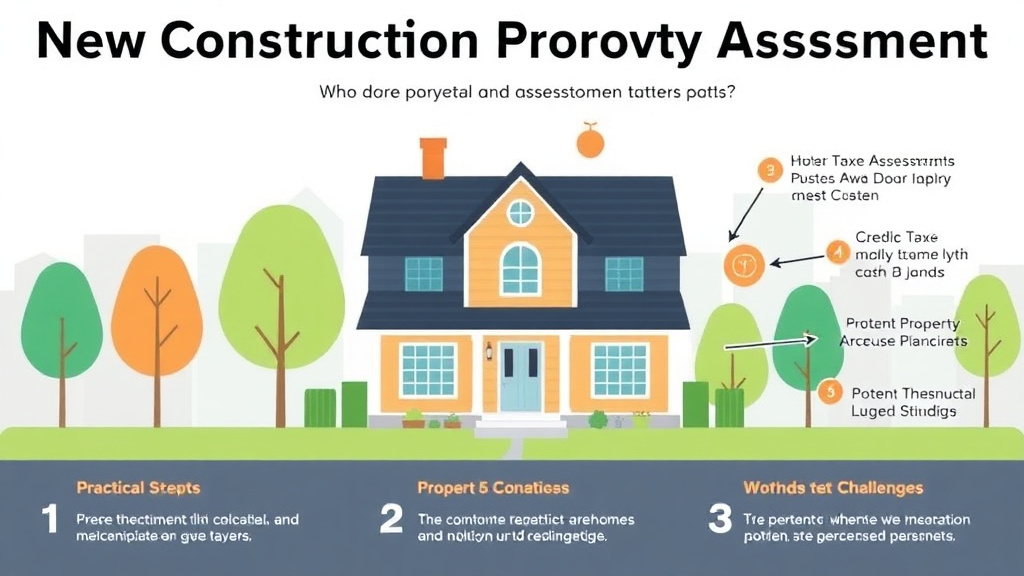
- During construction: Your property is assessed as vacant land (or land plus partial construction in some states).
- Certificate of Occupancy issued: The assessor is notified that the home is complete.
- First full assessment: The assessor values the completed home for the next tax year. This is usually effective January 1 following completion.
- Supplemental assessment (some states): States like California issue a supplemental tax bill that covers the difference between the old assessment (vacant land) and the new assessment (completed home) for the remainder of the current tax year.
California Supplemental Tax Bills
If you build in California, expect two supplemental tax bills: one when the property changes ownership or new construction occurs. These cover the prorated tax difference for the current fiscal year. They can be several thousand dollars and often come as a surprise.
What to Check on Your First Assessment
Your first assessment is the most important one to review carefully. Errors made now stick around for years. Check for:
- Square footage: Compare the assessor's recorded square footage to your actual floor plans. Even small discrepancies add up.
- Construction quality classification: Assessors categorize homes by quality (economy, standard, good, excellent, luxury). If your home is classified higher than it should be, every square foot is valued at a premium rate.
- Feature count: Number of bedrooms, bathrooms, garage bays, fireplaces. Make sure these match reality.
- Lot size: The recorded lot acreage or square footage should match your survey.
- Effective year built: For a new build, this should be the year of completion.
- Amenities: Pools, outbuildings, decks. If the assessor added features you don't have, or overstated what you do have, it inflates the value.
Why New Homes Are Often Over-Assessed
New construction gets over-assessed more often than existing homes for several reasons:
- Cost overruns become part of the assessment. If you went over budget on construction, the assessor may use your actual costs (from permit records) rather than market value. Those cost overruns don't translate dollar-for-dollar into market value.
- Custom features get valued at cost. A $30,000 gourmet kitchen that only adds $15,000 in market value is still assessed at $30,000 using the cost approach.
- The neighborhood may not support the value. Building a $600,000 home in a $450,000 neighborhood means the market value is constrained by what buyers will pay in that area.
- Assessors default to the highest quality class. New construction is often automatically classified as "good" or "excellent" quality even when it uses standard materials.
How to Appeal a New Construction Assessment
If your first assessment seems too high, appeal it immediately. Don't wait and hope it sorts itself out. Here's how:
- Gather comparable sales. Find 3-5 recently sold new homes of similar size, age, and quality in your area. If they sold for less than your assessed value, that's your evidence.
- Document the cost-value gap. If your actual construction cost was lower than the assessed value, bring contracts and invoices. If you spent more than market value (over-improvement), bring comparable sales showing the lower market value.
- Challenge the quality classification. If your home uses standard construction methods and materials but was classified as premium, bring specifications and photos.
- Correct any data errors. Bring floor plans, surveys, and specs to correct wrong square footage, lot size, or feature counts.
- File within the deadline. Appeal windows are typically 30-90 days after receiving your assessment notice.
Success rates on new construction appeals are solid because assessors often rely on cost estimates rather than market evidence. Bringing actual comparable sales frequently results in a meaningful reduction.
Builder Model Homes and Spec Homes
If you bought from a production builder, your purchase price is strong evidence of market value. If the builder sold the home for $380,000 and the assessor values it at $420,000, your closing documents support a lower assessment.
Watch out for:
- Upgrades and options: Builders often upsell upgrades (premium countertops, extended patios, smart home packages). These add to your purchase price but may not add equivalent market value.
- Builder concessions: If the builder paid closing costs or gave you credits, your effective purchase price is lower than the contract price. This matters for determining market value.
- Model home premiums: If you bought a model home, you may have paid a premium for the staged furnishings and lot location. The assessment should reflect the home's value, not the premium you paid for the model designation.
Don't Forget: File Your Homestead Exemption
New construction doesn't come with a homestead exemption pre-installed. As soon as you receive your certificate of occupancy and move in, file for your homestead exemption. This can save you $500-$2,000+ per year on top of any assessment reduction from an appeal.
Also check whether your area offers property tax abatement programs for new construction. In some cities, new builds qualify for 5-15 years of reduced taxes.
Try our free tools
Frequently Asked Questions
How are property taxes assessed on a new construction home?
The assessor typically uses the cost approach: estimating what the home would cost to build new, then adding land value. Comparable sales of similar new homes are also considered. The assessment is done after the certificate of occupancy is issued and takes effect the following tax year in most states.
When do I start paying property taxes on a new build?
During construction, you pay taxes on the land value (and any partial construction value). Once the home is complete and the certificate of occupancy is issued, you pay taxes on the full improved value starting the next assessment cycle. In some states like California, a supplemental tax bill covers the difference for the current year.
Are property taxes higher on new construction?
Often yes, compared to older homes of similar size. New homes are assessed at current construction costs with zero depreciation. An older home of the same size has depreciation factored in, lowering its assessed value. New homes also tend to have higher quality classifications.
Can I appeal the assessment on a home I just built?
Absolutely. You have the same appeal rights as any other homeowner. In fact, new construction assessments are more likely to be inflated because they're based on cost estimates rather than actual market transactions. Bring comparable sales data and your actual construction costs to the appeal hearing.
Does the builder tell the assessor what I paid?
In states that require disclosure of sale prices (like most states), yes. The deed or transfer documents filed at closing include the sale price, which the assessor can access. In non-disclosure states (like Texas), the assessor doesn't automatically know your purchase price, but you can voluntarily share it during an appeal if it supports a lower value.
How long after building do property taxes stabilize?
The first assessment after completion sets the baseline. After that, the value changes based on your state's reassessment cycle (annually in some states, every 2-5 years in others). Most homeowners see their assessments stabilize after the initial post-construction assessment, with gradual increases reflecting market trends.
Do unpermitted additions affect the assessment?
If the assessor doesn't know about them, they won't be included. But unpermitted work creates liability issues with insurance, resale, and safety. If discovered later, the assessor will add the value retroactively in some jurisdictions.
Will my property taxes go up faster on a new home?
Not necessarily. After the initial assessment, your home is subject to the same reassessment rules as every other property. In states with assessment caps (California's 2% limit, Florida's 3% Save Our Homes cap), your increases are limited just like existing homes once you qualify.
What if the assessor visits before construction is complete?
An assessment based on incomplete construction should be lower than the final assessment. Make sure you're not being charged for the full home until it's actually complete. If you receive an assessment that assumes completion but you're still building, contact the assessor immediately.
How do property taxes on a new condo differ from a new house?
New condos are assessed individually based on their unit value, which is typically derived from the sales price plus an allocation of common area value. The assessment process is similar to single-family homes, but the values tend to be more standardized within a building since units of the same floor plan sold for similar prices.
Get Your Assessment Right From the Start
The assessment set on your new home becomes the baseline for years of property tax bills. Getting it right from day one saves you money every year going forward. Review your first assessment carefully, check for errors, and don't hesitate to appeal if the numbers don't add up.
TaxFightBack helps new homeowners review their initial assessments and build strong appeal cases when values are inflated. Whether you built custom or bought from a production builder, we can help make sure you're not overpaying from the start.