What to Do Before Your Property Tax Hearing: Preparation Guide
TL;DR
Your property tax hearing is your one shot to make your case in front of the review board. Most hearings last 10-20 minutes, so preparation is everything. Bring 3-5 comparable sales, photos of condition issues, a one-page summary of your argument, and enough copies for each board member. Lead with your strongest evidence, stay factual, and do not argue about tax rates. The board can only change your assessed value, so focus your entire presentation on proving the assessor's number is too high.
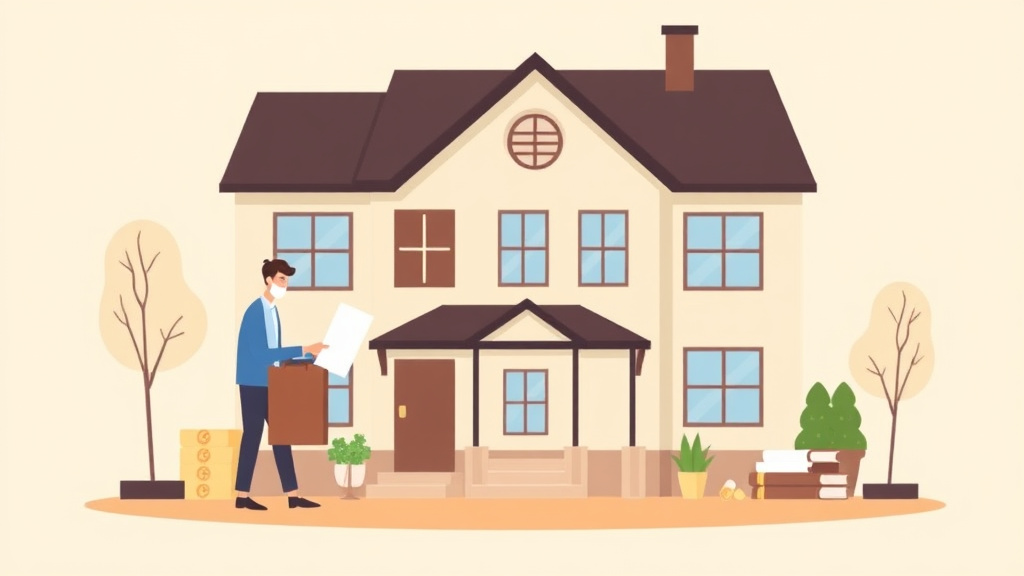
What to Expect at a Property Tax Hearing
If you have never been to a property tax hearing, the idea might seem intimidating. It is not. Most hearings are informal proceedings in a conference room or government building. There is no judge, no jury, and no courtroom drama. A review board of 2-5 members listens to your case, hears from the assessor's representative, and makes a decision.
The typical flow looks like this:
- You are called up and sworn in (in some jurisdictions)
- You present your case and evidence (5-15 minutes)
- The assessor's representative presents their position (5-10 minutes)
- Board members may ask questions
- You may get a chance to respond to the assessor's points
- The board deliberates and issues a decision (sometimes on the spot, sometimes by mail later)
That is it. The whole thing is usually over in 15-20 minutes. The key is making those minutes count.
Two Weeks Before: Build Your Evidence
The hearing is won or lost before you walk in the door. Here is what to prepare:
Comparable Sales (Your Best Weapon)
Comparable sales are the foundation of almost every successful appeal. You need 3-5 sales of homes similar to yours that support a lower value.
For each comp, document:
| Detail | Why It Matters |
|---|---|
| Address | Shows proximity to your property |
| Sale date | More recent = more relevant |
| Sale price | The actual market evidence |
| Square footage | Allows apples-to-apples comparison |
| Lot size | Adjusts for land value differences |
| Bedrooms / Bathrooms | Shows similarity to your home |
| Year built | Age affects value |
| Price per square foot | The most useful comparison metric |
Choose comps that are close to your home (within half a mile if possible), recent (sold within the last 12 months), and genuinely comparable in size, age, and condition. Do not cherry-pick the cheapest sales in town. The board will see through that, and it hurts your credibility.
Assessment Equity Evidence
In addition to comparable sales, check whether similar homes in your area are assessed at lower values. If your neighbor's house is nearly identical to yours but assessed at $30,000 less, that is a strong equity argument.
Pull assessment records for 3-5 similar nearby properties from your county assessor's website. Create a simple comparison showing the assessment per square foot for each property versus yours.
Photos and Documentation
If your home has condition issues that reduce its value, document them with photos:
- Roof damage or aging
- Foundation cracks or settling
- Water damage
- Outdated kitchen or bathrooms
- Needed repairs (HVAC, electrical, plumbing)
- Negative external factors (proximity to commercial property, highway noise, flooding risk)
Date your photos and label them clearly. "Cracked foundation, east wall, March 2026" is more persuasive than an unlabeled photo.
Repair Estimates
Written quotes from licensed contractors carry weight. If your roof needs replacing ($12,000-$20,000) or your HVAC is failing ($5,000-$10,000), those costs directly reduce what a buyer would pay for your home.
Property Record Errors
If the assessor has wrong information about your home, bring documentation proving the correct details. A professional appraisal, your home's actual measurements, building permits, or a survey all work.
One Week Before: Organize Your Presentation
Create a One-Page Summary
This is the single most effective thing you can bring. Board members hear dozens of cases in a day. Make it easy for them to understand yours at a glance.
Your summary should include:
- Your name, property address, and parcel number
- Current assessed value
- Your opinion of value
- 3-4 bullet points explaining why (key comps, data errors, condition issues)
Keep it to one page. Hand a copy to each board member at the start of your presentation.
Practice Your Presentation
You have 10-15 minutes. Practice saying your key points out loud. Time yourself. Hit these beats:
- State your name, address, and what you believe your home is worth (30 seconds)
- Present your comparable sales (3-5 minutes)
- Address any data errors on the property record (1-2 minutes)
- Discuss condition issues if applicable (1-2 minutes)
- Summarize your request (30 seconds)
Do not read from a script. Know your material well enough to have a conversation about it.
Print Your Materials
Bring enough copies for every board member plus one for yourself and one for the assessor's representative. Call ahead to find out how many board members typically hear cases. Five copies is usually safe.
The Day Before: Final Prep
- Confirm the time and location of your hearing
- Organize your materials in a folder or binder
- Review your key points one more time
- Get a good night's sleep
At the Hearing: What to Do (and Not Do)
Do
- Arrive early. Give yourself time to find parking and the right room.
- Be polite and professional. The board members are volunteers in many jurisdictions.
- Lead with your strongest evidence. If you have a great comp that sold for well below your assessment, start there.
- Use specific numbers. "My home is assessed at $385,000 but three comparable homes sold for $330,000, $338,000, and $345,000" is a strong statement.
- Answer questions directly. If a board member asks you something, give a clear answer.
- Thank the board for their time when you are finished.
Do Not
- Do not argue about the tax rate or how much your bill is. The board has no control over rates.
- Do not compare your taxes to other states or cities. Irrelevant.
- Do not get emotional or angry. Stick to facts and data.
- Do not bash the assessor. Frame your case as "the data supports a different value" rather than "the assessor is wrong."
- Do not bring up your income, your inability to pay, or personal hardship. The board evaluates property value, not your financial situation.
- Do not lie or exaggerate. The board and assessor can verify your claims.
What If the Assessor Presents Evidence You Were Not Expecting?
The assessor may bring their own comparable sales that support the current value. This is normal. Listen carefully, take notes, and if you get a chance to respond:
- Point out differences between the assessor's comps and your property (size, condition, location, features)
- Note if their comps are further away or less recent than yours
- Explain why your comps are more representative of your property's actual market
After the Hearing
Some boards announce their decision at the hearing. Others mail it within a few weeks. If you receive a reduction, it will be reflected on your next tax bill. If the board upholds the current value, you usually have the right to appeal to a higher authority, such as a state tax tribunal or court.
For most homeowners, the initial hearing is where the case is decided. Second-level appeals are more formal and may benefit from professional help.
Try our free tools
Frequently Asked Questions
Do I need a lawyer?
No. The vast majority of residential property tax hearings are handled by homeowners without an attorney. The process is designed to be accessible. If your case involves complex commercial property or very high values, an attorney may be worth the cost.
Can my assessment go up as a result of the hearing?
In most states, no. The review board can reduce your value, uphold it, or in rare cases in some states, increase it. Check your state's rules before filing. In the vast majority of jurisdictions, there is no risk of an increase.
What if I cannot attend?
Most review boards allow you to submit your case in writing. Some offer phone or video hearings. Contact the board to ask about alternatives. If you cannot attend and written submission is not an option, some jurisdictions allow you to send a representative.
How long until I get a decision?
Anywhere from the same day to 6-8 weeks after the hearing, depending on your jurisdiction and how many cases the board is processing.
Build Your Hearing Evidence Packet Today
TaxFightBack pulls comparable sales, formats assessment comparisons, and generates a complete evidence packet you can bring to your hearing. Everything organized, printed-ready, and tailored to your property. $79 one-time. Get your evidence packet now.