Property Tax Assessment Notice Explained: How to Read It
TL;DR
Your property tax assessment notice is not just a bill. It tells you what the assessor thinks your home is worth, what data they used, and how long you have to dispute it. Most homeowners miss key details that could save them money. The critical things to check: your property details (square footage, bedrooms, lot size), the assessed value versus actual market value, any exemptions applied, and the appeal deadline. Errors in any of these areas mean you could be overpaying.
What Is a Property Tax Assessment Notice?
A property tax assessment notice is an official document from your county or local assessor telling you the value they have assigned to your property for tax purposes. It arrives by mail, usually once a year, though the timing varies by state. Some states send them in January, others in March or April, and a few as late as August.
This notice is different from your property tax bill. The notice shows the assessed value. The bill shows what you owe based on that value multiplied by the tax rate. You typically receive the notice first, giving you time to appeal the value before the bill arrives.
Think of the notice as your chance to check the assessor's work before it becomes your tax bill.
Anatomy of an Assessment Notice
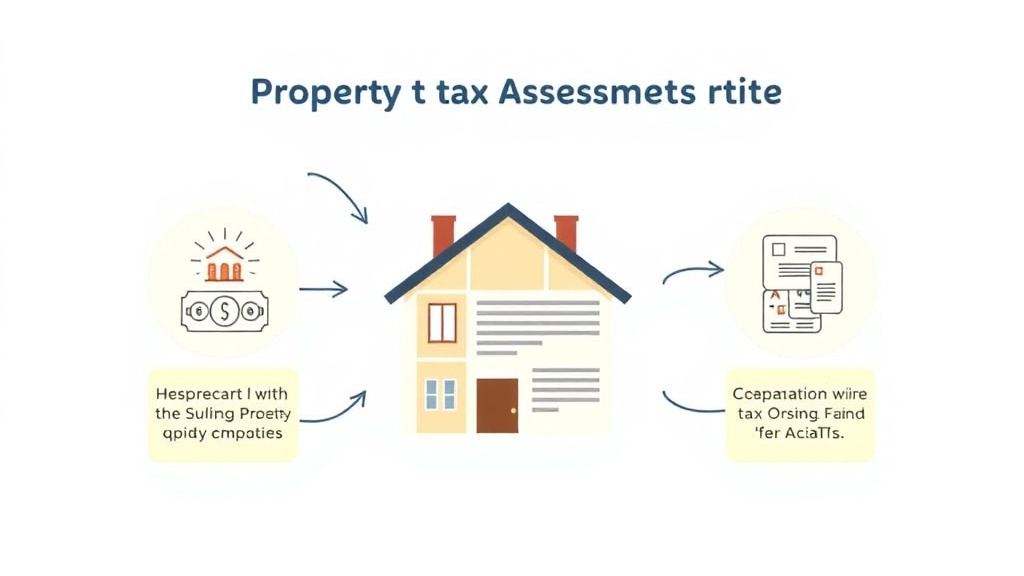
Assessment notices vary in format from county to county, but most contain the same core information. Here is what each section means and why it matters.
Property Identification
This section lists your property address, parcel number (also called APN, PID, or tax ID), and legal description. The parcel number is your property's unique identifier in the assessor's system. You will need it for any appeal filing, so keep it handy.
Property Characteristics
This is where the assessor lists the physical details of your property:
| Detail | What to Check | Why It Matters |
|---|---|---|
| Total living area (sq ft) | Compare to your home's actual measurements | Square footage is the biggest driver of assessed value |
| Lot size | Check against your deed or survey | Larger lots increase land value |
| Bedrooms / Bathrooms | Count your actual rooms | More rooms = higher value in the assessor's model |
| Year built | Check against building records | Newer homes are valued higher |
| Construction type | Verify material (brick, frame, etc.) | Different materials have different cost factors |
| Features | Pool, garage, fireplace, finished basement | Each feature adds to assessed value |
| Condition rating | Is it fair? Average? Good? | Higher condition ratings mean higher values |
This section is where factual errors hide. Assessors work from building permits, aerial photos, and sometimes decades-old records. A remodeling project that added square footage might be counted twice. A pool that was filled in years ago might still be on record. An extra bathroom the previous owner added to permit records but never actually built could be inflating your value.
Assessed Value
This is the number most homeowners jump to first. But understanding what it means requires knowing your state's rules.
In some states, the assessed value equals the full market value. In others, it is a fraction. For example:
- Ohio assesses at 35% of market value
- South Carolina assesses owner-occupied homes at 4%
- Georgia assesses at 40% of fair market value
- Many states use 100% of market value
Your notice may show both the "market value" and the "assessed value." If it only shows one number, check your state's assessment ratio to understand what the assessor thinks your home is actually worth on the open market.
Exemptions
This section shows any exemptions currently applied to your property. Common exemptions include:
- Homestead exemption for primary residences
- Senior citizen exemptions
- Veteran and disabled veteran exemptions
- Disability exemptions
- Agricultural or conservation exemptions
If you qualify for an exemption that is not listed, you are paying more than you should. Many homeowners do not realize they need to apply for exemptions. They do not happen automatically in most states.
Prior Year Comparison
Most notices show last year's value alongside the new value so you can see the change. A significant jump, say 15% or more, is worth investigating. While property values do rise, the assessor's estimate may be outpacing actual market conditions in your neighborhood.
Appeal Information
This is the most important section on the notice, and it is often the smallest. It tells you:
- The deadline to file an appeal (usually 30-90 days from the notice date)
- Where to file (county assessor, board of review, or assessment appeals board)
- How to file (online, by mail, or in person)
- What you need to include with your appeal
Write down the deadline immediately. Set a reminder on your phone. This is a hard deadline in most states, with no extensions.
How to Spot Overassessment on Your Notice
Reading the notice is step one. Evaluating whether the value is fair is step two. Here is how to check:
Compare to Recent Sales
Look at what similar homes in your area have actually sold for in the past 6-12 months. If your assessed market value is $400,000 but comparable homes are selling for $340,000-$360,000, the assessor has likely overvalued your property.
Compare to Neighbors
Check the assessed values of homes similar to yours on the same street or in the same subdivision. Most county assessor websites let you search by address. If your home is assessed significantly higher than comparable neighbors, that is an equity argument for a reduction.
Check for Data Errors
As mentioned above, wrong square footage, phantom bedrooms, or non-existent features can inflate your value. Even a small error in square footage, say 200 extra square feet, could mean thousands of dollars in over-assessment.
Consider Condition Issues
The assessor may rate your home's condition as "average" or "good" when it actually needs a new roof, has foundation issues, or has outdated electrical and plumbing. These condition factors affect value but are hard for assessors to know about without an interior inspection.
What to Do If the Numbers Look Wrong
If you have identified an error or believe your home is overassessed, you have two paths:
Path 1: Contact the Assessor
For factual errors, calling the assessor's office is often the fastest fix. Many offices will correct data errors (wrong square footage, non-existent pool, etc.) without a formal appeal. Bring documentation: your survey, appraisal, or photos showing the actual condition of the property.
Path 2: File a Formal Appeal
If the error is in the valuation itself (the assessor's opinion of what your home is worth), you will likely need to file a formal appeal. This involves submitting a form, presenting evidence, and attending a hearing before a review board.
The formal appeal process is more structured but still manageable without a lawyer. About 30-50% of homeowners who appeal get a reduction.
Common Types of Assessment Notices by State
Different states use different names for this document:
- Texas: "Notice of Appraised Value" from the county appraisal district
- California: "Notice of Assessed Value Change" from the county assessor
- Florida: "TRIM Notice" (Truth in Millage) from the property appraiser
- New York: "Tentative Assessment Roll" published by the assessor
- Illinois: "Notice of Assessment" from the township assessor
- Georgia: "Annual Notice of Assessment" from the county board of assessors
Regardless of the name, the purpose is the same: telling you the value assigned to your property and giving you a window to challenge it.
What If You Did Not Receive a Notice?
Not receiving a notice does not mean your assessment did not change. Some states only send notices when the value changes. Others publish the assessment roll online and expect homeowners to check it themselves.
If you did not receive a notice, check your county assessor's website for your current assessed value. Compare it to last year's value. If it changed and you were not notified, contact the assessor's office to find out if you still have time to appeal.
Try our free tools
Frequently Asked Questions
Is the assessed value the same as market value?
Not always. In states that assess at 100% of market value, they should be close. In states that use an assessment ratio (like 35% or 40%), the assessed value is a fraction of what the assessor estimates your home would sell for. Your notice may show both numbers.
Why did my assessment go up if I did not make any improvements?
The assessor adjusts values based on market conditions, not just improvements. If home prices in your area have risen, your assessment will likely increase even if your home has not changed at all.
Can I ignore the notice?
You can, but you should not. Ignoring the notice means accepting the assessed value and losing your right to appeal for another year. Even if the number looks reasonable, spend a few minutes checking the property details for errors.
How often do I get an assessment notice?
It depends on your state and county. Some send notices annually. Others only send them during reassessment years, which could be every 2, 3, 4, or even 8 years. Reassessment cycles vary widely across the country.
What is the difference between the notice and the tax bill?
The assessment notice tells you the value. The tax bill tells you what you owe. The notice comes first, giving you time to appeal the value before the bill is calculated. Once you receive the tax bill, it is usually too late to challenge the assessed value for that year.
Do Not Let the Deadline Pass
Your assessment notice contains a deadline. Once it passes, you are stuck with that number for another year. TaxFightBack analyzes your assessment, finds comparable sales, and builds your appeal evidence packet in minutes. For $79, you get everything you need to challenge an overassessment. Check your assessment now while you still have time.