Property Taxes vs HOA Fees: Understanding Both Monthly Costs
Property taxes and HOA fees are both recurring costs of homeownership, but they work completely differently. Property taxes are government-imposed based on your home's assessed value. HOA fees are set by your homeowners association for community services. You can appeal your property taxes. You generally can't negotiate your HOA fees. Understanding both helps you budget accurately and find savings where they exist.
TL;DR
- Property taxes fund government services (schools, roads, fire) and are based on assessed value
- HOA fees fund community services (landscaping, pools, maintenance) and are set by the HOA board
- Property taxes are deductible on federal returns (up to $10,000 SALT cap); HOA fees are not (unless rental property)
- You can appeal property taxes; HOA fees are generally fixed but can be influenced through board participation
- Both should be factored into your total housing budget before buying
Key Differences at a Glance
| Feature | Property Taxes | HOA Fees |
|---|---|---|
| Set by | Government (county/city/school district) | HOA board of directors |
| Based on | Assessed value x tax rate | Community budget / number of units |
| Typical annual cost | $2,000 - $12,000+ | $1,200 - $6,000+ |
| Tax deductible? | Yes (up to $10,000 SALT cap) | No (personal residence) |
| Can you appeal? | Yes | Generally no |
| What happens if you don't pay? | Tax lien, eventual foreclosure | HOA lien, possible foreclosure |
| Covers | Schools, roads, police, fire, parks | Landscaping, amenities, insurance, maintenance |
Understanding this topic fully means looking at both the big picture and the specific details that apply to your situation. Every property is different, and the strategies that save the most money are the ones tailored to your particular home, location, and circumstances.
Start by gathering the basic facts about your property: its assessed value, the tax rate in your jurisdiction, and any exemptions currently applied. Then compare your situation to what is available. You may find opportunities for savings that you did not know existed.
How Property Taxes Are Calculated
Property taxes use a simple formula: Assessed Value x Tax Rate = Annual Tax. Your county assessor determines the assessed value. The tax rate is set by the combined levies of your school district, county, city, and special districts.
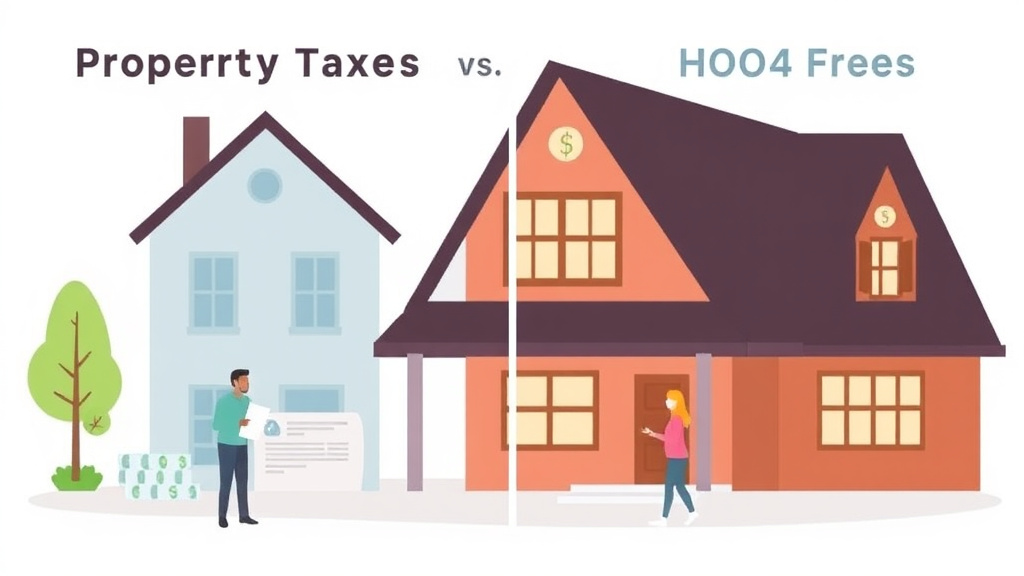
You have control over the assessed value through exemptions and appeals. If your home is over-assessed, you can challenge it and potentially save hundreds or thousands per year.
Understanding this topic fully means looking at both the big picture and the specific details that apply to your situation. Every property is different, and the strategies that save the most money are the ones tailored to your particular home, location, and circumstances.
Start by gathering the basic facts about your property: its assessed value, the tax rate in your jurisdiction, and any exemptions currently applied. Then compare your situation to what is available. You may find opportunities for savings that you did not know existed.
How HOA Fees Are Calculated
HOA fees are determined by the community's annual budget divided among all homeowners. The budget covers:
- Common area maintenance (landscaping, parking lots, pools)
- Building insurance (for condos)
- Utilities for common areas
- Management company fees
- Reserve fund contributions (for future major repairs)
- Amenities (gym, clubhouse, security)
HOA fees can increase annually as costs rise. Special assessments can be levied for unexpected major expenses (roof replacement, structural repairs). Unlike property taxes, there's no formal appeal process for HOA fees.
Understanding this topic fully means looking at both the big picture and the specific details that apply to your situation. Every property is different, and the strategies that save the most money are the ones tailored to your particular home, location, and circumstances.
Start by gathering the basic facts about your property: its assessed value, the tax rate in your jurisdiction, and any exemptions currently applied. Then compare your situation to what is available. You may find opportunities for savings that you did not know existed.
The Combined Cost of Homeownership
| Scenario | Monthly Mortgage | Monthly Property Tax | Monthly HOA | Total Monthly |
|---|---|---|---|---|
| $300K home, no HOA | $1,800 | $400 | $0 | $2,200 |
| $300K home, moderate HOA | $1,800 | $400 | $250 | $2,450 |
| $300K condo, high HOA | $1,800 | $350 | $500 | $2,650 |
| $400K home, high-tax area | $2,400 | $750 | $200 | $3,350 |
When shopping for a home, add property taxes AND HOA fees to your mortgage payment to get the true monthly cost. Some buyers focus only on the mortgage payment and get hit with $400 to $800 per month in additional costs they didn't budget for.
Understanding this topic fully means looking at both the big picture and the specific details that apply to your situation. Every property is different, and the strategies that save the most money are the ones tailored to your particular home, location, and circumstances.
Start by gathering the basic facts about your property: its assessed value, the tax rate in your jurisdiction, and any exemptions currently applied. Then compare your situation to what is available. You may find opportunities for savings that you did not know existed.
Tax Deductibility
Property Taxes
Property taxes are deductible on your federal tax return if you itemize, subject to the $10,000 SALT cap. See our SALT cap guide for details.
HOA Fees
HOA fees on your primary residence are NOT tax deductible. However, if the property is a rental, HOA fees are a deductible business expense on Schedule E. This is one area where landlords have an advantage.
Understanding this topic fully means looking at both the big picture and the specific details that apply to your situation. Every property is different, and the strategies that save the most money are the ones tailored to your particular home, location, and circumstances.
Start by gathering the basic facts about your property: its assessed value, the tax rate in your jurisdiction, and any exemptions currently applied. Then compare your situation to what is available. You may find opportunities for savings that you did not know existed.
What You Can Control
Reducing Property Taxes
- File for your homestead exemption
- Check for errors on your property record
- Appeal your assessment if it's too high
- Claim additional exemptions you qualify for (senior, veteran, disability)
Influencing HOA Fees
- Attend HOA meetings and vote on the budget
- Run for the HOA board to have direct input on spending
- Advocate for competitive bidding on service contracts
- Push for adequate reserve funding to avoid costly special assessments
Understanding this topic fully means looking at both the big picture and the specific details that apply to your situation. Every property is different, and the strategies that save the most money are the ones tailored to your particular home, location, and circumstances.
Start by gathering the basic facts about your property: its assessed value, the tax rate in your jurisdiction, and any exemptions currently applied. Then compare your situation to what is available. You may find opportunities for savings that you did not know existed.
Before You Buy: Research Both Costs
When evaluating a home purchase:
- Look up the property tax history on the county assessor's website. Note recent increases.
- Request HOA documents including the current budget, reserve study, and history of fee increases and special assessments.
- Ask about pending special assessments. A planned $20,000 special assessment can make an otherwise affordable home much more expensive.
- Compare total costs between HOA and non-HOA properties. Sometimes a slightly more expensive home without an HOA is cheaper overall.
Whether you're looking to buy or you already own, start with the cost you can control most. Check your assessment for free and see if your property tax bill can be reduced.
Understanding this topic fully means looking at both the big picture and the specific details that apply to your situation. Every property is different, and the strategies that save the most money are the ones tailored to your particular home, location, and circumstances.
Start by gathering the basic facts about your property: its assessed value, the tax rate in your jurisdiction, and any exemptions currently applied. Then compare your situation to what is available. You may find opportunities for savings that you did not know existed.
Your Next Steps
Do not let this information sit. Take action this week:
- Review your most recent assessment notice. Pull it out and check every line. Look for errors in square footage, lot size, bedroom count, and property features. Mistakes here are more common than most homeowners realize.
- Pull comparable sales data. Find 3 to 5 similar properties near you that sold recently. If they sold for less than your assessed value, you have the foundation of a strong appeal.
- Check your exemption status. Contact your county assessor's office and confirm which exemptions are currently applied to your property. Many homeowners qualify for exemptions they have never filed for.
- Set a deadline reminder. Find your appeal deadline and put it on your calendar with a 2-week advance warning. Missing the deadline costs you a full year of potential savings.
Try our free tools
Frequently Asked Questions
How do they compare in terms of property taxes vs hoa fees: understanding both monthly costs?
Property taxes and HOA fees are both recurring costs of homeownership, but they work completely differently. Property taxes are government-imposed based on your home's assessed value. HOA fees are set by your homeowners association for community services. You can appeal your property taxes. You generally can't negotiate your HOA fees. Understanding both helps you budget accurately and find savings.
How Property Taxes Are Calculated?
Property taxes use a simple formula: Assessed Value x Tax Rate = Annual Tax. Your county assessor determines the assessed value. The tax rate is set by the combined levies of your school district, county, city, and special districts. You have control over the assessed value through exemptions and appeals.
How HOA Fees Are Calculated?
HOA fees are determined by the community's annual budget divided among all homeowners. The budget covers:
What are the costs for the combined cost of homeownership?
When shopping for a home, add property taxes AND HOA fees to your mortgage payment to get the true monthly cost. Some buyers focus only on the mortgage payment and get hit with $400 to $800 per month in additional costs. Understanding the full picture helps you budget accurately and avoid surprises.
Can I deduct property taxes on my federal tax return?
Property taxes are deductible on your federal tax return if you itemize, subject to the $10,000 SALT cap. See our SALT cap guide for details.