Property Tax Savings in Delaware: Every Exemption and Program Available (2026)
Delaware homeowners pay an average effective property tax rate of 0.56%, with the typical homeowner paying about $1,300 per year. Like every state, Delaware offers exemptions and programs that can significantly reduce your bill, but most homeowners never take full advantage. Here's everything available.

TL;DR
- Average effective rate: 0.56% (average annual bill: $1,300)
- Multiple exemption and relief programs available for homeowners, seniors, veterans, and disabled residents
- Income-based programs may be available depending on your household income
- Filing for every exemption you qualify for is the fastest path to savings
Understanding property Tax Savings in Delaware: Every Exemption and Program Available (2026) starts with the right information. Average effective rate: 0.56% (average annual bill: $1,300).
If you qualify for multiple exemptions, apply for all of them. In most jurisdictions, exemptions stack. A senior homeowner who is also a veteran can often claim both exemptions simultaneously, doubling the savings.
Key Programs and Exemptions
No statewide homestead exemption. School property tax credit for 65+ reduces school taxes. Senior citizen tax credit. No general property tax on real property at state level (county and school only). Low property taxes overall. Assessments are decades old in some counties. 100% disabled veteran exemption. Appeals to Board of Assessment Review.
Do not assume you are automatically enrolled. Most exemptions require an application, and many homeowners lose years of savings simply because they never filed. Contact your county assessor's office or check their website for the application form. Bring proof of eligibility (age verification, disability documentation, veteran status, etc.) and file well before the deadline.
If you qualify for multiple exemptions, apply for all of them. In most jurisdictions, exemptions stack. A senior homeowner who is also a veteran can often claim both exemptions simultaneously, doubling the savings.
General Savings Strategies for Delaware Homeowners
1. Claim Your Exemptions
File for every exemption you qualify for. Start with the homestead-type exemption if available, then add senior, veteran, disability, or income-based programs on top. See our homestead exemption guide and stacking exemptions guide.
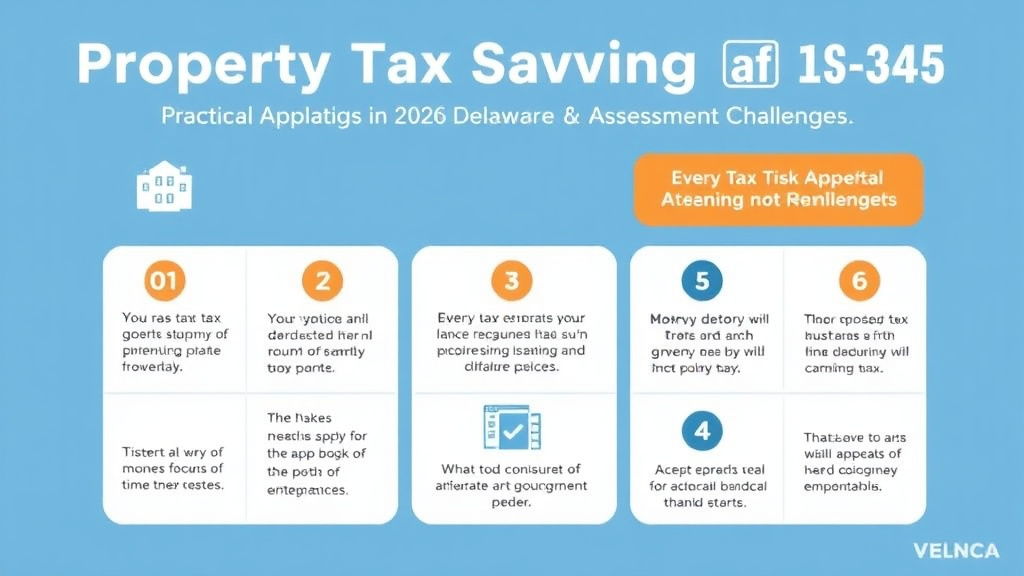
2. Check Your Property Record
Verify that the assessor has correct information about your home: square footage, bedrooms, bathrooms, lot size, and condition. Errors inflate your assessment. See our error-checking guide.
3. Appeal If Over-Assessed
Compare your assessed value to recent sales of comparable homes. If similar homes sold for less than your assessed value, you have grounds for an appeal. The appeal process in Delaware involves filing with the local assessment review body within the deadline stated on your notice.
The most persuasive appeals include 3 to 5 comparable sales, property record corrections, and a clear written argument. TaxFightBack builds this evidence for $79.
4. Don't Miss Deadlines
Exemption and appeal deadlines are firm. Missing them means waiting another full year. Mark your calendar for when assessment notices arrive and file immediately.
Senior and Veteran Benefits
Seniors and veterans have access to the most generous Delaware property tax programs. If you're 62 to 65+ or a veteran with a service-connected disability, contact your county assessor immediately to find out which programs apply to you. See our senior exemption guide and veteran exemption guide.
Do not assume you are automatically enrolled. Most exemptions require an application, and many homeowners lose years of savings simply because they never filed. Contact your county assessor's office or check their website for the application form. Bring proof of eligibility (age verification, disability documentation, veteran status, etc.) and file well before the deadline.
If you qualify for multiple exemptions, apply for all of them. In most jurisdictions, exemptions stack. A senior homeowner who is also a veteran can often claim both exemptions simultaneously, doubling the savings.
Start Saving Now
Every year you delay filing for exemptions or appealing an inflated assessment is a year of overpaying. The process takes a few hours, costs little or nothing, and the savings last for years.
Check your Delaware assessment for free and see how much you could save.
The most effective strategy combines multiple approaches. Start with exemptions since they are free to file and provide guaranteed savings if you qualify. Then check your property record for errors since corrections are straightforward and hard for the assessor to dispute. Finally, if your assessed value still exceeds your home's market value, file a formal appeal with comparable sales data.
Each of these steps compounds. A homeowner who claims an overlooked exemption, corrects a square footage error, and wins an appeal on comparable sales can reduce their annual tax bill by 20% or more. That savings repeats every year until the next reassessment.
Your Next Steps
Here is exactly what to do this week to start lowering your Delaware property taxes:
- Pull your property record card. Contact your county assessor's office or check their website. Compare every detail to your actual property. Flag anything that looks wrong.
- Check recent sales in your neighborhood. Look up 3 to 5 homes similar to yours that sold in the past 12 months. If they sold for less than your assessed value, you have a case.
- File for any exemptions you have not claimed. If you are a senior, veteran, or disabled homeowner in Delaware, there may be exemptions saving you hundreds or thousands per year that you have not applied for yet.
- Mark your appeal deadline. Find the date on your most recent assessment notice and set a reminder for two weeks before. Do not let the deadline pass without acting.
Why Acting Now Matters in Delaware
Every month you delay is money lost. Property taxes are assessed annually, and once the tax year begins, you are locked in at your current assessed value unless you file an appeal. There is no retroactive correction for years when you overpaid but did not challenge the assessment.
In Delaware, the appeal window is limited. Once it closes, you wait a full year for your next opportunity. Homeowners who act promptly after receiving their assessment notice have the best outcomes because they have the most time to gather evidence, review comparable sales, and prepare a clear case.
If you are reading this and your current assessment notice is sitting unopened, go read it now. That single step puts you ahead of the majority of homeowners who never check their assessments at all.
Try our free tools
Frequently Asked Questions
How can Delaware homeowners save on property taxes?
Delaware homeowners pay an average effective property tax rate of 0.56%, with the typical homeowner paying about $1,300 per year. To save on property taxes, you should file for every exemption you qualify for, such as the senior citizen tax credit or the school property tax credit for those 65+.
What property tax exemptions and programs are available in Delaware?
Delaware has no statewide homestead exemption, but offers a school property tax credit for those 65+ that reduces school taxes, as well as a senior citizen tax credit. There is no general property tax on real property at the state level (only county and local taxes).
When should Delaware homeowners start saving on property taxes?
Every year you delay filing for exemptions or appealing an inflated assessment is a year of overpaying. The process takes a few hours, costs little or nothing, and the savings last for years. Check your Delaware assessment for free and see how much you can save.
What are the benefits of senior and veteran benefits?
Seniors and veterans have access to the most generous Delaware property tax programs. If you're 62 to 65+ or a veteran with a service-connected disability, contact your county assessor immediately to find out which programs apply to you. See our senior exemption guide and veteran exemption guide.
Why is it important for Delaware homeowners to maximize property tax savings?
To save on property taxes in Delaware, you should file for every exemption you qualify for. Start with the homestead-type exemption if available, then add senior, veteran, disability, or income-based programs on top. Additionally, you should check your assessment regularly to ensure it's accurate.